Polyurethane Textile Composite Multi layer Board
CN → US| HS Code | Tariff Rate | Origin | Destination | Doc |
|---|---|---|---|---|
| 3921131950 | 40.3% | CN | US | Official Doc |
| 5903202000 | 35.0% | CN | US | Official Doc |
| 3921131500 | 41.5% | CN | US | Official Doc |
| 5903202500 | 42.5% | CN | US | Official Doc |
| 6810990080 | 35.0% | CN | US | Official Doc |
Product Images
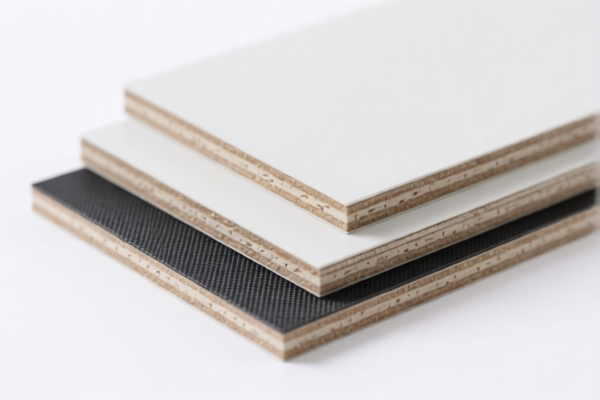
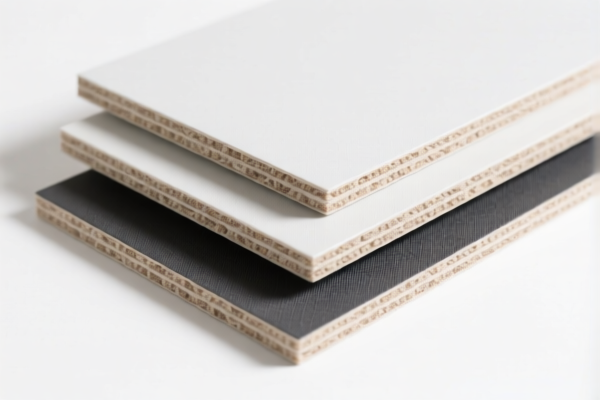
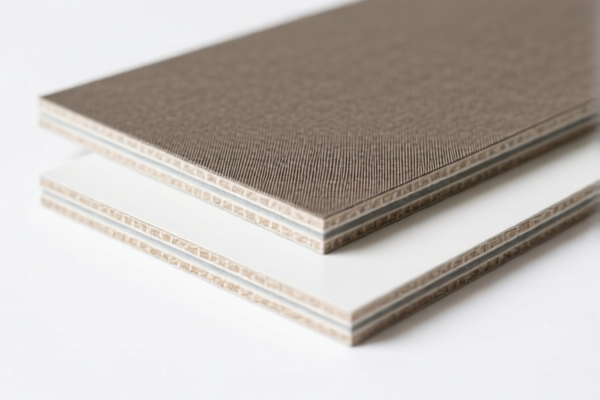
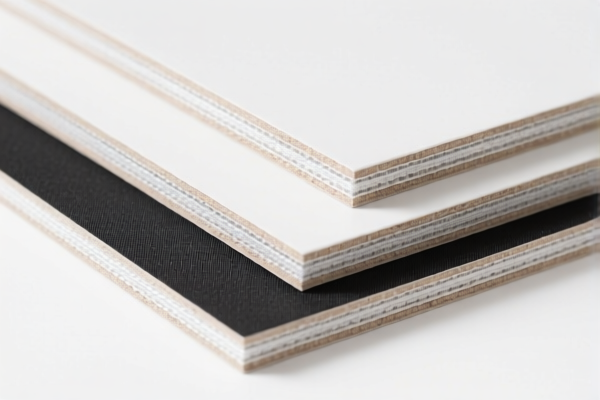
AI Analysis
🏗️ Polyurethane Textile Composite Multi-layer Board (Architectural Grade)
🌐 HS Code Reference & Customs Clearance Guide | 2026 Latest Tariff Analysis | Professional Clearance Strategy
📌 1. Product Definition & Classification: What Exactly Is This Material?
This product is a multi-layer composite board used primarily in construction and building applications. Its core characteristic is the integration of Polyurethane (PU) with textile materials (such as fiberglass, polyester, or other synthetic fibers) through impregnation, coating, or lamination processes.
In international trade, the classification hinges on the primary material and the form of the product: * If it behaves like a rigid board/panel: It leans towards Chapter 39 (Plastics) or Chapter 68 (Stone/Cement). * If it behaves like a treated textile fabric: It leans towards Chapter 59 (Impregnated/Covered Textile Fabrics). * Key Distinction: Customs authorities scrutinize the ratio of PU to textile and the mechanical properties (rigidity vs. flexibility). A "board" implies rigidity, but if the textile structure dominates the identity, Chapter 59 may apply.
⚠️ Critical Distinction Point:
- If the product is a rigid foam board sandwiched between textile layers → Often 3921 (Plastic Plates/Sheets/Film) or 6810 (Concrete/Stone if PU is merely a surface treatment).
- If the product is a flexible textile impregnated with PU and then laminated into a composite → Often 5903 (Textile Fabrics Impregnated with Plastic).
- Ambiguity Alert: The term "Multi-layer Board" suggests rigidity, but "Textile Composite" suggests textile classification. Misclassification can lead to significant duty differences.
📦 2. HS Code Classification Details (2026 Latest Tariff Mapping)
Based on the provided data, here are the five potential HS Codes for Polyurethane Textile Composite Boards, along with their specific tax implications. All codes listed below are subject to US Import Duties with Section 301 (25%) and Section 122/IEEPA (10%) surcharges.
| HS Code | Product Description & Logic | Tax Rate Breakdown | Total Duty |
|---|---|---|---|
3921.13.19.50 |
PU Material, Board Form. Classified as "Other plates, sheets, film, film and strip, of plastics." Suitable if the PU is the dominant structural material, even with textile reinforcement. | Base: 5.3% Sec 301: 25.0% Sec 122: 10% |
40.3% |
5903.20.20.00 |
PU Material, Textile Composite Form. Classified as "Textile fabrics impregnated, coated, covered or laminated with plastics." Used if the product is viewed as a textile fabric treated with PU, even if used as a board. | Base: 0.0% Sec 301: 25.0% Sec 122: 10% |
35.0% |
3921.13.15.00 |
PU Material, Composite Board Form. Specific sub-category for "Other" plastic plates/sheets. Highlights the combination of PU with textile materials. | Base: 6.5% Sec 301: 25.0% Sec 122: 10% |
41.5% |
5903.20.25.00 |
PU Material, Textile Form. Specifically for "PU-treated artificial fiber textile fabrics." If the textile component is identified as artificial fibers (e.g., polyester) and the PU is the treatment agent. | Base: 7.5% Sec 301: 25.0% Sec 122: 10% |
42.5% |
6810.99.00.80 |
Construction Board (Inferred). Classified as "Other articles of cement, concrete or artificial stone." This is an inferior classification assuming PU is a composite layer on a cement/concrete core. Used only if the core is mineral-based, not purely plastic/textile. | Base: 0.0% Sec 301: 25.0% Sec 122: 10% |
35.0% |
🔍 Key Insight:
- Lowest Duty (35.0%): Codes5903.20.20.00and6810.99.00.80offer the lowest total duty due to 0% base rates. However,5903requires proving it is a textile fabric, while6810requires proving a cement/concrete core.
- Highest Duty (42.5%): Code5903.20.25.00has the highest base rate (7.5%) for treated artificial fiber textiles.
- Most Common for Pure PU-Textile Boards: Code3921.13.19.50(40.3%) or3921.13.15.00(41.5%) is often used for rigid PU foam boards with textile facings, as they are legally "plastic products."
💰 3. 2026 Latest Tariff Rate Breakdown (Including Surcharges)
✅ Applicable Country: United States (US)
✅ Origin: China (CN)
✅ Effective Date: November 10, 2025 (and subsequent imports)
🎯 1. The "Section 301" & "Section 122" Surcharge Reality
All HS Codes listed in the data share the same additional tariff structure due to US-China trade tensions:
| Component | Rate | Legal Basis | Notes |
|---|---|---|---|
| Base Duty (MFN) | 0.0% – 7.5% | Varies by HS Code | Depends on whether it's classified as plastic (3921) or textile (5903) or stone (6810). |
| Section 301 Tariff | +25.0% | USITC Footnote 9903.88.01 (approx.) | Applies to all Chinese-origin plastics and textiles in these categories. |
| Section 122/IEEPA Tariff | +10.0% | IEEPA: 9903.01.24 / 9903.01.25 | Additional surcharge on Chinese goods. |
| Total Effective Duty | 35.0% – 42.5% | Sum of above | No de minimis exemption applies. |
📌 Explanation:
- The 25% Section 301 tariff is the biggest cost driver. It applies to "Plastic plates, sheets, film, and of plastics" (3921) and "Impregnated textile fabrics" (5903).
- The 10% Section 122 tariff is an additional layer on top of the 301 tariff.
- Result: Even if the base duty is 0%, the total duty is 35%. If the base duty is 7.5%, the total duty is 42.5%.
🛠️ 4. Customs Clearance Operational Advice (Pitfall Avoidance Guide)
✅ 1. Preparation Checklist (Non-Negotiable)
| Document | Required? | Purpose |
|---|---|---|
| ✅ Product Specification Sheet | ✔️ | Must detail: PU content %, textile type (glass/polyester), layer structure, density, and rigidity. |
| ✅ Composition Analysis Report | ✔️ | Third-party lab report proving the ratio of PU to textile. Critical for deciding between Ch 39 vs. Ch 59. |
| ✅ Commercial Invoice | ✔️ | Must clearly state: "Polyurethane Textile Composite Board for Construction Use." Avoid vague terms like "Building Material." |
| ✅ Packing List | ✔️ | Show dimensions, weight, and layer composition. |
| ✅ Photographs (Cross-Section) | ✔️ | Crucial. Show the internal layers to prove it's a composite board, not just a sheet. |
| ✅ Certificate of Origin | ✔️ | Mandatory for proving Chinese origin (to apply surcharges correctly or challenge them). |
✅ 2. Classification Strategy (Key Decision Matrix)
| Scenario | Recommended HS Code | Why? |
|---|---|---|
| Rigid PU Foam Core + Textile Skin | 3921.13.19.50 or 3921.13.15.00 |
The PU foam provides the structural integrity. It is legally a "plastic plate/sheet." |
| Flexible PU-Coated Fabric Laminated into Board | 5903.20.20.00 |
If the textile is the primary component and PU is just a coating/lamination. Base duty is 0%. |
| Cement/Concrete Core with PU/Textile Facing | 6810.99.00.80 |
If the core is mineral-based. Base duty is 0%. |
🔥 Pro Tip:
"If it's rigid, think Plastic (3921). If it's flexible textile treated with PU, think Textile (5903). If it has concrete in it, think Stone (6810)."
- Misclassification Risk: Declaring a rigid PU board as5903to save duty may trigger a customs audit. Customs may classify it as3921and assess penalties.
- Safe Route: For pure PU-textile composite boards,3921.13.19.50(40.3%) is often the most defensible if the PU layer is structural.
✅ 3. Special Considerations
| Situation | Action |
|---|---|
| OEM Custom Boards | Provide customer design specs to prove the exact layer order. |
| Mixed Shipment | Clearly separate PU boards from other goods. Mixed shipments can lead to higher scrutiny. |
| New Product Type | Apply for an Advance Ruling from US Customs and Border Protection (CBP) before shipping. This locks in the HS Code and avoids surprise duties. |
🌍 5. Global Market Comparison (2026)
| Market | Recommended HS Code | Estimated Total Duty (CN Origin) | Key Requirement |
|---|---|---|---|
| 🇺🇸 USA | 3921.13.19.50 |
40.3% | FCC/CE (if applicable), precise description. |
| 🇪🇺 EU | 3921.13 |
~5-10% (No 301/122) | REACH, RoHS compliance. |
| 🇨🇳 China | 3921.13 |
5.3% (Import Duty) | CCC certification (if applicable). |
| 🇯🇵 Japan | 3921.13 |
~5% | PSE/JPMA standards. |
📌 Conclusion:
- The US market is the most expensive due to the 35-42.5% total duty burden.
- EU/Asia markets are significantly cheaper, but require different certifications (REACH, RoHS).
- Strategy: If targeting the US, optimize the product design to qualify for5903.20.20.00(35.0%) if legally possible, or apply for an Advance Ruling to secure the most favorable classification.
📌 6. Common Mistakes & Pitfalls (Lessons Learned)
❌ Mistake 1: Describing the product as "Building Material" without specifying composition.
👉 Consequence: Customs assigns a higher duty code or delays inspection for classification.
❌ Mistake 2: Claiming "Textile" classification (5903) for a rigid PU foam board.
👉 Consequence: Customs reclassifies to 3921 (higher base duty) + penalties.
❌ Mistake 3: Ignoring the Section 122 (10%) surcharge.
👉 Consequence: Underpayment of duties. The 10% is always added on top of the 301 tariff for Chinese goods.
❌ Mistake 4: Failing to provide a cross-section photo.
👉 Consequence: Customs cannot verify the "composite" nature, leading to potential rejection or detention.
✅ Correct Declaration Example:
"Polyurethane Foam Board with Textile Facing, Rigid, for Construction Insulation, 25mm Thickness, HS Code 3921.13.19.50, Made in China."
🎯 7. Conclusion: Professional Clearance, Cost Efficiency, and Compliance
🎯 Key Takeaways:
🔹 "Know Your Core: Is it Plastic (3921), Textile (5903), or Stone (6810)?
🔹 "Total Duty is King: Base duty is only part of the story. Add 35% for US Section 301/122.
🔹 "Documentation is Defense: Lab reports, cross-section photos, and detailed specs are your best defense against misclassification.
📌 Pro Tip:
If your product is 100% PU with minimal textile backing, argue for 3921.13.19.50 (40.3%).
If the product is textile fabric with PU coating, argue for 5903.20.20.00 (35.0%) only if it is flexible.
If it is a rigid board, 5903 may be challenged.
Always apply for an Advance Ruling for new product lines entering the US market.
📣 Immediate Action:
📞 Contact a licensed US customs broker.
📤 Provide product samples and technical data sheets.
🚀 Secure your HS Code before shipment to avoid 35-42.5% duty surprises!
✨ Professional Clearance Starts with Accurate Classification!
💼 Every percent of duty saved is pure profit!
Customer Reviews
About HS Code Classification
The Harmonized System (HS) is an internationally standardized nomenclature developed by the World Customs Organization (WCO) to classify traded products. Over 200 countries use the HS system as the basis for customs tariffs, trade statistics, and import/export regulations.
Each HS code follows a hierarchical structure:
- Chapter (2 digits) — Broad category of goods (e.g., Chapter 84: Machinery and Mechanical Appliances)
- Heading (4 digits) — More specific grouping within the chapter
- Subheading (6 digits) — Internationally standardized breakdown, used by all WCO member countries
- National subdivisions (8-10 digits) — Country-specific extensions for further classification, such as US HTSUS 10-digit codes
Correct HS code classification is essential for smooth customs clearance, accurate duty payment, and compliance with trade regulations. Misclassification can lead to customs delays, overpayment of duties, or penalties.
When importing from CN to US, the applicable tariff rates may include:
- Most-Favored-Nation (MFN) rate — The standard duty rate applied to WTO members
- General rate — Applied to countries without trade agreements
- Trade remedy duties — Additional tariffs such as Section 301 (anti-dumping), Section 232 (national security), or countervailing duties
The information provided on this page is for reference purposes only. For official classification, please consult with your local customs authority or a licensed customs broker.