Polyurethane Textile Composite Panel
CN → US| HS Code | Tariff Rate | Origin | Destination | Doc |
|---|---|---|---|---|
| 6810990080 | 35.0% | CN | US | Official Doc |
| 5903202000 | 35.0% | CN | US | Official Doc |
| 5903202500 | 42.5% | CN | US | Official Doc |
| 3921131950 | 40.3% | CN | US | Official Doc |
Product Images
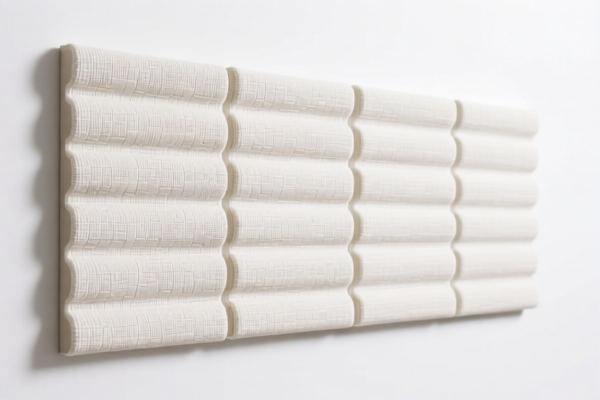
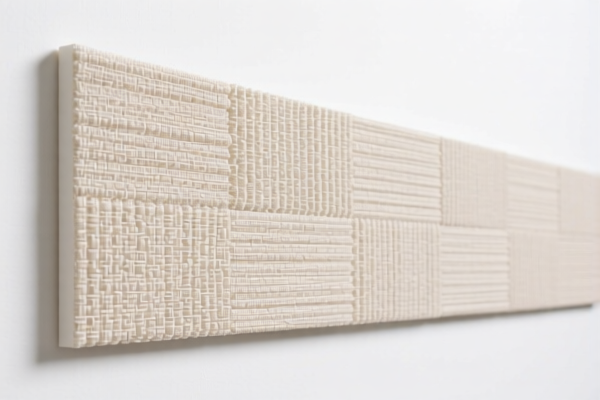
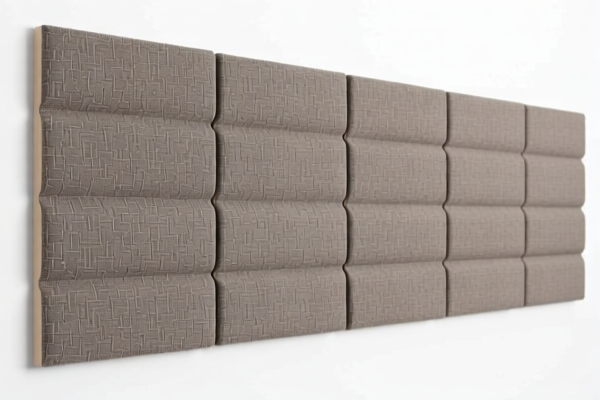
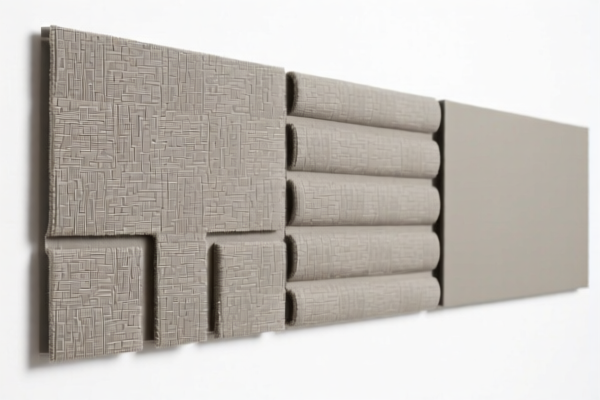
AI Analysis
🏗️ Polyurethane Textile Composite Panel (建筑用聚氨酯纺织复合板)
🌐 HS Code Reference & Customs Clearance Guide | 2026 Latest Tariff Analysis | Professional Clearance Strategy
📌 I. Product Definition & Classification: What is a "Polyurethane Textile Composite Panel"?
This product is a hybrid construction material characterized by a composite structure. It typically consists of polyurethane (PU) treated, impregnated, or laminated onto a textile/fabric base, subsequently formed into rigid or semi-rigid boards/panels for architectural construction purposes.
In international trade, classification hinges on the dominant material and the manufacturing process: 1. Textile-First Approach: If the textile fabric is the base structure and the PU is merely a coating/lamination agent without altering the fabric's essential character, it may fall under Textile Articles (Chapter 59). 2. Plastic/Plastic-Composite Approach: If the PU dominates the structure (e.g., a foam core or rigid plastic board reinforced with textile), or if the final product is primarily a "plastic board/plate" with textile reinforcement, it may fall under Plastics (Chapter 39). 3. Other Construction Articles: In some interpretations, if it doesn't fit neatly into the above due to specific composite nature, it might be categorized under Miscellaneous Manufactured Articles of Stone/Cement (Chapter 68).
⚠️ Key Distinction Point:
- If the fabric structure remains dominant and PU is a surface treatment → Chapter 59 (Textile Articles).
- If the PU/Plastic structure is dominant (rigid board shape) → Chapter 39 (Plastics).
- If classified as a non-specific stone/cement-like composite due to construction use → Chapter 68.
📦 II. HS Code Classification Details (2026 Latest Tariff Authority Comparison)
| HS Code | Product Description | Application Scenario | Dominant Material/Feature |
|---|---|---|---|
6810.99.00.80 |
Other articles of cement, concrete, or artificial stone | Construction panels; inferred as "other articles" due to composite nature; PU composite seen as non-specific quartz aggregate board | 🧱 Inferred Construction Material (No direct conflict with stone/cement category logic) |
5903.20.20.00 |
Textile fabrics impregnated, coated, covered, or laminated with polyvinyl chloride, polyethylene, or other plastics (Note: PU is often grouped here in specific national subheadings) | PU-coated/laminated textile fabrics; construction board is a downstream application | 🧵 Textile-Based (PU treatment + Fabric form) |
5903.20.25.00 |
Other textile fabrics impregnated, coated, covered, or laminated with polyurethane (Specific to PU) | Explicitly matches "Polyurethane" + "Textile" form; construction board does not conflict with textile definition | 🧵 Textile-Based (Explicit PU + Fabric match) |
3921.13.19.50 |
Plates, sheets, film, foil, and strip, of polyurethane, other than cellular; Other; Other; Other | PU material + Board/Sheet form; Construction use aligns with "textile material combination" feature | 🧱 Plastic-Based (PU Material + Board Form) |
🔍 Key Reminder:
- 5903.20.25.00 is the most precise match if the product is legally defined as a treated textile fabric used in construction.
- 3921.13.19.50 is appropriate if the product is defined as a rigid PU plastic board reinforced with textile.
- 6810.99.00.80 is a fallback classification if the composite is viewed as a cement-like construction article without specific plastic/textile dominance, though less common for PU-based products.
💰 III. 2026 Latest Tariff Rate Breakdown (Including Surtaxes, Policy Surcharges)
✅ Applicable Country: United States (US)
✅ Country of Origin: China (CN)
✅ Effective Date: From November 10, 2025 (Including subsequent imports)
🎯 1. 6810.99.00.80 —— Other Articles of Cement/Concrete (Inferred)
| Item | Content |
|---|---|
| Basic Duty Rate | 0% (ad valorem) |
| USITC Surcharge | +25% (Section 301 Duties) |
| IEEPA Surcharge | +10% (China/Hong Kong products, from Nov 10, 2025) |
| Total Duty Rate | 35.0% |
| Tax Calculation | CIF Value × 35% |
| De Minimis Eligibility | ❌ No (deny_de_minimis) |
| Legal Basis Path | IEEPA:9903.01.25 → IEEPA:9903.01.24 → USITC:6810.99.00.80 → FOOTNOTE:9903.88.01 |
📌 Explanation:
- Although the basic duty is 0%, the 25% Section 301 and 10% IEEPA surcharges apply.
- Total 35%. This is a high tariff, requiring advance planning.
- Classification relies on the inference that the PU composite fits the "other articles" category under Chapter 68, avoiding material conflict.
🎯 2. 5903.20.20.00 —— PU-Impregnated/Laminated Textile (General Plastic Grouping)
| Item | Content |
|---|---|
| Basic Duty Rate | 0% (ad valorem) |
| USITC Surcharge | +25% (Section 301 Duties) |
| IEEPA Surcharge | +10% (China/Hong Kong products, from Nov 10, 2025) |
| Total Duty Rate | 35.0% |
| Tax Calculation | CIF Value × 35% |
| De Minimis Eligibility | ❌ No (deny_de_minimis) |
| Legal Basis Path | IEEPA:9903.01.25 → IEEPA:9903.01.24 → USITC:5903.20.20.00 → FOOTNOTE:9903.88.01 |
📌 Note:
- This code captures textiles treated with plastics (including PU, often grouped broadly or via specific national subheadings).
- Total 35%. The construction board usage is considered a downstream application of the textile fabric, with no material conflict.
🎯 3. 5903.20.25.00 —— Textile Fabrics Impregnated with Polyurethane (Specific PU Match)
| Item | Content |
|---|---|
| Basic Duty Rate | 7.5% (ad valorem) |
| USITC Surcharge | +25% (Section 301 Duties) |
| IEEPA Surcharge | +10% (China/Hong Kong products, from Nov 10, 2025) |
| Total Duty Rate | 42.5% |
| Tax Calculation | CIF Value × 42.5% |
| De Minimis Eligibility | ❌ No (deny_de_minimis) |
| Legal Basis Path | IEEPA:9903.01.25 → IEEPA:9903.01.24 → USITC:5903.20.25.00 → FOOTNOTE:9903.88.01 |
📌 Important:
- This is the most precise match for "Polyurethane" + "Textile" composition.
- However, the higher basic duty (7.5%) results in a Total 42.5%.
- This is the highest tariff among the textile-based options. Must be carefully weighed against classification accuracy.
🎯 4. 3921.13.19.50 —— Polyurethane Plates, Sheets, Strips (Other)
| Item | Content |
|---|---|
| Basic Duty Rate | 5.3% (ad valorem) |
| USITC Surcharge | +25% (Section 301 Duties) |
| IEEPA Surcharge | +10% (China/Hong Kong products, from Nov 10, 2025) |
| Total Duty Rate | 40.3% |
| Tax Calculation | CIF Value × 40.3% |
| De Minimis Eligibility | ❌ No (deny_de_minimis) |
| Legal Basis Path | IEEPA:9903.01.25 → IEEPA:9903.01.24 → USITC:3921.13.19.50 → FOOTNOTE:9903.88.01 |
📌 Key Insight:
- This code focuses on the Polyurethane (Plastic) nature of the product, regardless of textile reinforcement.
- Total 40.3% is a middle-ground option.
- Suitable if the product is considered a rigid plastic board (Chapter 39) rather than a textile fabric. The "construction use" and "textile combination" are secondary features.
🛠️ IV. Customs Clearance Practical Advice (Real-World Pitfall Avoidance)
✅ 1. Required Documentation Checklist (Mandatory)
| Document | Must Provide | Explanation |
|---|---|---|
| ✅ Product Specification Sheet | ✔️ | Must detail PU content %, textile type, thickness, density, and rigid vs. flexible nature. |
| ✅ Composition Analysis Report | ✔️ | Third-party lab report confirming the dominant material (Textile vs. Plastic) is critical for HS Code selection. |
| ✅ Product Photos | ✔️ | Clear images showing cross-section, surface texture, and edges to prove composite structure. |
| ✅ Commercial Invoice | ✔️ | Must describe as "Polyurethane Textile Composite Panel" or similar, avoiding vague terms like "Plastic Board" if textural evidence supports textile classification. |
| ✅ Packing List | ✔️ | Must list components if shipped disassembled, but ideally declare as finished panels. |
| ✅ Certificate of Origin (CO) | ✔️ | Required for US origin verification and surcharge application. |
| ✅ Test Reports | ✔️ | Flammability (UL 94), tensile strength, and durability tests for construction compliance. |
✅ 2. Declaration Strategy (Key Mnemonics)
🔥 "Material Dominance Defines HS: Textile Treated = Ch.59, Plastic Board = Ch.39, Construction Inference = Ch.68!"
| Scenario | Correct Declaration | Wrong Practice |
|---|---|---|
| Textile Fabric with PU Coating | 5903.20.25.00 (42.5%) |
Misdeclare as 3921.13.19.50 (40.3%) → Risk of penalty for misclassification. |
| Rigid PU Board with Fabric Reinforcement | 3921.13.19.50 (40.3%) |
Misdeclare as 6810.99.00.80 (35%) → High risk of audit if textile dominance is proven. |
| Composite with No Clear Dominant Material | 6810.99.00.80 (35.0%) |
Misdeclare as 5903.20.25.00 (42.5%) → Overpayment of tax. |
| Flexible PU Textile Sheet (not rigid) | 5903.20.20.00 (35.0%) |
Misdeclare as rigid panel → Rejection by customs. |
✅ 3. Special Case Handling
| Situation | Handling Advice |
|---|---|
| OEM Custom Panels | Provide client order + design specs. If textile is custom-woven, emphasize Chapter 59. |
| Fire-Retardant PU Textiles | Must provide fire certification. Customs may scrutinize material content to prevent misclassification. |
| Mixed Shipments (Panels + Loose Textiles) | Declare separately. Loose textiles might have different HS codes. |
| Re-export from Vietnam/Mexico | If processed significantly in 3rd country, CO may change. Verify USMCA/TPP eligibility. |
🌍 V. Global Market Clearance Comparison (2026 Latest)
| Country/Region | Recommended HS Code | Duty Rate | Certification Required | Notes |
|---|---|---|---|---|
| 🇺🇸 USA | 5903.20.25.00 or 3921.13.19.50 |
35% - 42.5% | FCC (if electronic components), UL (Fire) | Highest duty due to 301/IEEPA. Accurate classification is vital to save 2-5%. |
| 🇨🇳 China | 5903.20.25.00 |
7.5% | CCC (if applicable) | Lower basic duty. No surcharges for domestic import. |
| 🇪🇺 EU | 5903.20.25.00 |
Variable | CE, REACH | EU tariffs vary by specific textile/plastic subheading. No Section 301 equivalent. |
| 🇬🇧 UK | 5903.20.25.00 |
Variable | UKCA | Post-Brexit rules apply. Generally more favorable than US. |
| 🇯🇵 Japan | 5903.20.25.00 |
6.0% | PSE (if electronic) | Moderate duty. No major surcharges. |
📌 Conclusion:
- The US market is the most challenging due to the 35%–42.5% effective duty rate.
- Classification Accuracy is Cost-Critical: Choosing between Ch.59 (Textile) and Ch.39 (Plastic) can save 2–7.5% on the CIF value.
- Chapter 68 is a riskier inference but offers the lowest total rate (35%) if defensible.
📌 VI. Common Errors & Pitfall Guide (Blood & Tears Lessons)
❌ Error 1: Declaring PU-Textile Panels as Plain Plastic Boards (3921.13.19.50) when textile is dominant.
👉 Consequence: Customs audit for misclassification. Potential penalty + back taxes if Ch.59 is deemed more accurate.
❌ Error 2: Declaring as Textile Fabric (5903.20.25.00) when product is a rigid composite board.
👉 Consequence: Customs may reject under Ch.59 if product doesn't meet "fabric" definition. May be reclassified to Ch.39 or Ch.68.
❌ Error 3: Ignoring Section 301 and IEEPA surcharges.
👉 Consequence: Unexpected 25% + 10% costs. Budget fails. Total 35%–42.5% is unavoidable for CN origin.
❌ Error 4: Using vague terms like "Building Material" in invoice.
👉 Consequence: Customs delays. Request for detailed specs. May lead to reclassification and higher duties.
✅ Correct Practice:
"Polyurethane-Coated Textile Composite Panel for Construction, Model XYZ, 100% PU Textile Composite, UL 94 V-0 Certified, Origin: China"
🎯 VII. Conclusion: Professional Declaration, Save Costs!
🎯 Remember the Mantra:
🔹 "Material Dominance Rules: Textile Treated = 5903, Plastic Board = 3921, Construction Inference = 6810!"
🔹 "US Surcharges are Fixed: 25% + 10% = 35% Base. Basic Duty Adds 0% to 7.5%. Total 35% to 42.5%!"
🔹 "HS Code Determines Your Profit Margin. A 7.5% Basic Duty Difference is Huge!"
📌 Pro Tip:
If your product can be technically argued as Chapter 68 (non-specific construction article), the 35% total rate is the lowest. However, this requires strong justification that the PU/Textile composite is primarily a "stone/cement-like" construction material. Consult a customs broker for Advance Ruling before shipping.
📣 Immediate Action:
📞 Contact a Professional Customs Broker + Provide Product Specs + Apply for Advance Ruling (APA)
🚀 Ensure smooth clearance, maximize profit, and avoid customs delays!
✨ Professional Clearance Starts with Accurate Classification!
💼 Every Cent of Cost Deserves Precise Calculation!
Customer Reviews
About HS Code Classification
The Harmonized System (HS) is an internationally standardized nomenclature developed by the World Customs Organization (WCO) to classify traded products. Over 200 countries use the HS system as the basis for customs tariffs, trade statistics, and import/export regulations.
Each HS code follows a hierarchical structure:
- Chapter (2 digits) — Broad category of goods (e.g., Chapter 84: Machinery and Mechanical Appliances)
- Heading (4 digits) — More specific grouping within the chapter
- Subheading (6 digits) — Internationally standardized breakdown, used by all WCO member countries
- National subdivisions (8-10 digits) — Country-specific extensions for further classification, such as US HTSUS 10-digit codes
Correct HS code classification is essential for smooth customs clearance, accurate duty payment, and compliance with trade regulations. Misclassification can lead to customs delays, overpayment of duties, or penalties.
When importing from CN to US, the applicable tariff rates may include:
- Most-Favored-Nation (MFN) rate — The standard duty rate applied to WTO members
- General rate — Applied to countries without trade agreements
- Trade remedy duties — Additional tariffs such as Section 301 (anti-dumping), Section 232 (national security), or countervailing duties
The information provided on this page is for reference purposes only. For official classification, please consult with your local customs authority or a licensed customs broker.