Polyurethane Textile Composite Soundproof Board
CN → US| HS Code | Tariff Rate | Origin | Destination | Doc |
|---|---|---|---|---|
| 3921131500 | 41.5% | CN | US | Official Doc |
| 3921131950 | 40.3% | CN | US | Official Doc |
| 5903202500 | 42.5% | CN | US | Official Doc |
| 5903202000 | 35.0% | CN | US | Official Doc |
| 6810990080 | 35.0% | CN | US | Official Doc |
Product Images

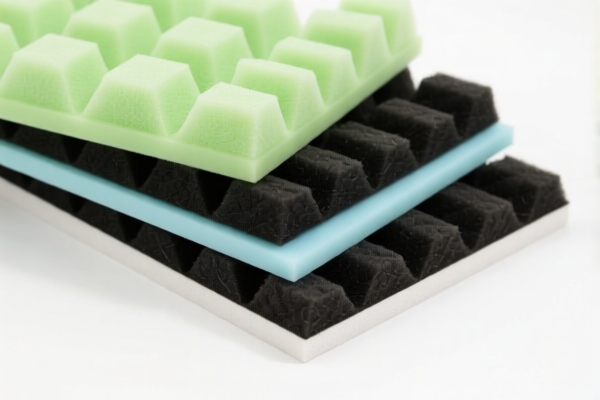
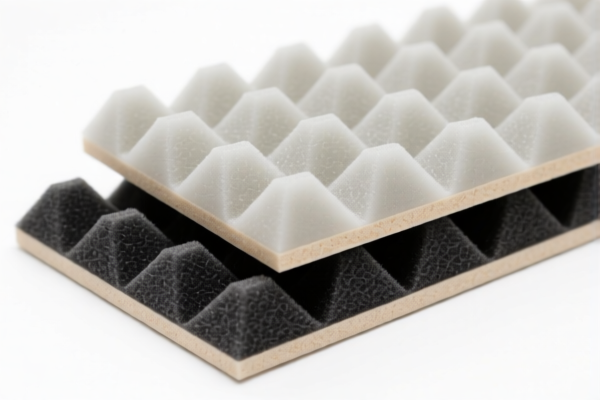
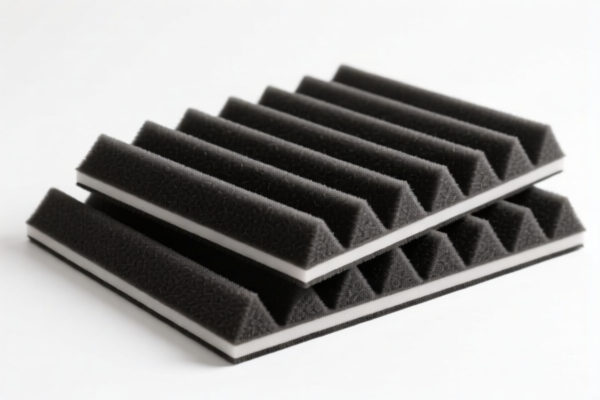
AI Analysis
🔇 Polyurethane Textile Composite Soundproof Board
🌐 HS Code Reference & Customs Clearance Guide | 2026 Latest Tariff Analysis | Professional Clearance Strategy
📌 Part 1: Product Definition & Classification: Do You Really Understand This "Soundproof Board"?
The Polyurethane (PU) Textile Composite Soundproof Board is a specialized construction material designed for noise reduction and acoustic insulation. In international trade, its classification depends heavily on the primary character of the composite: is it primarily a plastic/board or primarily a textile fabric?
Key Components: 1. Polyurethane (PU): Provides the core soundproofing density and elasticity. 2. Textile Material: Acts as a facing, reinforcement, or aesthetic layer. 3. Composite Structure: Laminated or impregnated layers bonded together.
⚠️ Critical Distinction Point:
- If the product is viewed as a constructed panel/board where PU is the main structural material → Chapter 39 (Plastics).
- If the product is viewed as a fabric impregnated with PU → Chapter 59 (Impregnated Textiles).
- Misclassification Risk: Incorrectly classifying it as "Cement/Concrete" (Chapter 68) can lead to severe penalties or rejection, as the primary material is clearly polymer-based.
📦 Part 2: HS Code Classification Details (2026 Latest Tariff Authority对照)
Based on the provided data, here are the five potential HS Codes, ranging from high to low tax liability.
| HS Code | Product Description (From Data) | Applicable Scenario | Tax Rate Analysis |
|---|---|---|---|
3921.13.15.00 |
PU Textile Composite Building Board: Material is PU, Form is composite board, Use is for building. Matches the feature of PU combined with textile materials. | Best fit for structured composite panels. | 41.5% (Highest Risk) |
3921.13.19.50 |
PU Textile Composite Building Board: Material is PU, Form is board/sheet/film. Matches the description of "Plastics, sheets, film, foil, and strip." | Alternative classification for non-specific composite boards. | 40.3% |
5903.20.25.00 |
PU Textile Composite Building Board: Name includes PU material and textile form. Matches the classification of PU-treated artificial fiber textile fabrics. | Best fit if the product is primarily fabric-like or soft composite. | 42.5% (Highest Tax) |
5903.20.20.00 |
PU Textile Composite Building Board: PU corresponds to material requirements; textile composite matches impregnated/coated/laminated forms. Building board is the downstream application. | Best fit for impregnated/laminated textiles used in construction. | 35.0% (Lowest Tax) |
6810.99.00.80 |
PU Textile Composite Building Board: Infers compliance with "other articles of cement, concrete, or artificial stone" based on the "building board" usage. | ⚠️ High Risk/Incorrect: Only if the PU layer is negligible and the core is cementitious (rare for pure PU boards). | 35.0% |
🔍 Key Reminder:
- Chapter 39 (Plastics): If the PU is the dominant structural element,3921is the standard classification for plastic plates/sheets. - Chapter 59 (Textiles): If the textile fabric is the base and PU is merely a coating/impregnation,5903applies. - Chapter 68 (Stone/Cement): Generally incorrect for PU-based products unless it is a cement board with a thin PU coating. Use with extreme caution.
💰 Part 3: 2026 Latest Tariff Rate Breakdown (Including Surtaxes & Policy Additions)
✅ Applicable Country: United States (US)
✅ Origin: China (CN)
✅ Effective Time: Post-2025 November 10 (Includes subsequent imports)
🎯 1. 3921.13.15.00 — Composite Boards (Plastics)
| Item | Content |
|---|---|
| Base Tariff | 6.5% (ad valorem) |
| Section 301 Surtax | +25.0% (From USITC Footnote on Chinese Goods) |
| Section 122 Tariff | +10.0% (Specific policy surcharge) |
| Total Tariff | 41.5% |
| Tax Calculation | CIF Value × 41.5% |
| De Minimis Eligibility | ❌ No (Denied) |
| Legal Basis Path | Base Tariff: 6.5% → Section 301: 25.0% → Section 122: 10.0% |
📌 Explanation:
- This is the most "direct" classification for a plastic composite board. - The 41.5% total rate is very high. It includes the base duty, the 301 trade war tariff, and the 122 policy tariff. - Cost Impact: For a $10,000 shipment, you pay $4,150 in tariffs alone.
🎯 2. 3921.13.19.50 — Other Plastic Plates/Sheets
| Item | Content |
|---|---|
| Base Tariff | 5.3% (ad valorem) |
| Section 301 Surtax | +25.0% |
| Section 122 Tariff | +10.0% |
| Total Tariff | 40.3% |
| Tax Calculation | CIF Value × 40.3% |
| De Minimis Eligibility | ❌ No |
| Legal Basis Path | Base Tariff: 5.3% → Section 301: 25.0% → Section 122: 10.0% |
📌 Note:
- Slightly lower than3921.13.15.00due to a lower base tariff (5.3% vs 6.5%). - Suitable if the board does not fit the specific "composite board" subcategory but is still a plastic sheet/board.
🎯 3. 5903.20.25.00 — Impregnated Textile Fabrics (Artificial Fiber)
| Item | Content |
|---|---|
| Base Tariff | 7.5% (ad valorem) |
| Section 301 Surtax | +25.0% |
| Section 122 Tariff | +10.0% |
| Total Tariff | 42.5% |
| Tax Calculation | CIF Value × 42.5% |
| De Minimis Eligibility | ❌ No |
| Legal Basis Path | Base Tariff: 7.5% → Section 301: 25.0% → Section 122: 10.0% |
📌 Warning:
- This is the highest tax rate (42.5%). - Classifying as "Textile" often carries a higher base duty. Avoid this unless the product is clearly a soft fabric roll, not a rigid board.
🎯 4. 5903.20.20.00 — Impregnated/Laminated Textile Fabrics (Other)
| Item | Content |
|---|---|
| Base Tariff | 0.0% (ad valorem) |
| Section 301 Surtax | +25.0% |
| Section 122 Tariff | +10.0% |
| Total Tariff | 35.0% |
| Tax Calculation | CIF Value × 35.0% |
| De Minimis Eligibility | ❌ No |
| Legal Basis Path | Base Tariff: 0.0% → Section 301: 25.0% → Section 122: 10.0% |
📌 Optimization Tip:
- This is the lowest tax rate (35.0%) among all options. - It relies on a 0% base tariff. To use this, you must prove the product is primarily textile-based (e.g., a PU-coated fabric roll) rather than a rigid plastic board. - Strategy: If the product can be described as "PU-impregnated textile fabric used for soundproofing," this is the best financial choice.
🎯 5. 6810.99.00.80 — Articles of Cement/Concrete/Artificial Stone
| Item | Content |
|---|---|
| Base Tariff | 0.0% (ad valorem) |
| Section 301 Surtax | +25.0% |
| Section 122 Tariff | +10.0% |
| Total Tariff | 35.0% |
| Tax Calculation | CIF Value × 35.0% |
| De Minimis Eligibility | ❌ No |
| Legal Basis Path | Base Tariff: 0.0% → Section 301: 25.0% → Section 122: 10.0% |
📌 Caution:
- While the rate is low (35%), the classification is highly risky. - Customs may reject this if the product is not primarily cement/concrete. Misclassification can lead to audits, penalties, and shipment delays. - Only use if the product is a cement board with a thin PU layer, not a pure PU board.
🛠️ Part 4: Customs Clearance Practical Advice (Battle-Tested Pitfall Avoidance)
✅ 1. Preparation Checklist (Mandatory)
| Document | Required | Notes |
|---|---|---|
| ✅ Product Specification Sheet | ✔️ | Must detail: PU density, textile type, thickness, weight per square meter. |
| ✅ Material Composition Statement | ✔️ | Explicitly state: "% Polyurethane" and "% Textile Fiber". This determines Chapter 39 vs. Chapter 59. |
| ✅ Photos (Clear Labeling) | ✔️ | Show the cross-section of the composite to prove lamination/impregnation. |
| ✅ Third-Party Test Report | ✔️ | Fire resistance, sound absorption coefficient (NRC), and material analysis. |
| ✅ Commercial Invoice | ✔️ | Do NOT just say "Board." Use precise terms like "PU-Composite Soundproof Panel" or "PU-Impregnated Textile Roll." |
| ✅ Packing List | ✔️ | Ensure weight and dimensions match the HS Code description (e.g., roll length vs. rigid board size). |
✅ 2. Declaration Strategy (Key Mantras)
🔥 “Character Defines Chapter, Base Rate Determines Cost!”
| Scenario | Recommended HS Code | Reasoning |
|---|---|---|
| Rigid PU Panel with Textile Facing | 3921.13.15.00 or 3921.13.19.50 |
The board shape and PU core suggest plastic classification. |
| Soft PU-Coated Fabric Roll (Unwound) | 5903.20.20.00 |
If it behaves like fabric, use the 0% base rate. Save 5.3-7.5% vs. Chapter 39. |
| Cement Board with PU Surface | 6810.99.00.80 |
Only if cement is the core. Risky if PU is dominant. |
📌 Critical Advice:
- If you can legally describe the product as a "PU-treated textile fabric" (even if it's stiff), choose5903.20.20.00(35%). This saves you 6.5% compared to the highest plastic classification. - Do NOT use6810.99.00.80unless you are 100% sure it contains significant cement/concrete content. Customs experts will easily identify pure PU boards.
✅ 3. Special Case Handling
| Situation | Handling Advice |
|---|---|
| OEM Custom Soundproof Boards | Provide design drawings showing the layer structure. Label clearly as "Custom PU Composite." |
| Rolls vs. Cut Boards | If imported as rolls, argue for 5903 (Textile). If imported as pre-cut rigid panels, argue for 3921 (Plastic). |
| Soundproofing Certification | Provide NRC (Noise Reduction Coefficient) tests. This proves the "soundproof" function but doesn't change HS Code. |
| Mixed Shipments | If shipping both PU boards and textile rolls, declare separately. Do not mix HS Codes on one line item. |
🌍 Part 5: Global Market Comparison (2026 Latest)
| Country/Region | Recommended HS Code | Tariff Rate (China Origin) | Certification Requirements | Notes |
|---|---|---|---|---|
| 🇺🇸 USA | 5903.20.20.00 (Best) |
35.0% (Total) | N/A | High surtaxes apply. Base rate is 0%. |
| 🇺🇸 USA | 3921.13.15.00 |
41.5% (Total) | N/A | Higher base rate (6.5%). |
| 🇨🇳 China | 3921.13.15.00 |
~6.5% | N/A | No US surtaxes. |
| 🇪🇺 EU | 3921.13.15.00 |
~3.8% | CE + RoHS | Lower duties than US. |
| 🇦🇺 Australia | 3921.13.15.00 |
~5.0% | N/A | Standard FTA rates may apply. |
📌 Conclusion:
- The USA is the most expensive market due to Section 301 and Section 122 tariffs. - Optimization Goal: Try to classify under5903.20.20.00to benefit from the 0% base tariff. - European Union offers significantly lower duties if you can prove the textile nature.
📌 Part 6: Common Mistakes & Pitfalls (Blood-Teachings)
❌ Mistake 1: Classifying as "Construction Material" broadly.
👉 Consequence: Customs assigns a random HS Code or rejects the declaration.
❌ Mistake 2: Ignoring the "Textile" component.
👉 Consequence: Missed opportunity for 0% base rate under 5903.20.20.00. You pay 6.5% extra unnecessarily.
❌ Mistake 3: Misdeclaring as "Cement Board" (6810).
👉 Consequence: Customs demands proof of cement content. If none is found, penalties + retroactive taxes apply.
❌ Mistake 4: Not providing cross-section photos.
👉 Consequence: Customs cannot determine if it's a plastic board or impregnated textile. Holds shipment for 2-4 weeks.
✅ Correct Approach:
"Polyurethane-Impregnated Textile Soundproof Panel, 10mm thick, 1.2m x 2.4m, NRC 0.8, Model XYZ."
🎯 Part 7: Conclusion: Professional Declaration, Cost Reduction!
🎯 Remember the Mantra:
🔹 "Base Rate is King: 0% vs 6.5% is a 6.5% Savings!"
🔹 "Chapter 59 (Textile) beats Chapter 39 (Plastic) if the fabric is dominant!"
🔹 "US Tariffs are brutal: Plan your HS Code early!"
📌 Pro Tip:
If your product is shipped as rolls, emphasize the textile fabric aspect to qualify for 5903.20.20.00 (35% Total).
If it is pre-cut rigid boards, be prepared for 3921 rates (40-41.5% Total).
📣 Immediate Action:
📞 Consult your customs broker.
📸 Provide cross-section images.
📄 Request an Advance Ruling if the product is new.
🚀 Save 6.5% on every shipment by choosing the right Chapter!
✨ Professional Clearance Starts with Precise Classification!
💼 Every Dollar of Tariff Matters!
Customer Reviews
About HS Code Classification
The Harmonized System (HS) is an internationally standardized nomenclature developed by the World Customs Organization (WCO) to classify traded products. Over 200 countries use the HS system as the basis for customs tariffs, trade statistics, and import/export regulations.
Each HS code follows a hierarchical structure:
- Chapter (2 digits) — Broad category of goods (e.g., Chapter 84: Machinery and Mechanical Appliances)
- Heading (4 digits) — More specific grouping within the chapter
- Subheading (6 digits) — Internationally standardized breakdown, used by all WCO member countries
- National subdivisions (8-10 digits) — Country-specific extensions for further classification, such as US HTSUS 10-digit codes
Correct HS code classification is essential for smooth customs clearance, accurate duty payment, and compliance with trade regulations. Misclassification can lead to customs delays, overpayment of duties, or penalties.
When importing from CN to US, the applicable tariff rates may include:
- Most-Favored-Nation (MFN) rate — The standard duty rate applied to WTO members
- General rate — Applied to countries without trade agreements
- Trade remedy duties — Additional tariffs such as Section 301 (anti-dumping), Section 232 (national security), or countervailing duties
The information provided on this page is for reference purposes only. For official classification, please consult with your local customs authority or a licensed customs broker.