Polyurethane Textile Composite Soundproof Boards
CN → US| HS Code | Tariff Rate | Origin | Destination | Doc |
|---|---|---|---|---|
| 3921131500 | 41.5% | CN | US | Official Doc |
| 3921131950 | 40.3% | CN | US | Official Doc |
| 5903202500 | 42.5% | CN | US | Official Doc |
| 5903202000 | 35.0% | CN | US | Official Doc |
| 6810990080 | 35.0% | CN | US | Official Doc |
Product Images

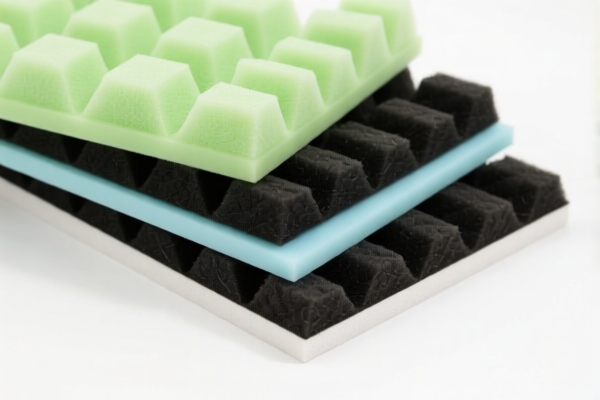
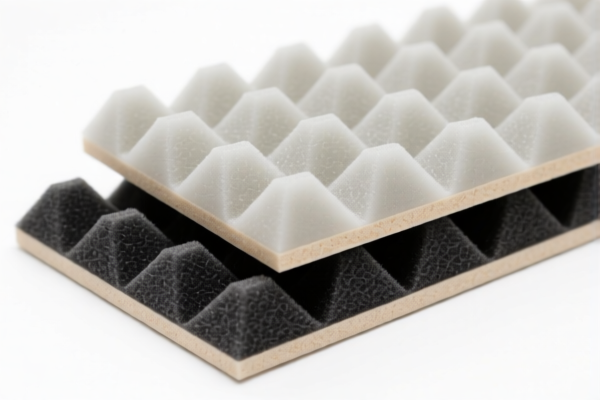
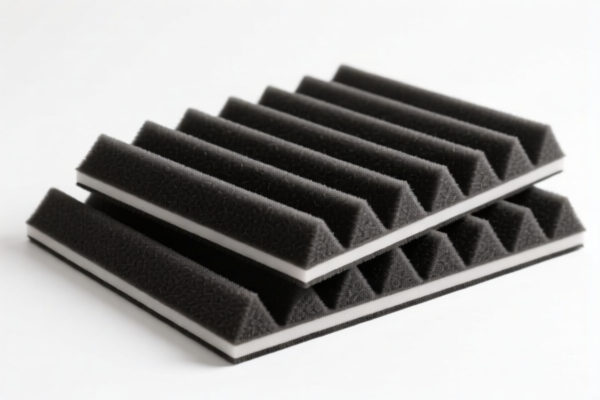
AI Analysis
🏗️ Polyurethane Textile Composite Soundproof Boards
🌐 HS Code Reference & Customs Clearance Guide | 2026 Latest Tariff Analysis | Professional Level Clearance Strategy
📌 I. Product Definition & Classification: Do You Truly Understand "Polyurethane Textile Composite Boards"?
Polyurethane Textile Composite Soundproof Boards are advanced building materials consisting of a polyurethane (PU) core laminated or impregnated with textile fabrics. They are primarily used for acoustic insulation, thermal protection, and structural reinforcement in construction projects. In international trade, their classification hinges on whether they are viewed as constructed plastic products, impregnated textile fabrics, or constructed stone/cement products.
⚠️ Key Distinction Points:
- If the textile is merely a surface finish on a rigid PU board → Classify under Chapter 39 (Plastics and Articles Thereof);
- If the textile is the essential character, coated/impregnated with PU → Classify under Chapter 59 (Impregnated, Coated, Covered or Laminate Textile Fabrics);
- If considered a composite construction material mimicking stone/cement → Classify under Chapter 68 (Articles of Stone, Plaster, Cement, Asbestos, Mica or Similar Materials).
📦 II. HS Code Classification Details (2026 Latest Tariff Authoritative Comparison)
| HS Code | Product Description | Applicable Scenario | Primary Characteristic |
|---|---|---|---|
3921.13.15.00 |
Polyurethane textile composite building boards, material is polyurethane, form is composite boards, use is for construction, conforms to the characteristics of polyurethane combined with textile materials. | Building insulation, acoustic panels, wall cladding | ✅ Composite Plastic Board |
3921.13.19.50 |
Polyurethane textile composite building boards, material is polyurethane, form is boards/films/sheets, use is for construction, conforms to the description of "boards, sheets, film, foil and strip." | General construction boards, non-specified composite PU boards | ✅ Plastic Sheet/Board |
5903.20.25.00 |
Polyurethane textile composite building boards, name includes polyurethane material and textile form, conforms to the classification characteristics of PU-treated artificial fiber textile fabrics. | Textile-centric composites, flexible PU-textile laminates | ✅ Impregnated Textile |
5903.20.20.00 |
Polyurethane textile composite building boards, polyurethane corresponds to material requirements, textile composite conforms to impregnation, coating or lamination forms, building boards are downstream application scenarios. | PU-coated textile fabrics for construction lining | ✅ Textile Fabric Core |
6810.99.00.80 |
Polyurethane textile composite building boards, inferred from "building boards" to conform to the category of "other articles" under cement, concrete or artificial stone products. | Rigid construction panels resembling stone/concrete | ✅ Artificial Stone/Cement Substitute |
🔍 Key Reminder:
- If the board is rigid and the plastic content defines its essential character, it usually falls under Chapter 39;
- If the board is flexible or the textile layer is dominant, it may fall under Chapter 59;
- Misclassification as Chapter 68 (6810.99.00.80) is risky unless the product structurally mimics concrete/stone more than plastic/fabric.
💰 III. 2026 Latest Tariff Rate Details (Including Surtaxes, Policy Add-ons)
✅ Applicable Country: United States (US)
✅ Origin: China (CN)
✅ Effective Time: From November 10, 2025 (Including subsequent imports)
🎯 1. 3921.13.15.00 —— Polyurethane Textile Composite Building Boards (Composite Plastic)
| Item | Content |
|---|---|
| Basic Tariff | 6.5% (ad valorem) |
| Section 301 Surtax | +25.0% |
| Section 122 Tariff | +10.0% |
| Total Tax Rate | 41.5% |
| Tax Calculation | CIF Value × 41.5% |
| De Minimis Eligibility | ❌ No (deny_de_minimis) |
| Legal Basis Path | HTSUS:3921.13.15.00 → Section 301: Footnote 9903.88.01 → Section 122: IEEPA Authority |
📌 Explanation:
- "Section 301 Surtax 25%" comes from the US Trade Act Section 301 on Chinese goods;
- "Section 122 Tariff 10%" is an additional levy under IEEPA for specific categories;
- Total 41.5%, which is a high tariff barrier, must be anticipated in cost planning!
🎯 2. 3921.13.19.50 —— Other Polyurethane Boards/Sheets (Plastic Composite)
| Item | Content |
|---|---|
| Basic Tariff | 5.3% |
| Section 301 Surtax | +25.0% |
| Section 122 Tariff | +10.0% |
| Total Tax Rate | 40.3% |
| Tax Calculation | CIF Value × 40.3% |
| De Minimis Eligibility | ❌ No |
| Legal Basis Path | HTSUS:3921.13.19.50 → Section 301: Footnote 9903.88.01 → Section 122: IEEPA Authority |
📌 Note:
- Similar to the previous item, but classified under "other" plastic boards;
- Applicable to PU-textile composites where the specific textile composite code does not fit;
- Total 40.3%, still very high, requires careful documentation.
🎯 3. 5903.20.25.00 —— Polyurethane-Treated Artificial Fiber Textile Fabrics
| Item | Content |
|---|---|
| Basic Tariff | 7.5% |
| Section 301 Surtax | +25.0% |
| Section 122 Tariff | +10.0% |
| Total Tax Rate | 42.5% |
| Tax Calculation | CIF Value × 42.5% |
| De Minimis Eligibility | ❌ No |
| Legal Basis Path | HTSUS:5903.20.25.00 → Section 301: Footnote 9903.88.01 → Section 122: IEEPA Authority |
📌 Note:
- Highest basic rate among the options (7.5%);
- Used if the product is legally defined as an "artificial fiber fabric" rather than a plastic board;
- Total 42.5%, the most expensive option if classified this way.
🎯 4. 5903.20.20.00 —— Polyurethane-Coated/Laminated Textile Fabrics
| Item | Content |
|---|---|
| Basic Tariff | 0.0% |
| Section 301 Surtax | +25.0% |
| Section 122 Tariff | +10.0% |
| Total Tax Rate | 35.0% |
| Tax Calculation | CIF Value × 35.0% |
| De Minimis Eligibility | ❌ No |
| Legal Basis Path | HTSUS:5903.20.20.00 → Section 301: Footnote 9903.88.01 → Section 122: IEEPA Authority |
📌 Note:
- Most cost-effective if the textile fabric argument holds strong;
- Basic rate is 0%, but surtaxes still apply heavily;
- Total 35.0%, lowest among all options, but requires strong evidence that the product is primarily a textile fabric.
🎯 5. 6810.99.00.80 —— Other Articles of Cement/Concrete/Artificial Stone
| Item | Content |
|---|---|
| Basic Tariff | 0.0% |
| Section 301 Surtax | +25.0% |
| Section 122 Tariff | +10.0% |
| Total Tax Rate | 35.0% |
| Tax Calculation | CIF Value × 35.0% |
| De Minimis Eligibility | ❌ No |
| Legal Basis Path | HTSUS:6810.99.00.80 → Section 301: Footnote 9903.88.01 → Section 122: IEEPA Authority |
📌 Note:
- Also 35.0%, same as 5903.20.20.00;
- High risk of customs rejection if the product is clearly plastic/textile-based;
- Only use if the board has significant cement/concrete/stone content or appearance.
🛠️ IV. Customs Clearance Practical Advice (Practical Pitfall Avoidance Guide)
✅ 1. Document Checklist (Missing Items Will Cause Delays)
| Document | Mandatory | Explanation |
|---|---|---|
| ✅ Product Specification Sheet | ✔️ | Include dimensions, density, acoustic rating, PU content %, textile type |
| ✅ Composite Structure Diagram | ✔️ | Show layering: which layer is PU, which is textile, bonding method |
| ✅ Product Photos (Including Label) | ✔️ | Clear view of texture, edges, labels, and composite interface |
| ✅ Third-Party Test Report | ✔️ | Acoustic performance, fire resistance, material composition analysis |
| ✅ Commercial Invoice | ✔️ | Clearly state "Polyurethane Textile Composite Soundproof Board" |
| ✅ Packing List | ✔️ | Detail net/gross weight, number of boards, packaging type |
| ✅ Certification of Origin | ✔️ | If not China origin, may reduce tariffs |
✅ 2. Declaration Tips (Key Mnemonics)
🔥 “Rigid is Plastic, Flexible is Textile, Labeling Precise, Tariffs Tumble!”
| Scenario | Correct Declaration | Wrong Approach |
|---|---|---|
| Rigid PU board with textile facing | 3921.13.15.00 / 3921.13.19.50 |
Misdeclare as Textile → Risk of audit |
| Flexible PU-coated textile roll | 5903.20.20.00 |
Misdeclare as Plastic Board → Higher tax |
| Board with cement-like appearance | 6810.99.00.80 (with caution) |
Misdeclare without proof → Rejection |
| Mixed shipments (boards + rolls) | Split declaration correctly | Combine incorrectly → Confusion |
✅ 3. Special Case Handling
| Situation | Recommendation |
|---|---|
| OEM Custom Boards | Provide customer order + design specs to prove intended use |
| High-Acoustic Rating Panels | Emphasize acoustic performance in description, but base classification on material |
| Foam PU vs. Solid PU | Clarify if it’s flexible foam (likely 5903) or rigid board (likely 3921) |
| Non-Chinese Origin | If manufactured in Vietnam/Mexico, may qualify for lower tariffs |
🌍 V. Global Major Market Clearance Comparison (2026 Latest)
| Country/Region | Recommended HS Code | Tariff | Certification Requirements | Notes |
|---|---|---|---|---|
| 🇺🇸 United States | 3921.13.15.00 / 5903.20.20.00 |
35%–42.5% (CN) | None specific | High surtaxes apply |
| 🇨🇳 China | 3921.13.15.00 |
6.5% | CCC (if applicable) | No surtaxes |
| 🇪🇺 European Union | 3921.10 / 5903.20 |
6.5%–7.5% | CE + REACH | No additional surtaxes |
| 🇬🇧 United Kingdom | 3921.10 / 5903.20 |
6.5%–7.5% | UKCA | Post-Brexit rules |
| 🇦🇺 Australia | 3921.10 |
5% | RCAS | No surtaxes |
📌 Conclusion:
- USA is the only major market with high additional surtaxes (25%+10%);
- Chinese-origin boards face steep costs in the US; consider supply chain diversification if volume is high.
📌 VI. Common Errors & Pitfall Avoidance Guide (Lessons Learned the Hard Way)
❌ Error 1: Declaring rigid PU boards as "Textile Fabrics" to save tax
👉 Consequence: Customs audit → Reclassification to 3921 → Back taxes + penalties!
❌ Error 2: Ignoring the "Section 122" 10% tariff in cost calculation
👉 Consequence: Profit margin erosion → Unexpected 10% cost increase!
❌ Error 3: Using vague terms like "Composite Board" without material details
👉 Consequence: Customs delays → Storage fees + demurrage!
❌ Error 4: Assuming De Minimis applies to small samples
👉 Consequence: No de minimis exemption for Chinese-origin goods under these codes → Full tax paid!
✅ Correct Approach:
“Rigid Polyurethane Textile Composite Soundproof Board, 25mm Thickness, PU Core with Fiberglass Facing, for Acoustic Insulation, Model XYZ, Fire-Rated”
🎯 VII. Conclusion: Professional Declaration, Save Time, Reduce Costs!
🎯 Remember the Mantra:
🔹 “Rigid = Plastic, Flexible = Textile, Labeling Precise, Tariffs Tumble!”
🔹 “HS Code Determines Destiny, Tariff Difference 7.5%, Declaration Error, Thousands in Penalties!”
📌 Pro Tip:
If your boards are originated from Vietnam, Mexico, Thailand, or Malaysia, you may qualify for IEEPA Exemptions, reducing tariffs to 0%~5%;
Recommend Applying for Advance Ruling to avoid clearance risks.
📣 Immediate Action:
📞 Contact Professional Customs Broker + Provide Product Images + Apply for HS Code Advance Ruling
🚀 Let your soundproof boards, Clear Customs Smoothly, Efficiently Export, Double Profits!
✨ Professional Clearance Starts with Accurate Classification!
💼 Every Cent of Your Cost Deserves Precise Calculation!
Customer Reviews
About HS Code Classification
The Harmonized System (HS) is an internationally standardized nomenclature developed by the World Customs Organization (WCO) to classify traded products. Over 200 countries use the HS system as the basis for customs tariffs, trade statistics, and import/export regulations.
Each HS code follows a hierarchical structure:
- Chapter (2 digits) — Broad category of goods (e.g., Chapter 84: Machinery and Mechanical Appliances)
- Heading (4 digits) — More specific grouping within the chapter
- Subheading (6 digits) — Internationally standardized breakdown, used by all WCO member countries
- National subdivisions (8-10 digits) — Country-specific extensions for further classification, such as US HTSUS 10-digit codes
Correct HS code classification is essential for smooth customs clearance, accurate duty payment, and compliance with trade regulations. Misclassification can lead to customs delays, overpayment of duties, or penalties.
When importing from CN to US, the applicable tariff rates may include:
- Most-Favored-Nation (MFN) rate — The standard duty rate applied to WTO members
- General rate — Applied to countries without trade agreements
- Trade remedy duties — Additional tariffs such as Section 301 (anti-dumping), Section 232 (national security), or countervailing duties
The information provided on this page is for reference purposes only. For official classification, please consult with your local customs authority or a licensed customs broker.