Polyurethane Textile Composite Wave Board
CN → US| HS Code | Tariff Rate | Origin | Destination | Doc |
|---|---|---|---|---|
| 6810990080 | 35.0% | CN | US | Official Doc |
| 5903202000 | 35.0% | CN | US | Official Doc |
| 5903202500 | 42.5% | CN | US | Official Doc |
| 3921131950 | 40.3% | CN | US | Official Doc |
Product Images
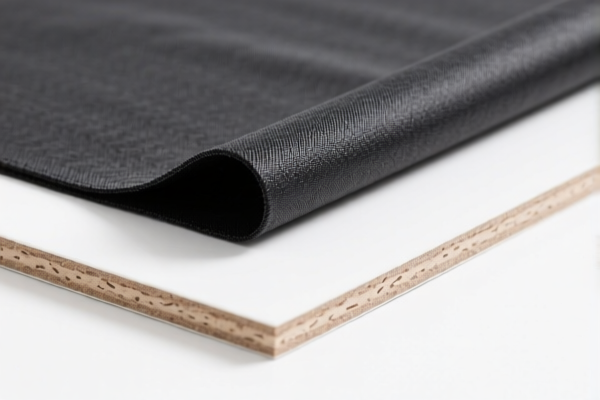
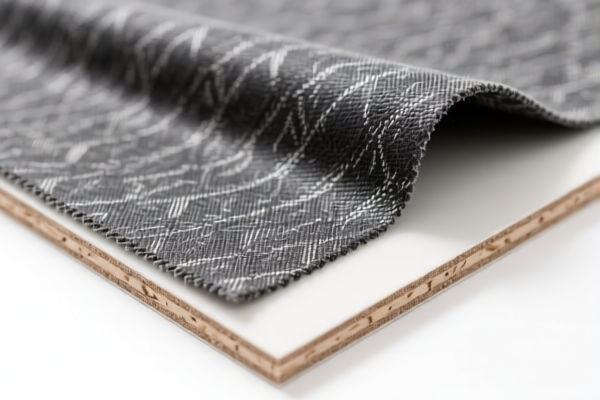
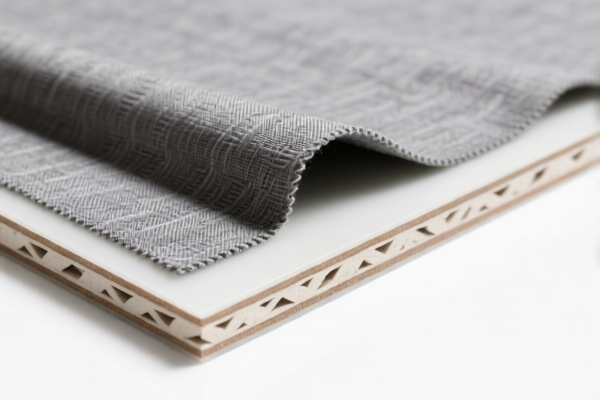

AI Analysis
🌊 Polyurethane Textile Composite Wave Board (建筑用聚氨酯纺织复合波纹板)
🌐 HS Code Reference & Customs Clearance Guide | 2026 Latest Tariff Analysis | Professional Customs Strategy
📌 Part 1: Product Definition & Classification – Do You Really Understand "PU Textile Composite Boards"?
The "Polyurethane Textile Composite Wave Board" is a specialized construction material. It combines polyurethane (PU) resin with textile fabrics through impregnation, coating, or lamination processes. Its "wave" (corrugated) shape provides structural rigidity for building applications.
In international trade, classification depends heavily on whether the textile or the polyurethane/plastic is the essential character of the composite.
Key Distinction Points: * If Textile is Essential: If the fabric provides the primary structure and the PU is merely a coating/impregnation to make it durable/waterproof → Chapter 59 (Impregnated/Laminated Textiles). * If Plastic/Polymer is Essential: If the PU forms a solid sheet/board where the textile is embedded for reinforcement, acting more like a plastic composite → Chapter 39 (Plastics and Articles Thereof). * If it’s a Non-Textile Construction Material: If the product is viewed as a cementitious or stone-like board with a PU surface layer → Chapter 68 (Mineral Products).
📦 Part 2: HS Code Classification Details (2026 Latest Tariff Authority Cross-Reference)
| HS Code | Product Description | Application Scenario | Material Dominance |
|---|---|---|---|
6810.99.00.80 |
Other articles of cement, concrete or artificial stone | Construction boards where PU is a surface finish, but structure is mineral-like | ⚠️ Disputed: Viewed as "Other articles" if mineral base dominates |
5903.20.20.00 |
Textiles impregnated/coated/laminated with polyvinyl chloride | Note: Often grouped with PU textiles in broader "PU-treated textile" categories if PU is the coating agent. Correction: Specific PU textile codes are often nearby. The provided data suggests this code applies to PU-treated textile fabrics. | ✅ Textile Primary: The textile is the base, PU is the coating/lamination. |
5903.20.25.00 |
Other textiles impregnated/coated/laminated with polyurethane | Best Fit for Textile-Based: Specifically targets PU-treated textile fabrics. The "board" form is seen as a downstream application of this fabric. | ✅ Textile Primary: Explicitly mentions "Polyurethane" and "Textile" form. |
3921.13.19.50 |
Other plates, sheets, film, foil and strip, of plastics: Of polyurethane, other | Best Fit for Plastic-Based: If the board is essentially a PU plate/sheet with textile reinforcement, falling under "Other" PU plates. | ✅ Plastic Primary: Material is "Polyurethane", Form is "Board/Plate". |
🔍 Critical Warning: - If the product is primarily a fabric coated with PU, use 5903.20.25.00. - If the product is primarily a solid plastic board reinforced with fabric, use 3921.13.19.50. - If customs argues it is a construction mineral product (rare but possible if very thick/mineral-heavy), they might push for 6810.99.00.80, but this is less likely for a "textile composite."
💰 Part 3: 2026 Latest Tariff Rate Breakdown (Including Surtaxes & Policy Add-ons)
✅ Applicable Country: United States (US)
✅ Country of Origin: China (CN)
✅ Effective Date: From November 10, 2025 (including subsequent imports)
🎯 1. 6810.99.00.80 —— Other Articles of Cement/Concrete/Artificial Stone
| Item | Content |
|---|---|
| Base Tariff | 0% (ad valorem) |
| USITC Surcharge | +25% (Under Section 301) |
| IEEPA Surcharge | +10% (Targeting China/HK products, from Nov 10, 2025) |
| Total Tariff Rate | 35.0% |
| Tax Calculation | CIF Value × 35% |
| De Minimis Exemption | ❌ Not Available (deny_de_minimis) |
| Legal Basis Path | IEEPA:9903.01.25 → IEEPA:9903.01.24 → USITC:6810.99.00.80 → FOOTNOTE:9903.88.01 |
📌 Explanation: - Although the base rate is 0%, the 35% total rate is high. - This code is used if customs views the PU composite as a "mineral-like construction article." It is risky because it denies the textile argument.
🎯 2. 5903.20.20.00 —— Textiles Impregnated/Coated/Laminated with Polyurethane (Category A)
| Item | Content |
|---|---|
| Base Tariff | 0% |
| USITC Surcharge | +25% |
| IEEPA Surcharge | +10% |
| Total Tariff Rate | 35.0% |
| Tax Calculation | CIF × 35% |
| De Minimis Exemption | ❌ Not Available |
| Legal Basis Path | IEEPA:9903.01.25 → IEEPA:9903.01.24 → USITC:5903.20.20.00 → FOOTNOTE:9903.88.01 |
📌 Note: - Similar to the above, this code treats the product as a textile fabric. - The "board" is considered a derivative application. - Total 35% remains a significant cost factor.
🎯 3. 5903.20.25.00 —— Other Textiles Impregnated/Coated/Laminated with Polyurethane (Category B)
| Item | Content |
|---|---|
| Base Tariff | 7.5% |
| USITC Surcharge | +25% |
| IEEPA Surcharge | +10% |
| Total Tariff Rate | 42.5% |
| Tax Calculation | CIF × 42.5% |
| De Minimis Exemption | ❌ Not Available |
| Legal Basis Path | IEEPA:9903.01.25 → IEEPA:9903.01.24 → USITC:5903.20.25.00 → FOOTNOTE:9903.88.01 |
📌 Caution: - This is the most specific code for PU-treated textiles among the textile codes provided. - However, it has a higher base rate (7.5%), leading to a higher total tax (42.5%). - Choose this only if you want to strictly adhere to the "Textile" definition and are willing to pay the higher base duty.
🎯 4. 3921.13.19.50 —— Other Plates, Sheets, Film, Foil and Strip, of Plastics: Of Polyurethane, Other
| Item | Content |
|---|---|
| Base Tariff | 5.3% |
| USITC Surcharge | +25% |
| IEEPA Surcharge | +10% |
| Total Tariff Rate | 40.3% |
| Tax Calculation | CIF × 40.3% |
| De Minimis Exemption | ❌ Not Available |
| Legal Basis Path | IEEPA:9903.01.25 → IEEPA:9903.01.24 → USITC:3921.13.19.50 → FOOTNOTE:9903.88.01 |
📌 Strategic Insight: - This code classifies the item as a plastic board (PU plate/sheet). - It offers a compromise: Lower total tax than the specific textile code (40.3% vs 42.5%), but higher base than the 0% textile categories. - This is often the safest and most cost-effective choice for "composite boards" where the plastic matrix is dominant.
🛠️ Part 4: Customs Clearance Practical Advice (Combat Pitfall Avoidance Guide)
✅ 1. Required Documentation List (Non-Negotiable)
| Document | Must Provide | Description |
|---|---|---|
| ✅ Product Spec Sheet | ✔️ | Dimensions, weight, PU thickness, textile type, corrugation depth |
| ✅ Material Composition Statement | ✔️ | Explicitly state % of PU vs. Textile. Crucial for Chapter 39 vs. 59 decision |
| ✅ Product Photos (Clear) | ✔️ | Show cross-section (to prove PU matrix) and surface texture |
| ✅ Commercial Invoice | ✔️ | Must clearly state "Polyurethane Textile Composite Board for Construction Use" |
| ✅ Packing List | ✔️ | Ensure no loose textiles or separate PU sheets are mixed |
| ✅ Third-Party Test Report | ✔️ | If available, show bonding strength between PU and textile |
✅ 2. Declaration Tips (Key Mnemonics)
🔥 "If Plastic Dominates, Go 39; If Fabric Dominates, Go 59; Be Honest, Don't Hide!"
| Situation | Correct Declaration | Wrong Practice |
|---|---|---|
| Board is rigid, PU is the main binder | 3921.13.19.50 (Plastic Board) |
Reporting as "Textile" → Risk of reclassification |
| Board is flexible, just coated fabric | 5903.20.25.00 (Textile Fabric) |
Reporting as "Plastic Board" → Possible penalty if deemed misclassification |
| Product is very thick/mineral-like | 6810.99.00.80 (Mineral Product) |
Unlikely, but be prepared to justify why it's NOT mineral if challenged |
| Mixed Packaging (Boards + Loose Textile Rolls) | Separate HS Codes | Combining into one HS code → Seizure/Fines |
✅ 3. Special Case Handling
| Situation | Handling Advice |
|---|---|
| OEM Custom Sizes | Provide cutting diagrams. Ensure "Wave" shape is described as "corrugated PU board," not just "fabric." |
| Used for Roofing/Wall Cladding | Emphasize "Construction Material" in description, but link back to Material Composition (PU/Textile) for HS code. |
| If Customs Questions Chapter 39 vs 59 | Argue GRI 3(b): The essential character is the Polyurethane plate/sheet structure (if rigid). Provide cross-section photos. |
| Origin Marking | Ensure the product or packaging is clearly marked "Made in China" to avoid origin-related delays. |
🌍 Part 5: Global Major Market Customs Comparison (2026 Latest)
| Country/Region | Recommended HS Code | Tariff (China Origin) | Certification Requirements | Notes |
|---|---|---|---|---|
| 🇺🇸 United States | 3921.13.19.50 |
40.3% (Best Balance) | No specific, but must be accurate | High tariffs due to Section 301 + IEEPA |
| 🇨🇳 China | 3921.13.19.50 or 5903.20.25.00 |
~5-7.5% | CCC (if applicable) | Lower entry barrier, focus on domestic sales |
| 🇪🇺 European Union | 3921.13.00 or 5903.20 |
~0-6.5% | CE, REACH, RoHS | No Section 301/IEEPA equivalent surcharges |
| 🇬🇧 United Kingdom | 3921.13 or 5903.20 |
~0-6.5% | UKCA, REACH | Post-Brexit rules apply, but generally favorable |
| 🇦🇺 Australia | 3921.13 |
~5% | RCM | No high surcharges |
📌 Conclusion: - The USA is the only major market imposing high punitive tariffs on these goods. - Cost Management is Critical: The 35-42.5% duty significantly impacts margins. - Recommendation: Consider supply chain diversification (e.g., final assembly in Vietnam/Mexico) if possible to mitigate US tariffs, or negotiate cost-sharing with buyers.
📌 Part 6: Common Errors & Pitfall Avoidance Guide (Lessons Learned)
❌ Error 1: Declaring as "Textile Fabric" (5903.20.25.00) when the product is a rigid board.
👉 Consequence: Customs may reclassify to 3921 or 6810, causing delays and potential penalties for incorrect declaration.
❌ Error 2: Ignoring the IEEPA 10% Surcharge. 👉 Consequence: Under-declaring taxes by 10-25%. Penalties can include 25-100% of the evaded tax.
❌ Error 3: Vague Description ("Composite Board"). 👉 Consequence: Customs will ask for more info, delaying clearance by 2-4 weeks. 👉 Correct Description: "Polyurethane-Coated Textile Composite Wave Board for Construction, 10mm Thick, Model XYZ, Made in China."
❌ Error 4: Assuming De Minimis Exemption ($800) Applies. 👉 Consequence: NO. These goods are explicitly excluded from de minimis due to Section 301 and IEEPA surcharges. All shipments are subject to full duty and formal entry.
✅ Correct Approach:
Provide clear cross-section photos, specify the dominant material (PU vs. Textile), and calculate the 40.3% duty cost into your pricing model.
🎯 Part 7: Conclusion – Professional Declaration, Save Time, Save Money!
🎯 Remember the Mnemonic:
🔹 "Rigid Board = Plastic (39); Flexible Fabric = Textile (59); Both Taxed High in USA (35-42.5%)."
🔹 "HS Code Determines Tax; 40% is the Reality; Don't Guess, Get a Ruling!"
📌 Pro Tip:
If your product is originally from China, consider applying for an Advance Ruling (US CBP) before the first shipment. This provides legal certainty on whether it is classified as 3921.13.19.50 (40.3%) or 5903.20.25.00 (42.5%), potentially saving money and avoiding disputes.
📣 Immediate Action:
📞 Contact your customs broker + Provide product photos + Request HS Code Pre-Ruling
🚀 Let your Polyurethane Boards pass smoothly, efficiently, and profitably!
✨ Professional Customs Clearance Starts with Accurate Classification!
💼 Every Penny of Tax is Worth Being Calculated Precisely!
Customer Reviews
About HS Code Classification
The Harmonized System (HS) is an internationally standardized nomenclature developed by the World Customs Organization (WCO) to classify traded products. Over 200 countries use the HS system as the basis for customs tariffs, trade statistics, and import/export regulations.
Each HS code follows a hierarchical structure:
- Chapter (2 digits) — Broad category of goods (e.g., Chapter 84: Machinery and Mechanical Appliances)
- Heading (4 digits) — More specific grouping within the chapter
- Subheading (6 digits) — Internationally standardized breakdown, used by all WCO member countries
- National subdivisions (8-10 digits) — Country-specific extensions for further classification, such as US HTSUS 10-digit codes
Correct HS code classification is essential for smooth customs clearance, accurate duty payment, and compliance with trade regulations. Misclassification can lead to customs delays, overpayment of duties, or penalties.
When importing from CN to US, the applicable tariff rates may include:
- Most-Favored-Nation (MFN) rate — The standard duty rate applied to WTO members
- General rate — Applied to countries without trade agreements
- Trade remedy duties — Additional tariffs such as Section 301 (anti-dumping), Section 232 (national security), or countervailing duties
The information provided on this page is for reference purposes only. For official classification, please consult with your local customs authority or a licensed customs broker.