Polyurethane Textile Composite Wear Resistant Plate
CN → US| HS Code | Tariff Rate | Origin | Destination | Doc |
|---|---|---|---|---|
| 3921135000 | 39.2% | CN | US | Official Doc |
| 5911900080 | 38.8% | CN | US | Official Doc |
| 3926905900 | 37.4% | CN | US | Official Doc |
| 3926909989 | 22.8% | CN | US | Official Doc |
| 3921131950 | 40.3% | CN | US | Official Doc |
Product Images
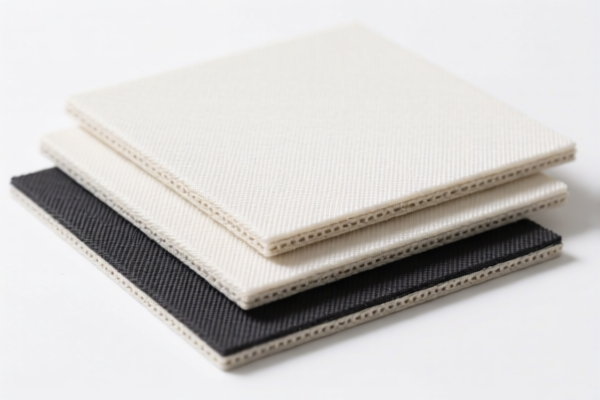
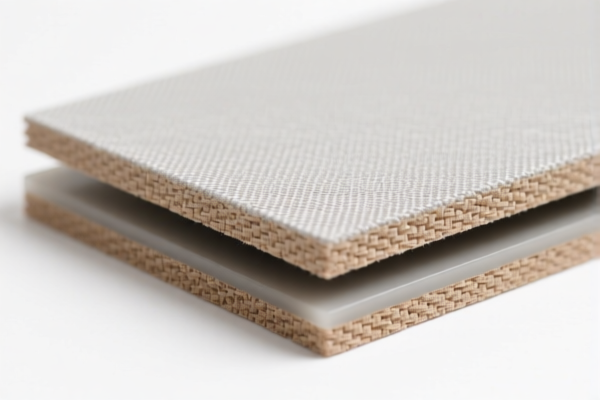
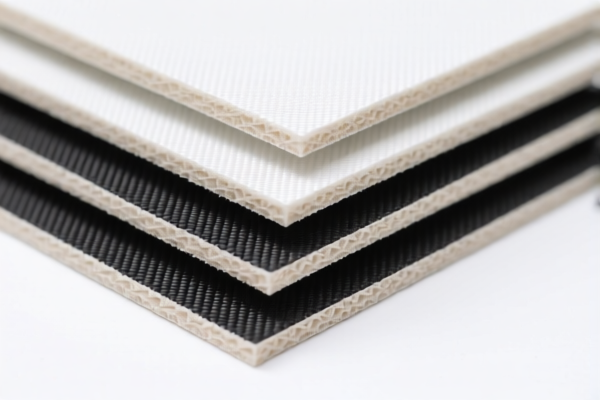

AI Analysis
🧱 Polyurethane Textile Composite Wear Resistant Plate
[PU Textile Composite Wear Resistant Plate]
🌐 HS Code Reference & Customs Clearance Guide | 2026 Latest Tariff Analysis | Professional-Level Clearance Strategy
📌 I. Product Definition & Classification: Do You Really Understand "Polyurethane Composite Plates"?
The Polyurethane Textile Composite Wear Resistant Plate is a high-performance industrial material widely used in mining, cement, power, and metallurgy industries for lining chutes, hoppers, and transfer points to reduce wear and extend equipment life.
In international trade, its classification depends heavily on its physical form (sheet/plate vs. other shapes) and composite structure (whether it is primarily regarded as a plastic product or a textile product).
Key Classification Criteria: 1. Base Material: Polyurethane (PU). 2. Structure: Composite with textile (fabric/knitted material) for reinforcement. 3. Form: Sheet/Plate shape (flat or rolled). 4. Function: Wear resistance, industrial lining.
⚠️ Critical Distinction:
- If the PU layer is the essential character and it is in sheet/plate form → Generally falls under Chapter 39 (Plastics).
- If the textile layer provides the essential character or it is specifically for technical textile applications → May fall under Chapter 59 (Impregnated/Coated Textiles) or Chapter 60/63 depending on specific usage.
- Note: The provided DATA focuses on US Import Tariffs from China, so we analyze based on US Customs (CBP) interpretations.
📦 II. HS Code Classification Details (2026 Latest Tariff Reference)
Based on the provided <DATA>, here are the specific HS Codes, their summaries, tax rates, and the rationale for classification.
| HS Code | Summary & Rationale | Total Tax Rate | Tax Detail Breakdown |
|---|---|---|---|
| 3921.13.50.00 | PU Material, Sheet Form: Classified under "Polyurethane foam; other" in Chapter 39. This is the standard classification for rigid or semi-rigid PU sheets/plates used industrially. | 39.2% | Base: 4.2% Add-on: 25.0% (Section 301) 122 Clause: 10% |
| 5911.90.00.80 | PU Material, Textile Plate Form: Classified as "Technical textile products" in Chapter 59. Applied when the PU is coated/impregnated onto a textile base for specific industrial technical uses. | 38.8% | Base: 3.8% Add-on: 25.0% (Section 301) 122 Clause: 10% |
| 3926.90.59.00 | PU Material, Sheet Form: Classified under "Plastics and articles thereof; other." Used when the product is considered a "plastic article" rather than a basic plastic plate/sheet. | 37.4% | Base: 2.4% Add-on: 25.0% (Section 301) 122 Clause: 10% |
| 3926.90.99.89 | PU Material, Sheet Form: Classified as "Other plastic articles." Note: This is the LOWEST rate option in the provided data. Likely applies if the product is considered a minor plastic component or specific article not covered by more specific headings. | 22.8% | Base: 5.3% Add-on: 7.5% (Section 301)* 122 Clause: 10% |
| 3921.13.19.50 | PU Material, Textile Plate Form: Specifically for "Plates, sheets, film, foil, strip and film of polyurethane, combined with textiles." This is the most precise match for "Textile Composite" if the combination is the defining feature. | 40.3% | Base: 5.3% Add-on: 25.0% (Section 301) 122 Clause: 10% |
🔍 Key Insight:
- 3921.13.50.00 vs. 3921.13.19.50: Both are Chapter 39.13 (Polyurethane). The difference lies in the sub-headings. 19.50 explicitly mentions "combined with textiles," which matches the product name perfectly. However, 50.00 is slightly cheaper (39.2% vs 40.3%).
- 5911.90.00.80: Chapter 59 implies the textile is the base. If the PU is merely a coating, this might apply. But PU wear plates are usually PU-dominant.
- 3926.90.99.89: Offers the lowest rate (22.8%) but has a different Section 301 add-on (7.5% vs 25%). This suggests it might be for a different type of "plastic article" or a specific exclusion. Use with caution as it may not fit the "wear resistant plate" definition strictly.
💰 III. 2026 Latest Tariff Rate Detailed Analysis (US Import from China)
✅ Applicable Country: United States (US)
✅ Country of Origin: China (CN)
✅ Effective Time: From November 10, 2025 (and subsequent imports)
✅ Key Policies: Section 301 Tariffs, IEEPA (Section 122) Tariffs
🎯 1. 3921.13.50.00 – Polyurethane Foam, Other (Sheet/Plate)
| Item | Content |
|---|---|
| Base Duty Rate | 4.2% |
| Section 301 Add-on | +25.0% |
| 122 Clause (IEEPA) Add-on | +10.0% |
| Total Duty Rate | 39.2% |
| Calculation Basis | CIF Value × 39.2% |
| De Minimis Exemption? | ❌ No (Section 321 de minimis does NOT apply to Section 301/122 goods) |
| Legal Path | USITC:3921.13.50.00 → FOOTNOTE:301 → IEEPA:122 |
📌 Explanation:
- This is a standard classification for PU plates.
- The 25% Section 301 is a punitive tariff on Chinese plastics.
- The 10% IEEPA (122 Clause) is an additional layer on top.
- Total 39.2% is high. Cost optimization is critical.
🎯 2. 5911.90.00.80 – Technical Textile Products
| Item | Content |
|---|---|
| Base Duty Rate | 3.8% |
| Section 301 Add-on | +25.0% |
| 122 Clause (IEEPA) Add-on | +10.0% |
| Total Duty Rate | 38.8% |
| Calculation Basis | CIF Value × 38.8% |
| De Minimis Exemption? | ❌ No |
| Legal Path | USITC:5911.90.00.80 → FOOTNOTE:301 → IEEPA:122 |
📌 Explanation:
- Slightly cheaper (0.4%) than 3921.13.50.00.
- Applies if CBP views the textile reinforcement as the primary character.
- Risk: CBP may argue it's a plastic product, not a textile.
🎯 3. 3926.90.59.00 – Other Plastic Articles
| Item | Content |
|---|---|
| Base Duty Rate | 2.4% |
| Section 301 Add-on | +25.0% |
| 122 Clause (IEEPA) Add-on | +10.0% |
| Total Duty Rate | 37.4% |
| Calculation Basis | CIF Value × 37.4% |
| De Minimis Exemption? | ❌ No |
| Legal Path | USITC:3926.90.59.00 → FOOTNOTE:301 → IEEPA:122 |
📌 Explanation:
- Cheaper than 3921.13.50.00 by 1.8%.
- Used when the product is seen as a "finished article" rather than a raw "sheet."
- Risk: Must prove it's not a simple sheet.
🎯 4. 3926.90.99.89 – Other Plastic Articles (Lowest Rate)
| Item | Content |
|---|---|
| Base Duty Rate | 5.3% |
| Section 301 Add-on | +7.5% |
| 122 Clause (IEEPA) Add-on | +10.0% |
| Total Duty Rate | 22.8% |
| Calculation Basis | CIF Value × 22.8% |
| De Minimis Exemption? | ❌ No |
| Legal Path | USITC:3926.90.99.89 → FOOTNOTE:301 (Lower Tier) → IEEPA:122 |
📌 Explanation:
- This is the most cost-effective option (22.8%).
- Why is Section 301 only 7.5%? This suggests it falls under a different list or exclusion within Section 301.
- CRITICAL WARNING: This code is for "Other plastic articles." Using it for a standard PU wear plate is risky. CBP may reclassify it to 3921.13.50.00 (39.2%) if deemed a simple sheet.
- Strategy: Only use if you can argue the product is a complex, finished "article" and not a basic sheet, AND if it qualifies for the lower 7.5% 301 rate. Request a Pre-Ruling!
🎯 5. 3921.13.19.50 – PU Combined with Textiles
| Item | Content |
|---|---|
| Base Duty Rate | 5.3% |
| Section 301 Add-on | +25.0% |
| 122 Clause (IEEPA) Add-on | +10.0% |
| Total Duty Rate | 40.3% |
| Calculation Basis | CIF Value × 40.3% |
| De Minimis Exemption? | ❌ No |
| Legal Path | USITC:3921.13.19.50 → FOOTNOTE:301 → IEEPA:122 |
📌 Explanation:
- Most descriptive code for "PU + Textile."
- Highest rate (40.3%) due to standard 25% 301 tariff.
- Use this if accuracy is prioritized over cost, and the product is clearly a composite.
🛠️ IV. Customs Clearance Practical Advice (Pitfall Avoidance Guide)
✅ 1. Documentation Checklist (Must-Haves)
| Document | Required | Purpose |
|---|---|---|
| ✅ Product Specifications | ✔️ | Detail PU hardness (Shore A), density, fabric type, thickness. |
| ✅ Composition Breakdown | ✔️ | % of PU vs. % of Textile. Crucial for Chapter 39 vs. 59. |
| ✅ Product Photos | ✔️ | Show cross-section to prove composite structure. |
| ✅ Usage Statement | ✔️ | "Used for lining chutes in mining, wear-resistant." |
| ✅ Commercial Invoice | ✔️ | Clearly state "Polyurethane Textile Composite Wear Resistant Plate." |
| ✅ Country of Origin Certificate | ✔️ | To prove Chinese origin and apply correct tariffs. |
✅ 2. Declaration Strategy (Key Mantra)
🔥 "Describe the Composite, Don't Hide the Textile, Choose the Code Wisely, Save the Cost!"
| Scenario | Recommended HS Code | Risk Level |
|---|---|---|
| Standard PU Sheet with Textile Backing | 3921.13.19.50 (40.3%) |
✅ Low Risk (Most Accurate) |
| PU Plate Viewed as Plastic Article | 3926.90.59.00 (37.4%) |
⚠️ Medium Risk (CBP may disagree) |
| PU Plate Viewed as Simple Plastic | 3921.13.50.00 (39.2%) |
✅ Low Risk (Common Practice) |
| Highly Specialized Composite Article | 3926.90.99.89 (22.8%) |
❌ High Risk (Requires strong argument & Pre-Ruling) |
| Textile-First Classification | 5911.90.00.80 (38.8%) |
⚠️ Medium Risk (PU usually dominates) |
📌 Advice:
- Do NOT use3926.90.99.89without a Binding Ruling from CBP. The 16.5% difference (40.3% vs 22.8%) is too large to gamble on.
- If the product is a simple sheet, use3921.13.50.00.
- If the product is clearly a composite, use3921.13.19.50for safety.
✅ 3. Special Case Handling
| Situation | Handling Suggestion |
|---|---|
| OEM Custom Shapes | Provide CAD drawings. If cut into specific shapes, it may be 3926.90.59.00. |
| Multiple Layers | If more than 2 layers, provide lamination process details. |
| Used for Food Contact | If it contacts food, add FDA compliance docs. May affect classification. |
| Samples vs. Bulk | Samples under $2,500 may qualify for Section 321 (De Minimis), but Section 301/122 tariffs still apply to Chinese goods entering via this method. |
🌍 V. Global Market Clearance Comparison (2026 Latest)
| Country/Region | Recommended HS Code | Base Tariff | Section 301/Retaliation | Total Effective Rate | Notes |
|---|---|---|---|---|---|
| 🇺🇸 USA | 3921.13.50.00 |
4.2% | +25% (301) + 10% (122) | 39.2% | High barrier. Pre-Ruling recommended for 3926.90.99.89. |
| 🇨🇳 China | 3921.13.50.00 |
~5-10% | None | ~5-10% | Export from China. |
| 🇪🇺 EU | 3921.10 |
0-4% | None (mostly) | ~0-4% | No Section 301. Much cheaper. |
| 🇯🇵 Japan | 3921.19 |
0-6% | None | ~0-6% | No Section 301. |
| 🇮🇳 India | 3921.11 |
7.5-10% | None | ~7.5-10% | CEBC may apply. |
📌 Conclusion:
- USA is the most expensive market due to Section 301 and 122 Clause tariffs.
- Diversify supply chain to Vietnam/Mexico/EU to avoid high US tariffs.
- Value Engineering: Consider if the product can be classified under3926.90.99.89with legal support to save 16.5% in duty.
📌 VI. Common Mistakes & Pitfalls (Blood & Tears Lessons)
❌ Mistake 1: Declaring as "Plastic Sheet" when it's "Composite Textile"
👉 Consequence: CBP may reclassify to 3921.13.50.00 or 3926.90.99.89, causing delays and fines.
✅ Fix: Clearly state "Textile Reinforced" in description.
❌ Mistake 2: Assuming De Minimis ($800) applies to Section 301 goods
👉 Consequence: Section 301 tariffs still apply even for small packages.
✅ Fix: Budget for full tariffs even for samples.
❌ Mistake 3: Using 3926.90.99.89 without Pre-Ruling
👉 Consequence: CBP rejects classification, back-tariffs at 39.2%.
✅ Fix: Get a Binding Ruling before shipment.
❌ Mistake 4: Ignoring the "122 Clause"
👉 Consequence: Underpaying 10% of tariff.
✅ Fix: Ensure all declarations include "122 Clause" applicability.
🎯 VII. Conclusion: Precision Classification for Cost Savings
🎯 Remember the Mantra:
🔹 "PU Sheet vs. Composite: Choose Wisely!"
🔹 "3921.13.50.00 is Safe (39.2%), 3926.90.99.89 is Risky (22.8%)!"
🔹 "Section 301 & 122 are Non-Negotiable for Chinese Goods!"
📌 Pro Tip:
If your product is exported to the US, request a CBP Pre-Ruling for
3926.90.99.89. If approved, you save 16.5% on duties.
If not, stick to3921.13.50.00or3921.13.19.50for compliance.
Consider supply chain shift to Vietnam or Mexico to avoid Section 301 tariffs entirely.
📣 Call to Action:
📞 Contact a licensed customs broker for a Pre-Ruling Application.
📄 Prepare detailed product specs and cross-section photos.
🚀 Clear Customs Smoothly, Minimize Costs, Maximize Profit!
✨ Professional Customs Clearance Starts with Accurate Classification!
💼 Every Percent of Duty Saved is Pure Profit!
Customer Reviews
About HS Code Classification
The Harmonized System (HS) is an internationally standardized nomenclature developed by the World Customs Organization (WCO) to classify traded products. Over 200 countries use the HS system as the basis for customs tariffs, trade statistics, and import/export regulations.
Each HS code follows a hierarchical structure:
- Chapter (2 digits) — Broad category of goods (e.g., Chapter 84: Machinery and Mechanical Appliances)
- Heading (4 digits) — More specific grouping within the chapter
- Subheading (6 digits) — Internationally standardized breakdown, used by all WCO member countries
- National subdivisions (8-10 digits) — Country-specific extensions for further classification, such as US HTSUS 10-digit codes
Correct HS code classification is essential for smooth customs clearance, accurate duty payment, and compliance with trade regulations. Misclassification can lead to customs delays, overpayment of duties, or penalties.
When importing from CN to US, the applicable tariff rates may include:
- Most-Favored-Nation (MFN) rate — The standard duty rate applied to WTO members
- General rate — Applied to countries without trade agreements
- Trade remedy duties — Additional tariffs such as Section 301 (anti-dumping), Section 232 (national security), or countervailing duties
The information provided on this page is for reference purposes only. For official classification, please consult with your local customs authority or a licensed customs broker.