Polyurethane Textile Laminated Boards
CN → US| HS Code | Tariff Rate | Origin | Destination | Doc |
|---|---|---|---|---|
| 6810195000 | 38.9% | CN | US | Official Doc |
| 5903202000 | 35.0% | CN | US | Official Doc |
| 3921131950 | 40.3% | CN | US | Official Doc |
| 6810990080 | 35.0% | CN | US | Official Doc |
Product Images
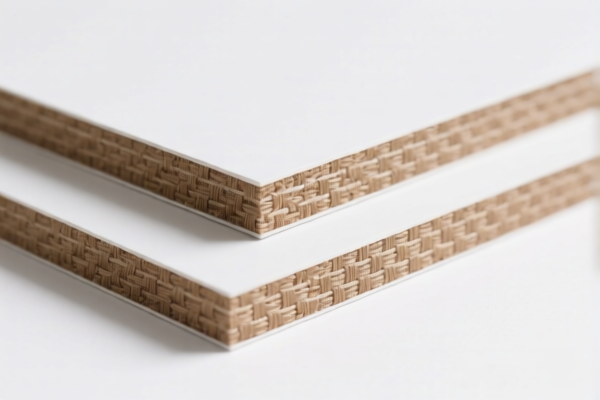
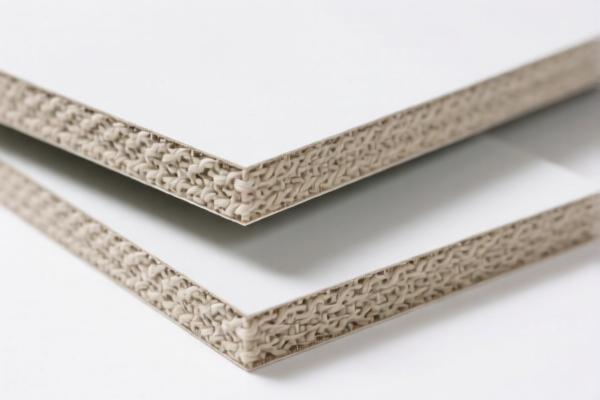
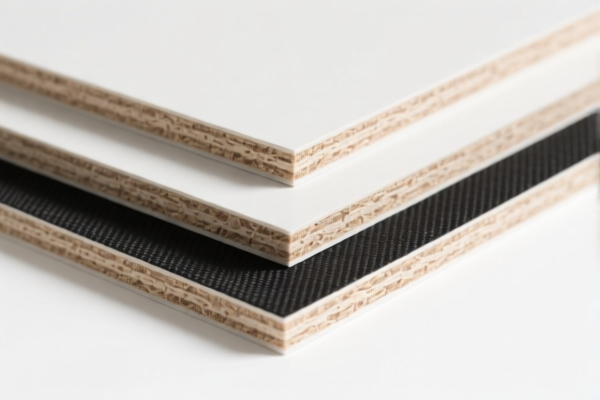

AI Analysis
🏗️ Polyurethane Textile Laminated Boards (PTLB)
🌐 HS Code Reference & Customs Clearance Guide | 2026 Latest Tariff Analysis | Professional Compliance Strategy
📌 1. Product Definition & Classification: What Exactly Are "Polyurethane Textile Laminated Boards"?
Polyurethane Textile Laminated Boards are composite construction materials consisting of a textile base (such as fiberglass, polyester, or non-woven fabric) that has been impregnated, coated, or laminated with polyurethane (PU) resins. These boards are widely used in construction for roofing, wall cladding, insulation, and waterproofing due to their durability, flexibility, and weather resistance.
In international trade, classification is critical because the product straddles the line between textiles, plastics, and building materials. Depending on the primary function and composition, it may be classified differently under the Harmonized System (HS).
⚠️ Key Classification Dilemma:
- Is it primarily a textile product coated with plastic? → HS Chapter 59
- Is it primarily a plastic board with a textile backing? → HS Chapter 39
- Is it primarily a cement/concrete/stone-like composite? → HS Chapter 68
📦 2. HS Code Classification Details (2026 Latest Tariff对照)
The following four HS Codes represent the most common classifications for Polyurethane Textile Laminated Boards, each with distinct tax implications.
| HS Code | Product Description (Summary) | Category | Key Characteristics |
|---|---|---|---|
6810.19.50.00 |
Cement, concrete, or artificial stone articles; other plates | Chapter 68: Cement/Concrete/Stone | If the board is interpreted as a stone-like composite with textile reinforcement. |
5903.20.20.00 |
Textile fabrics impregnated, coated, or covered with plastic (PU) | Chapter 59: Impregnated Textiles | If the primary characteristic is the textile fabric coated with polyurethane. |
3921.13.19.50 |
Plates, sheets, film, foil, and strip of plastics (PU) | Chapter 39: Plastics/Polymers | If the board is viewed primarily as a rigid PU plastic plate, even with textile backing. |
6810.99.00.80 |
Other articles of cement, concrete, or artificial stone | Chapter 68: Other Stone/Cement Articles | For non-specified quartz-aggregate or similar composite boards. |
🔍 Critical Distinction:
- Chapter 59 (5903.20.20.00) applies if the textile provides the structural integrity and the PU is a coating.
- Chapter 39 (3921.13.19.50) applies if the PU resin forms the bulk of the board's volume and rigidity.
- Chapter 68 (6810.19.50.00/6810.99.00.80) is less common for pure PU/textile composites but may apply if the product mimics stone/concrete in density and usage.
💰 3. 2026 Latest Tariff Rate Breakdown (Including Surtaxes & Policy Surcharges)
✅ Applicable Country: United States (US)
✅ Origin: China (CN)
✅ Effective Date: From November 10, 2025 (and subsequent imports)
🎯 1. 5903.20.20.00 — Impregnated/Coated Textile Fabrics (PU)
This is often the most technically accurate classification if the textile base is dominant.
| Item | Details |
|---|---|
| Basic Duty Rate | 0.0% (Ad valorem) |
| Section 301 Surcharge | +25.0% |
| Section 122 Surcharge | +10.0% |
| Total Effective Rate | 35.0% |
| Tax Calculation | CIF Value × 35.0% |
| De Minimis Exemption | ❌ Not Eligible (deny_de_minimis) |
| Legal Basis Path | USITC:5903.20.20.00 → Section 301: Footnote 9903.88.01 → Section 122: IEEPA |
📌 Explanation:
- The base duty is 0%, which makes the 35% total driven entirely by punitive surcharges.
- Section 301 (25%) is the standard tariff on Chinese goods.
- Section 122 (10%) is an additional surcharge applied to certain textile/apparel-related imports.
- Total 35% is a significant cost factor but lower than the plastic classification.
🎯 2. 3921.13.19.50 — Plates/Sheets of Polyurethane Plastics
If customs authorities view the board as primarily a plastic product.
| Item | Details |
|---|---|
| Basic Duty Rate | 5.3% (Ad valorem) |
| Section 301 Surcharge | +25.0% |
| Section 122 Surcharge | +10.0% |
| Total Effective Rate | 40.3% |
| Tax Calculation | CIF Value × 40.3% |
| De Minimis Exemption | ❌ Not Eligible (deny_de_minimis) |
| Legal Basis Path | USITC:3921.13.19.50 → Section 301: Footnote 9903.88.01 → Section 122: IEEPA |
📌 Note:
- The base duty of 5.3% makes this the most expensive classification at 40.3%.
- Even a small difference in base duty significantly impacts total landed cost.
- This classification is riskier for cost optimization.
🎯 3. 6810.19.50.00 — Other Cement/Concrete/Artificial Stone Plates
A less likely classification unless the product contains significant mineral fillers.
| Item | Details |
|---|---|
| Basic Duty Rate | 3.9% (Ad valorem) |
| Section 301 Surcharge | +25.0% |
| Section 122 Surcharge | +10.0% |
| Total Effective Rate | 38.9% |
| Tax Calculation | CIF Value × 38.9% |
| De Minimis Exemption | ❌ Not Eligible (deny_de_minimis) |
| Legal Basis Path | USITC:6810.19.50.00 → Section 301: Footnote 9903.88.01 → Section 122: IEEPA |
📌 Warning:
- Classification under Chapter 68 requires proof that the product functions as a stone/concrete substitute.
- If the product is flexible PU/textile, this classification may be rejected by CBP, leading to penalties.
🎯 4. 6810.99.00.80 — Other Articles of Cement/Concrete/Artificial Stone
Another stone-like classification.
| Item | Details |
|---|---|
| Basic Duty Rate | 0.0% (Ad valorem) |
| Section 301 Surcharge | +25.0% |
| Section 122 Surcharge | +10.0% |
| Total Effective Rate | 35.0% |
| Tax Calculation | CIF Value × 35.0% |
| De Minimis Exemption | ❌ Not Eligible (deny_de_minimis) |
| Legal Basis Path | USITC:6810.99.00.80 → Section 301: Footnote 9903.88.01 → Section 122: IEEPA |
📌 Observation:
- Same total rate as5903.20.20.00due to 0% base duty.
- However, misclassification under Chapter 68 for a textile/plastic composite carries high audit risk.
🛠️ 4. Customs Clearance Practical Advice (Real-World Pitfall Guide)
✅ 1. Document Checklist (All Required)
| Document | Required? | Notes |
|---|---|---|
| ✅ Product Specification Sheet | ✔️ | Must detail composition: % PU, % Textile, thickness, density. |
| ✅ Material Safety Data Sheet (MSDS) | ✔️ | Proves chemical composition (PU type). |
| ✅ Technical Data Sheet (TDS) | ✔️ | Shows performance metrics (waterproofing, tensile strength). |
| ✅ Product Photos (Clear) | ✔️ | Show cross-section to demonstrate lamination structure. |
| ✅ Commercial Invoice | ✔️ | Clearly state "Polyurethane Laminated Textile Board" – avoid vague terms. |
| ✅ Bill of Lading | ✔️ | Ensure weight and volume match invoice. |
✅ 2. Declaration Strategy (Key Tips)
🔥 "Describe the Core, Don't Hide the Base, HS Code Must Match Reality!"
| Scenario | Recommended HS Code | Why? |
|---|---|---|
| Textile dominates, PU is coating | 5903.20.20.00 |
Most accurate for laminated fabrics. Lowest total tax (35%). |
| PU is the main volume/rigidity | 3921.13.19.50 |
Higher tax (40.3%). Use only if structurally plastic-dominant. |
| Product mimics stone/concrete | 6810.19.50.00 / 6810.99.00.80 |
Only if it contains mineral fillers and behaves like stone. Risky if pure PU. |
⚠️ Warning:
- Do not declare as "Building Material" without a specific HS code.
- Do not misclassify PU textile boards as "Textiles" (Chapter 50-60) if they are impregnated (Chapter 59).
- Misclassification can lead to CBP audits, fines, and shipment delays.
✅ 3. Special Cases
| Situation | Handling Advice |
|---|---|
| Customs Audit | Provide cross-section photos and lab test reports proving PU content and textile backing. |
| Dispute with CBP | File a Post Summary Correction (PSC) if HS code is wrong. Do not ignore notices. |
| Multiple Materials | If the board has metal or fiberglass mesh, ensure it doesn’t change the essential character (e.g., from plastic to metal). |
| Small Shipments | No de minimis exemption (under $800). All shipments are subject to full duty calculation. |
🌍 5. Global Market Comparison (2026 Update)
| Country/Region | Recommended HS Code | Approx. Total Duty (China Origin) | Notes |
|---|---|---|---|
| 🇺🇸 USA | 5903.20.20.00 |
35.0% | High surcharges (301 + 122). |
| 🇪🇺 EU | 5903.20.00 |
~0-6% | Usually lower duties; no Section 301/122 equivalents. |
| 🇨🇳 China | 5903.20.20.00 |
~0% | Export duty is 0%. |
| 🇯🇵 Japan | 5903.20.00 |
~0-5% | Generally favorable. |
📌 Conclusion:
- USA is the most expensive market for PTLB due to punitive tariffs.
- EU, Japan, and Asia offer significantly lower duty burdens.
- Consider supply chain diversification (e.g., manufacturing in Vietnam or Mexico) if exporting primarily to the US.
📌 6. Common Mistakes & Pitfalls (Lessons Learned)
❌ Mistake 1: Declaring as "Textile Fabric" without noting PU impregnation.
👉 Result: CBP reclassifies to Chapter 59, applies 35% duty + penalties.
❌ Mistake 2: Using "Building Board" as a generic description.
👉 Result: CBP assigns a default HS code, often with higher duties or delays.
❌ Mistake 3: Ignoring Section 122 Surcharge.
👉 Result: Underpayment by 10%, leading to 10% interest + penalties.
❌ Mistake 4: Misclassifying as Plastic (Chapter 39) when Textile is dominant.
👉 Result: Higher duty (40.3% vs 35%) and unnecessary cost.
✅ Correct Practice:
"Polyurethane Impregnated Fiberglass Board, 5mm Thick, Waterproof Construction Material, HS 5903.20.20.00"
🎯 7. Conclusion: Professional Declaration Saves Money!
🎯 Remember These Rules:
🔹 "Textile Base + PU Coating = HS 5903.20.20.00 (35% Total)"
🔹 "Plastic Dominant = HS 3921.13.19.50 (40.3% Total)"
🔹 "No De Minimis for China Origin – Plan for Full Duty!"
🔹 "Document Composition Clearly to Avoid CBP Audits!"
📌 Pro Tip:
If your polyurethane textile boards are originating from Vietnam, Mexico, or Thailand, you may be eligible for lower or zero tariffs under USMCA or other free trade agreements.
Recommendation: Apply for an Advance Ruling from CBP before shipping to confirm the HS code and avoid post-import penalties.
📣 Take Action Now:
📞 Contact a licensed customs broker.
📄 Prepare product specs and cross-section images.
🚀 Ensure smooth customs clearance and maximize your profit margins!
✨ Accurate Classification Starts Here!
💼 Every Percentage Point of Duty Counts!
Customer Reviews
About HS Code Classification
The Harmonized System (HS) is an internationally standardized nomenclature developed by the World Customs Organization (WCO) to classify traded products. Over 200 countries use the HS system as the basis for customs tariffs, trade statistics, and import/export regulations.
Each HS code follows a hierarchical structure:
- Chapter (2 digits) — Broad category of goods (e.g., Chapter 84: Machinery and Mechanical Appliances)
- Heading (4 digits) — More specific grouping within the chapter
- Subheading (6 digits) — Internationally standardized breakdown, used by all WCO member countries
- National subdivisions (8-10 digits) — Country-specific extensions for further classification, such as US HTSUS 10-digit codes
Correct HS code classification is essential for smooth customs clearance, accurate duty payment, and compliance with trade regulations. Misclassification can lead to customs delays, overpayment of duties, or penalties.
When importing from CN to US, the applicable tariff rates may include:
- Most-Favored-Nation (MFN) rate — The standard duty rate applied to WTO members
- General rate — Applied to countries without trade agreements
- Trade remedy duties — Additional tariffs such as Section 301 (anti-dumping), Section 232 (national security), or countervailing duties
The information provided on this page is for reference purposes only. For official classification, please consult with your local customs authority or a licensed customs broker.