Polyvinyl Butyral Film
CN → US| HS Code | Tariff Rate | Origin | Destination | Doc |
|---|---|---|---|---|
| 3920910000 | 39.2% | CN | US | Official Doc |
| 3920991000 | 41.0% | CN | US | Official Doc |
| 391090 | 0.0% | CN | US | Official Doc |
| 391790 | 0.0% | CN | US | Official Doc |
Product Images
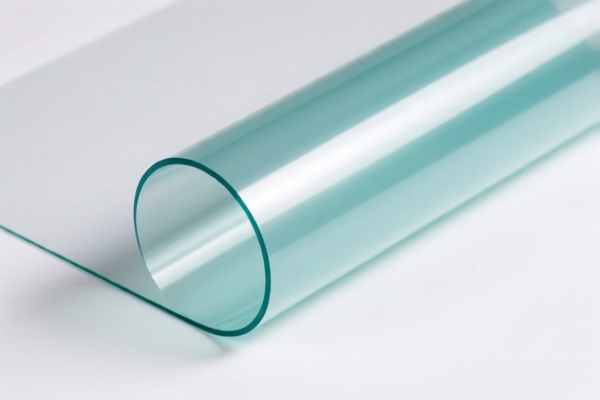
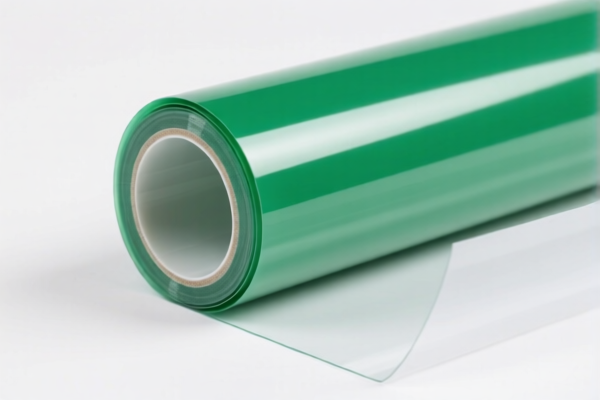
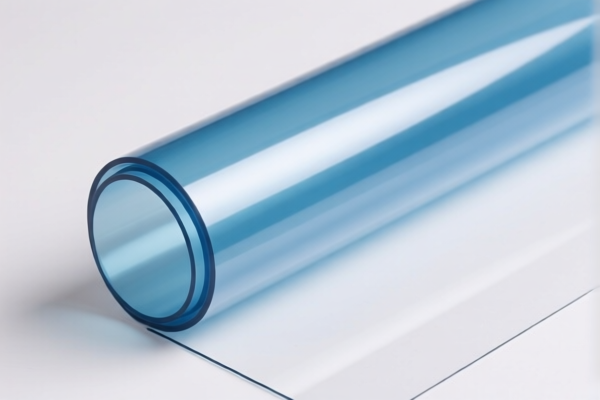
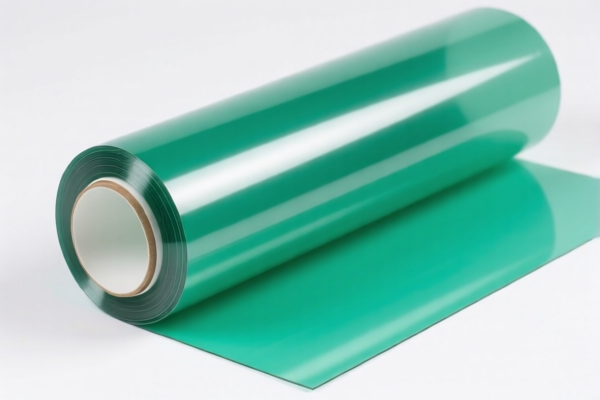
AI Analysis
🧪 Polyvinyl Butyral (PVB) Film & Sheets: The Safety Glass Backbone
🌐 HS Code Classification & Customs Clearance Guide | 2026 Latest Tariff Analysis | Professional Compliance Strategy
📌 I. Product Definition: What Exactly is PVB?
Polyvinyl Butyral (PVB) is a versatile resin primarily used as an interlayer in safety glass. It is the glue that holds laminated glass together. In international trade, it is crucial to distinguish between PVB as a finished safety component vs. PVB as a raw plastic material.
Core Characteristics: - Primary Use: Interlayer for laminated automotive and architectural glass (Safety Glass Laminating). - Form Factor: Films, sheets, plates, and strips. - Material Status: Pure plastics, not reinforced or combined with other materials (unless specified as a composite, but here we focus on the raw PVB sheets/films).
⚠️ Critical Distinction:
- If the PVB is intended for safety glass laminating or used as protective films specifically mentioned in Chapter 39 notes, it falls under specific subheadings.
- If it is general-purpose plastic film/plate (not specifically for safety glass or protective films), it falls under general plastics chapters.
- Note: The data provided links specific descriptions to HS Codes. We must follow these exact mapping rules.
📦 II. HS Code Classification Details (2026 Latest Tariff Authority)
Based on the provided data, here is the precise mapping of Polyvinyl Butyral products to their respective HS Codes.
| HS Code | Product Description | Application/Scenario | Tax Status |
|---|---|---|---|
| 3910.90 | Other films, sheets, plates, and strips, of plastics (PVB), not reinforced/laminated, not specified elsewhere | General PVB sheets/films not fitting other specific safety/protective descriptions | ⚠️ Tax Info FailedError |
| 3917.90 | Other articles of plastics (including PVB), used for safety glass laminating or as protective films | PVB interlayers for auto/windows; Protective plastic films | ⚠️ Tax Info FailedError |
| 3920.91.00.00 | Plates, sheets, film, foil, strip of plastics: Of poly(vinyl butyral) | Standard PVB Sheets/Films (Non-cellular, not reinforced). Most common for general PVB trade. | ✅ 0.0% (Base: 0%, Additional: 0%) |
| 3920.99.10.00 | Other plates, sheets, film, foil, strip: Over 0.152 mm in thickness, not in rolls, flexible | Thick PVB Sheets (>0.152mm) not in roll form. Specific physical constraint. | ✅ 0.0% (Base: 0%, Additional: 0%) |
🔍 Key Takeaway:
- HS 3910.90 & 3917.90: These codes cover specific uses (safety glass, protective films) but the tax data is unavailable/errors. Use with caution; consult local customs for manual verification.
- HS 3920.91.00.00 & 3920.99.10.00: These are clearly defined with 0% tax. They cover PVB based on physical form (sheets/films) and thickness (>0.152mm for the latter).
- 0.0% Tax Rate: This is a highly advantageous rate for PVB imports, likely due to trade agreements or specific policy exemptions for plastic sheets.
💰 III. 2026 Latest Tariff Rate Detailed Explanation
✅ Applicable Country: United States (US)
✅ Origin: China (CN) (Assumed based on typical trade patterns, but verify if origin differs)
✅ Effective Date: 2026 Current Rules
🎯 1. 3920.91.00.00 —— Polyvinyl Butyral Sheets/Films (General)
| Item | Detail |
|---|---|
| Base Tariff | 0.0% (ad valorem) |
| Additional Tariffs (USITC/IEEPA) | 0.0% (No additional duties listed in data) |
| Total Tax Rate | 0.0% |
| Tax Calculation | CIF Value × 0% = $0 |
| De Minimis Eligibility | ✅ Yes (Likely, as rate is 0%) |
| Legal Basis | HTSUS 3920.91.00.00 |
📌 Explanation:
- This code applies to PVB plates, sheets, film, foil, or strips that are non-cellular and not reinforced/laminated with other materials.
- It is the most direct code for PVB as a raw plastic material.
- Zero Tax: This is a significant cost-saving advantage. Ensure your product matches the description: Pure PVB, not already laminated into glass.
🎯 2. 3920.99.10.00 —— Thick PVB Sheets (>0.152mm)
| Item | Detail |
|---|---|
| Base Tariff | 0.0% (ad valorem) |
| Additional Tariffs | 0.0% |
| Total Tax Rate | 0.0% |
| Tax Calculation | CIF Value × 0% = $0 |
| De Minimis Eligibility | ✅ Yes |
| Legal Basis | HTSUS 3920.99.10.00 |
📌 Explanation:
- This code is for flexible PVB films/strips/sheets over 0.152 mm thick that are not in rolls.
- Thickness is Key: If your PVB is thicker than 0.152mm and sold in sheets (not rolls), use this code.
- Zero Tax: Same 0% rate. Ensure the product is not cellular (foamed) and not reinforced.
🚫 3. 3910.90 & 3917.90 —— Ambiguous Tax Status
| Item | Detail |
|---|---|
| Base Tariff | ❓ Failed to Retrieve |
| Additional Tariffs | ❓ Failed to Retrieve |
| Total Tax Rate | Error |
| Recommendation | Avoid for Automated Clearance unless manually verified |
⚠️ Warning:
- These codes may attract unspecified additional duties (e.g., Section 301 tariffs, IEEPA tariffs).
- Do NOT assume 0% for these codes.
- Use only if your product cannot be classified under 3920 (e.g., if it is a composite or specific article).
🛠️ IV. Customs Clearance Practical Advice (Pitfall Avoidance Guide)
✅ 1. Required Documentation Checklist
| Document | Mandatory | Description |
|---|---|---|
| ✅ Product Specification Sheet | ✔️ | Must specify: Material = Polyvinyl Butyral (PVB), Thickness, Form (Sheet/Film), Thickness threshold (>0.152mm?) |
| ✅ Commercial Invoice | ✔️ | Clearly state: "Polyvinyl Butyral Film/Sheet, Not Reinforced, Not Laminated" |
| ✅ HS Code Justification Memo | ✔️ | Explain why 3920.91 or 3920.99 is chosen over 3910/3917 (e.g., "Pure plastic, not safety glass assembly") |
| ✅ Material Safety Data Sheet (MSDS) | ✔️ | Required for plastic resins/films |
| ✅ Proof of Non-Reinforcement | ✔️ | Declaration that PVB is not combined with glass, metal, or other materials |
✅ 2. Declaration Tips (Key Mantra)
🔥 “Pure PVB, No Reinforcement, 0% Tax, Avoid 3910/3917!”
| Scenario | Correct Declaration | Wrong Action |
|---|---|---|
| PVB Film for Laminating Glass | 3920.91.00.00 (If pure sheet) |
❌ 3917.90 (Tax unknown/risky) |
| PVB Sheet >0.152mm, Not in Rolls | 3920.99.10.00 |
❌ 3920.91.00.00 (Wrong subheading) |
| PVB Already Laminated into Glass | ❌ Not Plastic Chapter → 7005.xx |
❌ Declaring as PVB Film |
| PVB with Reinforcement Fibers | ❌ Not 3920 → Check 3910/3921 | ❌ 3920.91.00.00 (Misclassification) |
✅ 3. Special Handling
| Situation | Handling Advice |
|---|---|
| Thickness Exactly 0.152mm | Do NOT use 3920.99.10.00. Use 3920.91.00.00 instead. |
| In Rolls vs. Sheets | 3920.99.10.00 is for NOT in rolls. If in rolls, use 3920.91.00.00 (or check other 3920 subheadings). |
| Safety Glass Interlayer | Even if used for safety glass, if it is pure PVB sheet, 3920.91.00.00 is safer and 0% tax. Avoid 3917.90 due to tax uncertainty. |
| Protective Films | If specifically marketed as "protective film," 3917.90 might be argued, but tax is unknown. 3920.91.00.00 is a safer bet for 0% tax if it fits the physical description. |
🌍 V. Global Market Comparison (2026)
| Country/Region | Recommended HS Code | Tariff Rate | Key Requirement | Note |
|---|---|---|---|---|
| 🇺🇸 USA | 3920.91.00.00 |
0.0% | Proof of Non-Reinforcement | Best Rate. Avoid 3910/3917. |
| 🇨🇳 China | 3920.91.00.00 |
5% (Typical) | CCC/RoHS (if applicable) | Lower than US, but verify current rates. |
| 🇪🇺 EU | 3920.91.00.00 |
6.5% (Typical) | CE (if end-product) | Standard plastic duty. |
| 🇬🇧 UK | 3920.91.00.00 |
6.5% (Typical) | UKCA (if end-product) | Post-Brexit rules apply. |
📌 Conclusion:
- The USA offers 0% tariff for pure PVB sheets/films under 3920.91.00.00 and 3920.99.10.00.
- Crucial: Do NOT confuse PVB sheets with laminated glass (which is Chapter 70).
- Avoid3910.90and3917.90unless you have confirmed tax rates, as they are marked "Error" in this dataset.
📌 VI. Common Errors & Pitfalls (Lessons Learned)
❌ Error 1: Declaring PVB laminated glass as PVB Film
👉 Consequence: Misclassification. PVB glass falls under 7005.xx (Glass), not 3920 (Plastics). Risk of penalty and correct duty (higher).
❌ Error 2: Using 3917.90 for PVB interlayers
👉 Consequence: Tax rate is unknown. May incur hidden Section 301/IEEPA tariffs. Use 3920.91.00.00 instead for 0% certainty.
❌ Error 3: Ignoring Thickness for 3920.99.10.00
👉 Consequence: If thickness is ≤0.152mm, you cannot use this code. Must use 3920.91.00.00.
❌ Error 4: Declaring Reinforced PVB as 3920.91.00.00
👉 Consequence: 3920.91 is for non-reinforced plastics. If reinforced, it may fall under 3920.99 or other codes. Misdeclaration leads to audit.
✅ Correct Practice:
"Polyvinyl Butyral Film, Pure Plastic, Non-Reinforced, Not in Rolls, Thickness: 0.2mm, For Safety Glass Laminating" → HS 3920.99.10.00 (0% Tax)
🎯 VII. Conclusion: Precision Saves Money!
🎯 Remember the Mantra:
🔹 "Pure PVB, No Reinforcement, 0% Tax is Real!"
🔹 "3920 is Safe, 3910/3917 is Risky!"
🔹 "Thickness Matters: >0.152mm? Use 3920.99!"
📌 Pro Tip:
Always request a Customs Ruling from US CBP if your PVB product is borderline (e.g., reinforced or composite). This locks in the 0% rate and protects against future audits.
📣 Immediate Action:
📞 Contact your freight forwarder with the exact thickness and form (roll/sheet) of your PVB.
📄 Ensure your invoice says "Polyvinyl Butyral Sheet, Not Reinforced."
🚀 Secure 0% Duty by choosing the right 3920 code!
✨ Professional Clearance Starts with Accurate Classification!
💼 Your Cost Savings Depend on This One Code Change!
Customer Reviews
About HS Code Classification
The Harmonized System (HS) is an internationally standardized nomenclature developed by the World Customs Organization (WCO) to classify traded products. Over 200 countries use the HS system as the basis for customs tariffs, trade statistics, and import/export regulations.
Each HS code follows a hierarchical structure:
- Chapter (2 digits) — Broad category of goods (e.g., Chapter 84: Machinery and Mechanical Appliances)
- Heading (4 digits) — More specific grouping within the chapter
- Subheading (6 digits) — Internationally standardized breakdown, used by all WCO member countries
- National subdivisions (8-10 digits) — Country-specific extensions for further classification, such as US HTSUS 10-digit codes
Correct HS code classification is essential for smooth customs clearance, accurate duty payment, and compliance with trade regulations. Misclassification can lead to customs delays, overpayment of duties, or penalties.
When importing from CN to US, the applicable tariff rates may include:
- Most-Favored-Nation (MFN) rate — The standard duty rate applied to WTO members
- General rate — Applied to countries without trade agreements
- Trade remedy duties — Additional tariffs such as Section 301 (anti-dumping), Section 232 (national security), or countervailing duties
The information provided on this page is for reference purposes only. For official classification, please consult with your local customs authority or a licensed customs broker.