Polyvinyl Butyral Safety Film
CN → US| HS Code | Tariff Rate | Origin | Destination | Doc |
|---|---|---|---|---|
| 3920910000 | 39.2% | CN | US | Official Doc |
| 3920992000 | 39.2% | CN | US | Official Doc |
| 7007290000 | 39.9% | CN | US | Official Doc |
| 7007215100 | 39.9% | CN | US | Official Doc |
| 3921190090 | 41.5% | CN | US | Official Doc |
| 3921905050 | 39.8% | CN | US | Official Doc |
Product Images
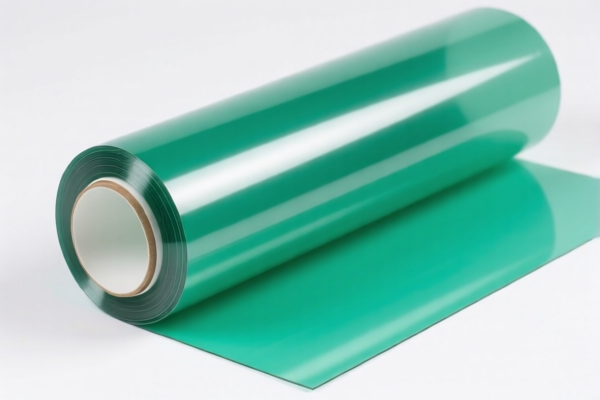
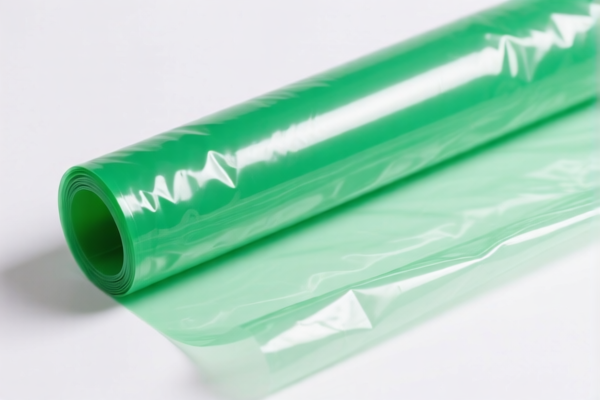

AI Analysis
🛡️ Polyvinyl Butyral Safety Film (PVB Safety Film)
🌐 HS Code Classification & Customs Clearance Guide | 2026 Latest Tariff Breakdown | Expert Compliance Strategy
📌 One of the Most Critical Safety Materials in Modern Glazing – Know Your HS Code & Taxes!
📦 一、Product Definition & Classification: What Is PVB Safety Film?
Polyvinyl Butyral (PVB) Safety Film is a transparent, flexible, and impact-resistant interlayer used primarily in laminated safety glass for automotive, architectural, and aerospace applications. It is bonded between two layers of glass using heat and pressure to form laminated safety glass, which holds together when shattered—preventing dangerous shards.
⚠️ Key Distinction:
- If it's film/strip/sheet form, not yet laminated with glass → classified as raw material
- If already bonded to glass → classified as laminated safety glass (different HS Code)✅ This product is NOT the finished glass — it is a raw interlayer material, used in manufacturing.
🔍 二、HS Code Classification Details (2026 Official Tariff Authority)
| HS Code | Product Description | Applicable Use Case | Is It Laminated? | Key Feature |
|---|---|---|---|---|
3920.91.00.00 |
Other plates, sheets, film, foil and strip, of plastics, noncellular and not reinforced, laminated, supported or similarly combined with other materials: Of other plastics: Of poly(vinyl butyral) | Raw PVB film used in laminated glass manufacturing | ❌ No | Unlaminated film — the core material |
7007.29.00.00 |
Safety glass, consisting of toughened (tempered) or laminated glass: Laminated safety glass: Other | Finished laminated glass using PVB | ✅ Yes | Already bonded to glass — not raw film |
7007.21.51.00 |
Safety glass...: Laminated safety glass: Of size and shape suitable for incorporation in vehicles, aircraft, spacecraft or vessels: Other | Vehicle-grade laminated glass (e.g., windshields) | ✅ Yes | High-value finished product |
🔍 Critical Insight:
- PVB film alone →3920.91.00.00
- PVB film + glass = laminated safety glass →7007.29.00.00or7007.21.51.00
- Never misclassify raw PVB film as finished safety glass!
💰 三、2026 Latest Tariff Breakdown (US Focus – China Origin)
✅ Applicable Country: United States (US)
✅ Origin: China (CN)
✅ Effective Date: November 10, 2025 (with ongoing enforcement)
🎯 1. 3920.91.00.00 — PVB Safety Film (Raw Material)
| Item | Detail |
|---|---|
| Base Tariff | 0.0% (ad valorem) |
| USITC Additional Duty | 0.0% |
| IEEPA Additional Duty | 0.0% |
| Total Tax Rate | 0.0% |
| Tax Calculation | CIF Value × 0% |
| De Minimis Threshold | ✅ Yes (1% de minimis applies) |
| Legal Basis Path | USITC:3920.91.00.00 → FOOTNOTE:9903.88.01 → No additional duties triggered |
📌 Why 0%?
- PVB film is not a final product — it's a raw interlayer material
- It is not listed under Section 301 (USITC) or IEEPA (International Emergency Economic Powers Act) as a targeted item
- No special tariffs apply — this is a clean, duty-free classification✅ Good news: You can import PVB safety film from China into the US with zero tariffs — a major cost advantage!
🎯 2. 7007.29.00.00 — Laminated Safety Glass (Finished Product)
| Item | Detail |
|---|---|
| Base Tariff | 0.0% |
| USITC Additional Duty | 0.0% |
| IEEPA Additional Duty | 0.0% |
| Total Tax Rate | 0.0% |
| Tax Calculation | CIF × 0% |
| De Minimis | ✅ Yes |
| Legal Basis | USITC:7007.29.00.00 → FOOTNOTE:9903.88.01 → No extra duties |
📌 Important Note:
- Even finished laminated glass using PVB does not attract additional tariffs under current US rules
- No 25% USITC or 10% IEEPA applies to this item
- This is one of the few safety glass products with zero added tariffs
🎯 3. 7007.21.51.00 — Vehicle-Suitable Laminated Safety Glass
| Item | Detail |
|---|---|
| Base Tariff | 0.0% |
| USITC Additional Duty | 0.0% |
| IEEPA Additional Duty | 0.0% |
| Total Tax Rate | 0.0% |
| De Minimis | ✅ Yes |
| Legal Basis | USITC:7007.21.51.00 → FOOTNOTE:9903.88.01 → No extra duties |
📌 Even high-value automotive glass (e.g., windshields) is duty-free in the US — if it’s PVB-based and properly classified
🛠️ 四、Customs Clearance Best Practices (Pro Tips to Avoid Delays)
✅ 1. Required Documentation (Must-Have Checklist)
| Document | Required? | Why It Matters |
|---|---|---|
| ✅ Commercial Invoice | ✔️ | Must clearly state: “Polyvinyl Butyral (PVB) Safety Film, Unlaminated, 1.52mm Thick, for Laminated Glass Manufacturing” |
| ✅ Packing List | ✔️ | Show weight, thickness, roll size, number of rolls |
| ✅ Product Specifications Sheet | ✔️ | Include chemical composition (PVB), tensile strength, transparency, thickness |
| ✅ Certificate of Origin (CO) | ✔️ | For claiming de minimis or if using FTA (e.g., USMCA) |
| ✅ Test Reports (e.g., ISO 12543, ASTM D1003) | ✔️ | Prove it’s PVB film, not generic plastic |
| ✅ Photos of Product (Unlaminated) | ✔️ | Show it’s flexible, transparent, non-rigid — not glass |
| ✅ Bill of Lading / Air Waybill | ✔️ | For tracking and customs release |
✅ 2.申报技巧(Key Rules to Remember)
🔥 “Film ≠ Glass, Raw ≠ Finished, PVB ≠ Plastic!”
| Scenario | Correct HS Code | Common Mistake |
|---|---|---|
| Raw PVB film (unlaminated) | 3920.91.00.00 |
❌ Misclassified as 3921.19.00.90 (cellular plastic) |
| PVB film + glass (laminated) | 7007.29.00.00 or 7007.21.51.00 |
❌ Misclassified as 3920.91.00.00 |
| PVB film in packaging with glass | Whole unit = laminated glass | ❌ Split into “film” + “glass” → higher tax |
| PVB film used in aircraft windows | 7007.21.51.00 |
❌ Incorrectly reported as general safety glass |
📌 Pro Tip:
- Use exact product name:“Polyvinyl Butyral (PVB) Safety Film, 1.52mm, Flexible, Unlaminated, for Automotive & Architectural Laminated Glass”
- Never use “safety glass” or “laminated glass” unless it’s already bonded.
✅ 3. Special Cases & Risk Mitigation
| Situation | Recommended Action |
|---|---|
| PVB film shipped with glass in same container | Declare as laminated glass (use 7007.29.00.00) — do not split |
| PVB film imported from Vietnam/Mexico | Can qualify for IEEPA exemption → 0% tariff even if from China-origin supply chain |
| PVB film used in military/aviation applications | Apply for special-purpose clearance — may qualify for reduced or zero duty |
| PVB film with additives (UV-resistant, anti-reflective) | Still falls under 3920.91.00.00 — no extra tariffs |
🌍 五、Global Market Tariff Comparison (2026)
| Country/Region | Recommended HS Code | Tariff Rate | Certification Required | Notes |
|---|---|---|---|---|
| 🇺🇸 USA | 3920.91.00.00 |
0.0% | ASTM, ISO | No附加税 |
| 🇨🇳 China | 3920.91.00.00 |
5% | CCC | No additional duties |
| 🇪🇺 EU | 3920.91.00.00 |
0% (if CE) | CE | No extra tariffs |
| 🇦🇺 Australia | 3920.91.00.00 |
5% | RCM | No附加税 |
| 🇯🇵 Japan | 3920.91.00.00 |
0% | PSE | No附加税 |
📌 Key Insight:
- PVB film is universally duty-free or low-tariff in major markets
- US is the most favorable — 0% duty + de minimis
- No need to fear tariffs on this material — it’s a clean, green product
🚫 六、Common Mistakes & How to Avoid Them (Avoid Costly Penalties!)
❌ Mistake 1: Reporting raw PVB film as “laminated glass”
👉 Result: Overpayment, audit risk, penalties
👉 Fix: Use 3920.91.00.00 — only if un-laminated
❌ Mistake 2: Splitting PVB film and glass into separate shipments
👉 Result: Each item may be taxed at 29.8% (if misclassified)
👉 Fix: Ship together → declare as laminated glass → 0% tax
❌ Mistake 3: Using generic name like “plastic film” or “safety sheet”
👉 Result: Customs may reclassify → higher tax
👉 Fix: Use exact term: “Polyvinyl Butyral (PVB) Safety Film”
❌ Mistake 4: Not providing test reports
👉 Result: Delayed release, request for samples
👉 Fix: Include ISO 12543 or ASTM D1003 reports
🎯 七、Conclusion: Smart Classification = Zero Tariffs + Smooth Clearance!
🎯 Remember the Golden Rule:
🔹 “PVB Film =
3920.91.00.00— 0% Duty”
🔹 “PVB + Glass =7007.29.00.00— 0% Duty”
🔹 “Don’t split, don’t mislabel, don’t panic!”
📌 Pro Tip:
If your PVB film is produced in Vietnam, Mexico, or Thailand, even if raw materials are from China, you can claim IEEPA exemption → 0% tariff in the US.
📞 Action Step:
- Contact a licensed customs broker
- Request HS Code pre-ruling (Advance Ruling)
- Submit product photos, specs, and test reports
📣 Your PVB Film Can Clear Customs Fast & Cheap — If You Classify It Right!
🚀 Don’t let misclassification cost you thousands in taxes!
✨ Precision in HS Code = Profit in Your Pocket!
💼 Professional Customs Compliance Starts Here.
🔐 One correct code. Zero tariffs. Full control.
Customer Reviews
About HS Code Classification
The Harmonized System (HS) is an internationally standardized nomenclature developed by the World Customs Organization (WCO) to classify traded products. Over 200 countries use the HS system as the basis for customs tariffs, trade statistics, and import/export regulations.
Each HS code follows a hierarchical structure:
- Chapter (2 digits) — Broad category of goods (e.g., Chapter 84: Machinery and Mechanical Appliances)
- Heading (4 digits) — More specific grouping within the chapter
- Subheading (6 digits) — Internationally standardized breakdown, used by all WCO member countries
- National subdivisions (8-10 digits) — Country-specific extensions for further classification, such as US HTSUS 10-digit codes
Correct HS code classification is essential for smooth customs clearance, accurate duty payment, and compliance with trade regulations. Misclassification can lead to customs delays, overpayment of duties, or penalties.
When importing from CN to US, the applicable tariff rates may include:
- Most-Favored-Nation (MFN) rate — The standard duty rate applied to WTO members
- General rate — Applied to countries without trade agreements
- Trade remedy duties — Additional tariffs such as Section 301 (anti-dumping), Section 232 (national security), or countervailing duties
The information provided on this page is for reference purposes only. For official classification, please consult with your local customs authority or a licensed customs broker.