Polyvinyl Chloride Elastomer General Grade
CN → US| HS Code | Tariff Rate | Origin | Destination | Doc |
|---|---|---|---|---|
| 3904210000 | 41.5% | CN | US | Official Doc |
| 3904100000 | 41.5% | CN | US | Official Doc |
| 3901901000 | 35.0% | CN | US | Official Doc |
| 4002800000 | 35.0% | CN | US | Official Doc |
| 3901909000 | 41.5% | CN | US | Official Doc |
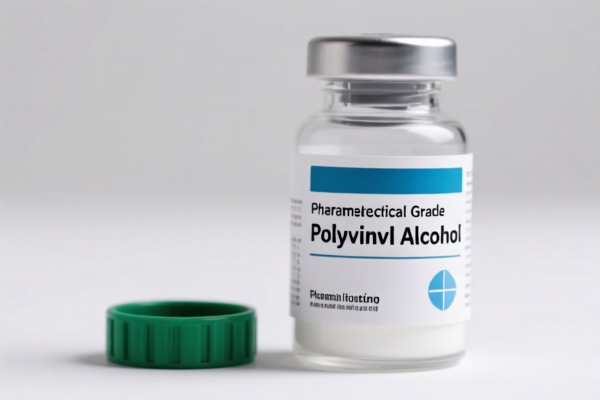
Product Images



AI Analysis
🧪 Polyvinyl Chloride Elastomer (General Grade) – Vinyl Chloride Polymers
🌐 HS Code Reference & Customs Clearance Guide | 2026 Latest Tariff Analysis | Professional Compliance Strategy
📌 I. Product Definition & Classification: Do You Really Understand PVC Elastomers?
Polyvinyl Chloride Elastomers (General Grade) belong to the broader category of halogenated olefin polymers. In international trade, these materials are classified under Chapter 39 (Plastics and Articles Thereof), specifically under heading 3904.
The term "General Grade" implies a standard elastomeric PVC compound, typically used for flexible applications such as cables, hoses, footwear, and medical tubing. Crucially, the classification depends on whether the product is explicitly labeled as "Elastomeric" or just "Other" within the same HS heading.
⚠️ Key Distinction Point: - If the material is explicitly described as "Elastomeric" (flexible, rubber-like properties) → It falls under subheading 3904.90.10.00. - If the material is PVC polymer but NOT explicitly elastomeric (or unspecified) → It falls under subheading 3904.90.50.00.
📦 II. HS Code Classification Details (2026 Latest Tariff Authority对照)
| HS Code | Product Description | Application Scenario | Tax Rate (CN Origin → US) |
|---|---|---|---|
3904.90.10.00 |
Polymers of vinyl chloride...: Other: Elastomeric | Flexible PVC compounds, rubber-like PVC, cable insulation compounds | 25.0% |
3904.90.50.00 |
Polymers of vinyl chloride...: Other: Other | Non-elastomeric PVC polymers, unspecified PVC resins | 0.0% |
🔍 Critical Note: - The description in
<DATA>explicitly splits "Other" into Elastomeric and Other. - "General Grade" PVC Elastomers are inherently Elastomeric. Therefore, they typically fall under 3904.90.10.00. - Misclassifying an elastomer as "Other" (3904.90.50.00) to avoid tariffs is a high-risk compliance error.
💰 III. 2026 Latest Tariff Rate Detailed Breakdown
✅ Applicable Country: United States (US)
✅ Origin: China (CN)
✅ Effective Time: 2025/2026 Tariff Schedule
🎯 1. 3904.90.10.00 —— PVC Elastomers (General Grade)
| Item | Content |
|---|---|
| Basic Tariff | 0.0% |
| Additional Tariff | +25.0% |
| Total Tax Rate | 25.0% |
| Tax Calculation | CIF Value × 25.0% |
| De Minimis Exemption | ❌ Not Available (Subject to Section 301) |
| Legal Basis | Section 301 Tariff: 3904.90.10.00 |
📌 Explanation: - Although the Basic Tariff is 0%, the Additional Tariff of 25% applies due to Section 301 trade actions against China. - This is a flat 25% tax on the customs value. - "General Grade" PVC Elastomers are chemically and physically elastomeric (flexible, reversible deformation), so they must be declared under 3904.90.10.00, not the "Other" category.
🎯 2. 3904.90.50.00 —— Other PVC Polymers (Non-Elastomeric)
| Item | Content |
|---|---|
| Basic Tariff | 0.0% |
| Additional Tariff | 0.0% |
| Total Tax Rate | 0.0% |
| Tax Calculation | CIF Value × 0.0% |
| De Minimis Exemption | ✅ Available (if under $800) |
| Legal Basis | Section 301 Exclusion/Non-Applicable |
📌 Warning: - This 0% rate ONLY applies if the PVC is NOT elastomeric (e.g., rigid PVC resins, unmodified PVC polymers). - PVC Elastomers cannot legally be declared under this code. Doing so constitutes misdeclaration, leading to penalties, back-taxes, and potential seizures.
🛠️ IV. Customs Clearance Practical Advice (Real-World Pitfall Avoidance)
✅ 1. Required Documentation Checklist (None Can Be Omitted)
| Document | Must Provide | Description |
|---|---|---|
| ✅ Product Specification Sheet | ✔️ | Must explicitly state "Elastomeric PVC" or "PVC Elastomer Compound" |
| ✅ MSDS / Safety Data Sheet | ✔️ | Confirms chemical composition and flexibility properties |
| ✅ Commercial Invoice | ✔️ | Must use precise description: "Polyvinyl Chloride Elastomer, General Grade" |
| ✅ Certificate of Origin (CO) | ✔️ | Required to determine origin-based tariff application |
| ✅ Packing List | ✔️ | Detailed weight and volume for valuation |
✅ 2. Declaration Tips (Key Mantra)
🔥 "Elastomer is Elastic, Not Rigid! Declare Correctly, Avoid Fines!"
| Scenario | Correct Declaration | Incorrect Action |
|---|---|---|
| PVC Elastomer Compound (Flexible, rubber-like) | 3904.90.10.00 (25% Tax) |
Misdeclare as 3904.90.50.00 → Risk of 25% Back-Tax + Penalties |
| Rigid PVC Resin (Non-elastic, powder/granules) | 3904.90.50.00 (0% Tax) |
Misdeclare as Elastomer → Unnecessary 25% cost |
| PVC Pipes (Finished articles) | Not 3904 → 3917/3918 | Declare under 3904 → Wrong Chapter |
✅ 3. Special Case Handling
| Scenario | Handling Advice |
|---|---|
| "General Grade" Ambiguity | Provide physical test reports (elongation, flexibility) to prove elastomeric nature. |
| Blends with Other Polymers | If PVC is not the principal material, classification may shift (e.g., to 3901-3903). Check primary polymer content. |
| Sample Imports | Even samples of elastomeric PVC are subject to 25% tax if declared under 3904.90.10.00. |
🌍 V. Global Market Comparison (2026 Latest)
| Country/Region | Recommended HS Code | Tariff (CN Origin) | Remarks |
|---|---|---|---|
| 🇺🇸 United States | 3904.90.10.00 |
25% | Section 301 Additional Tariff Applies |
| 🇨🇳 China | 3904.90.10.00 |
~5-7% | Standard Import Duty |
| 🇪🇺 European Union | 3904.21.00 |
~0-6% | Check if classified as PVC Elastomer under EU CN |
| 🇦🇺 Australia | 3904.21.00 |
~5% | Standard Import GST + Tariff |
| 🇯🇵 Japan | 3904.21.00 |
~5% | No Section 301 Equivalent |
📌 Conclusion: - The US market is significantly more expensive due to the 25% Section 301 tariff. - EU/Asia markets may offer lower duties if classified correctly under PVC Elastomer subheadings. - Strategic Advice: Consider supply chain diversification (e.g., Vietnam, Mexico) if exporting to the US, as these countries may be exempt from Section 301 tariffs.
📌 VI. Common Mistakes & Pitfalls (Blood & Tears Lessons)
❌ Mistake 1: Declaring "PVC Elastomer" as "Other PVC" (3904.90.50.00) to save 25%.
👉 Consequence: Customs audit reveals elastomeric properties → 25% back-tax + 10-20% penalty.
❌ Mistake 2: Using vague descriptions like "PVC Material" without specifying "Elastomeric".
👉 Consequence: Customs may default to the highest applicable duty or request additional testing → Delays & Storage Fees.
❌ Mistake 3: Confusing PVC Elastomers with PVC Finished Goods (e.g., hoses, cables).
👉 Consequence: Finished goods are classified under 3917 or 8544, not 3904. Misdeclaration leads to chapter errors.
✅ Correct Practice:
"Polyvinyl Chloride Elastomer, General Grade, Primary Form, Flexible Compound, Suitable for Cable Insulation"
🎯 VII. Conclusion: Precise Classification, Cost Control, Compliance!
🎯 Remember the Mantra:
🔹 "Elastomeric PVC = 3904.90.10.00 = 25% Tax"
🔹 "Non-Elastomeric PVC = 3904.90.50.00 = 0% Tax"
🔹 "General Grade is Elastic, Not Rigid!"
📌 Tips: - If your PVC elastomer is originating from Vietnam, Mexico, or Thailand, you may avoid the 25% US tariff. - Apply for a Pre-Ruling (Advance Ruling) from CBP to confirm the classification of "General Grade" elastomers before shipment. - Always provide technical data sheets proving the elastomeric nature to avoid disputes.
📣 Immediate Action:
📞 Consult a professional customs broker + Provide product specs + Apply for CBP Pre-Ruling
🚀 Ensure smooth customs clearance, compliance first, cost efficiency second!
✨ Professional Clearance Starts with Accurate Classification!
💼 Every dollar of tariff matters!
Customer Reviews
About HS Code Classification
The Harmonized System (HS) is an internationally standardized nomenclature developed by the World Customs Organization (WCO) to classify traded products. Over 200 countries use the HS system as the basis for customs tariffs, trade statistics, and import/export regulations.
Each HS code follows a hierarchical structure:
- Chapter (2 digits) — Broad category of goods (e.g., Chapter 84: Machinery and Mechanical Appliances)
- Heading (4 digits) — More specific grouping within the chapter
- Subheading (6 digits) — Internationally standardized breakdown, used by all WCO member countries
- National subdivisions (8-10 digits) — Country-specific extensions for further classification, such as US HTSUS 10-digit codes
Correct HS code classification is essential for smooth customs clearance, accurate duty payment, and compliance with trade regulations. Misclassification can lead to customs delays, overpayment of duties, or penalties.
When importing from CN to US, the applicable tariff rates may include:
- Most-Favored-Nation (MFN) rate — The standard duty rate applied to WTO members
- General rate — Applied to countries without trade agreements
- Trade remedy duties — Additional tariffs such as Section 301 (anti-dumping), Section 232 (national security), or countervailing duties
The information provided on this page is for reference purposes only. For official classification, please consult with your local customs authority or a licensed customs broker.