Polyvinyl Chloride Plastic Agricultural Irrigation Pipes
CN → US| HS Code | Tariff Rate | Origin | Destination | Doc |
|---|---|---|---|---|
| 3917400095 | 40.3% | CN | US | Official Doc |
| 3917400080 | 40.3% | CN | US | Official Doc |
| 3926909987 | 22.8% | CN | US | Official Doc |
| 3926909989 | 22.8% | CN | US | Official Doc |
| 8424820020 | 37.4% | CN | US | Official Doc |
| 8424820090 | 37.4% | CN | US | Official Doc |
Product Images
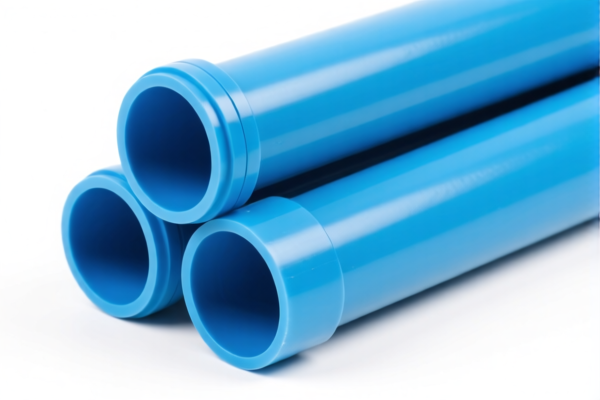
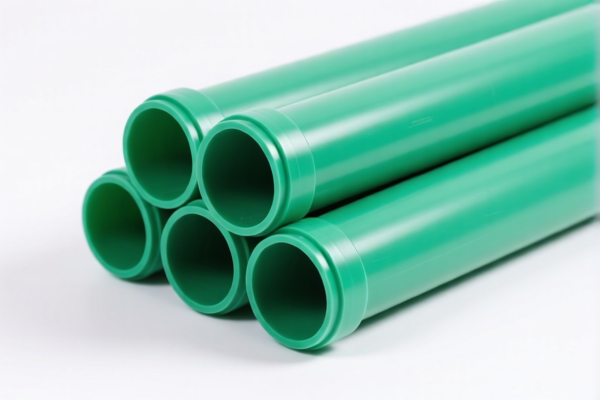
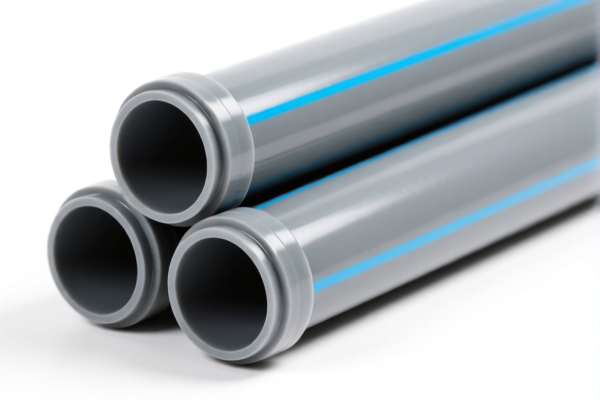
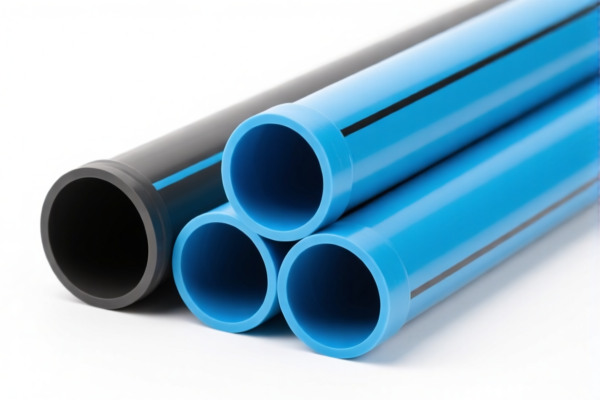
AI Analysis
🌊 Polyvinyl Chloride (PVC) Plastic Agricultural Irrigation Pipes
🌐 HS Code Reference & Customs Clearance Guide | 2026 Latest Tariff Analysis | Professional Compliance Strategy
📌 I. Product Definition and Classification: What Exactly Are "Irrigation Pipes"?
PVC Agricultural Irrigation Pipes are critical components of modern agricultural infrastructure. In international trade, they are often confused with simple plumbing pipes or generic plastic fittings. However, classification depends heavily on form (tube vs. fitting) and specific usage.
Two Main Categories in Data Context: 1. Pipes/Tubes (3917 Series): Continuous flexible or rigid tubes used for conveying water. 2. Fittings/Connectors (3917/3926 Series): Joints, elbows, tees, and adapters that connect the pipes. 3. Complete Irrigation Systems (8424 Series): If sold as a complete unit (pump + pipe network), it might be classified as machinery/equipment.
⚠️ Critical Distinction:
- If the item is a long, continuous tube (even with connectors attached if sold as a kit) → Typically 3917.40.00 or 8424.
- If the item is just a joint/adapter (no pipe length) → Typically 3917.40.00 or 3926.90.99.
- If it is a complete irrigation sprayer/device → 8424.82.00.
📦 II. HS Code Classification Details (Based on Provided Data)
| HS Code | Product Description | Key Characteristics | Primary Use Case |
|---|---|---|---|
| 3917.40.00.95 | Plastic irrigation joints/fittings | PVC material, shape: joint/fitting, fits plastic pipe accessory category | Connecting pipes, elbows, T-joints |
| 3917.40.00.80 | Plastic pipe accessories (Other) | PVC material, shape: joint/fitting, falls under "other" category | Generic plastic pipe connectors |
| 3926.90.99.87 | Other plastic articles (Joints) | PVC material, shape: joint, no conflict with other categories | General plastic fittings not strictly "pipe accessories" |
| 3926.90.99.89 | Plastic parts/accessories | PVC material, shape: other parts/accessories, meets 3901-3914 material req. | Small plastic components, loose fittings |
| 8424.82.00.20 | Other irrigation equipment | Purpose: irrigation, PVC material, fits equipment definition | Complete irrigation systems, sprayers, or pump+pipe kits |
🔍 Key Insight:
- 3917.40.00 is the most precise code for PVC pipe joints/fittings intended for fluid conveyance systems.
- 3926.90.99 is a "catch-all" for plastic articles if the specific "pipe accessory" classification (3917) is contested.
- 8424.82 applies only if the product is considered equipment/machinery (e.g., a sprinkler head with nozzle, not just a plain pipe joint).
💰 III. 2026 Latest Tariff Rate Breakdown (Including Surcharges & Policy Add-ons)
✅ Applicable Country: United States (US)
✅ Origin: China (CN)
✅ Effective Date: From 2025/2026 (subject to current IEEPA/USITC rules)
🎯 1. 3917.40.00.95 & 3917.40.00.80 — Plastic Irrigation Joints/Fittings
| Item | Detail |
|---|---|
| Base Tariff | 5.3% (Most Favored Nation Rate) |
| USITC Surcharge (Section 301) | +25.0% |
| IEEPA Surcharge (Section 122/EO) | +10.0% |
| Total Tariff Rate | 40.3% |
| Tax Calculation | CIF Value × 40.3% |
| De Minimis Exemption | ❌ Not Applicable (High value threshold not met for small parts if combined) |
| Legal Basis Path | USITC:3917.40.00.95 → Footnote 9903.88.01 (25%) → IEEPA:9903.01.24 (10%) |
📌 Explanation:
- These codes classify PVC fittings/joints.
- Total tax is 40.3%. This is a significant cost driver.
- Why so high? Because they are "plastic pipes/accessories" from China, subject to both Section 301 (25%) and IEEPA (10%) surcharges on top of the base 5.3%.
🎯 2. 3926.90.99.87 & 3926.90.99.89 — Other Plastic Parts/Accessories
| Item | Detail |
|---|---|
| Base Tariff | 5.3% |
| USITC Surcharge (Section 301) | +7.5% |
| IEEPA Surcharge (Section 122/EO) | +10.0% |
| Total Tariff Rate | 22.8% |
| Tax Calculation | CIF Value × 22.8% |
| De Minimis Exemption | ❌ Not Applicable (Likely due to value/origin rules) |
| Legal Basis Path | USITC:3926.90.99.89 → Footnote 9903.88.01 (7.5% for some plastics) → IEEPA:9903.01.24 (10%) |
📌 Explanation:
- If customs determines the PVC joint is not a "pipe accessory" (3917) but an "other plastic article" (3926), the Section 301 rate drops to 7.5% instead of 25%.
- Total tax is 22.8%. This is a lower risk/cost option if the product description allows ambiguity.
- Strategy: Argue for 3926 if the fitting is complex, non-standard, or not strictly for "pipe" connection (e.g., a valve body).
🎯 3. 8424.82.00.20 — Other Irrigation Equipment
| Item | Detail |
|---|---|
| Base Tariff | 2.4% |
| USITC Surcharge (Section 301) | +25.0% |
| IEEPA Surcharge (Section 122/EO) | +10.0% |
| Total Tariff Rate | 37.4% |
| Tax Calculation | CIF Value × 37.4% |
| De Minimis Exemption | ❌ Not Applicable |
| Legal Basis Path | USITC:8424.82.00.20 → Footnote 9903.88.01 (25%) → IEEPA:9903.01.24 (10%) |
📌 Explanation:
- Applies only if the item is a complete irrigation device (e.g., a sprinkler head, nozzle, or pump assembly).
- Total tax is 37.4%.
- Risk: High scrutiny. Must prove it is "equipment" and not just a pipe/fitting. Misclassification here can lead to penalties.
🛠️ IV. Customs Clearance Practical Advice (Battle-Tested Tips)
✅ 1. Documentation Checklist (Non-Negotiable)
| Document | Required? | Notes |
|---|---|---|
| ✅ Commercial Invoice | ✔️ | Must clearly state "PVC Irrigation Pipe Joint" or "Plastic Pipe Accessory". Avoid vague terms like "Plastic Part". |
| ✅ Product Specification Sheet | ✔️ | Include material (PVC-U, PVC-C), dimensions, pressure rating, and intended use (agricultural irrigation). |
| ✅ Product Photos | ✔️ | Clear images of the item, including any branding, part numbers, and connection threads. |
| ✅ Packing List | ✔️ | Itemize each component. If sold as a kit, list all parts. |
| ✅ Certificate of Origin | ✔️ | Essential for proving CN origin and applying surcharges correctly. |
| ✅ Import/Export License | ✔️ | If required by specific states or for certain plastic categories. |
✅ 2. Declaration Strategy (Key Mantras)
🔥 "Fit the Form, Define the Use, Avoid the 3917 Trap!"
| Scenario | Recommended HS Code | Why? |
|---|---|---|
| Standard PVC Elbow/Connector | 3917.40.00.95 or .80 |
Most accurate for "pipe accessories". But beware of 40.3% tax. |
| Complex/Non-Standard Fitting | 3926.90.99.87 or .89 |
Argue it's an "other plastic article" to reduce Section 301 to 7.5% (Total 22.8%). |
| Complete Sprinkler/Nozzle Unit | 8424.82.00.20 |
Only if it has moving parts, spray function, or is a complete device. |
| Long PVC Pipe (Tube) | Not in Data | Typically 3917.39 or 3917.29. If not listed, stick to fittings/joints in this data set. |
📌 Warning:
- Do not misclassify a simple joint as "Irrigation Equipment" (8424) unless it is a complete functional unit. Customs will reject it and apply 3917 rates + penalties.
- Do not claim "De Minimis" (Section 321) for high-value bulk shipments. The data shows no de minimis exemption for these codes.
✅ 3. Special Circumstances
| Situation | Advice |
|---|---|
| OEM/Private Label | Ensure invoices show both supplier and brand. Clarify who owns the design. |
| Kit Sales (Pipe + Fittings) | If sold as a single unit, declare as the primary component (usually the pipe) or split line items. Splitting may reduce risk but increases administrative burden. |
| Plastic Recycling Claims | If made from recycled PVC, provide documentation. May affect base tariff but not surcharges. |
| Pre-Cutting | If pipes are cut to length, they may still be "tubes". If joints are assembled, they are "fittings". |
🌍 V. Global Market Comparison (2026 Snapshot)
| Country/Region | Recommended HS Code | Estimated Duty (China Origin) | Notes |
|---|---|---|---|
| 🇺🇸 USA | 3917.40.00 or 3926.90.99 |
22.8% – 40.3% | High surcharges due to 301 & IEEPA. |
| 🇨🇳 China (Export) | 3917.40.00 |
0% (Export Duty) | No export duty, but focus on import duty in destination. |
| 🇪🇺 EU | 3917.29 or 3917.39 |
4.5% – 6.5% | No Section 301/IEEPA. Standard MFN rates apply. |
| 🇬🇧 UK | 3917.29 or 3917.39 |
4.5% – 6.5% | Post-Brexit tariffs similar to EU. |
| 🇦🇺 Australia | 3917.29 or 3917.39 |
5.0% | Free Trade Agreement with China may reduce to 0%. |
| 🇨🇦 Canada | 3917.29 or 3917.39 |
0% | CUSMA/USMCA does not apply, but MFN is 0% for some plastics. Check CETA/CEPA. |
📌 Conclusion:
- USA is the most expensive market for PVC irrigation fittings due to political tariffs.
- Diversify Supply Chains: If exporting to the US, consider assembling in Vietnam, Thailand, or Mexico to avoid CN-origin surcharges.
- EU/UK/AU are more favorable for pricing, but require strict CE/UKCA/Australian Standards compliance.
📌 VI. Common Mistakes & Pitfalls (Blood Lessons)
❌ Mistake 1: Declaring PVC Joints as "Plastic Parts" (3926) without justification.
👉 Consequence: Customs may reclassify to 3917 and charge 40.3% instead of 22.8%, plus penalties.
✅ Fix: Provide technical drawings showing the item is not a standard pipe fitting.
❌ Mistake 2: Declaring a simple joint as "Irrigation Equipment" (8424).
👉 Consequence: Customs rejects it as incomplete equipment. Returns shipment or forces reclassification.
✅ Fix: Only use 8424 for functional devices (sprinklers, pumps, nozzles).
❌ Mistake 3: Ignoring IEEPA 10% Surcharge.
👉 Consequence: Underpayment of duties. Audit findings, back taxes, and fines.
✅ Fix: Always add 10% to the base + 301 rate for CN-origin goods.
❌ Mistake 4: Assuming De Minimis applies to B2B shipments.
👉 Consequence: Shipment held at border for inspection.
✅ Fix: Declare full value on commercial invoice for B2B imports.
🎯 VII. Conclusion: Smart Classification, Lower Costs, Faster Clearance
🎯 Remember the Mantras:
🔹 "Joints are 3917 (40.3%) or 3926 (22.8%) – choose wisely!"
🔹 "Equipment is 8424 (37.4%) – only if it works, not just sits!"
🔹 "China Origin + Plastic = High Tax in the US. Plan Ahead!"
📌 Pro Tip:
- For high-volume imports, apply for a Binding Ruling from US CBP to lock in the HS code (e.g., 3926 vs 3917) before shipment.
- Consider tariff engineering: Modify the product design slightly to fall under a lower-surcharge category (e.g., from 3917 to 3926).
- Supply Chain Shift: If exporting to the US, explore Third-Country Assembly (Vietnam, Thailand, Mexico) to bypass CN surcharges.
📣 Action Required:
📞 Consult a Licensed Customs Broker before finalizing shipment documentation.
📄 Prepare Technical Datasheets to support your HS code choice.
🚀 Optimize Your Supply Chain to mitigate 40%+ tariff impacts.
✨ Professional Clearance Starts with Precise Classification!
💼 Your Bottom Line Depends on the First 8 Digits of Your HS Code!
Customer Reviews
About HS Code Classification
The Harmonized System (HS) is an internationally standardized nomenclature developed by the World Customs Organization (WCO) to classify traded products. Over 200 countries use the HS system as the basis for customs tariffs, trade statistics, and import/export regulations.
Each HS code follows a hierarchical structure:
- Chapter (2 digits) — Broad category of goods (e.g., Chapter 84: Machinery and Mechanical Appliances)
- Heading (4 digits) — More specific grouping within the chapter
- Subheading (6 digits) — Internationally standardized breakdown, used by all WCO member countries
- National subdivisions (8-10 digits) — Country-specific extensions for further classification, such as US HTSUS 10-digit codes
Correct HS code classification is essential for smooth customs clearance, accurate duty payment, and compliance with trade regulations. Misclassification can lead to customs delays, overpayment of duties, or penalties.
When importing from CN to US, the applicable tariff rates may include:
- Most-Favored-Nation (MFN) rate — The standard duty rate applied to WTO members
- General rate — Applied to countries without trade agreements
- Trade remedy duties — Additional tariffs such as Section 301 (anti-dumping), Section 232 (national security), or countervailing duties
The information provided on this page is for reference purposes only. For official classification, please consult with your local customs authority or a licensed customs broker.