Polyvinyl Chloride Plastic Corrosion Resistant Tubes
CN → US| HS Code | Tariff Rate | Origin | Destination | Doc |
|---|---|---|---|---|
| 3917400095 | 40.3% | CN | US | Official Doc |
| 3917400080 | 40.3% | CN | US | Official Doc |
| 3926305000 | 22.8% | CN | US | Official Doc |
| 3926909989 | 22.8% | CN | US | Official Doc |
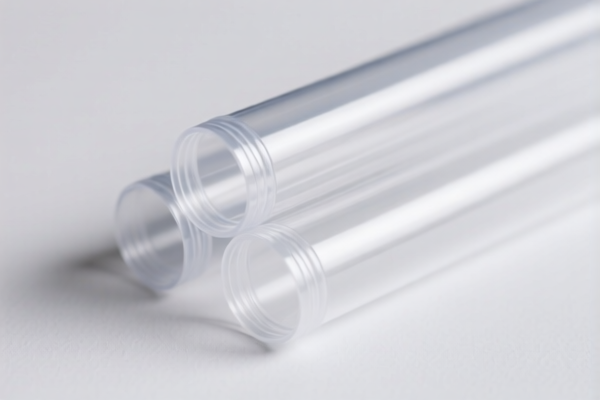
Product Images



AI Analysis
🧪 Polyvinyl Chloride (PVC) Plastic Corrosion Resistant Tubes
🌐 HS Code Reference & Clearance Guide | 2026 Latest Tariff Analysis | Professional Customs Strategy
📌 I. Product Definition & Classification: What Are "Corrosion Resistant PVC Tubes"?
PVC pipes are rigid or semi-rigid tubes made from Polyvinyl Chloride resin, widely used in industrial plumbing, chemical transport, and drainage systems due to their excellent resistance to acids, alkalis, and salts. In international trade, the classification of these products depends strictly on their physical form (pipe vs. fitting) and functional role (connection vs. transmission).
⚠️ Key Distinction:
- Tubes/Pipes: Long, continuous shapes designed for fluid/gas transport → Generally fall under 3917.
- Fittings/Accessories: Connectors, elbows, tees, couplings designed to join pipes → May fall under 3917 (if specific) or 3926 (if general accessories).
- Material: Must be explicitly "Plastic" (PVC).
📦 II. HS Code Classification Details (Based on Provided Data)
Based on the input data, here are the four possible HS Codes for "Corrosion Resistant PVC Tubes/Fittings," ranging from specific pipe categories to general accessory categories.
| HS Code | Product Description | Application Scenario | Key Classification Feature |
|---|---|---|---|
3917.40.00.95 |
Corrosion Resistant Plastic Pipe Fittings, classified under "Other plastic pipes and hoses" | Generic PVC pipes/fittings not listed elsewhere in 3917.40 | Specific Pipe Category: "Other" under plastic pipes/hoses |
3917.40.00.80 |
Corrosion Resistant Plastic Pipe Fittings, classified as "Other accessories in pipes" | Pipe accessories/accessories not specified in 3917.40 | Pipe Accessory: Explicitly under pipe accessories chapter |
3926.30.50.00 |
Corrosion Resistant Plastic Pipe Fittings, classified as "Connecting pieces/plastic articles" | General plastic connectors/fittings not specific to pipe transport | General Plastic Article: Treated as a general plastic connector |
3926.90.99.89 |
Corrosion Resistant Plastic Pipe Fittings, classified as "Other plastic articles/nosp" | Miscellaneous plastic parts/accessories not elsewhere specified | Catch-All: General plastic parts, least specific classification |
🔍 Critical Analysis:
- 3917 vs. 3926: The primary split is whether the item is considered part of the "pipe system" (3917) or a general "plastic article" (3926).
- 3917.40: Specifically covers "Other plastic pipes, tubes and hoses." Subcodes .95 and .80 are used for items that don't fit more specific pipe definitions.
- 3926: Covers "Other articles of plastics." Codes .30 (Articles for office machines) or .99 (Others) are used when the item is viewed as a generic plastic component rather than a pipe component.
💰 III. 2026 Latest Tariff Rate Breakdown (Including Additional Duties)
✅ Applicable Country: United States (US)
✅ Country of Origin: China (CN)
✅ Effective Date: Current tariffs apply (including Section 301 and Section 122/IEEPA measures)
🎯 1. 3917.40.00.95 & 3917.40.00.80 —— High Tariff Bracket (Pipe Fittings/Accessories)
These codes fall under the highest tariff impact due to their classification within the "Plastic Pipes" chapter with specific trade remedy impacts.
| Item | Details |
|---|---|
| Base Tariff Rate | 5.3% (Ad Valorem) |
| Section 301 Additional Duty | +25.0% |
| Section 122 / IEEPA Additional Duty | +10.0% |
| Total Tariff Rate | 40.3% |
| Calculation Base | CIF Value (Cost, Insurance, Freight) × 40.3% |
| De Minimis Exemption? | ❌ No (Denied for these categories) |
| Legal Path | Section 301: 9903.88.01 + Section 122: 9903.01.10 + USITC: 3917.40 |
📌 Explanation:
- The 25% is the standard Section 301 duty on many Chinese plastic products.
- The 10% is an additional penalty tariff (often referred to as Section 122 or specific IEEPA measures) applied to this specific category.
- Total 40.3% is a significant cost driver. Clear documentation proving the product is a "pipe fitting" (not a general plastic toy or household item) is crucial to avoid misclassification.
🎯 2. 3926.30.50.00 & 3926.90.99.89 —— Lower Tariff Bracket (General Plastic Articles)
These codes attract a lower additional duty rate, resulting in a lower total tax burden.
| Item | Details |
|---|---|
| Base Tariff Rate | 5.3% (Ad Valorem) |
| Section 301 Additional Duty | +7.5% |
| Section 122 / IEEPA Additional Duty | +10.0% |
| Total Tariff Rate | 22.8% |
| Calculation Base | CIF Value × 22.8% |
| De Minimis Exemption? | ❌ No (Denied for these categories) |
| Legal Path | Section 301: 9903.88.01 + Section 122: 9903.01.10 + USITC: 3926 |
📌 Explanation:
- The 7.5% additional duty is significantly lower than the 25% applied to the 3917 codes. This suggests that if the product can be legally justified as a "general plastic connector" or "accessory" rather than a "pipe fitting," substantial savings are possible.
- Total 22.8% is still high compared to non-China origins but much more competitive than 40.3%.
🛠️ IV. Customs Clearance Practical Advice (Avoiding Pitfalls)
✅ 1. Document Checklist (Essential for Clearance)
| Document | Required | Notes |
|---|---|---|
| Product Specifications | ✔️ | Must specify: Material (PVC), Diameter, Wall Thickness, Pressure Rating |
| Product Photos | ✔️ | Clear images showing shape (pipe vs. fitting), labels, and packaging |
| Commercial Invoice | ✔️ | Must describe item as "PVC Pipe Fitting" or "Plastic Connector" – be consistent with HS Code chosen |
| Packing List | ✔️ | Detail weight, dimensions, and number of pieces |
| Origin Certificate | ✔️ | Proves China origin (triggers the additional tariffs) |
| HS Code Pre-Ruling | ✔️ | Highly Recommended due to the 40.3% vs. 22.8% difference |
✅ 2. Strategic Declaration Tips
🔥 "Fit vs. Pipe: The 17.5% Difference"
| Scenario | Recommended HS Code | Total Tax | Strategy |
|---|---|---|---|
| Straight Pipes / Long Tubes | 3917.40.00.95 |
40.3% | Inevitable for long pipes. Ensure description matches "Pipe." |
| Elbows, Tees, Couplings | 3926.30.50.00 or 3926.90.99.89 |
22.8% | Argue as "General Plastic Accessories" or "Connectors" if structural design allows. Avoid calling them "Pipe Fittings" in description if possible. |
| Composite Kits | Consult Expert | Variable | Do not split invoices arbitrarily. Declare as a single unit if sold together. |
📌 Key Insight:
- If the item is a simple connector (e.g., a plastic sleeve or adapter) without complex threading or welding requirements, consider 3926 (22.8%).
- If the item is a standard pipe fitting (elbow, tee, reducer) designed to fit specific PVC pipe dimensions, customs may enforce 3917 (40.3%).
- Misclassification Risk: Declaring a standard fitting as3926to save tax may trigger an audit if the product is clearly a pipe accessory. Always have a strong technical justification.
✅ 3. Special Considerations
| Issue | Solution |
|---|---|
| Section 122 Tariff (10%) | Apply to all listed codes. No exemption for plastic tubes/fittings from China. |
| Section 301 Tariff (25% vs 7.5%) | This is the main variable. Focus on whether the product is classified under 3917 (25%) or 3926 (7.5%). |
| Material Declaration | Must explicitly state "Polyvinyl Chloride (PVC)" to ensure correct heading (39 vs 84/85 for mechanical parts). |
| Usage Declaration | State "For industrial fluid transport" or "For chemical drainage" to support the "Corrosion Resistant" claim and justify PVC material. |
🌍 V. Global Market Comparison (2026 Overview)
| Country | HS Code Range | Estimated Total Tariff | Notes |
|---|---|---|---|
| 🇺🇸 USA | 3917.40.00 / 3926.90 |
22.8% – 40.3% | High due to Section 301 + Section 122. |
| 🇨🇳 China | 3917.40 / 3926.90 |
~0% – 5% | Low import duty, but consider export taxes. |
| 🇪🇺 EU | 3917.40 / 3926.90 |
0% – 6.5% | Generally lower tariffs, no US-style additional duties. |
| 🇬🇧 UK | 3917.40 / 3926.90 |
~0% – 5% | Post-Brexit tariff schedules similar to EU. |
| 🇲🇽 Mexico | 3917.40 / 3926.90 |
~0% – 5% | Favorable under USMCA if local content rules met. |
📌 Conclusion:
- The USA is the most challenging market for PVC fittings/tubes from China due to the layered tariff structure (Base + Section 301 + Section 122).
- For exports to the US, accurate classification between 3917 and 3926 is the single most important factor in cost control.
📌 VI. Common Mistakes & Pitfalls (Lessons Learned)
❌ Mistake 1: Declaring all PVC items as 3917.40 (40.3%) when they could be 3926 (22.8%).
👉 Risk: Overpayment of duty.
👉 Fix: Evaluate if the item is a "general plastic article" (connector) vs. "pipe accessory."
❌ Mistake 2: Failing to declare the material as "PVC" or "Plastic."
👉 Risk: Misclassification into metal or mechanical headings, leading to fines.
👉 Fix: Clearly state "Polyvinyl Chloride Plastic" in the commercial invoice.
❌ Mistake 3: Ignoring Section 122 (10%) in cost calculations.
👉 Risk: Profit margin erosion due to unexpected additional duties.
👉 Fix: Include the 10% IEEPA/Section 122 duty in all FOB pricing.
✅ Correct Practice:
"PVC Corrosion Resistant Pipe Fitting, Model XYZ, for Industrial Chemical Drainage, Material: PVC, Country of Origin: China"
🎯 VII. Conclusion: Optimize Tariffs Through Precise Classification
🎯 Key Takeaway:
🔹 "3917 is 40.3%, 3926 is 22.8%. The difference is 17.5%!"
🔹 "Section 301 hits pipes harder. General plastics are cheaper."
🔹 "Always include the 10% Section 122 surcharge in your budget."
📌 Recommendation:
- If the product is a standard pipe fitting (elbow, tee, coupling), prepare for 40.3% under 3917.40.00.95/80.
- If the product is a unique connector or general plastic part, argue for 22.8% under 3926.30.50.00 or 3926.90.99.89.
- Always seek a US Customs Pre-Ruling to lock in the lower 22.8% rate if justifiable, avoiding post-clearance audits and back-taxes.
✨ Professional customs compliance saves money. Accurate HS codes are your first line of defense! 💼
📞 Consult a licensed customs broker before shipping to ensure optimal classification.
Customer Reviews
About HS Code Classification
The Harmonized System (HS) is an internationally standardized nomenclature developed by the World Customs Organization (WCO) to classify traded products. Over 200 countries use the HS system as the basis for customs tariffs, trade statistics, and import/export regulations.
Each HS code follows a hierarchical structure:
- Chapter (2 digits) — Broad category of goods (e.g., Chapter 84: Machinery and Mechanical Appliances)
- Heading (4 digits) — More specific grouping within the chapter
- Subheading (6 digits) — Internationally standardized breakdown, used by all WCO member countries
- National subdivisions (8-10 digits) — Country-specific extensions for further classification, such as US HTSUS 10-digit codes
Correct HS code classification is essential for smooth customs clearance, accurate duty payment, and compliance with trade regulations. Misclassification can lead to customs delays, overpayment of duties, or penalties.
When importing from CN to US, the applicable tariff rates may include:
- Most-Favored-Nation (MFN) rate — The standard duty rate applied to WTO members
- General rate — Applied to countries without trade agreements
- Trade remedy duties — Additional tariffs such as Section 301 (anti-dumping), Section 232 (national security), or countervailing duties
The information provided on this page is for reference purposes only. For official classification, please consult with your local customs authority or a licensed customs broker.