Polyvinyl Chloride Resin Construction Grade
CN → US| HS Code | Tariff Rate | Origin | Destination | Doc |
|---|---|---|---|---|
| 3915300000 | 35.0% | CN | US | Official Doc |
| 3915900090 | 35.0% | CN | US | Official Doc |
| 3904100000 | 41.5% | CN | US | Official Doc |
| 3904220000 | 41.5% | CN | US | Official Doc |
| 3904210000 | 41.5% | CN | US | Official Doc |
Product Images

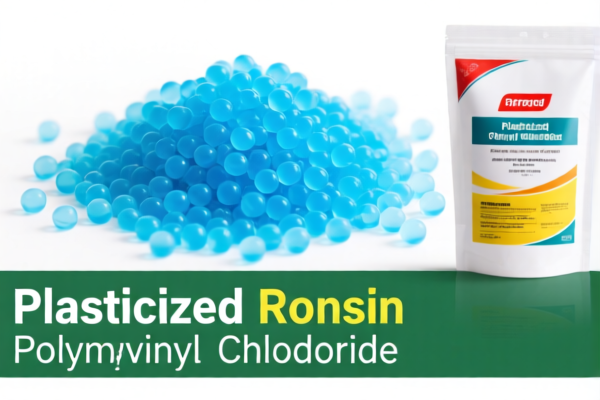
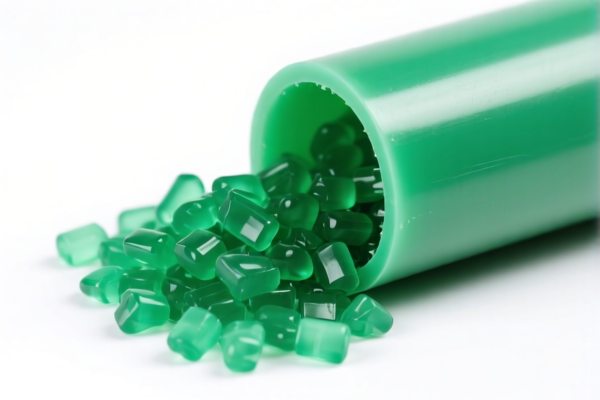
AI Analysis
🏗️ Polyvinyl Chloride Resin (Construction Grade)
🌐 HS Code Reference & Customs Clearance Guide | 2026 Latest Tariff Analysis | Professional Level Strategy
📌 I. Product Definition & Classification: What Exactly is "Construction Grade" PVC?
Polyvinyl Chloride (PVC) Resin is a versatile thermoplastic polymer widely used in construction for pipes, fittings, profiles, and siding. In international trade, the classification depends strictly on the chemical structure and physical form, not just its end-use application (even if labeled "construction grade").
Key Distinction:
- Primary Form (Resin/Powder/Granules): Raw PVC polymer before it is compounded with additives. This is what is typically traded.
- Finished Construction Products: Pipes, window frames, etc. (Not covered in this specific data set).
⚠️ Critical Classification Point:
- If the product is unplasticized PVC (uPVC) resin in primary form (powders/granules), it generally falls under Heading 3904.
- If the product is a waste, scrap, or off-cut from the manufacturing process, it falls under Heading 3915.
- "Construction Grade" is a marketing term for purity or molecular weight, not an HS Code category. Customs looks at the chemical nature, not the intended downstream use.
📦 II. HS Code Classification Details (2026 Latest Tariff Alignment)
Based on the provided dataset, here are the precise HS Codes and their corresponding descriptions for PVC Resin. Note that "Construction Grade" resin itself is likely classified under 3904 series unless it is scrap.
| HS Code | Product Description | Application/Context | Form |
|---|---|---|---|
3904.10.00.00 |
PVC Resin, Vinyl Chloride Polymer Primary Form | Raw PVC resin, general purpose, often used in pipes/profiles | ✅ Primary Form (Resin) |
3904.21.00.00 |
PVC Resin, Primary Form / Shape | Unplasticized PVC (uPVC) resin, primary form | ✅ Primary Form (Resin) |
3904.22.00.00 |
PVC Resin, Polymer Primary Form | Specific subtype of PVC polymer in primary form | ✅ Primary Form (Resin) |
3915.30.00.00 |
PVC Resin, High Chlorine Content Grade | Scrap/Waste/Off-cuts from PVC manufacturing | ❌ Scrap/Waste |
3915.90.00.90 |
PVC Resin, Other Plastic Range, Primary Form | Scrap/Waste of other PVC types | ❌ Scrap/Waste |
🔍 Important Note for "Construction Grade":
- If you are importing new raw PVC resin (powder/granules) for making construction pipes/frames, you are likely importing under 3904 (e.g.,3904.10.00.00or3904.21.00.00).
- If you are importing PVC scrap/off-cuts from a construction site or factory, you must use 3915 codes.
- Do not classify new resin as3915(scrap) to avoid customs rejection.
💰 III. 2026 Latest Tariff Rate Breakdown (Including Surcharges)
✅ Applicable Country: United States (US)
✅ Country of Origin: China (CN)
✅ Effective Date: 2025 onwards (including subsequent imports)
🎯 1. 3904.10.00.00 / 3904.21.00.00 / 3904.22.00.00 — Raw PVC Resin (Primary Form)
These are the primary HS Codes for new PVC resin used in manufacturing (including construction materials).
| Item | Details |
|---|---|
| Base Tariff Rate | 6.5% (Ad Valorem) |
| Section 301 Surcharge | +25.0% (Due to China origin) |
| Section 122 Surcharge | +10.0% (Specific provision for certain chemical products) |
| Total Tax Rate | 41.5% |
| Tax Calculation | CIF Value × 41.5% |
| De Minimis Eligibility | ❌ Not Eligible (Value exceeds threshold, plus surcharges apply) |
| Legal Basis Path | Base: 3904.10/21/22 → 301: 25% → 122: 10% |
📌 Explanation:
- The 6.5% is the standard Most Favored Nation (MFN) rate.
- The 25% is the Section 301 tariff targeting Chinese goods.
- The 10% is the Section 122 tariff, often applied to specific chemical intermediates.
- Total: 41.5%. This is a high tariff burden. Importers must factor this into cost models.
🎯 2. 3915.30.00.00 / 3915.90.00.90 — PVC Scrap/Waste/Off-cuts
These codes apply only if the product is waste, scrap, or off-cuts from PVC manufacturing.
| Item | Details |
|---|---|
| Base Tariff Rate | 0.0% |
| Section 301 Surcharge | +25.0% (Due to China origin) |
| Section 122 Surcharge | +10.0% |
| Total Tax Rate | 35.0% |
| Tax Calculation | CIF Value × 35.0% |
| De Minimis Eligibility | ❌ Not Eligible |
| Legal Basis Path | Base: 3915.30/90 → 301: 25% → 122: 10% |
📌 Explanation:
- While the base rate is lower (0%), the surcharges remain the same.
- Total: 35.0%.
- ⚠️ Warning: If you are importing new resin but declare it as scrap (3915) to save 6.5%, you risk customs seizure, penalties, and misdeclaration charges. Only use3915for actual waste/scrap.
🛠️ IV. Customs Clearance Practical Advice (Real-World Pitfall Guide)
✅ 1. Documentation Checklist (Essential)
| Document | Required | Notes |
|---|---|---|
| ✅ Product Specification Sheet | ✔️ | Must specify: PVC type (uPVC/Plasticized), molecular weight, viscosity, chlorine content. |
| ✅ Commercial Invoice | ✔️ | Must clearly state: "PVC Resin, Primary Form" or "PVC Scrap" depending on HS Code. |
| ✅ Certificate of Origin (CO) | ✔️ | Essential for confirming China origin (triggers 301/122 tariffs). |
| ✅ Bill of Lading | ✔️ | Must match invoice description. |
| ✅ Packaging List | ✔️ | Specify net/gross weight. PVC resin is often in 25kg bags. |
| ✅ Lab Test Report | ❓ (Optional but recommended) | Proves chlorine content or polymer type if customs questions classification. |
✅ 2. Classification Strategy (Key Mnemonic)
🔥 "New Resin: 3904 (41.5%). Scrap: 3915 (35.0%). Misclassify = Penalty!"
| Scenario | Correct HS Code | Tariff | Common Mistake |
|---|---|---|---|
| New PVC Resin (Powder/Granules) for pipes/profiles | 3904.10.00.00 or 3904.21.00.00 |
41.5% | Declaring as "Plastic Raw Material" (vague) → Audit risk |
| PVC Scrap/Off-cuts from factory | 3915.30.00.00 |
35.0% | Declaring as "Resin" → Higher tax + Misdeclaration |
| Finished PVC Pipes (Construction) | 3917.23.00.00 (Not in dataset) |
Varies | Using PVC Resin code for pipes → Refused Entry |
📌 Key Advice:
- "Construction Grade" is not a customs term. Use technical specifications (e.g., "K-value," "Viscosity," "Chlorine Content") in your declaration.
- If importing uPVC Resin (for pipes), use3904.21.00.00.
- If importing general PVC Resin, use3904.10.00.00.
- Never mix new resin and scrap in the same shipment without clear separation and documentation.
✅ 3. Special Cases & Pitfalls
| Situation | Handling Advice |
|---|---|
| Mixed Shipments (Resin + Scrap) | Declare separately. Scrap under 3915, Resin under 3904. Mixed declaration causes delays. |
| Re-granulated PVC | If it’s re-granulated from scrap, it may still be considered "scrap" (3915) or "secondary raw material" (3901/3904). Get a pre-ruling. |
| Additives Included | If the resin is pre-compounded with stabilizers/lubricants (still powder/granules), it may still be 3904. If it’s ready-to-use pellets for injection molding, check if it’s considered "compound" (3901/3902). |
| Low-Value Samples | De Minimis ($800) does not apply due to Section 301/122 surcharges on Chinese goods. Even small shipments incur tax. |
🌍 V. Global Market Comparison (2026)
| Country/Region | Recommended HS Code (New Resin) | Base Tariff | Section 301/122 | Total Estimated Tax | Notes |
|---|---|---|---|---|---|
| 🇺🇸 USA | 3904.10.00.00 |
6.5% | +35% (301+122) | 41.5% | High barrier for Chinese PVC. |
| 🇨🇳 China | 3904.10.00.00 |
5-6.5% | None | ~6.5% | Domestic production dominates. |
| 🇪🇺 EU | 3904.10 (8-digit: 3904 10 00) |
6.5% | None | 6.5% | No Section 301. Lower cost. |
| 🇻🇳 Vietnam | 3904.10 |
0-5% | None (if origin verified) | ~5% | Potential for supply chain shift. |
| 🇲🇽 Mexico | 3904.10 |
0-5% | None (if USMCA origin) | ~5% | Nearshoring opportunity. |
📌 Conclusion:
- USA is the most expensive market for Chinese PVC due to 35% in surcharges.
- Consider origin diversification (Vietnam, Mexico, Thailand) to reduce tariff burden.
- If importing to the US, budget for 41.5% duty on new PVC resin.
📌 VI. Common Errors & Pitfall Guide (Blood Lessons)
❌ Error 1: Declaring New PVC Resin as Scrap (3915) to save 6.5%
👉 Consequence: Customs audit, penalty for misdeclaration, possible seizure.
👉 Fix: Only use 3915 for actual waste/off-cuts. Provide photos showing waste characteristics.
❌ Error 2: Using Generic Description ("Plastic Resin") without specifying PVC
👉 Consequence: Customs may assign a higher default rate or request additional documentation, causing delays.
👉 Fix: Clearly state "Polyvinyl Chloride (PVC) Resin, Primary Form."
❌ Error 3: Ignoring Section 122 Tariff
👉 Consequence: Underpayment of 10%, leading to post-clearance audits and interest.
👉 Fix: Always check if your product is subject to Section 122. PVC resin is subject to it.
❌ Error 4: Assuming Construction Grade has a special tax rate
👉 Consequence: Customs rejects the classification as "non-standard."
👉 Fix: Use technical specs (K-value, viscosity) to justify the 3904 subheading.
✅ Correct Declaration Example:
"PVC RESIN, POLYVINYL CHLORIDE, PRIMARY FORM, UNPLASTICIZED (uPVC), K-VALUE 67, FOR PIPE EXTRUSION, CHINA ORIGIN, HS 3904.21.00.00"
🎯 VII. Conclusion: Professional Declaration, Save Costs, Ensure Compliance
🎯 Remember the Mantra:
🔹 "New Resin = 3904 (41.5%). Scrap = 3915 (35.0%). No Mixing! No Guessing!"
🔹 "301 & 122 Add 35%. Budget for 41.5% Total Duty."
📌 Pro Tip:
- If your PVC resin is originating from Vietnam, Mexico, or Thailand, you may avoid Section 301/122 tariffs, reducing the total tax to 6.5%.
- Apply for a Pre-Ruling (ISF/9510) if you are unsure about the classification of "Construction Grade" resins with additives.
- Consult a Licensed Customs Broker to verify your product’s specific K-value and polymerization degree against the 3904 subheadings.
📣 Immediate Action:
📞 Contact a Customs Broker + Provide Product Spec Sheet + Confirm Origin
🚀 Let Your PVC Resin Clear Customs Smoothly, Control Costs, and Boost Profit Margins!
✨ Professional Customs Clearance Starts with Precise Classification!
💼 Every Percent of Duty Counts!
Customer Reviews
About HS Code Classification
The Harmonized System (HS) is an internationally standardized nomenclature developed by the World Customs Organization (WCO) to classify traded products. Over 200 countries use the HS system as the basis for customs tariffs, trade statistics, and import/export regulations.
Each HS code follows a hierarchical structure:
- Chapter (2 digits) — Broad category of goods (e.g., Chapter 84: Machinery and Mechanical Appliances)
- Heading (4 digits) — More specific grouping within the chapter
- Subheading (6 digits) — Internationally standardized breakdown, used by all WCO member countries
- National subdivisions (8-10 digits) — Country-specific extensions for further classification, such as US HTSUS 10-digit codes
Correct HS code classification is essential for smooth customs clearance, accurate duty payment, and compliance with trade regulations. Misclassification can lead to customs delays, overpayment of duties, or penalties.
When importing from CN to US, the applicable tariff rates may include:
- Most-Favored-Nation (MFN) rate — The standard duty rate applied to WTO members
- General rate — Applied to countries without trade agreements
- Trade remedy duties — Additional tariffs such as Section 301 (anti-dumping), Section 232 (national security), or countervailing duties
The information provided on this page is for reference purposes only. For official classification, please consult with your local customs authority or a licensed customs broker.