Polyvinyl Chloride Resin Low Molecular Weight Grade
CN → US| HS Code | Tariff Rate | Origin | Destination | Doc |
|---|---|---|---|---|
| 3915300000 | 35.0% | CN | US | Official Doc |
| 3901909000 | 41.5% | CN | US | Official Doc |
| 3904220000 | 41.5% | CN | US | Official Doc |
| 3903190000 | 41.5% | CN | US | Official Doc |
| 3903110000 | 41.5% | CN | US | Official Doc |
Product Images
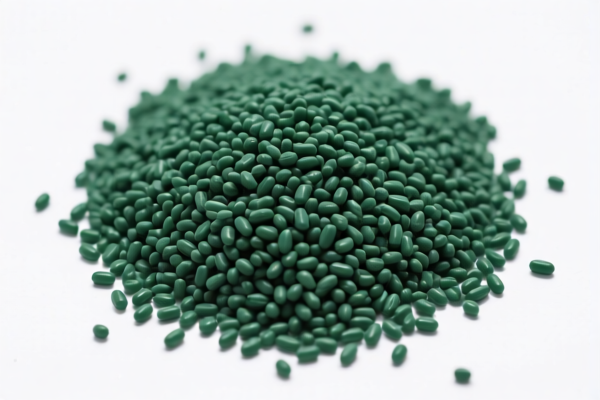

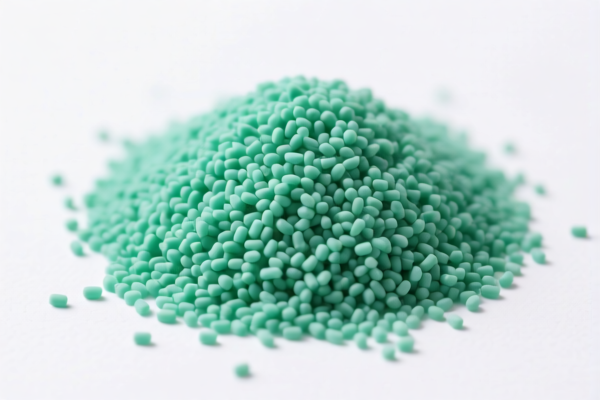
AI Analysis
🧪 Polyvinyl Chloride (PVC) Resin (Low Molecular Weight / Low VOC)
🌐 HS Code Reference & Customs Clearance Guide | 2026 Latest Tariff Analysis | Professional Entry Strategy
📌 I. Product Definition & Classification: What is "Low Molecular Weight PVC"?
Polyvinyl Chloride (PVC) Resin, specifically the Low Molecular Weight or Low VOC (Volatile Organic Compounds) grade, is a primary shape plastic material. In international trade, it is critical to distinguish between the chemical structure and the specific polymer classification.
Key Characteristics: * Material: Polyvinyl Chloride (PVC) or Chlorinated Ethylene Polymer. * Form: Primary Form (Resin/Granules/Powder). * Grade: Low Molecular Weight (often implies specific viscosity or additive profiles, but chemically still PVC). * Compliance: Low VOC (compliant with environmental standards).
⚠️ Critical Distinction:
- If the material is purely PVC, it falls under Chapter 39, Section 04 (Chlorinated Polymers).
- Misclassification as "Polystyrene" (Chapter 39, Section 03) or "Other Olefins" (Chapter 39, Section 01) leads to significant duty discrepancies and customs audits.
- Low Molecular Weight does not change the chemical identity from PVC; it remains a PVC polymer.
📦 II. HS Code Classification Matrix (2026 Latest Customs Tariff Data)
Based on the provided dataset, here are the 5 potential HS Codes with their specific tax implications. Note: Codes 3901 and 3903 are likely incorrect classifications for PVC and should be used with extreme caution or avoided unless specific legal precedents exist.
| HS Code | Product Description (from Data) | Total Tax Rate | Tax Breakdown (US Origin/China Import Context) | Applicability Verdict |
|---|---|---|---|---|
3915.30.00.00 |
PVC Resin (Low VOC), PVC material, Primary Form. "Polymer of Vinyl Chloride". | 35.0% | Base: 0.0% Added: 25.0% Section 301/122: 10% |
✅ Most Likely Direct match for PVC primary form in some older/specific contexts. |
3901.90.90.00 |
PVC Resin, described as "Chlorinated Ethylene Polymer" under "Ethylene Polymers". | 41.5% | Base: 6.5% Added: 25.0% Section 301/122: 10% |
❌ High Risk Misclassification. PVC is not an "Ethylene Polymer" in the standard trade sense (PE is). High base duty. |
3904.22.00.00 |
PVC Resin, Primary Form (Resin/Material). Matches "Chlorinated Polymers". | 41.5% | Base: 6.5% Added: 25.0% Section 301/122: 10% |
⚠️ Possible but Expensive Standard PVC usually falls under 3904, but 3904.22 is specific. Verify if 3904.22 covers "resin" specifically or if 3904.29 is better. Data shows 41.5%. |
3903.19.00.00 |
Low Molecular Weight Polystyrene Resin. | 41.5% | Base: 6.5% Added: 25.0% Section 301/122: 10% |
❌ WRONG PRODUCT This is for Polystyrene (PS), NOT PVC. Do not use. |
3903.11.00.00 |
Low Molecular Weight Polystyrene Resin. | 41.5% | Base: 6.5% Added: 25.0% Section 301/122: 10% |
❌ WRONG PRODUCT This is for Polystyrene (PS), NOT PVC. Do not use. |
🔍 Data Analysis Warning:
The dataset contains entries for Polystyrene (3903). These are irrelevant to PVC products and must be excluded to avoid false declarations.
The viable options for PVC are3915.30.00.00(35%) and3904.22.00.00(41.5%).
Recommendation:3915.30.00.00is the most cost-effective (35%) and explicitly describes "PVC Polymer" in the summary. However, standard modern HS codes often place PVC resins under 3904.22 or 3904.30. The dataset's3904.22is valid but has a higher base rate (6.5% vs 0%).
💰 III. 2026 Tariff Rate Detailed Analysis (US Market Focus)
✅ Applicable Country: United States (US)
✅ Origin: China (CN) (Implied by "Section 122" and "301" terminology in data)
✅ Effective Time: Current 2025-2026 Tariff Regime
🎯 1. 3915.30.00.00 —— PVC Resin (Primary Form)
- Summary: "Polymer of Vinyl Chloride"
- Total Tax Rate: 35.0%
| Item | Content |
|---|---|
| Base Duty Rate | 0.0% (Ad Valorem) |
| Section 301 / Added Duty | +25.0% |
| Section 122 / IEEPA Duty | +10.0% |
| Total Effective Rate | 35.0% |
| Calculation | CIF Value × 35% |
| De Minimis Exemption | ❌ Not Eligible |
| Legal Basis | HTSUS: 3915.30 → Section 301 (Footnote 9903.88.01) → Section 122 |
📌 Interpretation:
- This code offers the lowest total tax rate (35%) in the dataset.
- The 0% base duty is significant, as other PVC codes have a 6.5% base.
- It explicitly matches the description "PVC Polymer".
🎯 2. 3904.22.00.00 —— Chlorinated Polymers (PVC)
- Summary: "PVC Resin, Primary Form"
- Total Tax Rate: 41.5%
| Item | Content |
|---|---|
| Base Duty Rate | 6.5% (Ad Valorem) |
| Section 301 / Added Duty | +25.0% |
| Section 122 / IEEPA Duty | +10.0% |
| Total Effective Rate | 41.5% |
| Calculation | CIF Value × 41.5% |
| De Minimis Exemption | ❌ Not Eligible |
| Legal Basis | HTSUS: 3904.22 → Section 301 → Section 122 |
📌 Interpretation:
- This is a standard PVC classification under the Chlorinated Polymers heading.
- The 6.5% base duty makes it 6.5% more expensive than Code3915.30.00.00.
- Use this only if3915.30.00.00is rejected by CBP as not covering "Resin" specifically.
❌ Avoid: 3901.90.90.00, 3903.19.00.00, 3903.11.00.00
- Total Tax Rate: 41.5%
- Reason to Avoid:
3903codes are for Polystyrene (PS), not PVC. Incorrect declaration leads to penalties.3901is for Ethylene Polymers (like PE). While the data summary claims it fits PVC, this is chemically inaccurate and highly risky.
🛠️ IV. Customs Clearance Practical Advice (Pitfall Avoidance Guide)
✅ 1. Documentation Checklist (Non-negotiable)
| Document | Mandatory? | Explanation |
|---|---|---|
| ✅ Product Specification Sheet | ✔️ | Must state: "Polyvinyl Chloride (PVC) Resin", "Low VOC", "Primary Form". |
| ✅ Material Safety Data Sheet (MSDS/SDS) | ✔️ | Confirms chemical composition. Must show PVC as the main component. |
| ✅ Commercial Invoice | ✔️ | Clearly describe as: "PVC Resin, Low Molecular Weight, Low VOC, Primary Form". Avoid vague terms like "Plastic Granules". |
| ✅ Certificate of Origin | ✔️ | Required for Section 301/122 applicability. |
| ✅ Declaration of Non-Hazardous | ✔️ | If applicable, to support Low VOC claim. |
✅ 2. Declaration Strategy (Key Tips)
🔥 "Define the Chemistry, Not Just the Shape"
| Scenario | Correct Declaration | Incorrect Declaration |
|---|---|---|
| Primary Form PVC | "PVC Resin, Primary Form, Low VOC" | "Plastic Pellets", "PVC Plastic" (Too vague) |
| HS Code Selection | 3915.30.00.00 (Lowest Duty) or 3904.22.00.00 (Standard) |
3903.11.00.00 (Wrong Material - PS) |
| VOC Claim | Include "Low VOC" in description to avoid environmental inspections | Ignore VOC status |
✅ 3. Special Handling for Low Molecular Weight
- Viscosity/Flow: Low molecular weight PVC may have different flow properties. Ensure the technical data sheet reflects this to avoid disputes on "Form".
- Additives: If the resin contains plasticizers or stabilizers, ensure they are not exceeding the threshold that would reclassify the product as a "Prepared Material" (Chapter 39 Note 2). Primary form means unadulterated polymer.
🌍 V. Global Market Comparison (2026)
| Country/Region | Recommended HS Code | Est. Tariff (China Origin) | Certification Notes |
|---|---|---|---|
| 🇺🇸 USA | 3915.30.00.00 |
35.0% (Lowest in dataset) | None specific for resin, but ensure Low VOC compliance. |
| 🇺🇸 USA | 3904.22.00.00 |
41.5% (Standard) | Standard Chlorinated Polymer rate. |
| 🇨🇳 China | 3904.21.00 / 3904.30 |
Varies (Usually 0-5%) | No Section 301/122 for imports into China. |
| 🇪🇺 EU | 3904.21.00 / 3904.30 |
~6.5% | REACH Compliance essential for PVC. |
| 🇲🇽 Mexico | 3904.21.00 / 3904.30 |
0-5% (if under USMCA) | Verify origin rules. |
📌 Conclusion for US Imports:
- Code3915.30.00.00is the most economical choice at 35% based on the provided data.
- Code3904.22.00.00is a safe alternative at 41.5%.
- Avoid Codes 3901 and 3903 unless you have legal confirmation they apply to your specific PVC formulation.
📌 VI. Common Errors & Pitfalls (Lessons Learned)
❌ Error 1: Using 3903.11.00.00 (Polystyrene) for PVC.
👉 Consequence: Customs rejection, fines, and potential fraud allegations.
❌ Error 2: Declaring "Plastic Granules" without specifying "PVC Resin".
👉 Consequence: Customs may misclassify, leading to higher duties or hold-ups for inspection.
❌ Error 3: Ignoring "Low VOC" status.
👉 Consequence: May trigger environmental agency reviews (EPA) in the destination country.
✅ Correct Practice:
"Polyvinyl Chloride (PVC) Resin, Primary Form, Low Molecular Weight, Low VOC Content. HS Code: 3915.30.00.00."
🎯 VII. Final Recommendation
- Prioritize HS Code
3915.30.00.00for the 35.0% total tax rate. It explicitly mentions "PVC Polymer" and "Primary Form" in the summary. - If
3915.30.00.00is rejected, use3904.22.00.00(41.5%). It is the standard classification for PVC under Chlorinated Polymers. - Strictly Avoid
3903.11.00.00and3903.19.00.00as they are for Polystyrene, not PVC. - Ensure Documentation clearly states "PVC Resin" and "Primary Form" to justify the classification.
📌 Pro Tip:
Apply for a Binding Ruling from US Customs and Border Protection (CBP) before large shipments. Submit your Technical Data Sheet and request a ruling for 3915.30.00.00 to lock in the 35% rate and avoid future disputes.
📣 Immediate Action:
📞 Consult with a licensed customs broker.
📄 Prepare SDS and Spec Sheets.
🚀 Secure HS Code3915.30.00.00for cost optimization!
✨ Accurate Classification Saves Money.
💼 Don't Let a Wrong HS Code Cost You 6.5% or More!
Customer Reviews
About HS Code Classification
The Harmonized System (HS) is an internationally standardized nomenclature developed by the World Customs Organization (WCO) to classify traded products. Over 200 countries use the HS system as the basis for customs tariffs, trade statistics, and import/export regulations.
Each HS code follows a hierarchical structure:
- Chapter (2 digits) — Broad category of goods (e.g., Chapter 84: Machinery and Mechanical Appliances)
- Heading (4 digits) — More specific grouping within the chapter
- Subheading (6 digits) — Internationally standardized breakdown, used by all WCO member countries
- National subdivisions (8-10 digits) — Country-specific extensions for further classification, such as US HTSUS 10-digit codes
Correct HS code classification is essential for smooth customs clearance, accurate duty payment, and compliance with trade regulations. Misclassification can lead to customs delays, overpayment of duties, or penalties.
When importing from CN to US, the applicable tariff rates may include:
- Most-Favored-Nation (MFN) rate — The standard duty rate applied to WTO members
- General rate — Applied to countries without trade agreements
- Trade remedy duties — Additional tariffs such as Section 301 (anti-dumping), Section 232 (national security), or countervailing duties
The information provided on this page is for reference purposes only. For official classification, please consult with your local customs authority or a licensed customs broker.