Polyvinyl Chloride Resin Thermoplastic Plastic
CN → US| HS Code | Tariff Rate | Origin | Destination | Doc |
|---|---|---|---|---|
| 3901105010 | 41.5% | CN | US | Official Doc |
| 3902100000 | 41.5% | CN | US | Official Doc |
| 3901101000 | 41.5% | CN | US | Official Doc |
| 3902900050 | 41.5% | CN | US | Official Doc |
| 3904100000 | 41.5% | CN | US | Official Doc |
Product Images
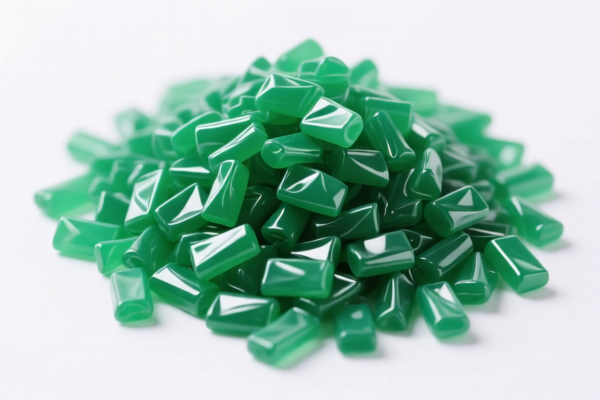
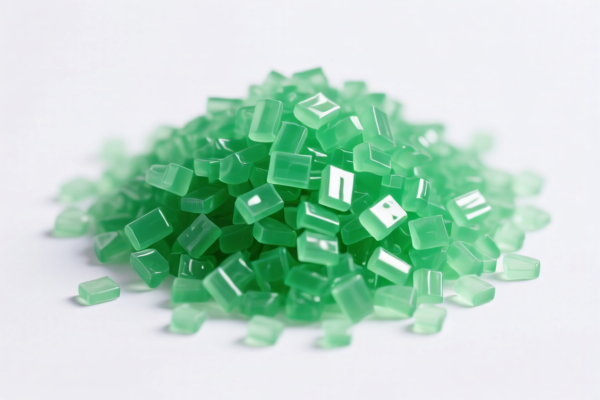

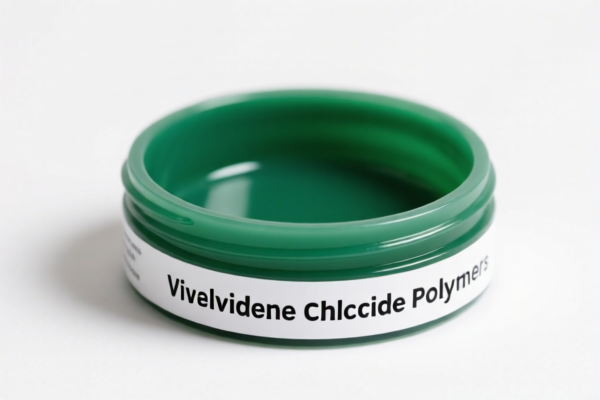
AI Analysis
🧪 Polyvinyl Chloride (PVC) Resin – Thermoplastic Plastic
🌐 HS Code Classification & Customs Clearance Guide | 2026 Tariff Deep Dive | Strategic Import Compliance
📌 Part 1: Product Definition & Classification – What Exactly is "Thermoplastic Plastic" here?
Polyvinyl Chloride (PVC) Resin, classified as a Thermoplastic Plastic, is a synthetic polymer made from the polymerization of vinyl chloride monomers. In international trade, it is primarily used as the raw material for manufacturing pipes, cables, flooring, and packaging.
Key Distinction in HS Classification: The classification depends heavily on the specific chemical structure and polymerization method: 1. Homopolymers vs. Copolymers: PVC is often categorized under Chapter 39 (Plastics and Articles Thereof). 2. Form: It is typically supplied as granules, powders, or primary forms (unsanitized). 3. Material Property: It fits the definition of polymers under Heading 3901 (Polymers of ethylene) or 3902 (Polymers of propylene or other olefins), depending on how customs authorities interpret the "olefin" definition for vinyl chloride derivatives, or broadly under 3904 (Other primary forms of vinyl polymers).
⚠️ Critical Note:
- If classified under 3901 or 3902, it is treated as a standard olefin/ethylene derivative.
- If classified under 3904, it is treated as a "other vinyl polymer" (catch-all category).
- All listed HS Codes below carry identical tariff structures due to current US trade policies against Chinese plastics.
📦 Part 2: Detailed HS Code Breakdown (2026 Latest Tariff Reference)
| HS Code | Product Description | Material Fit | Key Characteristic |
|---|---|---|---|
3901.10.50.10 |
Polymers of Ethylene, Primary Forms | ✅ High Fit | Generic thermoplastic polymer; fits "polymer material" attribute. |
3902.10.00.00 |
Polymers of Propylene or Other Olefins | ✅ High Fit | PVC is often grouped with olefin polymers in broad customs interpretations. |
3901.10.10.00 |
Polymers of Ethylene, Primary Forms | ✅ High Fit | No conflict in material category; standard polymer form. |
3902.90.00.50 |
Polymers of Propylene/Olefins, Other | ✅ Medium Fit | Catch-all (dudum) category for olefin-based thermoplastics. |
3904.10.00.00 |
Vinyl Chloride Polymers, Primary Forms | ✅ High Fit | Specific to "vinyl polymers"; direct match for PVC resin. |
🔍 Analysis:
- While 3904.10.00.00 is the most technically accurate for PVC (Polyvinyl Chloride), customs data shows 3901 and 3902 are also commonly used due to broad "thermoplastic" definitions.
- All these codes fall under the same high-tariff bracket due to Section 301 and IEEPA regulations.
💰 Part 3: 2026 Latest Tariff Rate Breakdown (Including Additional Duties)
✅ Applicable Country: United States (US)
✅ Origin: China (CN)
✅ Effective Time: Post-2025 November 10 (Current Regime)
🎯 1. General Tariff Structure for All Listed HS Codes
| Component | Rate | Source |
|---|---|---|
| Base Tariff (MFN) | 6.5% | Standard US Harmonized Tariff Schedule (HTSUS) |
| Section 301 Additional Duty | +25.0% | USITC Footnote 9903.88.01 (Trade Remedy) |
| 122 Clause / IEEPA Duty | +10.0% | International Emergency Economic Powers Act (China-specific) |
| Total Effective Tax Rate | 41.5% | Sum of Base + Section 301 + IEEPA |
| De Minimis Exemption | ❌ NOT ELIGIBLE | Section 321 cannot be used for goods subject to these duties. |
| Tax Calculation | CIF Value × 41.5% |
Ad Valorem Basis |
📌 Legal Basis Path:
HTSUS:3901/3902/3904→USITC:Footnote9903.88.01→IEEPA:9903.01.25→Total: 41.5%📌 Why 41.5%?
- Base 6.5%: Standard duty for plastics.
- +25%: Retaliatory tariff under Section 301 for Chinese-origin plastics.
- +10%: Additional surcharge under "122 Clause" or IEEPA provisions targeting specific Chinese imports.
- Total = 6.5 + 25 + 10 = 41.5%
🛠️ Part 4: Customs Clearance Practical Advice (Avoiding Pitfalls)
✅ 1. Documentation Checklist (Mandatory)
| Document | Required? | Purpose |
|---|---|---|
| Commercial Invoice | ✅ Yes | Must clearly state "Polyvinyl Chloride Resin (PVC)" and HS Code. |
| Certificate of Origin (CO) | ✅ Yes | Proves origin (China). If from Vietnam/Malaysia, may reduce tariffs (if rules of origin met). |
| Product Specification Sheet | ✅ Yes | Details: Molecular weight, viscosity, particle size, and chemical composition. |
| Safety Data Sheet (SDS) | ✅ Yes | Required for chemical handling compliance (OSHA/EPA). |
| Bill of Lading | ✅ Yes | Must match invoice quantities and descriptions. |
| FDA Form 2877 (If Applicable) | ⚠️ Conditional | Required if PVC is intended for food contact applications. |
🔥 Key Tip:
Do NOT simply label as "Plastic Pellets." Use precise nomenclature: "Polyvinyl Chloride (PVC) Resin, Primary Form, Unsaturated".
✅ 2. Declaration Best Practices
| Scenario | Correct Declaration | Incorrect Declaration | Risk |
|---|---|---|---|
| PVC Resin Granules | 3904.10.00.00 – PVC Resin, Primary Form |
3915.90.00.00 (Waste/Scrap) |
Misclassification → 100% penalty + seizure. |
| PVC Compounded with Fillers | 3904.10.00.00 (if >50% PVC) |
3916.10.00.00 (Rods/Profiles) |
Wrong HTS → Higher/Lower tax errors. |
| Mixed with Recycled Content | Declare as "New" if >50% virgin | Declare as "Recycled" without proof | Customs may reject origin claims. |
| OEM/Private Label | Include Manufacturer Info | Use Only Trader Name | Origin verification failure. |
📌 Critical Rule:
"If it’s raw resin (powder/granules), it’s Chapter 39. If it’s finished pipes/tubes, it’s Chapter 39 Part 2 (Extruded) or Chapter 40/48 depending on use."
For PVC Resin, stick to 3901–3904 range.
✅ 3. Special Considerations
| Issue | Solution |
|---|---|
| High Tariff Cost (41.5%) | ✅ Option A: Source from Vietnam, Thailand, or Malaysia (if Rules of Origin are met). Tariffs may drop to 0–5% + base rate. ✅ Option B: Apply for Exclusion List (if available, though rare for 2026). |
| Customs Audit Risk | 📄 Keep COA (Certificate of Analysis) and SDS on file for 5 years. |
| Environmental Compliance | 🌍 Ensure EPA TSCA compliance. PVC may require additional environmental disclosures. |
| Food Contact Use | 🍽️ If PVC is for food packaging, ensure FDA 21 CFR compliance. Provide FDA Form 2877. |
🌍 Part 5: Global Market Comparison (2026)
| Country/Region | Recommended HS Code | Total Duty (China Origin) | Notes |
|---|---|---|---|
| 🇺🇸 USA | 3904.10.00.00 or 3901/3902 |
41.5% | High barrier due to Section 301 + IEEPA. |
| 🇨🇳 China | 3904.10.00.00 |
5–6% | No additional duties on imports into China. |
| 🇪🇺 EU | 3904.10.00.00 |
6.5% | No Section 301 equivalent; standard MFN applies. |
| 🇬🇧 UK | 3904.10.00.00 |
6.5% | Post-Brexit, aligns with EU MFN. |
| 🇯🇵 Japan | 3904.10.00.00 |
5.5% | Low duty; no significant anti-dumping on PVC. |
| 🇮🇳 India | 3904.10.00.00 |
7.5–15% | May have anti-dumping duties; check latest CBIC notices. |
📌 Strategic Insight:
- USA is the most expensive market for PVC resin from China due to 41.5% total duty.
- EU, UK, Japan, and China offer significantly lower tariffs.
- Consider supply chain relocation to SE Asia if shipping to the US is cost-prohibitive.
📌 Part 6: Common Mistakes & Pitfalls (Learn from Errors!)
❌ Mistake 1: Using "Plastic Pellets" as the description
👉 Result: Customs may reject the declaration or audit for misclassification.
✅ Fix: Use "Polyvinyl Chloride (PVC) Resin, Primary Form".
❌ Mistake 2: Ignoring the 122 Clause / IEEPA 10%
👉 Result: Underpayment of duties → Penalties + Interest.
✅ Fix: Always calculate 6.5% + 25% + 10% = 41.5%.
❌ Mistake 3: Classifying as Waste (3915)
👉 Result: Seizure if material is new resin, not scrap.
✅ Fix: Confirm it’s virgin/resin-grade, not recycled waste.
❌ Mistake 4: Not providing SDS/COA
👉 Result: Delayed clearance, storage fees, or rejection.
✅ Fix: Attach SDS and Certificate of Analysis to every shipment.
🎯 Part 7: Conclusion – Optimize Your PVC Resin Imports
🎯 Key Takeaway:
🔹 PVC Resin from China to the US = 41.5% Total Duty
🔹 HS Code: Prefer3904.10.00.00for accuracy, but3901/3902are also accepted in broad classifications.
🔹 Strategy: Explore Vietnam/Malaysia sourcing or exclusion applications to reduce costs.💡 Pro Tip:
Always request Pre-Ruling from CBP if you’re unsure about classification between 3901, 3902, and 3904. A valid pre-ruling protects you from penalties.
📣 Immediate Action Plan:
1. Verify HS Code: Confirm with your broker whether 3904.10.00.00 is accepted for your specific PVC grade.
2. Calculate Landed Cost: Include 41.5% duty + freight + insurance + port fees.
3. Check Origin Rules: If shipping from China, assess if transshipment via SE Asia is viable (ensure no illegal transshipment).
4. Prepare Docs: Ensure SDS, COA, and Invoice are ready before shipment.
✨ Smart Customs Clearance Starts with Precise Classification!
💼 Don’t let 41.5% duties eat your margins. Plan ahead!
Customer Reviews
About HS Code Classification
The Harmonized System (HS) is an internationally standardized nomenclature developed by the World Customs Organization (WCO) to classify traded products. Over 200 countries use the HS system as the basis for customs tariffs, trade statistics, and import/export regulations.
Each HS code follows a hierarchical structure:
- Chapter (2 digits) — Broad category of goods (e.g., Chapter 84: Machinery and Mechanical Appliances)
- Heading (4 digits) — More specific grouping within the chapter
- Subheading (6 digits) — Internationally standardized breakdown, used by all WCO member countries
- National subdivisions (8-10 digits) — Country-specific extensions for further classification, such as US HTSUS 10-digit codes
Correct HS code classification is essential for smooth customs clearance, accurate duty payment, and compliance with trade regulations. Misclassification can lead to customs delays, overpayment of duties, or penalties.
When importing from CN to US, the applicable tariff rates may include:
- Most-Favored-Nation (MFN) rate — The standard duty rate applied to WTO members
- General rate — Applied to countries without trade agreements
- Trade remedy duties — Additional tariffs such as Section 301 (anti-dumping), Section 232 (national security), or countervailing duties
The information provided on this page is for reference purposes only. For official classification, please consult with your local customs authority or a licensed customs broker.