Poplar Lumber in the Rough
CN → US| HS Code | Tariff Rate | Origin | Destination | Doc |
|---|---|---|---|---|
| 4403970022 | 35.0% | CN | US | Official Doc |
| 4403970067 | 35.0% | CN | US | Official Doc |
| 4407970079 | 35.0% | CN | US | Official Doc |
| 4408900197 | 35.0% | CN | US | Official Doc |
| 4412333285 | 43.0% | CN | US | Official Doc |
Product Images
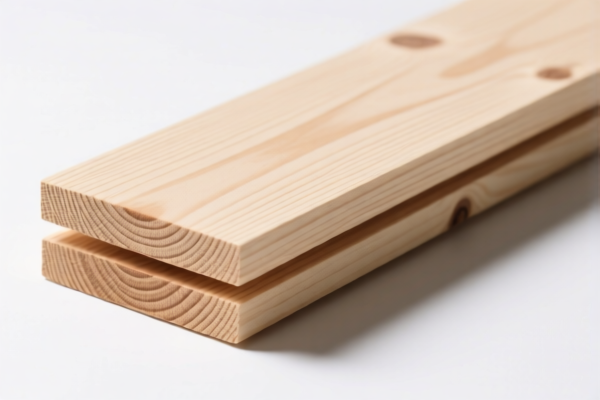
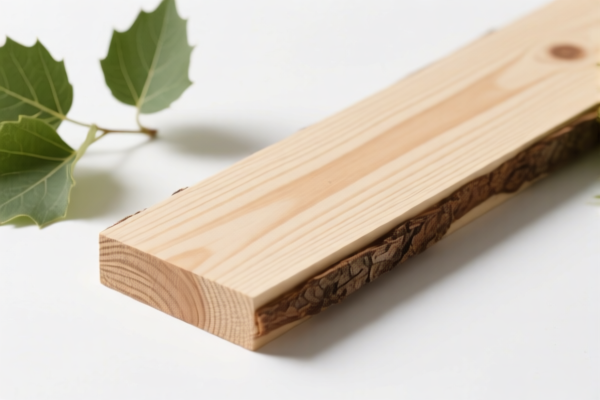
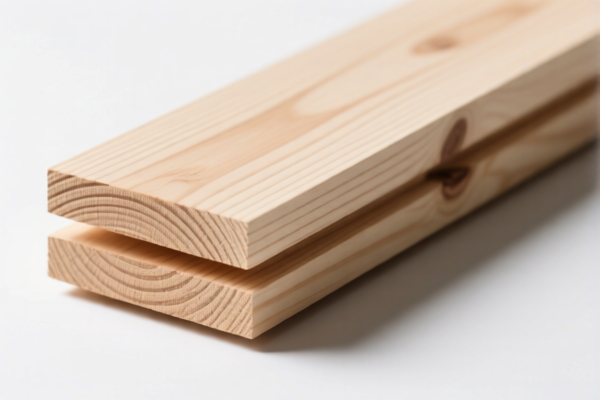
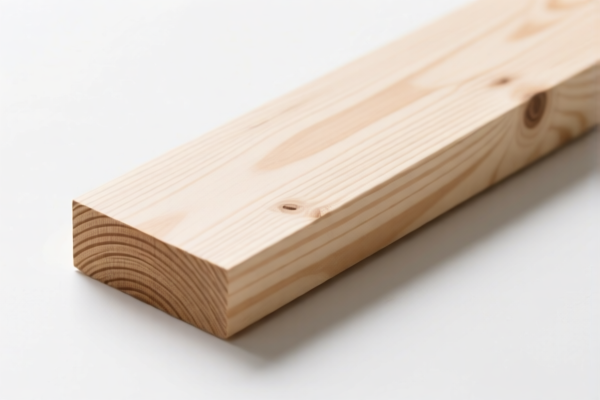
AI Analysis
🌲 Poplar Lumber in the Rough (Raw Wood Logs/Unprocessed Timber)
🌐 HS Code Reference & Customs Clearance Guide | 2026 Tariff Analysis for Chinese Origin Goods | Professional Strategy for US Imports
📌 I. Product Definition & Classification: What is "Poplar Lumber in the Rough"?
Poplar wood is one of the most widely traded softwoods in global timber trade. In international customs terms, "Poplar Lumber in the Rough" refers to wood that has undergone minimal processing. It typically includes: - Rough Logs/Sawn Timber: Wood that has been debarked and roughly squared or cut, but not planed, sanded, or treated for final use. - Primary Processed Forms: These are intermediate products used as raw materials for further manufacturing (e.g., plywood, furniture, paper pulp).
⚠️ Key Distinction:
- Logs/Raw Timber (Chapters 44.03): Unprocessed or simply cut timber.
- Sawn Wood (>6mm thickness, Chapter 44.07): Longitudinally sawn wood, retaining rough or plain surfaces.
- Veneer Sheets (Chapter 44.08): Thin slices used for laminating.
- Plywood/Laminated Wood (Chapter 44.12): Composite products made from layers of veneer.
📦 II. HS Code Classification Details (2026 Latest Tariff Concordance)
| HS Code | Product Description | Application Scenario | Processing Level |
|---|---|---|---|
4403.97.00.22 |
Poplar Wood in the Rough (Matched with Raw Sawn Timber Morphology) | Raw logs, rough-sawn timber blocks | 🔪 Minimal (Debarked/Squared) |
4403.97.00.67 |
Poplar Wood in the Rough (Matched with Log Morphology) | Intact or split logs, unprocessed round wood | 🌳 Minimal (Natural/Cut) |
4407.97.00.79 |
Poplar Boards/Sawn Wood (>6mm, Longitudinally Sawn) | Rough-sawn planks, construction timber | 🪚 Moderate (Sawed, Not Planed) |
4408.90.01.97 |
Poplar Veneer Sheets (Matched with Veneer Attributes) | Thin wood slices for laminating/veneer | ✂️ High (Sliced/Veneer) |
4412.33.32.85 |
Poplar Plywood/Laminated Wood Products | Composite boards, layered wood structures | 🏗️ High (Pressed/Adhered) |
🔍 Critical Note:
- Chapters 44.03 & 44.07 cover raw and semi-processed timber. These are the most common classifications for "Poplar Lumber in the Rough." - Chapter 44.08 applies to veneer sheets, which are much thinner and specifically prepared for laminating. - Chapter 44.12 applies to engineered wood products like plywood, which involve adhesives and layering.
💰 III. 2026 Latest Tariff Rate Breakdown (Including Surtaxes & Policy Add-ons)
✅ Applicable Country: United States (US)
✅ Origin: China (CN)
✅ Effective Date: November 10, 2025 (and subsequent imports)
🎯 1. Raw & Semi-Processed Poplar (4403.97.00.22, 4403.97.00.67, 4407.97.00.79, 4408.90.01.97)
| Item | Content |
|---|---|
| Base Tariff | 0% (ad valorem) |
| USITC Surtax | +25% (from USITC Footnote 9903.88.01) |
| IEEPA Surtax | +10% (Targeting China/Hong Kong products, effective from Nov 10, 2025) |
| Total Tariff | 35% |
| Tax Calculation | CIF Value × 35% |
| De Minimis Exemption | ❌ Not Eligible (deny_de_minimis) |
| Legal Basis Path | IEEPA:9903.01.25 → IEEPA:9903.01.24 → USITC:4403/4407/4408 → FOOTNOTE:9903.88.01 |
📌 Explanation:
- The 25% USITC surtax is part of the Section 301 tariffs imposed on Chinese timber products. - The 10% IEEPA surtax is an additional penalty under the International Emergency Economic Powers Act for specific Chinese imports. - Total 35% is a high tariff rate, significantly impacting profitability.
🎯 2. Engineered Poplar Wood/Plywood (4412.33.32.85)
| Item | Content |
|---|---|
| Base Tariff | 8% (ad valorem) |
| USITC Surtax | +25% |
| IEEPA Surtax | +10% |
| Total Tariff | 43% |
| Tax Calculation | CIF Value × 43% |
| De Minimis Exemption | ❌ Not Eligible (deny_de_minimis) |
| Legal Basis Path | IEEPA:9903.01.25 → IEEPA:9903.01.24 → USITC:4412.33.32.85 → FOOTNOTE:9903.88.01 |
📌 Note:
- Plywood and laminated wood are subject to a higher base tariff (8%) due to higher processing value. - With the same surtaxes, the total rate jumps to 43%, making it even more expensive than raw poplar.
🛠️ IV. Customs Clearance Practical Advice (Operational Pitfall Guide)
✅ 1. Required Documentation Checklist (All Mandatory)
| Document | Mandatory? | Description |
|---|---|---|
| ✅ Product Specification Sheet | ✔️ | Includes species (Poplar), dimensions, moisture content, treatment status. |
| ✅ Commercial Invoice | ✔️ | Must clearly state "Poplar Wood in the Rough" or "Poplar Sawn Wood." |
| ✅ Packing List | ✔️ | Detail quantities, weights, and packaging materials. |
| ✅ Phytosanitary Certificate | ✔️ | Crucial for wood products. Issued by the exporting country's plant protection agency. |
| ✅ Fumigation Certificate | ✔️ | Proof of pest control treatment (e.g., methyl bromide or heat treatment). |
| ✅ Certificate of Origin (CO) | ✔️ | Confirming Chinese origin to apply correct tariff rates. |
| ✅ Customs Declaration Form | ✔️ | Accurate HS Code declaration to avoid misclassification penalties. |
✅ 2. Declaration Tips (Key Mnemonics)
🔥 "Raw vs. Processed, Species Must Be Clear, Phytosanitary is Key, Avoid Misclassification!"
| Scenario | Correct Declaration | Wrong Practice |
|---|---|---|
| Rough Logs/Planks | 4403.97.00.22 or 4407.97.00.79 |
Misdeclare as "Finished Furniture" → Higher Tax |
| Veneer Sheets | 4408.90.01.97 |
Misdeclare as "Lumber" → Incorrect Rate |
| Plywood/Laminated | 4412.33.32.85 |
Misdeclare as "Raw Wood" → Penalty for False Declaration |
| Untreated Wood | Include Phytosanitary Certificate | Ship without certification → Seizure/Destruction! |
✅ 3. Special Handling Cases
| Case | Handling Advice |
|---|---|
| OEM Custom Sizes | Provide detailed drawings and specifications to avoid ambiguity in HS Code. |
| Heat-Treated Wood | Ensure the IPPC Mark is clearly visible on packaging for compliance. |
| Mixed Wood Shipments | Separate poplar from other species in documentation; mixed declarations can lead to delays. |
| Value-Added Processing | If wood is planed, sanded, or treated, it may fall under a different HS Code (e.g., 4409 for continuously shaped wood), which could have different tariff rates. |
🌍 V. Global Market Comparison for Poplar Wood (2026 Latest)
| Country/Region | Recommended HS Code | Tariff | Certification Requirements | Notes |
|---|---|---|---|---|
| 🇺🇸 USA | 4403.97.00.22 / 4407.97.00.79 |
35% | Phytosanitary + Fumigation | High tariff due to Section 301 & IEEPA |
| 🇨🇳 China | 4403.97.00.22 |
0-5% | None | No surtax for domestic trade |
| 🇪🇺 EU | 4403.97 |
0-8% | FSC/PEFC (if eco-label) | No IEEPA surtax, but strict phytosanitary rules |
| 🇯🇵 Japan | 4403.97 |
0-8% | IPPC Mark | No additional surtax |
| 🇦🇺 Australia | 4403.97 |
5% | Biosecurity Permit | Strict quarantine rules |
📌 Conclusion:
- The US is the most expensive market for Chinese poplar wood due to 35% cumulative tariffs. - EU, Japan, and Australia are more favorable, but require strict phytosanitary compliance. - Consider supply chain diversification (e.g., sourcing from Vietnam or Russia) if US market is primary, to avoid high tariffs.
📌 VI. Common Errors & Pitfall Guide (Lessons Learned)
❌ Error 1: Failing to declare the exact species (e.g., just saying "Wood" instead of "Poplar")
👉 Consequence: Customs may reclassify under a higher tariff code or impose fines.
❌ Error 2: Missing Phytosanitary Certificate
👉 Consequence: Goods seized or destroyed at port, plus significant demurrage costs.
❌ Error 3: Misclassifying Plywood as Raw Timber
👉 Consequence: Underpayment of tariffs (43% vs 35%), leading to back taxes + penalties.
❌ Error 4: Not indicating Treatment Status (Heat-Treated vs. Un-treated)
👉 Consequence: Delay in clearance, additional inspections, or rejection.
✅ Correct Approach:
"Poplar Wood, Roughly Sawn, Heat-Treated, IPPC Marked, for Plywood Manufacturing, CIF New York, HS 4407.97.00.79"
🎯 VII. Conclusion: Professional Declaration, Cost Savings, Efficiency!
🎯 Remember the Mnemonic:
🔹 "Raw Wood 35%, Plywood 43%, Phytosanitary is Key, Never Skip the Paperwork!"
🔹 "HS Code Determines Tax, Declaration Accuracy Saves Money!"
📌 Pro Tip:
If your poplar wood is originated from Vietnam, Russia, or other non-Chinese sources, you may benefit from lower or zero tariffs in the US.
Recommendation: Apply for an Advance Ruling from US Customs to confirm the HS Code and tariff rate before shipment.
📣 Immediate Action:
📞 Contact a licensed customs broker + Provide Product Photos & Specs + Request HS Code Advance Ruling
🚀 Ensure your poplar lumber passes US customs smoothly, complies with regulations, and maximizes profit margins!
✨ Professional Clearance Starts with Accurate Classification!
💼 Every cent saved in tariffs is pure profit!
Customer Reviews
About HS Code Classification
The Harmonized System (HS) is an internationally standardized nomenclature developed by the World Customs Organization (WCO) to classify traded products. Over 200 countries use the HS system as the basis for customs tariffs, trade statistics, and import/export regulations.
Each HS code follows a hierarchical structure:
- Chapter (2 digits) — Broad category of goods (e.g., Chapter 84: Machinery and Mechanical Appliances)
- Heading (4 digits) — More specific grouping within the chapter
- Subheading (6 digits) — Internationally standardized breakdown, used by all WCO member countries
- National subdivisions (8-10 digits) — Country-specific extensions for further classification, such as US HTSUS 10-digit codes
Correct HS code classification is essential for smooth customs clearance, accurate duty payment, and compliance with trade regulations. Misclassification can lead to customs delays, overpayment of duties, or penalties.
When importing from CN to US, the applicable tariff rates may include:
- Most-Favored-Nation (MFN) rate — The standard duty rate applied to WTO members
- General rate — Applied to countries without trade agreements
- Trade remedy duties — Additional tariffs such as Section 301 (anti-dumping), Section 232 (national security), or countervailing duties
The information provided on this page is for reference purposes only. For official classification, please consult with your local customs authority or a licensed customs broker.