Poplar Rough Timber
CN → US| HS Code | Tariff Rate | Origin | Destination | Doc |
|---|---|---|---|---|
| 4407970079 | 35.0% | CN | US | Official Doc |
| 4407970072 | 35.0% | CN | US | Official Doc |
Product Images
AI Analysis
🌲 Poplar Rough Timber (Unprocessed Sawn Wood)
🌐 HS Code Reference & Customs Clearance Guide | 2026 Latest Tariff Analysis | Professional Clearance Strategy for Raw Lumber
📌 I. Product Definition & Classification: What Exactly is "Poplar Rough Timber"?
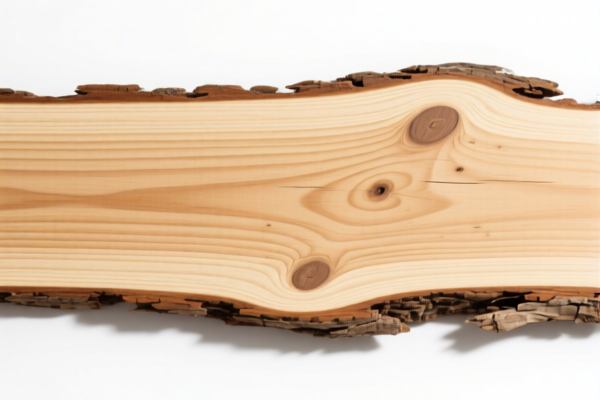
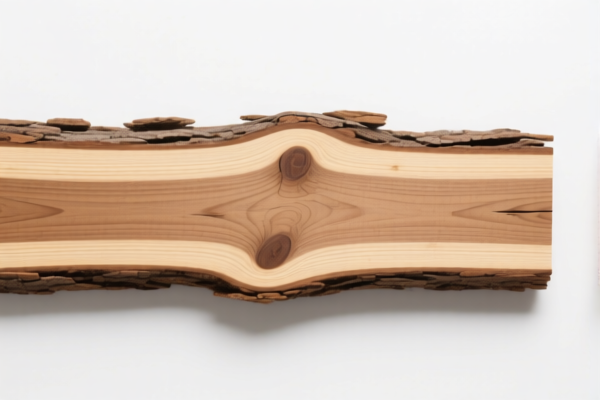
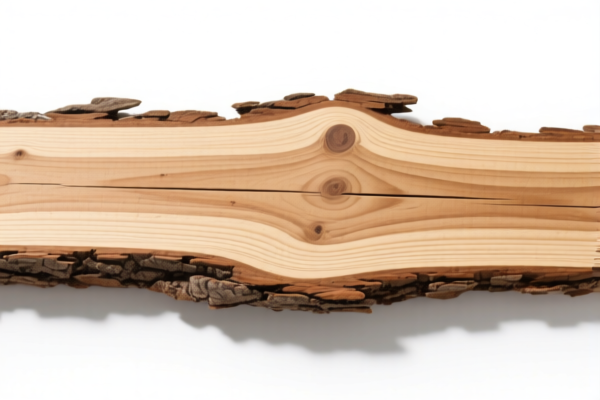
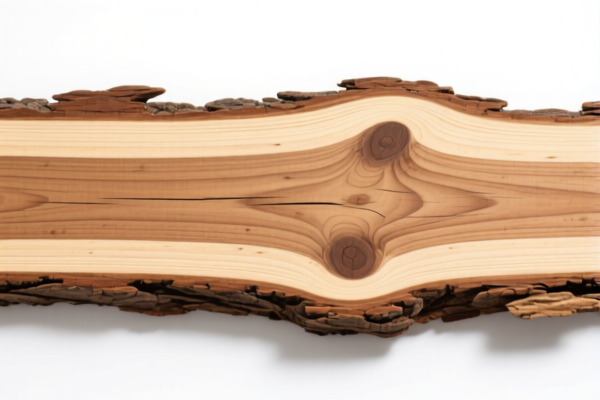
Poplar Rough Timber refers to wood from the Populus genus (including Poplar, Aspen, and Cottonwood) that has been sawn or chipped lengthwise, sliced, or peeled. It is considered "rough" because it typically retains its natural edges or is merely planed/sanded but not further processed into furniture parts, veneers, or engineered wood.
Crucially, for it to fall under the specific HS codes provided in your dataset, it must meet two physical criteria: 1. Thickness: Must exceed 6 mm. 2. Processing State: It is "sawn or chipped lengthwise... whether or not planed, sanded or end-jointed."
⚠️ Key Distinction Point:
- If the wood is thinner than 6 mm (e.g., thin sheets for plywood core) → It likely falls under Chapter 44 (Veneers) or 47 (Pulp), NOT the codes below.
- If it is veneer sheets peeled for decoration → It falls under 4408, NOT 4407.
- If it is charcoal → It falls under 4402, NOT 4407.
📦 II. HS Code Classification Details (2026 Latest Tariff Authority Comparison)
Based on the provided data, the classification depends strictly on the specific species of the Poplar tree.
| HS Code | Product Description | Key Criteria | Specific Species |
|---|---|---|---|
4407.97.00.79 |
Wood sawn/chipped lengthwise, thickness > 6mm: Other: Of poplar/aspen | General Category | Other Poplar, Aspen, Cottonwood (General species) |
4407.97.00.72 |
Wood sawn/chipped lengthwise, thickness > 6mm: Other: Of poplar/aspen | Specific Species | Yellow Poplar (Liriodendron tulipifera) |
🔍 Critical Reminder:
- Yellow Poplar (Liriodendron tulipifera) is NOT technically a true Populus species biologically, but it is often grouped with "Poplars" in trade nomenclature under this subheading. You must verify the botanical name. If it is Liriodendron tulipifera, use.72. If it is any other Populus (like Populus deltoides) or Aspen, use.79. - Misidentifying Yellow Poplar as "Other Poplar" is a common customs error that can lead to delays or audits.
💰 III. 2026 Latest Tariff Rate Details (Including Surcharge)
✅ Applicable Country: United States (US)
✅ Origin: China (CN) (Assumed based on the tax detail format provided in the source data)
✅ Effective Time: Current 2026 Rates
🎯 1. 4407.97.00.79 —— Other Poplar; Aspen; Cottonwood
| Item | Content |
|---|---|
| Base Tariff Rate | 0.0% (ad valorem) |
| Section 301 Surcharge | +25.0% (Applied to Chinese imports) |
| Total Tax Rate | 25.0% |
| Tax Calculation | CIF Value × 25% |
| Legal Basis Path | HTSUS:4407.97.00.79 → USITC Footnote: 301/Chapter 99 |
📌 Explanation:
- While the Base Duty for softwood/hardwood lumber like poplar is 0%, the 25% Section 301 tariff is mandatory for goods originating in China. - There are no additional IEEPA (International Emergency Economic Powers Act) surcharges listed in the provided data for this specific code. The total burden is strictly 25%.
🎯 2. 4407.97.00.72 —— Yellow Poplar (Liriodendron tulipifera)
| Item | Content |
|---|---|
| Base Tariff Rate | 0.0% (ad valorem) |
| Section 301 Surcharge | +25.0% (Applied to Chinese imports) |
| Total Tax Rate | 25.0% |
| Tax Calculation | CIF Value × 25% |
| Legal Basis Path | HTSUS:4407.97.00.72 → USITC Footnote: 301/Chapter 99 |
📌 Note:
- Despite being a different HS suffix (.72 vs .79), the tax rate is identical. - The distinction is purely for import statistics and regulatory tracking (e.g., FLEGT/EUTR compliance tracking, though US focuses on volume). Do not confuse the codes just because the tax is the same; correct botanical identification is still required for legal compliance.
🛠️ IV. Customs Clearance Practical Advice (实战避坑指南)
✅ 1. Required Documentation Checklist (Non-negotiable)
| Document | Required | Explanation |
|---|---|---|
| ✅ Commercial Invoice | ✔️ | Must clearly state "Wood Sawn Lengthwise, Thickness > 6mm" and specify species (e.g., "Poplar, Populus deltoides"). |
| ✅ Packing List | ✔️ | Must detail dimensions and volume (board feet or cubic meters). |
| ✅ Botanical Name Declaration | ✔️ | Crucial: Must specify if it is Populus spp. or Liriodendron tulipifera. Vague terms like "Hardwood" or "Poplar" without scientific names risk rejection. |
| ✅ ISF (10+2) Filing | ✔️ | Required for ocean freight. Must include commodity number (HS 10-digit). |
| ✅ Phytosanitary Certificate | ✔️ | Often required by USDA-APHIS to ensure no pests/diseases. |
| ✅ Lacey Act Declaration | ✔️ | Mandatory for all plant/plant products. Must declare genus, species, and country of harvest. |
✅ 2. Declaration Tips (Key Mantra)
🔥 "Thickness > 6mm, Sawn Lengthwise, Species Specific!"
| Scenario | Correct Declaration | Incorrect Practice |
|---|---|---|
| Wood is 4 mm thick | NOT 4407. Likely 4408 (Veneer) or 4403 (if treated). Do not use 4407 codes. | Using 4407.97.00.79 for thin sheets → Customs Rejection |
| Wood is 10 mm thick | 4407.97.00.79 (if generic Poplar) |
Calling it "Lumber" without dimensions → Audit Risk |
| Species is Yellow Poplar | 4407.97.00.72 + Liriodendron tulipifera |
Calling it "Poplar" → Classification Error |
| Species is Aspen | 4407.97.00.79 |
Ignoring species → Statistical Inaccuracy |
✅ 3. Special Situation Handling
| Situation | Handling Advice |
|---|---|
| Mixed Lots (Poplar + Aspen) | If the lot contains both, and they cannot be separated, customs may require classification of the majority volume. Ensure your invoice reflects the dominant species or split the lot if possible. |
| End-Jointed Wood | The HS code description explicitly includes "end-jointed." Do not avoid this code because the wood is joined; it is still classified here if it meets the thickness and processing criteria. |
| Planed/Sanded Finish | The code allows "whether or not planed, sanded." You do not need to change the code if the wood has been sanded smooth. It remains 4407. |
🌍 V. Global Market Comparison (2026 Latest)
| Country/Region | Recommended HS Code | Tariff Rate (China Origin) | Notes |
|---|---|---|---|
| 🇺🇸 United States | 4407.97.00.79 / .72 |
25% | Base 0% + 25% Section 301. |
| 🇨🇳 China | 4407.97.00.79 / .72 |
Varies (Usually 0-5%) | Import duties for raw wood into China may be low, but check specific MFN rates. |
| 🇪🇺 European Union | 4407.97 |
Varies (0-2.7%) | EU often has lower base duties but requires strict EUTR (EU Timber Regulation) due diligence. |
| 🇯🇵 Japan | 4407.97 |
Varies (0-3.2%) | Check for specific JAS (Japanese Agricultural Standards) requirements for poplar. |
📌 Conclusion:
- The US market is the most cost-sensitive due to the flat 25% surcharge. - Europe requires heavier administrative burden (due diligence files) rather than high tariffs. - Always verify the 6mm thickness threshold; it is the single most common reason for misclassification.
📌 VI. Common Mistakes & Pitfalls (Blood & Tears Lessons)
❌ Mistake 1: Classifying wood thinner than 6mm under 4407.
👉 Consequence: Code mismatch. Correct code is likely 4408.10.00 (Veneer sheets) or 4403 (if treated).
👉 Result: Penalties or hold for re-classification.
❌ Mistake 2: Using "Poplar" as the sole description without the scientific name.
👉 Consequence: USDA-APHIS or CBP may flag the shipment for Lacey Act compliance issues.
👉 Result: Delay in clearance, potential fines.
❌ Mistake 3: Confusing "Yellow Poplar" (Liriodendron) with true Poplar (Populus).
👉 Consequence: Incorrect HS suffix (.72 vs .79). While the tax is the same, it shows lack of due diligence and can trigger audits.
👉 Result: Request for additional documentation.
✅ Correct Action:
"Sawn Wood, Poplar, Populus deltoides, Thickness 20mm, Planed, FOB Shanghai"
🎯 VII. Conclusion: Precision is Profit
🎯 Remember the Mantra:
🔹 "6mm is the Line, Sawn is the Key, Species Defines the Code!"
🔹 "Base is Zero, But 301 is Twenty-Five, Total Cost is Twenty-Five!"
📌 Pro Tip:
If your supplier cannot confirm the exact species (Populus vs Liriodendron), request a sample for testing or a botanical certificate from the supplier. The cost of a test is far lower than the cost of customs detention or misclassification penalties.
📣 Immediate Action:
📞 Contact your customs broker to verify the 10-digit HTSUS code based on the exact species.
📄 Ensure Lacey Act Declarations are pre-filled and accurate.
🚀 Let your Poplar timber cross borders smoothly, tax-compliantly, and on time!
✨ Professional Classification Starts with Accurate Data!
💼 Every mm of thickness and every leaf of species matters!
Customer Reviews
About HS Code Classification
The Harmonized System (HS) is an internationally standardized nomenclature developed by the World Customs Organization (WCO) to classify traded products. Over 200 countries use the HS system as the basis for customs tariffs, trade statistics, and import/export regulations.
Each HS code follows a hierarchical structure:
- Chapter (2 digits) — Broad category of goods (e.g., Chapter 84: Machinery and Mechanical Appliances)
- Heading (4 digits) — More specific grouping within the chapter
- Subheading (6 digits) — Internationally standardized breakdown, used by all WCO member countries
- National subdivisions (8-10 digits) — Country-specific extensions for further classification, such as US HTSUS 10-digit codes
Correct HS code classification is essential for smooth customs clearance, accurate duty payment, and compliance with trade regulations. Misclassification can lead to customs delays, overpayment of duties, or penalties.
When importing from CN to US, the applicable tariff rates may include:
- Most-Favored-Nation (MFN) rate — The standard duty rate applied to WTO members
- General rate — Applied to countries without trade agreements
- Trade remedy duties — Additional tariffs such as Section 301 (anti-dumping), Section 232 (national security), or countervailing duties
The information provided on this page is for reference purposes only. For official classification, please consult with your local customs authority or a licensed customs broker.