Poplar Rough Wood Poles
CN → US| HS Code | Tariff Rate | Origin | Destination | Doc |
|---|---|---|---|---|
| 4403970022 | 35.0% | CN | US | Official Doc |
| 4403970067 | 35.0% | CN | US | Official Doc |
| 4407970079 | 35.0% | CN | US | Official Doc |
| 1404909090 | 35.0% | CN | US | Official Doc |
| 1404909040 | 35.0% | CN | US | Official Doc |
Product Images
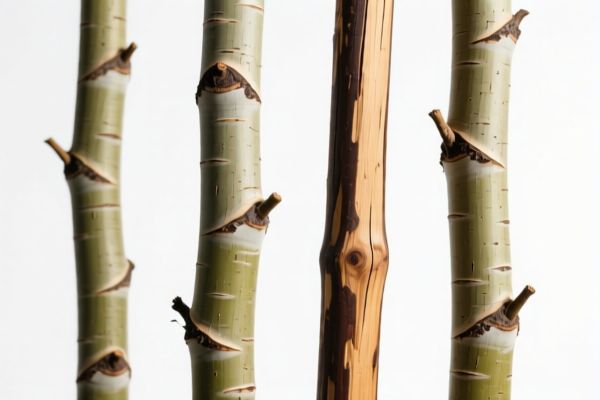
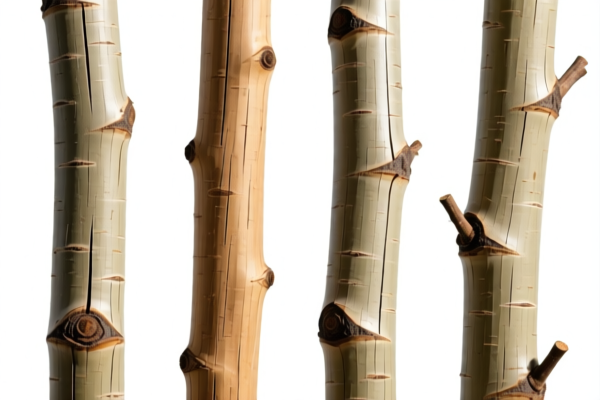
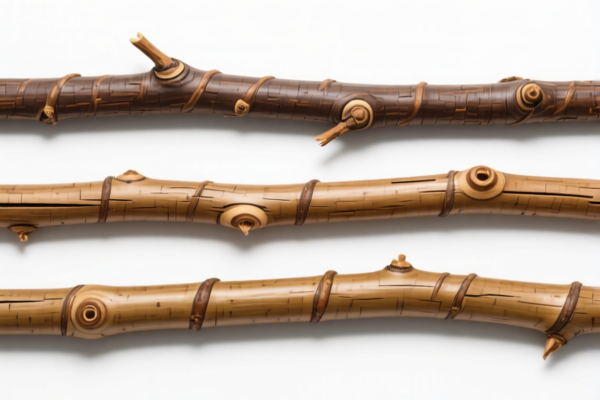
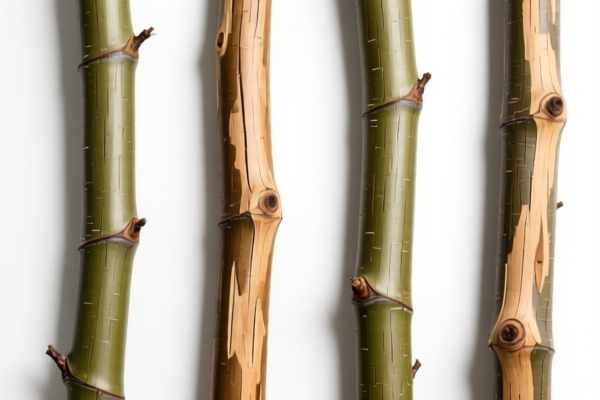
AI Analysis
🌲 Poplar Rough Wood Poles (Log/Pole Grade)
🌐 HS Code Reference & Customs Clearance Guide | 2026 Latest Tariff Analysis | Professional Entry Strategy
📌 I. Product Definition & Classification: What Exactly Are "Poplar Rough Wood Poles"?
Poplar rough wood poles refer to logs of Poplar (Populus) or Trembling Aspen (Populus tremuloides) that have been simply debarked, tipped, and roughly shaped but retain their natural cylindrical form. They are primarily used as structural poles for fencing, landscaping, mine support, or temporary construction.
In international trade, these products fall strictly under Chapter 44 (Wood and Articles of Wood; Wood Charcoal), specifically within the heading for Wood roughly squared or roughly shaped or In the original state.
⚠️ Key Distinction:
- If the wood is roughly shaped (tipped, debarked, roughly cylindrical) → It falls under Heading 4403 or 4407 depending on the specific processing level. - If it is merely raw logs without any squaring → It falls under Heading 4403. - Crucial Note: Poplar is often classified under "Other Wood" (not Pine, Oak, etc.), which triggers specific additional duties due to trade policies.
📦 II. HS Code Classification Details (2026 Latest Tariff Authority)
Based on the provided dataset, there are 5 potential HS Codes for Poplar Rough Wood. However, 4403 and 4407 are the most technically accurate for "Rough Wood/Poles," while 1404 codes represent a misclassification risk that should be avoided unless the product is processed into fibers or chips.
| HS Code | Product Description | Applicability & Status |
|---|---|---|
4403.97.00.22 |
Roughly squared or roughly shaped wood of Poplar and Trembling Aspen; in the original state | ✅ Most Likely: Fits "Rough Wood Poles" perfectly. Logs roughly shaped. |
4403.97.00.67 |
Other wood of Poplar and Trembling Aspen; roughly squared or roughly shaped; in the original state | ✅ High Probability: Similar to above, covers specific sub-categories of rough poplar logs. |
4407.97.00.79 |
Wood sawn lengthwise, sliced or peeled, thickness >6mm, of Poplar/Trembling Aspen | ⚠️ Conditional: Only if the "poles" are sawn into rectangular beams or thick planks, not round logs. |
1404.90.90.90 |
Other vegetable products; Poplar as a raw vegetable material | ❌ Rare/Misclassification: Only if the wood is broken down into chips, fibers, or raw plant matter for dyeing/tanning. |
1404.90.90.40 |
Raw materials for dyeing/tanning; Poplar as unnamed vegetable product | ❌ Misclassification: Only applicable if sold specifically for chemical extraction/tanning, not as structural poles. |
🔍 重点提醒:
- For Round Poles/Rough Logs,4403.97.00.22and4403.97.00.67are the correct classifications.
- If the wood is cut into beams/planks, use4407.97.00.79.
- Do NOT use 1404 codes for structural wood poles; this will lead to customs delays and potential fines for incorrect classification.
💰 III. 2026 Latest Tariff Rate Breakdown (Including Surcharges & Policy Add-ons)
✅ Applicable Country: United States (US)
✅ Origin: China (CN)
✅ Effective Date: November 10, 2025 onwards (including subsequent imports)
All HS Codes listed in the dataset carry the same total tax rate of 35.0%. Here is the detailed breakdown:
🎯 1. 4403.97.00.22 & 4403.97.00.67 —— Poplar Rough Wood Logs/Poles
| Item | Detail |
|---|---|
| Base Tariff | 0.0% (Ad Valorem) |
| Section 301 Surcharge | +25.0% (Added Tariffs) |
| Section 122 Surcharge | +10.0% (IEEPA/Additional Tariffs) |
| Total Tax Rate | 35.0% |
| Calculation Method | CIF Value × 35% |
| De Minimis Exemption? | ❌ No (High tariff rates disqualify de minimis) |
| Legal Basis Path | Section 301: USITC Footnote 9903.88 → Section 122: IEEPA → USITC: 4403.97 |
📌 Explanation:
- 0% Base: Standard MFN (Most Favored Nation) rate for wood imports is often low or zero.
- 25% Section 301: Retaliatory tariffs on Chinese goods, including many wood products.
- 10% Section 122: Additional tariffs imposed under the International Emergency Economic Powers Act (IEEPA) for specific Chinese imports.
- Total 35%: This is a significant cost. Importers must account for this in their landed cost calculations.
🎯 2. 4407.97.00.79 —— Sawn Poplar Wood
| Item | Detail |
|---|---|
| Base Tariff | 0.0% |
| Section 301 Surcharge | +25.0% |
| Section 122 Surcharge | +10.0% |
| Total Tax Rate | 35.0% |
| Calculation Method | CIF Value × 35% |
| De Minimis Exemption? | ❌ No |
📌 Note: Even if processed into lumber, the tariff burden remains the same due to the origin (China) and product category.
🎯 3. 1404.90.90.90 & 1404.90.90.40 —— Other Vegetable Products
| Item | Detail |
|---|---|
| Base Tariff | 0.0% |
| Section 301 Surcharge | +25.0% |
| Section 122 Surcharge | +10.0% |
| Total Tax Rate | 35.0% |
| Calculation Method | CIF Value × 35% |
| De Minimis Exemption? | ❌ No |
📌 Warning: While these codes might seem like they apply to "natural products," using them for structural wood poles is incorrect. Customs may reject the declaration, leading to reclassification and penalties, even if the rate is the same.
🛠️ IV. Customs Clearance Practical Advice (Real-World Pitfall Guide)
✅ 1. Required Documentation Checklist (Non-Negotiable)
| Document | Mandatory? | Description |
|---|---|---|
| ✅ Commercial Invoice | ✔️ | Must clearly state: "Poplar Rough Wood Poles," HS Code, Country of Origin (China), and Value. |
| ✅ Packing List | ✔️ | Detail number of poles, dimensions, weight (gross/net), and packaging type. |
| ✅ Phytosanitary Certificate | ✔️ | Critical for Wood! Must be issued by the Chinese customs/agriculture authority, confirming no pests/diseases. |
| ✅ ISPM 15 Compliance | ✔️ | If wood packaging (pallets/containers) is used, it must be heat-treated and marked with the ISPM 15 stamp. |
| ✅ Bill of Lading (B/L) | ✔️ | Original B/L showing shipper, consignee, and notify party. |
| ✅ Certificate of Origin | ✔️ | To prove origin as China, which triggers the 35% tariff. |
✅ 2. Declaration Tips (Key Mantras)
🔥 "Correct HS is 4403, Not 1404! Phyto Cert is a Must!"
| Scenario | Correct Declaration | Wrong Approach |
|---|---|---|
| Round Poplar Poles | 4403.97.00.22 or 4403.97.00.67 |
Misclassifying as 1404 → Risk of rejection |
| Sawn Poplar Beams | 4407.97.00.79 |
Misclassifying as 4403 (logs) |
| Wood with Pests | FAIL | No Phytosanitary Cert → Quarantine/Return |
| Unmarked Wooden Pallets | FAIL | ISPM 15 Violation → Destroy Pallets/Fines |
✅ 3. Special Handling Notes
| Situation | Handling Advice |
|---|---|
| Moisture Content | Ensure wood is dry enough to prevent mold during transit, but not dried to <15% if "rough" state is claimed. |
| Bark Status | Clearly state if bark is present or removed. "Roughly shaped" usually allows for some bark, but pest control may require debarking. |
| Value Declaration | Ensure CIF value includes freight and insurance. Undervaluation will trigger audits. |
| Section 122 Impact | The 10% surcharge is non-negotiable for Chinese-origin wood. Plan cash flow accordingly. |
🌍 V. Global Market Comparison (2026 Latest)
| Country/Region | Recommended HS Code | Tariff Rate (China Origin) | Certification Requirements | Notes |
|---|---|---|---|---|
| 🇺🇸 USA | 4403.97.00.22/67 |
35.0% (0% Base + 25% Sec 301 + 10% Sec 122) | Phytosanitary Cert, ISPM 15 | High tariff burden. |
| 🇨🇳 China | 4403.97.00.22 |
Varies (Import) | Phytosanitary Cert | Domestic trade has different rules. |
| 🇪🇺 EU | 4403.97.00 |
0-6.5% (General) | EUTR Compliance (Due Diligence) | No Section 301/122 tariffs. |
| 🇬🇧 UK | 4403.97.00 |
0-6.5% (General) | UK Timber Regulation | Post-Brexit rules apply. |
| 🇦🇺 Australia | 4403.97.00 |
5% (General) | Biosecurity Permit | Strict biosecurity laws. |
📌 Conclusion:
- USA is the most challenging market for Chinese Poplar wood due to the 35% effective tariff rate.
- Europe/UK/Australia do not apply Section 301 or 122 tariffs, making them more cost-effective for Chinese wood imports, but they have strict biosecurity regulations.
📌 VI. Common Mistakes & Pitfalls (Blood & Tears Lessons)
❌ Mistake 1: Declaring Poplar Poles under 1404
👉 Consequence: Customs may flag it as "miscellaneous vegetable products," causing delays. Even if the rate is the same, the product description won't match, leading to inspections.
❌ Mistake 2: Missing Phytosanitary Certificate
👉 Consequence: Quarantine hold, potential destruction of cargo, or return shipment. This is the #1 cause of delay for wood imports.
❌ Mistake 3: Not marking Wood Packaging (ISPM 15)
👉 Consequence: Fines, rejection of packaging, and delays while pallets are replaced or fumigated.
❌ Mistake 4: Ignoring Section 122
👉 Consequence: Underestimating landed cost by 10%, leading to loss of profit margins.
✅ Correct Practice:
"Poplar Rough Wood Poles, Debarked, Tipped, Length 2-3m, Country of Origin: China, HS Code: 4403.97.00.22, Phytosanitary Certificate Attached."
🎯 VII. Conclusion: Professional Declaration, Save Time and Money!
🎯 Remember the Mantra:
🔹 "4403 for Rough Logs, Not 1404! Phyto Cert is King!"
🔹 "35% Tax is Real, Plan Your Cost Before You Ship!"
🔹 "ISPM 15 on Pallets, Or Face the Penalty!"
📌 Pro Tip:
If you are importing Poplar Wood to the US, consider:
1. Pre-Arrival Review Initiative (PARI): Submit documentation early to avoid border delays.
2. Hybrid Sourcing: If possible, source from non-China origins (e.g., Canada, Europe) to avoid Section 301/122 tariffs.
3. Customs Brokers: Always work with experienced brokers who understand wood products and phytosanitary requirements.
📣 Immediate Action:
📞 Contact your Customs Broker + Provide Product Photos + Get Phytosanitary Certificate + Apply for Pre-Arrival Review
🚀 Ensure your Poplar Poles Clear Customs Smoothly, On Time, and Within Budget!
✨ Professional Customs Clearance Starts with Accurate Classification!
💼 Every Penny of Cost Should Be Precisely Calculated!
Customer Reviews
About HS Code Classification
The Harmonized System (HS) is an internationally standardized nomenclature developed by the World Customs Organization (WCO) to classify traded products. Over 200 countries use the HS system as the basis for customs tariffs, trade statistics, and import/export regulations.
Each HS code follows a hierarchical structure:
- Chapter (2 digits) — Broad category of goods (e.g., Chapter 84: Machinery and Mechanical Appliances)
- Heading (4 digits) — More specific grouping within the chapter
- Subheading (6 digits) — Internationally standardized breakdown, used by all WCO member countries
- National subdivisions (8-10 digits) — Country-specific extensions for further classification, such as US HTSUS 10-digit codes
Correct HS code classification is essential for smooth customs clearance, accurate duty payment, and compliance with trade regulations. Misclassification can lead to customs delays, overpayment of duties, or penalties.
When importing from CN to US, the applicable tariff rates may include:
- Most-Favored-Nation (MFN) rate — The standard duty rate applied to WTO members
- General rate — Applied to countries without trade agreements
- Trade remedy duties — Additional tariffs such as Section 301 (anti-dumping), Section 232 (national security), or countervailing duties
The information provided on this page is for reference purposes only. For official classification, please consult with your local customs authority or a licensed customs broker.