Poplar Rough Wooden Pile
CN → US| HS Code | Tariff Rate | Origin | Destination | Doc |
|---|---|---|---|---|
| 1404909040 | 35.0% | CN | US | Official Doc |
| 1404909090 | 35.0% | CN | US | Official Doc |
| 4403970022 | 35.0% | CN | US | Official Doc |
| 4403970067 | 35.0% | CN | US | Official Doc |
| 4412335700 | 43.0% | CN | US | Official Doc |
Product Images
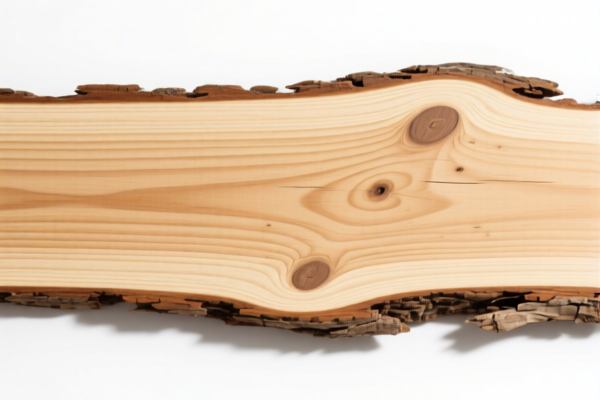
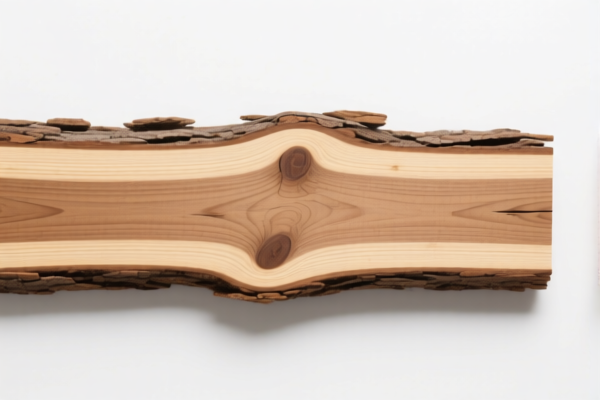
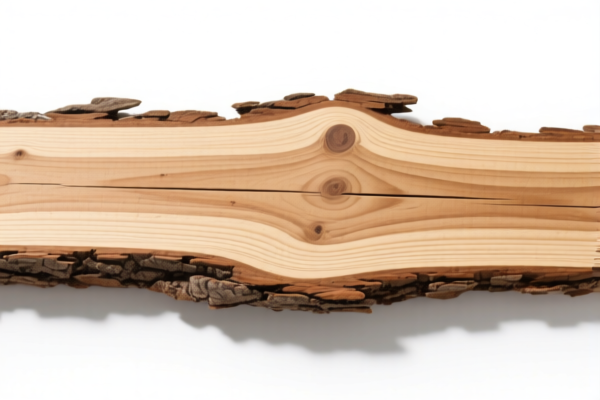
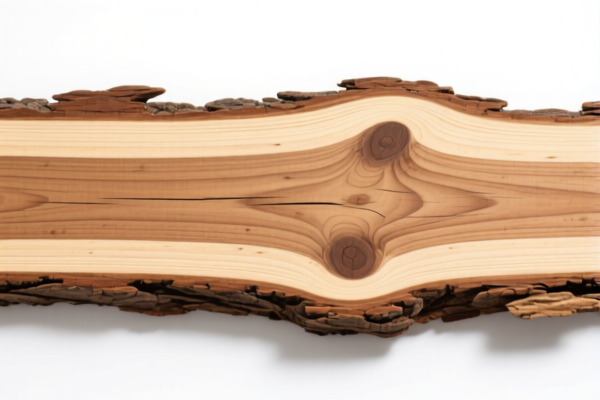
AI Analysis
🌲 Poplar Rough Wooden Pile (Raw Timber)
🌐 HS Code Classification & Customs Clearance Guide | 2026 Tariff Analysis | Strategic Entry into the US Market
📌 I. Product Definition & Classification: What is "Poplar Rough Wooden Pile"?
"Poplar Rough Wooden Pile" refers to untreated, unprocessed timber from the Poplar tree (Populus spp.), typically stacked in raw logs or rough-cut pieces. In international trade, this product is categorized based on its material origin (wood/plant matter) and processing state (raw, unworked, or semi-processed).
Depending on how strictly customs officials interpret the "processed state" and the "intended use," this product can fall into different HS Code categories, ranging from raw plant materials to specific wood products.
⚠️ Critical Distinction:
- If treated strictly as raw agricultural/plant material (unworked logs for tanning/dyeing) → Chapter 14
- If treated as forest products/timber (wood in the rough, whether or not stripped of bark) → Chapter 44
- If treated as engineered wood (if laminated/plywood) → Chapter 44 (Different Subheading)
📦 II. HS Code Classification Details (2026 Latest Tariff Reference)
Based on the provided data, the following HS Codes are applicable for "Poplar Rough Wooden Pile":
| HS Code | Product Description | Classification Logic | Applicable Scenario |
|---|---|---|---|
1404.90.90.40 |
Other vegetable products (for tanning/dyeing) | Raw plant material, fits "other materials for tanning or dyeing" catch-all | Unprocessed logs intended for industrial tanning/dyeing processes |
1404.90.90.90 |
Other vegetable products | Plant material, raw form, fits "other vegetable products" catch-all | General raw poplar logs, unspecified use |
4403.97.00.22 |
Wood, roughly hewn (Poplar & other hardwoods) | Material: Poplar; Form: Rough logs/timber | Raw timber logs, suitable for construction or further processing |
4403.97.00.67 |
Wood, roughly hewn (Poplar & other hardwoods) | Material: Poplar; Form: Rough logs/timber (specific sub-category) | Raw timber logs, specific trade classification for poplar timber |
4412.33.57.00 |
Plywood & similar laminated wood (Non-coniferous) | IF the pile consists of laminated/plywood sheets made of poplar | Poplar plywood or layered wood products (Note: This applies if the "rough pile" is actually processed into panels) |
🔍 Key Insight:
- HS Codes1404.xxxx.xxxxtreat the wood as a vegetable/plant raw material.
- HS Codes4403.xxxx.xxxxtreat the wood as timber/forest product.
- HS Code4412.xxxx.xxxxis only applicable if the wood has been laminated/plywooded.
- Most raw "rough wooden piles" will fall under4403.97as they are considered "wood in the rough."
💰 III. 2026 Latest Tariff Rate Breakdown (Including Surcharges)
✅ Applicable Country: United States (US)
✅ Origin: China (CN)
✅ Effective Date: 2025/2026 (Current Trade Policy)
🎯 1. Raw Wood & Vegetable Materials (1404.90.90.40, 1404.90.90.90)
| Item | Details |
|---|---|
| Base Tariff | 0.0% |
| Section 301 Surcharge | +25.0% (USITC Footnote) |
| Section 122 Tariff | +10.0% (Specific US Import Duty) |
| Total Tax Rate | 35.0% |
| Calculation Basis | CIF Value × 35% |
| De Minimis Exemption | ❌ Not Eligible (High tariff rate disqualifies from Section 321 de minimis) |
| Legal Path | Base: 0% → Section 301: +25% → Section 122: +10% |
📌 Explanation:
- Even though the base tariff is 0%, the 35% total tax is driven by Section 301 (25%) and Section 122 (10%).
- This makes importing raw poplar logs from China to the US costly.
🎯 2. Rough Timber Products (4403.97.00.22, 4403.97.00.67)
| Item | Details |
|---|---|
| Base Tariff | 0.0% |
| Section 301 Surcharge | +25.0% (USITC Footnote) |
| Section 122 Tariff | +10.0% (Specific US Import Duty) |
| Total Tax Rate | 35.0% |
| Calculation Basis | CIF Value × 35% |
| De Minimis Exemption | ❌ Not Eligible |
| Legal Path | Base: 0% → Section 301: +25% → Section 122: +10% |
📌 Explanation:
- Identical tariff structure to raw vegetable materials.
- Total Tax: 35% applies to all raw/rough poplar wood imports from China.
🎯 3. Plywood/Laminated Wood (4412.33.57.00)
| Item | Details |
|---|---|
| Base Tariff | 8.0% |
| Section 301 Surcharge | +25.0% (USITC Footnote) |
| Section 122 Tariff | +10.0% (Specific US Import Duty) |
| Total Tax Rate | 43.0% |
| Calculation Basis | CIF Value × 43% |
| De Minimis Exemption | ❌ Not Eligible |
| Legal Path | Base: 8% → Section 301: +25% → Section 122: +10% |
📌 Warning:
- If the wood is laminated or processed into plywood, the base tariff increases to 8%, leading to a higher total tax of 43%.
- Do not misclassify raw logs as plywood to avoid penalties, but note that plywood is more expensive to import due to higher base rates.
🛠️ IV. Customs Clearance Practical Advice (Avoiding Pitfalls)
✅ 1. Required Documentation Checklist
| Document | Required | Notes |
|---|---|---|
| Commercial Invoice | ✅ Yes | Must clearly state "Poplar Logs" or "Rough Timber" and HS Code |
| Packing List | ✅ Yes | Detail weight, volume, and number of bundles |
| Phytosanitary Certificate | ✅ Yes | Critical! Wood products require ISPM 15 compliance to prevent pest introduction |
| Fumigation Certificate | ✅ Yes | Must show treatment for insects/borers |
| Certificate of Origin | ✅ Yes | To confirm China origin (subject to 35% tax) |
| Product Description | ✅ Yes | Avoid vague terms like "Wood Pile." Use "Poplar Rough Logs, Unprocessed" |
✅ 2. Classification Strategy (Crucial!)
🔥 "Raw Logs vs. Processed Wood: Know the Difference!"
| Scenario | Correct HS Code | Tax Rate | Risk |
|---|---|---|---|
| Raw Poplar Logs (bark on/off, unworked) | 4403.97.00.22 or 4403.97.00.67 |
35% | Low if properly documented with Phytosanitary Cert |
| Raw Logs for Tanning/Dyeing | 1404.90.90.40 or 1404.90.90.90 |
35% | Higher scrutiny; must prove intended use |
| Poplar Plywood/Laminated | 4412.33.57.00 |
43% | Higher tax; ensure product is actually laminated |
| Misclassified: Logs as Plywood | N/A | ❌ Penalty | High Risk: Customs will reclassify and charge 43% + fines |
| Misclassified: Plywood as Logs | N/A | ❌ Penalty | High Risk: Customs may view as fraud if processing evidence exists |
✅ 3. Special Handling Tips
| Situation | Recommendation |
|---|---|
| ISPM 15 Compliance | Ensure all wood pallets/crates are marked with the IPPC stamp. Non-compliant shipments will be rejected or destroyed. |
| Pre-arrival Filing | Submit Entry Summary with correct HS Code and attach Phytosanitary Certificate before arrival to avoid delays. |
| Third-Party Inspection | Use agencies like SGS or BV to verify wood species and processing level before shipment. |
| Origin Verification | Confirm wood is not from restricted species (e.g., endangered poplar variants). |
🌍 V. Global Market Comparison (2026)
| Country | Recommended HS Code | Tariff (China Origin) | Notes |
|---|---|---|---|
| 🇺🇸 USA | 4403.97.00.22 |
35% (301 + 122) | High tax due to Section 301 & 122. |
| 🇨🇳 China | 4403.97.00.22 |
Low/Zero | Domestic trade benefits from lower tariffs. |
| 🇪🇺 EU | 4403.97.00 |
Varies (0-8%) | No Section 301; standard MFN rates apply. |
| 🇯🇵 Japan | 4403.97.00 |
Low (0-5%) | Favorable trade agreements with some origins. |
| 🇰🇷 S. Korea | 4403.97.00 |
0-5% | KORUS FTA may reduce rates for qualifying wood. |
📌 Conclusion:
- USA has the highest effective tax rate (35-43%) for poplar wood products from China.
- Consider supply chain diversification (e.g., sourcing from non-China origins) to mitigate tariff impact.
📌 VI. Common Mistakes & Pitfalls (Lessons Learned)
❌ Mistake 1: Declaring "Wood Pile" without specifying "Poplar"
👉 Consequence: Customs may assign a higher-risk HS Code or demand additional testing.
👉 Solution: Always specify species: "Populus spp. Rough Logs."
❌ Mistake 2: Forgetting Phytosanitary Certificate
👉 Consequence: Shipment held at port, potential fumigation costs or destruction.
👉 Solution: Always include ISPM 15-compliant phytosanitary certificate.
❌ Mistake 3: Misclassifying Raw Logs as Plywood (4412)
👉 Consequence: Overpayment of tax (43% vs 35%) or customs fraud allegations if not actually plywood.
👉 Solution: Accurately describe the physical state of the wood.
❌ Mistake 4: Ignoring Section 122 Tariff
👉 Consequence: Underpayment by 10%.
👉 Solution: Ensure HS Code selection includes Section 122 applicability.
🎯 VII. Conclusion: Smart Classification, Cost Control, Smooth Clearance
🎯 Key Takeaway:
🔹 Raw Poplar Logs = 35% Total Tax (0% Base + 25% 301 + 10% 122)
🔹 Poplar Plywood = 43% Total Tax (8% Base + 25% 301 + 10% 122)
🔹 Always have Phytosanitary Certificates!
📌 Pro Tip:
- If your wood is not yet processed, stick to HS Code 4403.97 to avoid the higher 43% tax bracket.
- For raw logs, ensure ISPM 15 compliance to prevent port delays.
- Consider pre-clearance services to avoid unexpected 35% tariff shocks.
📣 Action Plan:
📞 Contact Customs Broker + Provide Phytosanitary Cert + Confirm HS Code
4403.97.00.22
🚀 Minimize Tax Impact, Avoid Delays, Ensure Compliance!
✨ Precision in Classification = Savings in Cost!
💼 Your Wood, Your Way, Smoothly Cleared!
Customer Reviews
About HS Code Classification
The Harmonized System (HS) is an internationally standardized nomenclature developed by the World Customs Organization (WCO) to classify traded products. Over 200 countries use the HS system as the basis for customs tariffs, trade statistics, and import/export regulations.
Each HS code follows a hierarchical structure:
- Chapter (2 digits) — Broad category of goods (e.g., Chapter 84: Machinery and Mechanical Appliances)
- Heading (4 digits) — More specific grouping within the chapter
- Subheading (6 digits) — Internationally standardized breakdown, used by all WCO member countries
- National subdivisions (8-10 digits) — Country-specific extensions for further classification, such as US HTSUS 10-digit codes
Correct HS code classification is essential for smooth customs clearance, accurate duty payment, and compliance with trade regulations. Misclassification can lead to customs delays, overpayment of duties, or penalties.
When importing from CN to US, the applicable tariff rates may include:
- Most-Favored-Nation (MFN) rate — The standard duty rate applied to WTO members
- General rate — Applied to countries without trade agreements
- Trade remedy duties — Additional tariffs such as Section 301 (anti-dumping), Section 232 (national security), or countervailing duties
The information provided on this page is for reference purposes only. For official classification, please consult with your local customs authority or a licensed customs broker.