Poplar Sawlog
CN → US| HS Code | Tariff Rate | Origin | Destination | Doc |
|---|---|---|---|---|
| 1404909040 | 35.0% | CN | US | Official Doc |
| 1404909090 | 35.0% | CN | US | Official Doc |
| 4403970022 | 35.0% | CN | US | Official Doc |
| 4403970067 | 35.0% | CN | US | Official Doc |
| 4401120000 | 35.0% | CN | US | Official Doc |
| 4407970079 | 35.0% | CN | US | Official Doc |
Product Images
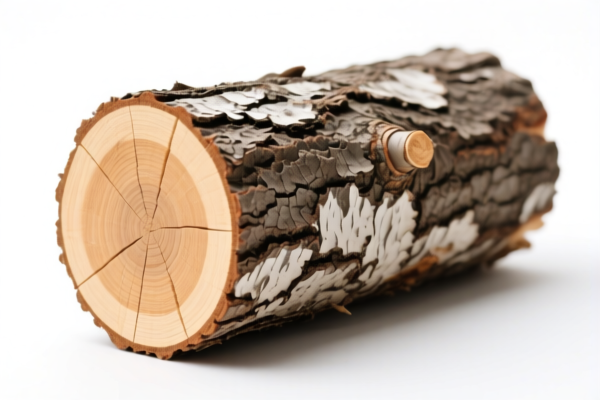
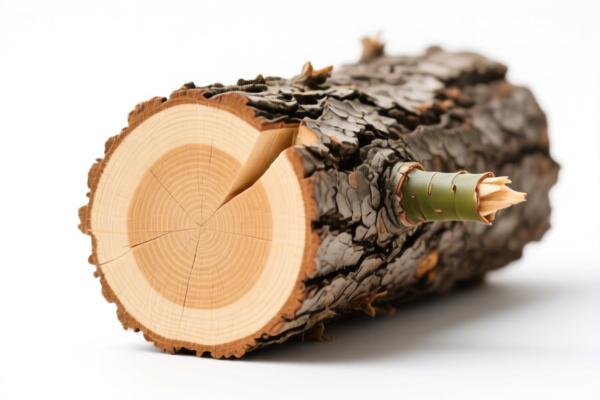
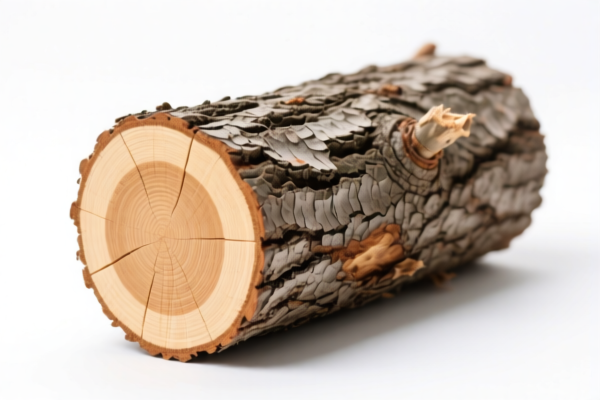

AI Analysis
🌲 Poplar Sawlog (Poplar Timber Logs)
🌐 HS Code Reference & Customs Clearance Guide | 2026 Latest Tariff Analysis | Professional通关 Strategy
📌 1. Product Definition: What is "Poplar Sawlog"?
Poplar Sawlogs refer to felled poplar trees (genus Populus) trimmed of branches and leaves, with diameters suitable for sawmilling. In international trade, these are classified as raw timber/wood in the rough, which serves as the primary raw material for plywood, particleboard, furniture, and pulp.
⚠️ Key Distinction for Classification:
- Raw Timber (Sawlogs): Unprocessed, rough form → Falls under Chapter 44 (Wood and articles of wood) or potentially Chapter 14 (Vegetable products) if treated as a general raw material.
- Processed Wood (Planks/Lumber): Sawn or chipped lengthwise → Falls under Chapter 44.07.
- Fuel Wood: Chopped or not → Falls under Chapter 44.01.
Since the input is "Sawlog", it is primarily classified as raw wood intended for further processing (sawing), making it a high-risk category for US customs due to heavy tariffs on Chinese wood products.
📦 2. HS Code Classification Details (Based on Provided Data)
The following HS codes are derived from the provided <DATA> JSON. All entries reflect Poplar Wood (杨木) in Log/Sawlog (原木) form.
| HS Code | Product Description & Summary | Primary Use/Characteristic |
|---|---|---|
4403.97.00.22 |
Poplar Wood (Untreated or Treated) Summary: Matches "Poplar Wood" and "Log" form; fits the definition of poplar and pulpwood. |
Raw timber for sawmilling or pulp. |
4403.97.00.67 |
Poplar Wood (Other) Summary: Material "Poplar" and form "Log" are fully consistent with classification explanation. |
General raw poplar logs. |
4407.97.00.79 |
Poplar Wood (Sawn or Chipped) Summary: Poplar matches required material; logs are considered raw wood material. |
Note: 4407 is for sawn wood, but data links "logs" here. Use with caution; logs usually go to 4403. |
1404.90.90.90 |
Other Plant Products Summary: Poplar is a plant material; logs are in a primary form, fitting "Other Plant Products." |
General plant raw material. |
1404.90.90.40 |
Other Vegetable Materials Summary: Logs are raw plant material, fitting "Other raw materials for dyeing/tanning." |
Raw vegetable material. |
4401.12.00.00 |
Fuel Wood (Poplar) Summary: Poplar is a non-coniferous wood; logs fit the form of fuel wood. |
High Risk: If declared as fuel, but used for timber, this is a misclassification risk. |
🔍 Critical Analysis:
-4403.97.00.xxis the most accurate classification for "Poplar Sawlogs" intended for sawmilling (timber).
-4401.12.00.00(Fuel Wood) is risky. If the logs are clearly for timber production, declaring them as fuel can lead to penalties for misdeclaration.
-1404.90.90.xxis a fallback for general vegetable products if specific wood codes are contested.
💰 3. 2026 Tariff Rate Breakdown (Detailed Tax Clauses)
✅ Applicable Country: United States (US)
✅ Origin: China (CN) (Assumed based on "122 Clause" and Chinese tax context in data)
✅ Effective Time: 2025–2026
🎯 1. 4403.97.00.22 & 4403.97.00.67 —— Poplar Logs (Timber Raw Material)
| Item | Content |
|---|---|
| Base Tariff | 0.0% (ad valorem) |
| Additional Tariff (Section 301) | +25.0% (From USITC Footnote 9903.88.01 / Section 301 List 4) |
| Clause 122 Tariff | +10.0% (Specific Clause 122 on Chinese Wood Products) |
| Total Tax Rate | 35.0% |
| Tax Calculation | CIF Value × 35% |
| De Minimis Exemption | ❌ Not Applicable (Denied) |
| Legal Basis Path | Section 301: 4403.97.00.22 → Clause 122: Poplar Logs |
📌 Explanation:
- Base Tariff (0%): Wood logs often have low base MFN rates.
- Section 301 (25%): Applies to Chinese wood products.
- Clause 122 (10%): A specific additional duty on certain Chinese wood/pulp products.
- Total 35%: This is a significant cost factor. Importers must budget for this high effective duty.
🎯 2. 4407.97.00.79 —— Poplar Wood (Sawn/Chipped)
| Item | Content |
|---|---|
| Base Tariff | 0.0% |
| Additional Tariff (Section 301) | +25.0% |
| Clause 122 Tariff | +10.0% |
| Total Tax Rate | 35.0% |
| De Minimis Exemption | ❌ Not Applicable |
📌 Note: Even if classified under 4407 (sawn wood), the total tariff remains 35% for Chinese-origin poplar.
🎯 3. 1404.90.90.90 & 1404.90.90.40 —— Other Plant Products
| Item | Content |
|---|---|
| Base Tariff | 0.0% |
| Additional Tariff (Section 301) | +25.0% |
| Clause 122 Tariff | +10.0% |
| Total Tax Rate | 35.0% |
| De Minimis Exemption | ❌ Not Applicable |
📌 Note: Even if misclassified as "general plant products," the total tariff is still 35% due to Section 301 and Clause 122.
🎯 4. 4401.12.00.00 —— Poplar Fuel Wood
| Item | Content |
|---|---|
| Base Tariff | 0.0% |
| Additional Tariff (Section 301) | +25.0% |
| Clause 122 Tariff | +10.0% |
| Total Tax Rate | 35.0% |
| De Minimis Exemption | ❌ Not Applicable |
📌 Warning: Do not declare timber logs as "fuel wood" to avoid higher duties. The total is still 35%, and misdeclaration can lead to penalties.
🛠️ 4. Customs Clearance Practical Advice
✅ 1. Required Documentation Checklist
| Document | Required | Explanation |
|---|---|---|
| Commercial Invoice | ✔️ | Must clearly state "Poplar Sawlogs," species (Populus), volume (cubic meters/board feet), and origin. |
| Packing List | ✔️ | Detail log lengths, diameters, and number of pieces. |
| Phytosanitary Certificate | ✔️ | Mandatory from China. Certifies no pests/diseases. |
| ISPM 15 Marking | ✔️ | If packed in wood pallets/crates, they must be heat-treated or fumigated with ISPM 15 stamp. |
| Bill of Lading (B/L) | ✔️ | Show weight, volume, and commodity description. |
| Fumigation Certificate | ✔️ | If applicable for logs. |
| Certificate of Origin | ✔️ | To prove Chinese origin (triggers tariffs). |
✅ 2. Declaration Tips
🔥 “Accurate Description, ISPM 15, and Phytosanitary Certificate are Key!”
| Scenario | Correct Declaration | Common Mistake |
|---|---|---|
| Raw Logs | 4403.97.00.22 - "Poplar Wood, Unprocessed Logs" |
Declaring as "Plywood" or "Furniture Parts" |
| Fuel Wood | 4401.12.00.00 - "Poplar Fuel Wood" |
Declaring timber logs as fuel to avoid scrutiny (Risky) |
| Mixed Species | Declare each species separately | Mixing poplar with other woods in one HS code |
| Volume Unit | Cubic Meters (CBM) or Board Feet | Using vague units like "pieces" without volume |
✅ 3. Special Handling
| Situation | Recommendation |
|---|---|
| Pest Inspection | CBP and APHIS will inspect for bark, pests, and rot. Ensure logs are clean. |
| ISPM 15 | If wooden packaging is used, it must be ISPM 15 compliant. Non-compliance leads to rejection. |
| Tariff Engineering | Consider if any processing can change the HS code to a lower-tariff category (e.g., finished plywood under 4412). |
| Pre-Ruling | Apply for a Binding Ruling from CBP to confirm the HS code and tariff rate. |
🌍 5. Global Market Comparison (2026)
| Country/Region | Recommended HS Code | Tariff (China Origin) | Certification | Notes |
|---|---|---|---|---|
| 🇺🇸 USA | 4403.97.00.22 |
35% (0% Base + 25% + 10%) | Phytosanitary + ISPM 15 | Highest duties; strict pest control. |
| 🇨🇳 China | 4403.97.00.22 |
5–10% | None | Low duty for imports. |
| 🇪🇺 EU | 4403.97.00.00 |
0% (if EUTR compliant) | EUTR Due Diligence | No Section 301 tariffs. |
| 🇦🇺 Australia | 4403.97.00.00 |
5% | Biosecurity Approval | Strict biosecurity. |
| 🇯🇵 Japan | 4403.97.00.00 |
5% | Fumigation Cert | Moderate duties. |
📌 Conclusion:
- USA has the highest barriers due to Section 301 and Clause 122.
- EU and Japan are more accessible with lower duties and simpler certification.
📌 6. Common Errors & Pitfalls
❌ Error 1: Declaring "Poplar Logs" as "Plywood" (4412) to avoid tariffs.
👉 Consequence: Severe penalties, seizure of goods, and blacklisting.
❌ Error 2: Missing Phytosanitary Certificate.
👉 Consequence: Goods held at port, re-exported, or destroyed.
❌ Error 3: Using non-ISPM 15 wooden pallets.
👉 Consequence: Rejection of entire shipment due to pest risk.
❌ Error 4: Incorrect volume measurement (CBM vs. Board Feet).
👉 Consequence: Under-declaration, leading to audits and back taxes.
✅ Best Practice:
"Poplar Sawlogs, Species: Populus, Volume: 100 CBM, Unprocessed, Origin: China, ISPM 15 Pallets, Phytosanitary Cert Included."
🎯 7. Conclusion: Professional Declaration, Cost Control, and Compliance
🎯 Remember the Rules:
🔹 "Logs are Logs: 35% Total Duty (0+25+10)."
🔹 "No Phytosanitary Cert? No Entry."
🔹 "ISPM 15 is Non-Negotiable."
📌 Pro Tip:
If your poplar logs are shipped from Vietnam, Malaysia, or Thailand, you may qualify for zero or lower tariffs (depending on FTA agreements) and avoid Section 301 tariffs.
Consider supply chain diversification to reduce costs.
📣 Immediate Action:
📞 Consult a licensed customs broker.
📋 Verify Phytosanitary Certificate requirements.
📝 Apply for CBP Pre-Ruling if volume is high.
✨ Professional Clearance Starts with Accurate Classification!
💼 Every Percent of Duty Counts in Wood Trade!
Customer Reviews
About HS Code Classification
The Harmonized System (HS) is an internationally standardized nomenclature developed by the World Customs Organization (WCO) to classify traded products. Over 200 countries use the HS system as the basis for customs tariffs, trade statistics, and import/export regulations.
Each HS code follows a hierarchical structure:
- Chapter (2 digits) — Broad category of goods (e.g., Chapter 84: Machinery and Mechanical Appliances)
- Heading (4 digits) — More specific grouping within the chapter
- Subheading (6 digits) — Internationally standardized breakdown, used by all WCO member countries
- National subdivisions (8-10 digits) — Country-specific extensions for further classification, such as US HTSUS 10-digit codes
Correct HS code classification is essential for smooth customs clearance, accurate duty payment, and compliance with trade regulations. Misclassification can lead to customs delays, overpayment of duties, or penalties.
When importing from CN to US, the applicable tariff rates may include:
- Most-Favored-Nation (MFN) rate — The standard duty rate applied to WTO members
- General rate — Applied to countries without trade agreements
- Trade remedy duties — Additional tariffs such as Section 301 (anti-dumping), Section 232 (national security), or countervailing duties
The information provided on this page is for reference purposes only. For official classification, please consult with your local customs authority or a licensed customs broker.