Poplar Wood
CN → US| HS Code | Tariff Rate | Origin | Destination | Doc |
|---|---|---|---|---|
| 4407970079 | 35.0% | CN | US | Official Doc |
| 9403910080 | 35.0% | CN | US | Official Doc |
| 4407970072 | 35.0% | CN | US | Official Doc |
Product Images
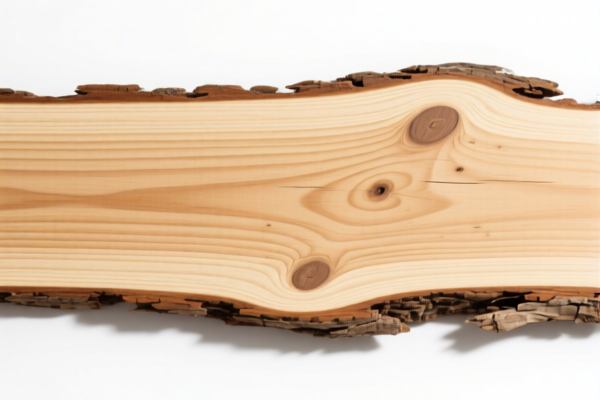
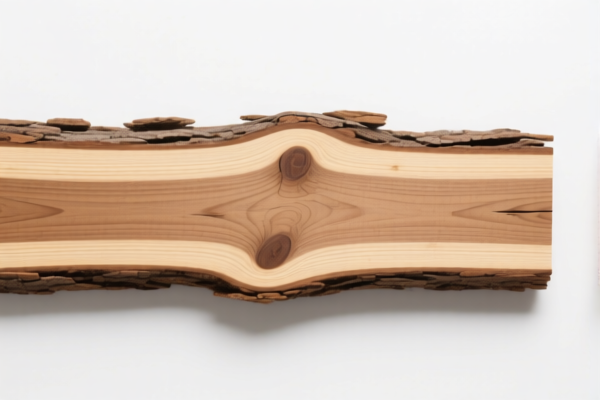
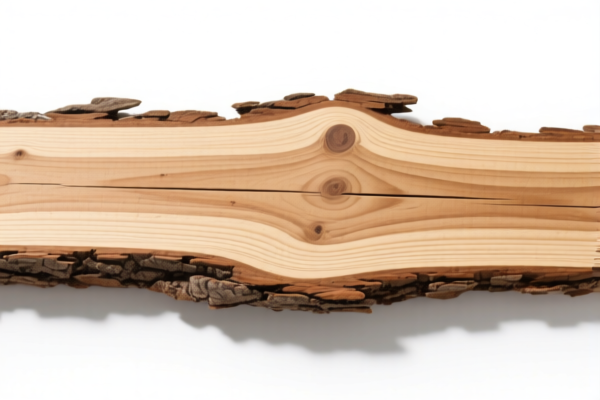
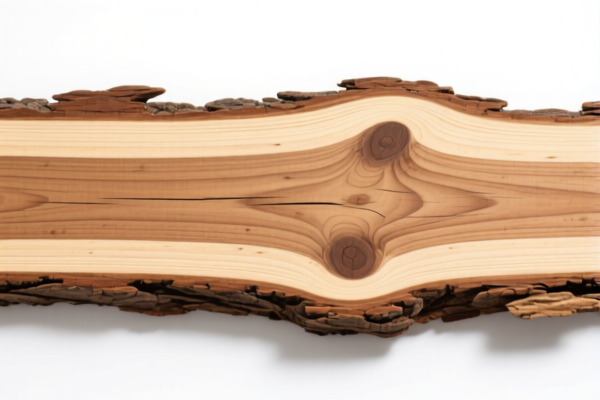
AI Analysis
🌲 Poplar Wood (Yangmu / Poplar)
🌐 HS Code Reference & Customs Clearance Guide | 2026 Latest Tariff Analysis | Professional Level通关 Strategy
📌 Part I: Product Definition & Classification: Do You Really Understand "Poplar Wood"?
Poplar wood (scientifically Populus genus, including Poplar, Trembling Aspen, and Cottonwood) is a widely used softwood in international trade, primarily for furniture manufacturing, plywood, packaging, and veneer. In international trade, it is classified based on its processing level and material characteristics.
Raw/Semi-processed Poplar (Sawn/Lathed): Wood cut to length, roughly squared, or peeled into veneer sheets;
Furniture Parts/Components: Assembled or semi-assembled wooden parts that are not yet final furniture items.
⚠️ Key Distinction Point:
- If the wood is sawn, chipped, or peeled (basic processing) → Classified under Chapter 44 (Wood and articles of wood);
- If it is part of furniture (e.g., legs, panels for cabinets) but not a complete item → Classified under Chapter 94 (Furniture) as parts/components.
📦 Part II: HS Code Classification Details (2026 Latest Tariff Authority Comparison)
| HS Code | Product Description | Applicable Scenario | Material Confirmation |
|---|---|---|---|
4407.97.00.79 |
Other wood, sawn or chipped lengthwise, sliced or peeled, dressed, planed, tongued, grooved, finger-jointed, end-jointed, or otherwise joined, thickness > 6mm | Sawn Poplar lumber, thick boards, structural wood | ✅ Poplar/Aspen/Cottonwood |
9403.91.00.80 |
Parts of furniture of wood | Poplar wood parts for furniture (e.g., cabinet doors, shelves) | ✅ Wooden (Poplar inferred) |
4407.97.00.72 |
Other wood, sawn or chipped lengthwise, sliced or peeled, thickness > 6mm | General Poplar/Liriodendron tulipifera timber | ✅ Poplar/Liriodendron |
🔍 Key Reminder:
- All raw or semi-processed poplar wood must be classified under Chapter 44 (4407 series);
- If the product is specifically parts of wooden furniture, it may fall under 9403.91.00.80 as a "catch-all" category when no specific material conflict exists.
💰 Part III: 2026 Latest Tariff Rate Details (Including Additional Taxes & Policy Surcharges)
✅ Applicable Country: United States (US)
✅ Origin: China (CN)
✅ Effective Date: November 10, 2025 onwards (for subsequent imports)
🎯 1. 4407.97.00.79 – Sawn/Peel Poplar Wood (Thickness > 6mm)
| Item | Content |
|---|---|
| Base Tariff Rate | 0% (ad valorem) |
| USITC Additional Tax | +25% (from USITC Footnote 9903.88.01) |
| IEEPA Additional Tax | +10% (targeting China/Hong Kong products, effective Nov 10, 2025) |
| Total Tariff Rate | 45% |
| Tax Calculation | CIF Value × 45% |
| De Minimis Exemption Eligibility | ❌ Not Eligible (deny_de_minimis) |
| Legal Basis Path | IEEPA:9903.01.25 → IEEPA:9903.01.24 → USITC:4407.97.00.79 → FOOTNOTE:9903.88.01 |
📌 Explanation:
- The "USITC Additional Tax 25%" comes from the "Section 301 Additional Tariffs" under US Trade Law;
- The "IEEPA 10%" is the additional tariff on Chinese products under the International Emergency Economic Powers Act;
- Total 45%, considered a high tariff rate, must be anticipated in advance!
🎯 2. 9403.91.00.80 – Parts of Furniture of Wood
| Item | Content |
|---|---|
| Base Tariff Rate | 0% |
| USITC Additional Tax | +25% |
| IEEPA Additional Tax | +10% |
| Total Tariff Rate | 45% |
| Tax Calculation | CIF × 45% |
| De Minimis Exemption Eligibility | ❌ Not Eligible |
| Legal Basis Path | IEEPA:9901.25 → IEEPA:9903.01.24 → USITC:9403.91.00.80 → FOOTNOTE:9903.88.01 |
📌 Note:
- Same as above, belongs to "Wooden Components";
- Whether it is "Poplar cabinet parts" or "Aspen drawer slides," as long as it is wooden furniture parts, this tariff applies.
🎯 3. 4407.97.00.72 – Other Sawn/Peel Wood (Poplar/Liriodendron)
| Item | Content |
|---|---|
| Base Tariff Rate | 0% |
| USITC Additional Tax | +25% |
| IEEPA Additional Tax | +10% |
| Total Tariff Rate | 45% |
| Tax Calculation | CIF × 45% |
| De Minimis Exemption Eligibility | ❌ Not Eligible |
| Legal Basis Path | IEEPA:9903.01.25 → IEEPA:9903.01.24 → USITC:4407.97.00.72 → FOOTNOTE:9903.88.01 |
📌 Note:
- Same tariff structure as4407.97.00.79;
- Even if labeled as "Poplar" or "Liriodendron tulipifera" (Tulip Poplar), as long as it is sawn/peeled wood >6mm, it falls under this category.
🛠️ Part IV: Customs Clearance Practical Advice (Practical Pitfall Avoidance Guide)
✅ 1. Required Documents Checklist (None Can Be Omitted)
| Document | Must Provide | Description |
|---|---|---|
| ✅ Product Specification Sheet | ✔️ | Includes dimensions, moisture content, grade, processing type |
| ✅ Material Confirmation Letter | ✔️ | Explicitly states "Poplar/Aspen/Cottonwood," no mixed materials |
| ✅ Product Photos (Including Label) | ✔️ | Clear display of wood grain, markings, moisture tags |
| ✅ Third-Party Inspection Report | ✔️ | Fumigation Certificate, ISPM 15 Compliance (if applicable) |
| ✅ Commercial Invoice | ✔️ | Clearly mark "Sawn Poplar Wood" or "Poplar Furniture Parts" |
| ✅ Certificate of Origin (CO) | ✔️ | If not Chinese origin, preferential tariff may apply |
| ✅ Packing List | ✔️ | Explain relationship between bulk wood and components |
✅ 2. Declaration Tips (Key Mnemonics)
🔥 "Raw wood goes to Ch44, Furniture parts to Ch94, Name accurate, tax avoids half!"
| Situation | Correct Declaration Method | Wrong Practice |
|---|---|---|
| Sawn Poplar Lumber | 4407.97.00.79 or 4407.97.00.72 |
Misdeclared as "Furniture" → 45% |
| Poplar Cabinet Doors/Shelves | 9403.91.00.80 |
Misdeclared as "Raw Wood" → 45% |
| Mixed Material Wood | Must declare main material | Hidden mixed materials → Penalty + Delay |
| Raw Poplar Veneer | 4408.10.00.00 (if <6mm) |
Misdeclared as >6mm board → 45% |
✅ 3. Special Circumstances Handling
| Situation | Handling Advice |
|---|---|
| OEM Custom Wood Parts | Provide customer order + design drawings to avoid being deemed "non-standard" |
| Wood with Moisture Content Issues | Provide ISPM 15 Fumigation Certificate to avoid quarantine delays |
| Wood Used in Medical Equipment | If special purpose, apply for "non-commercial use" exemption, but need proof |
| Wood Used in Military/Aerospace | Apply for "special purpose" declaration, tariff may be reduced, communicate in advance |
🌍 Part V: Global Main Market Customs Clearance Comparison (2026 Latest)
| Country/Region | Recommended HS Code | Tariff | Certification Requirements | Remarks |
|---|---|---|---|---|
| 🇺🇸 USA | 4407.97.00.79 |
45% (Chinese origin) | None | High tariff due to Section 301 |
| 🇨🇳 China | 4407.97.00.79 |
5% | None | No additional surtax |
| 🇪🇺 EU | 4407.97.00.79 |
0% (if compliant with CE) | CE + FSC (if sustainable) | No additional tax |
| 🇦🇺 Australia | 4407.97.00.79 |
5% | RCM | No additional tax |
| 🇯🇵 Japan | 4407.97.00.79 |
0% | PSE | No additional tax |
📌 Conclusion:
- USA is the only market imposing high additional tariffs on poplar wood;
- Chinese-origin poplar wood faces extremely high clearance costs in the US;
- Suggest early evaluation of whether to shift production or adjust supply chain.
📌 Part VI: Common Errors & Pitfall Avoidance Guide (Blood Lessons)
❌ Mistake 1: Declaring "Furniture Parts" as "Raw Wood"
👉 Consequence: Tariff from 45% to 0% → Under-declaration + Fine!
❌ Mistake 2: Declaring "Raw Wood" as "Furniture"
👉 Consequence: Tariff from 0% to 45% → Overpayment + Penalty!
❌ Mistake 3: No material confirmation, only writing "Wood"
👉 Consequence: Customs cannot determine material → Delay or Return
❌ Mistake 4: Using "Wooden Board" as Declaration Name
👉 Consequence: If actually furniture parts, misclassification → Fine + Late Fee
✅ Correct Practice:
"Sawn Poplar Wood, 20mm thickness, Moisture Content 12%, ISPM 15 Compliant, Grade A, Model XYZ, Certified by [Lab Name]"
🎯 Part VII: Conclusion: Professional Declaration, Save Time and Cost!
🎯 Remember Mnemonics:
🔹 "Raw wood Ch44, Parts Ch94, Name accurate, tax avoids half!"
🔹 "HS Code determines life, tariff difference 25 points, declaration one step wrong, thousands in penalties!"
📌 Tips:
If your poplar wood originates from Vietnam, Mexico, Thailand, Malaysia, you may apply for IEEPA Exemption, tariff only 0%~5%;
Suggest applying for Advance Ruling in advance to avoid clearance risks.
📣 Immediate Action:
📞 Contact professional customs broker + Provide product photos + Apply for HS Code Advance Ruling
🚀 Let your poplar wood clear customs smoothly, export efficiently, double profits!
✨ Professional Customs Clearance, Starting with Accurate Classification!
💼 Every cent of your cost deserves to be precisely calculated!
Customer Reviews
About HS Code Classification
The Harmonized System (HS) is an internationally standardized nomenclature developed by the World Customs Organization (WCO) to classify traded products. Over 200 countries use the HS system as the basis for customs tariffs, trade statistics, and import/export regulations.
Each HS code follows a hierarchical structure:
- Chapter (2 digits) — Broad category of goods (e.g., Chapter 84: Machinery and Mechanical Appliances)
- Heading (4 digits) — More specific grouping within the chapter
- Subheading (6 digits) — Internationally standardized breakdown, used by all WCO member countries
- National subdivisions (8-10 digits) — Country-specific extensions for further classification, such as US HTSUS 10-digit codes
Correct HS code classification is essential for smooth customs clearance, accurate duty payment, and compliance with trade regulations. Misclassification can lead to customs delays, overpayment of duties, or penalties.
When importing from CN to US, the applicable tariff rates may include:
- Most-Favored-Nation (MFN) rate — The standard duty rate applied to WTO members
- General rate — Applied to countries without trade agreements
- Trade remedy duties — Additional tariffs such as Section 301 (anti-dumping), Section 232 (national security), or countervailing duties
The information provided on this page is for reference purposes only. For official classification, please consult with your local customs authority or a licensed customs broker.