Portable Apple Watch Charger
CN → US| HS Code | Tariff Rate | Origin | Destination | Doc |
|---|---|---|---|---|
| 8504407007 | 35.0% | CN | US | Official Doc |
| 8504409520 | 35.0% | CN | US | Official Doc |
| 8507808200 | 38.4% | CN | US | Official Doc |
Product Images
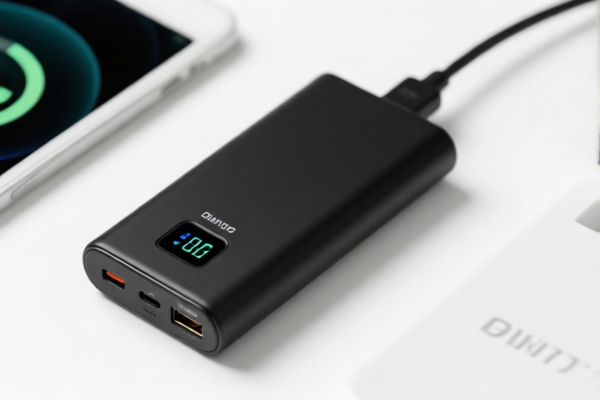
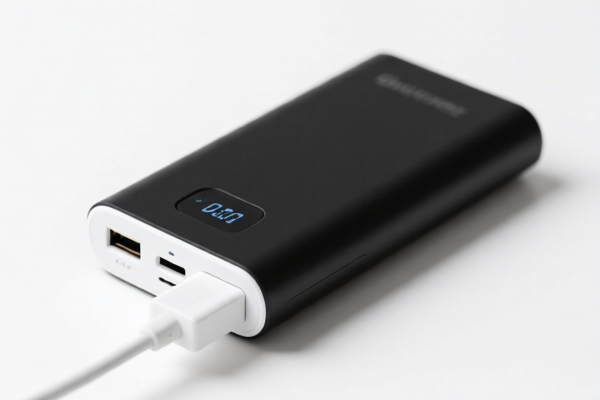
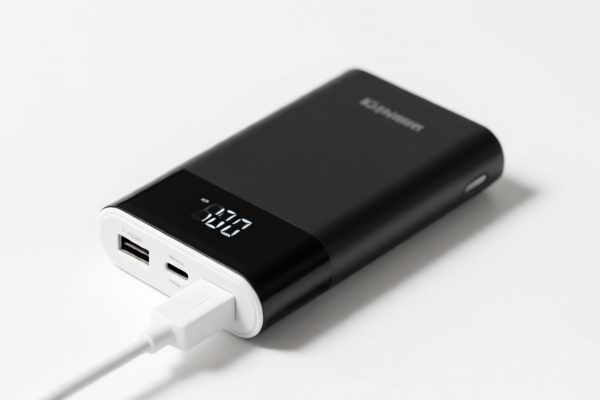
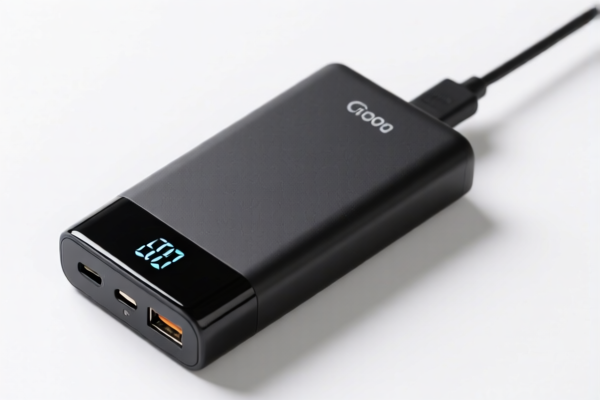
AI Analysis
🔋 Portable Apple Watch Charger (Wireless Charging Pads)
🌐 HS Code Reference & Customs Clearance Guide | 2026 Latest Tariff Analysis | Professional Strategy for Cross-Border E-Commerce
📌 I. Product Definition & Classification: What Exactly Is a "Portable Charger"?
A Portable Apple Watch Charger is typically a standalone wireless charging device designed specifically for smartwatches. In international trade, its classification depends heavily on its internal structure: * Pure Power Supply/Rectifier: If the device consists only of the charging coil, circuit board, and casing (no battery inside), it is classified as a "Static Converter" or "Power Supply." * Battery-Powered Unit: If the device includes a built-in lithium-ion battery to function as a portable power bank plus a charger, it is classified as a "Storage Battery" or "Part of a Battery."
⚠️ Critical Distinction:
- No Battery Inside → Classified under Chapter 85 (Electrical Machinery/Power Supplies).
- With Battery Inside → Classified under Chapter 85 (Specifically Batteries) or potentially Chapter 91 (if considered a watch part, though rare for generic chargers).
Note: Most "Apple Watch Chargers" sold as accessories are pure power supplies without batteries. However, if marketed as a "Portable Power Bank for Watch," it changes.
📦 II. HS Code Classification Details (2026 Latest Tariff Authority Mapping)
Based on the provided data, there are three primary HS Code options depending on the specific technical configuration of the charger.
| HS Code | Product Description | Key Characteristic | Total Tax Rate (China to US) |
|---|---|---|---|
8504.40.70.07 |
Static Converters | Output power range fits other categories; treated as a general static converter. | 35.0% |
8504.40.95.20 |
Rectifying Equipment / Power Supplies | Specifically identified as rectifying equipment or power supply units consistent with power functions. | 35.0% |
8507.80.82.00 |
Electric Storage Batteries | The device is primarily a Lithium-ion battery pack with charging capability (Power Bank style). | 38.4% |
🔍 Key Insight:
- The majority of dedicated Apple Watch charging pads (magnetic, plug-in or USB-C) fall under 8504 (Static Converters/Power Supplies).
- The tax rate is higher (38.4%) if the device is essentially a battery pack (8507), because battery products often carry higher base tariffs.
- Do not misclassify a simple charging pad as a battery to save on base tariffs if it doesn't contain a battery; this leads to customs audits.
💰 III. 2026 Latest Tariff Rate Breakdown (Including Surtaxes)
✅ Applicable Country: United States (US)
✅ Country of Origin: China (CN)
✅ Effective Date: November 10, 2025 onwards
🎯 1. 8504.40.70.07 & 8504.40.95.20 — Static Converters / Power Supplies
| Item | Content |
|---|---|
| Base Tariff (MFN) | 0.0% (Ad Valorem) |
| Section 301 Surtax | +25.0% (USITC Footnote 9903.88.01) |
| IEEPA Surtax (Section 122/123) | +10.0% (Against Chinese/ Hong Kong products, effective Nov 10, 2025) |
| Total Effective Rate | 35.0% |
| Tax Calculation | CIF Value × 35% |
| De Minimis Exemption | ❌ NOT Eligible (Section 301 and IEEPA surcharges usually negate the $800 de minimis exemption for direct shipments from China) |
| Legal Basis Path | IEEPA:9903.01.24 → USITC:8504.40.70.00 → FOOTNOTE:9903.88.01 |
📌 Explanation:
- Base Rate (0%): These goods are generally considered electronic accessories with low base duties.
- 301 Clause (25%): All electrical machinery and parts from China are subject to this major surtax.
- IEEPA 10%: A new/additional layer of tariff targeting specific Chinese imports.
- Total 35%: This is a significant cost. For a $10 charger, the duty is $3.50.
🎯 2. 8507.80.82.00 — Electric Storage Batteries (If applicable)
| Item | Content |
|---|---|
| Base Tariff | 3.4% |
| Section 301 Surtax | +25.0% |
| IEEPA Surtax | +10.0% |
| Total Effective Rate | 38.4% |
| Tax Calculation | CIF Value × 38.4% |
| De Minimis Exemption | ❌ NOT Eligible |
📌 Explanation:
- If your "charger" is actually a power bank that charges the watch, it falls here.
- The base tariff is 3.4%, which is higher than the 0% for pure power supplies.
- Even though the base is higher, the surtaxes remain the same, resulting in a higher total rate (38.4% vs 35%).
🛠️ IV. Customs Clearance Practical Advice (Avoid Pitfalls)
✅ 1. Documentation Checklist (Mandatory)
| Document | Required? | Notes |
|---|---|---|
| ✅ Product Specifications | ✔️ | Must clearly state: "Wireless Charging Pad," "Input: 5V/2A," "Output: Qi Standard." |
| ✅ Circuit Diagram / Block Diagram | ✔️ | Crucial: Prove there is NO battery inside. If there is a battery, declare as 8507. |
| ✅ Product Photos | ✔️ | Show the device unboxed. If opened, show no internal lithium cell. |
| ✅ Commercial Invoice | ✔️ | Describe as "Apple Watch Wireless Charging Adapter," NOT "Battery Pack." |
| ✅ Certificate of Origin (CO) | ✔️ | For China origin proof. |
| ✅ FCC Certification | ✔️ | Required for wireless charging devices (RF emissions) in the US. |
✅ 2. Classification Strategy & Keywords
🔥 Golden Rule: "If no battery, call it a Converter. If battery, call it a Storage Battery."
| Scenario | Recommended HS Code | Warning |
|---|---|---|
| Standard Magnetic Pad (No battery) | 8504.40.70.07 or 8504.40.95.20 |
✅ Correct. Lowest total tax (35%). |
| Power Bank for Watch (With battery) | 8507.80.82.00 |
⚠️ Higher tax (38.4%). Do not hide the battery. |
| Watch Straps / Bands | 9113.90.00.00 |
❌ Do not mix chargers with bands in one HS code. |
✅ 3. Special Considerations for "Portable"
- "Portable" is a Marketing Term: Customs does not care if it's "portable." They care if it's battery-powered.
- If it plugs into a wall or USB for power and has no internal energy storage → 8504.
- If it stores energy to charge the watch away from a wall → 8507.
- De Minimis Risk: Many sellers try to ship these under the $800 De Minimis (Section 321) for direct mail. This is high-risk. Section 301 (25%) and IEEPA (10%) surcharges do not apply to de minimis exemptions for China-origin goods in many enforcement contexts, or CBP actively challenges them. Plan for full duty payment.
🌍 V. Global Market Comparison (2026)
| Market | Recommended HS Code | Estimated Total Duty (China Origin) | Notes |
|---|---|---|---|
| 🇺🇸 USA | 8504.40.70.07 |
35.0% | Highest due to 301 + IEEPA surtaxes. |
| 🇬🇧 UK | 8504.40.70 |
~5-7% + VAT | Post-Brexit rules apply; no US-style surtaxes. |
| 🇪🇺 EU | 8504.40.70 |
0-2.7% | Generally low base duty; no Section 301 equivalent. |
| 🇨🇦 Canada | 8504.40.70 |
~0% (if USMCA) | Check for USMCA eligibility if assembled in NA. |
📌 Conclusion:
The US is the most expensive market for this product due to the叠加 (stacking) of tariffs. Profit margins must account for this 35% duty cost.
📌 VI. Common Mistakes & Pitfalls (Lessons Learned)
❌ Mistake 1: Declaring as "Power Bank" when it has no battery.
👉 Consequence: Customs may reject it or force a re-classification, leading to delays and penalties. Also, 8507 has a higher base rate.
❌ Mistake 2: Declaring as "Watch Part" (Chapter 91).
👉 Consequence: Incorrect classification. Chargers are classified under Chapter 85 (Electrical). Chapter 91 is for mechanical watches and specific watch parts, not universal electronic chargers.
❌ Mistake 3: Assuming "Small Value Shipment" (De Minimis) exempts from 301/122 tariffs.
👉 Consequence: CBP is increasingly auditing de minimis entries from China for electronics. Expect duty collection.
🎯 VII. Conclusion: Professional Clearance for Maximum Efficiency
🎯 Key Takeaway:
🔹 "No Battery = 8504 (35% Total). With Battery = 8507 (38.4% Total)."
🔹 "US Tariffs are HIGH (35%). Plan your pricing accordingly."
🔹 "FCC Certification is Mandatory for Wireless Charging."
📌 Pro Tip:
If you are dropshipping or selling on Amazon US, ensure your Supplier's Declaration explicitly states "No Internal Battery" to justify HS Code 8504. If your device is a "Travel Charging Kit" with a battery, be prepared for the higher 38.4% rate.
✨ Professional Clearance Starts with Accurate Classification!
💼 Every penny in duty is a penny less in profit. Get it right!
Customer Reviews
About HS Code Classification
The Harmonized System (HS) is an internationally standardized nomenclature developed by the World Customs Organization (WCO) to classify traded products. Over 200 countries use the HS system as the basis for customs tariffs, trade statistics, and import/export regulations.
Each HS code follows a hierarchical structure:
- Chapter (2 digits) — Broad category of goods (e.g., Chapter 84: Machinery and Mechanical Appliances)
- Heading (4 digits) — More specific grouping within the chapter
- Subheading (6 digits) — Internationally standardized breakdown, used by all WCO member countries
- National subdivisions (8-10 digits) — Country-specific extensions for further classification, such as US HTSUS 10-digit codes
Correct HS code classification is essential for smooth customs clearance, accurate duty payment, and compliance with trade regulations. Misclassification can lead to customs delays, overpayment of duties, or penalties.
When importing from CN to US, the applicable tariff rates may include:
- Most-Favored-Nation (MFN) rate — The standard duty rate applied to WTO members
- General rate — Applied to countries without trade agreements
- Trade remedy duties — Additional tariffs such as Section 301 (anti-dumping), Section 232 (national security), or countervailing duties
The information provided on this page is for reference purposes only. For official classification, please consult with your local customs authority or a licensed customs broker.