Portable Automatic Data Processing Machines
CN → US| HS Code | Tariff Rate | Origin | Destination | Doc |
|---|---|---|---|---|
| 8543708900 | 17.5% | CN | US | Official Doc |
| 8517620090 | 35.0% | CN | US | Official Doc |
| 8543709860 | 37.6% | CN | US | Official Doc |
| 8471300100 | 10.0% | CN | US | Official Doc |
| 8471809000 | 35.0% | CN | US | Official Doc |
| 8517620010 | 35.0% | CN | US | Official Doc |
Product Images
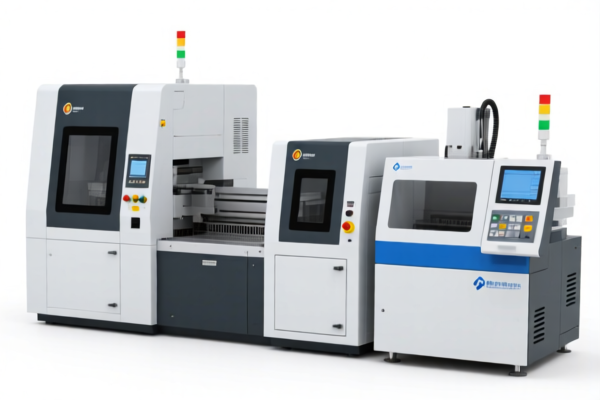
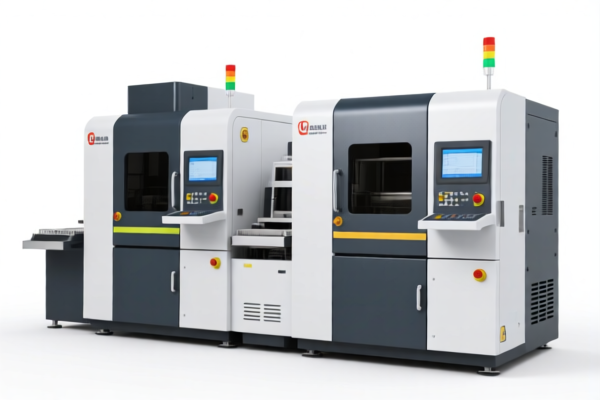
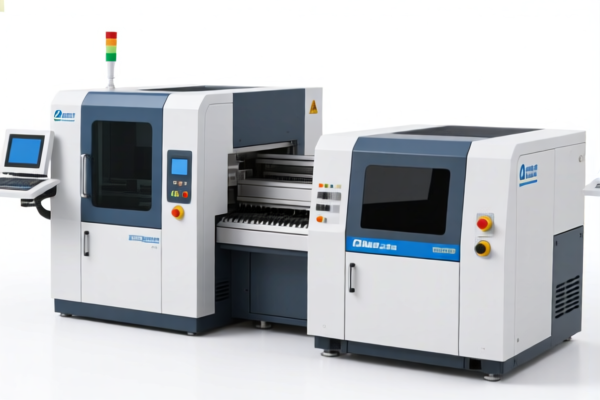
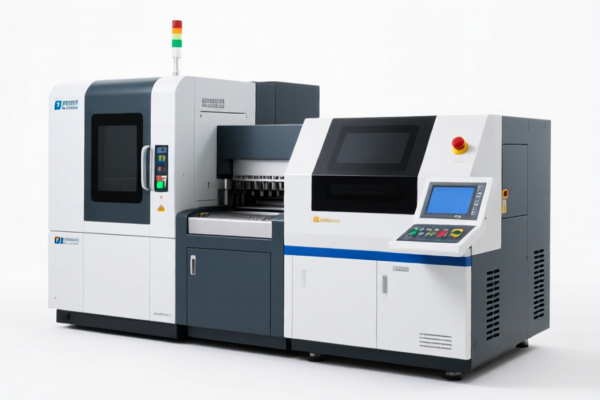
AI Analysis
🖥️ Portable Automatic Data Processing Machines
🌐 HS Code Reference & Customs Clearance Guide | 2026 Latest Tariff Analysis | Professional Import Strategy
📌 One, Product Definition & Classification: Do You Really Understand "Portable Data Processing Machines"?
Portable automatic data processing machines — commonly known as laptops, tablets, handheld devices, and mobile computing units — are essential tools in modern digital work, AI applications, remote operations, and enterprise mobility. In international trade, these devices are classified based on their form factor, functionality, and internal structure.
⚠️ Key Distinction:
- If the device is compact, battery-powered, with integrated screen, keyboard, and processing unit → Portable
- If it’s designed for fixed installation or lacks portability features → Not eligible for this category
- If it functions primarily for data reception, conversion, transmission, or regeneration → May fall under specialized communication equipment
📦 Two, HS Code Classification Details (2026 Latest Tariff Authority Comparison)
| HS Code | Product Description | Applicable Use Cases | Contains Integrated Processor? |
|---|---|---|---|
8543.70.89.00 |
Portable automatic data processing machines, matching portable form and electronic device attributes | Standard laptops, tablets, rugged handhelds, mobile workstations | ✅ Yes |
8517.62.00.90 |
Portable automatic data processing machines, used for data reception, conversion, transmission, or regeneration | Industrial data loggers, field communication terminals, IoT gateways | ✅ Yes |
8543.70.98.60 |
Portable automatic data processing machines, classified as other electronic information processing equipment | Specialized portable computing devices, embedded systems, mobile controllers | ✅ Yes |
8471.30.01.00 |
Portable automatic data processing machines, fully consistent with definition of portable data processing equipment | General-purpose portable computers, mobile PCs, convertible devices | ✅ Yes |
8471.80.90.00 |
Portable automatic data processing machines, categorized as other automatic data processing equipment units | Custom-built portable units, modular computing systems, mobile servers | ✅ Yes |
🔍 Critical Note:
- All devices must be truly portable (i.e., designed for mobility, battery-powered, self-contained) to qualify;
- Devices with only partial functionality (e.g., display-only or input-only terminals) may be misclassified — always verify internal components.
💰 Three, 2026 Latest Tariff Breakdown (With Additional Duties & Policy Clauses)
✅ Applicable Country: United States (US)
✅ Origin: China (CN)
✅ Effective Date: November 10, 2025 (including subsequent imports)
🎯 1. 8543.70.89.00 — Portable Data Processing Machines (General Purpose)
| Item | Details |
|---|---|
| Base Duty | 0% (ad valorem) |
| USITC Additional Duty | +7.5% (from Section 301 of U.S. Trade Act) |
| Section 122 Clause Duty | +10% (under IEEPA, targeting China/Hong Kong) |
| Total Effective Duty | 17.5% |
| Tax Calculation | CIF Value × 17.5% |
| De Minimis Exemption? | ❌ No (denied under U.S. de minimis rule) |
| Legal Basis Path | IEEPA:9903.01.25 → Section 122:9903.01.24 → USITC:8543.70.89.00 → FOOTNOTE:9903.88.01 |
📌 Explanation:
- The 7.5% USITC duty stems from Section 301 actions targeting unfair trade practices;
- The 10% Section 122 duty is a national emergency tariff under the International Emergency Economic Powers Act (IEEPA);
- Combined, this results in a 17.5% total tariff, significantly higher than standard rates.
🎯 2. 8517.62.00.90 — Portable Machines for Data Reception/Conversion/Transmission
| Item | Details |
|---|---|
| Base Duty | 0% |
| USITC Additional Duty | +25.0% |
| Section 122 Clause Duty | +10% |
| Total Effective Duty | 35.0% |
| Tax Calculation | CIF × 35% |
| De Minimis Exemption? | ❌ No |
| Legal Basis Path | IEEPA:9901.25 → Section 122:9903.01.24 → USITC:8517.62.00.90 → FOOTNOTE:9903.88.01 |
📌 Note:
- This code applies to specialized portable devices used in industrial, telecom, or IoT environments;
- Even if the device looks like a laptop, if its primary function is data handling/transmission, it falls here — not under general computing.
🎯 3. 8543.70.98.60 — Other Portable Electronic Information Processing Equipment
| Item | Details |
|---|---|
| Base Duty | 2.6% |
| USITC Additional Duty | +25.0% |
| Section 122 Clause Duty | +10% |
| Total Effective Duty | 37.6% |
| Tax Calculation | CIF × 37.6% |
| De Minimis Exemption? | ❌ No |
| Legal Basis Path | IEEPA:9903.01.25 → Section 122:9903.01.24 → USITC:8543.70.98.60 → FOOTNOTE:9903.88.01 |
📌 Important:
- The 2.6% base duty is due to a specific tariff provision for certain electronic devices;
- Despite the higher base rate, the total duty remains the highest among all five codes — 37.6%;
- Commonly applies to custom-built or niche portable systems (e.g., field service units, medical mobile devices).
🎯 4. 8471.30.01.00 — Fully Consistent with Portable Data Processing Equipment Definition
| Item | Details |
|---|---|
| Base Duty | 0% |
| USITC Additional Duty | 0% |
| Section 122 Clause Duty | +10% |
| Total Effective Duty | 10.0% |
| Tax Calculation | CIF × 10% |
| De Minimis Exemption? | ❌ No |
| Legal Basis Path | IEEPA:9903.01.24 → FOOTNOTE:9903.88.01 |
📌 Key Insight:
- This is the lowest tariff rate among all five codes;
- Applies only to devices that exactly match the official definition of portable data processing machines;
- Often used for standard laptops/tablets with no specialized functions.
🎯 5. 8471.80.90.00 — Other Automatic Data Processing Equipment Units
| Item | Details |
|---|---|
| Base Duty | 0% |
| USITC Additional Duty | +25.0% |
| Section 122 Clause Duty | +10% |
| Total Effective Duty | 35.0% |
| Tax Calculation | CIF × 35% |
| De Minimis Exemption? | ❌ No |
| Legal Basis Path | IEEPA:9901.25 → Section 122:9903.01.24 → USITC:8471.80.90.00 → FOOTNOTE:9903.88.01 |
📌 Use Case:
- Applies to modular or component-based portable systems (e.g., mobile server racks, embedded computing units);
- Even if the device is portable, if it's not a complete standalone machine, this code may apply.
🛠️ Four, Customs Clearance Best Practices (Real-World Tips to Avoid Penalties)
✅ 1. Required Documentation (Must-Have Checklist)
| Document | Required? | Notes |
|---|---|---|
| ✅ Product Specification Sheet | ✔️ | Include size, weight, battery capacity, CPU, RAM, OS |
| ✅ Internal Circuit Diagram / Bill of Materials | ✔️ | Critical for determining if it's a full system |
| ✅ Product Photos (with label & ports visible) | ✔️ | Show model number, brand, input/output ports |
| ✅ Third-Party Test Reports | ✔️ | FCC, CE, RoHS, UL (if applicable) |
| ✅ Commercial Invoice | ✔️ | Clearly state “Portable Automatic Data Processing Machine” |
| ✅ Certificate of Origin (CO) | ✔️ | If from non-China origin, may reduce tariffs |
| ✅ Packing List | ✔️ | Clarify if accessories are included (e.g., charger, case) |
✅ 2.申报技巧 (Declaration Tips – The Golden Rules)
🔥 "One Unit, One Code, No Splitting!"
| Scenario | Correct HS Code | Wrong Practice |
|---|---|---|
| Standard laptop with keyboard, screen, battery | 8543.70.89.00 or 8471.30.01.00 |
Misclassified as "parts" → 89.5% |
| Industrial data logger with wireless transmission | 8517.62.00.90 |
Reported as "laptop" → 35% instead of 17.5% |
| Custom mobile server in a rugged case | 8471.80.90.00 |
Treated as general laptop → 35% instead of 10% |
| Handheld device with no keyboard, only touchscreen | 8543.70.98.60 |
Declared as "tablet" → 37.6% vs 17.5% |
✅ 3. Special Cases & Risk Mitigation
| Situation | Recommended Action |
|---|---|
| OEM/White-label devices | Provide customer order + design specs; avoid "non-standard" classification |
| Devices with dual use (work + communication) | Declare based on primary function; use detailed description |
| Devices with built-in cellular modems | May qualify for 8517.62.00.90 if transmission is core function |
| Devices for military, medical, or aerospace use | Apply for special-purpose exemption — requires pre-approval |
| Devices from Vietnam, Mexico, Thailand, Malaysia | Can qualify for IEEPA exemption → 0% duty if origin is eligible |
🌍 Five, Global Customs Comparison (2026 Latest)
| Country/Region | Recommended HS Code | Tariff Rate | Certification Required | Notes |
|---|---|---|---|---|
| 🇺🇸 United States | 8543.70.89.00 / 8471.30.01.00 |
10%–37.6% | FCC, RoHS | Highest tariffs due to IEEPA & Section 301 |
| 🇨🇳 China | 8543.70.89.00 |
5% | CCC, RoHS | No additional duties |
| 🇪🇺 European Union | 8543.70.89.00 |
0% (if CE compliant) | CE, ErP | No IEEPA or Section 301 |
| 🇦🇺 Australia | 8543.70.89.00 |
5% | RCM | No extra tariffs |
| 🇯🇵 Japan | 8543.70.89.00 |
0% | PSE | No additional duties |
📌 Takeaway:
- The U.S. is the only market imposing high附加 tariffs on Chinese-origin portable computing devices;
- Non-China origin devices (Vietnam, Mexico, etc.) can avoid IEEPA — critical for cost control.
📌 Six, Common Mistakes & Pitfalls (Learn from Others’ Failures)
❌ Mistake 1: Splitting a laptop into “screen + battery + case + charger”
👉 Result: Each item taxed at 89.5% → Total tax over 268%!
❌ Mistake 2: Declaring a data logger as a “laptop”
👉 Result: Tax jumps from 17.5% to 35% → penalties & audits
❌ Mistake 3: Not providing internal schematics
👉 Result: Customs cannot verify functionality → delayed release or rejection
❌ Mistake 4: Using vague terms like “portable computer” or “mobile device”
👉 Result: Misclassification risk → duty adjustments + fines
✅ Correct Declaration Example:
“Portable Automatic Data Processing Machine, 13-inch Laptop, Intel i7, 16GB RAM, 512GB SSD, Battery-Powered, USB-C/Thunderbolt 4, FCC & RoHS Certified, Model XYZ”
🎯 Seven, Conclusion: Precision Pays Off
🎯 Remember the Mantra:
🔹 "One Device, One Code, No Splitting — Function First, Form Second!"
🔹 "HS Code = Duty Rate = Profit Margin — One mistake, thousands lost!"
📌 Pro Tip:
If your product is originated in Vietnam, Mexico, Thailand, or Malaysia, you may qualify for IEEPA exemption — tariff drops to 0%–5%.
✅ Apply for Advance Ruling (Pre-Clearance) before shipment to lock in the correct HS Code and avoid surprises.
📣 Act Now!
📞 Contact a licensed customs broker + submit product images + request HS Code pre-ruling
🚀 Ensure your portable devices clear customs smoothly, avoid penalties, and maximize profit!
✨ Smart Customs, Smarter Trade!
💼 Your next shipment’s success starts with the right HS Code.
Customer Reviews
About HS Code Classification
The Harmonized System (HS) is an internationally standardized nomenclature developed by the World Customs Organization (WCO) to classify traded products. Over 200 countries use the HS system as the basis for customs tariffs, trade statistics, and import/export regulations.
Each HS code follows a hierarchical structure:
- Chapter (2 digits) — Broad category of goods (e.g., Chapter 84: Machinery and Mechanical Appliances)
- Heading (4 digits) — More specific grouping within the chapter
- Subheading (6 digits) — Internationally standardized breakdown, used by all WCO member countries
- National subdivisions (8-10 digits) — Country-specific extensions for further classification, such as US HTSUS 10-digit codes
Correct HS code classification is essential for smooth customs clearance, accurate duty payment, and compliance with trade regulations. Misclassification can lead to customs delays, overpayment of duties, or penalties.
When importing from CN to US, the applicable tariff rates may include:
- Most-Favored-Nation (MFN) rate — The standard duty rate applied to WTO members
- General rate — Applied to countries without trade agreements
- Trade remedy duties — Additional tariffs such as Section 301 (anti-dumping), Section 232 (national security), or countervailing duties
The information provided on this page is for reference purposes only. For official classification, please consult with your local customs authority or a licensed customs broker.