Portable Bag
CN → US| HS Code | Tariff Rate | Origin | Destination | Doc |
|---|---|---|---|---|
| 3926902100 | 21.7% | CN | US | Official Doc |
| 3926909989 | 22.8% | CN | US | Official Doc |
| 9018390020 | 10.0% | CN | US | Official Doc |
| 4014905000 | 14.2% | CN | US | Official Doc |
| 4014901000 | 10.0% | CN | US | Official Doc |
Product Images
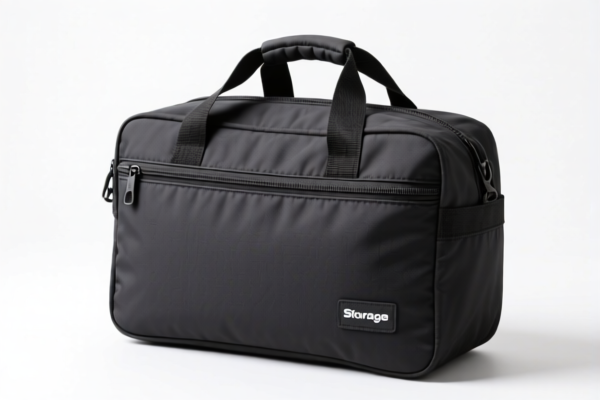
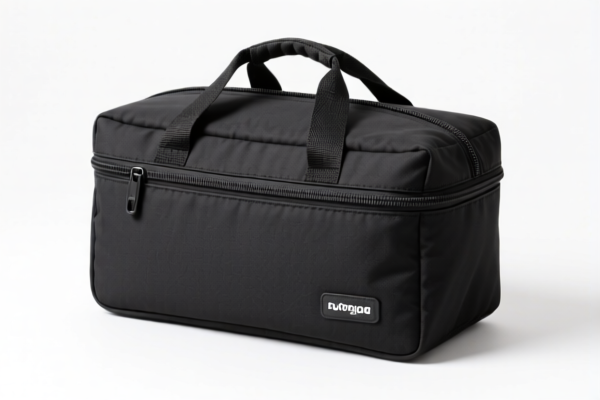
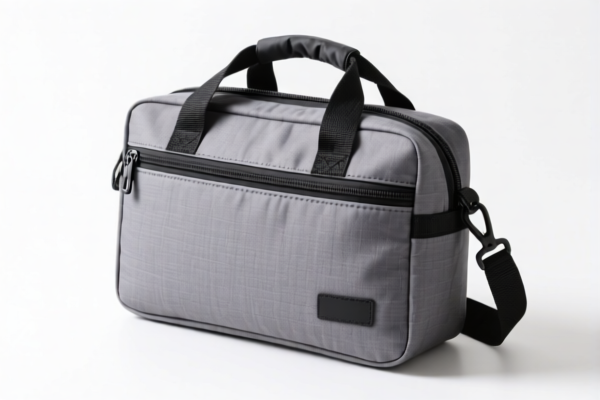
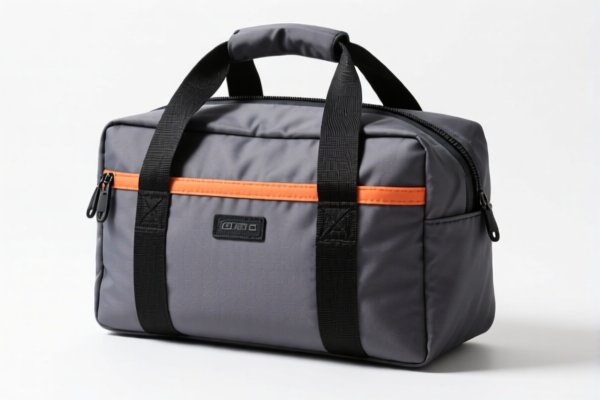
AI Analysis
💧 Portable Bag (Medical Irrigation / Enema Bags)
🌐 HS Code Reference & Customs Clearance Guide | 2026 Latest Tariff Analysis | Professional-Level Clearance Strategy
📌 I. Product Definition & Classification: Do You Really Understand "Portable Bag"?
In the context of international trade, "Portable Bag" is a generic term. However, based on the specific characteristics provided in the data (Medical Irrigation/Enema Bags), these items fall into two primary categories: 1. Plastic Medical Devices: Single-use or reusable containers made of synthetic polymers (PE, PVC, PP) used for fluid delivery. 2. Rubber Medical Devices: Containers made of vulcanized rubber or soft synthetic materials used for hygiene and medical purposes.
⚠️ Key Distinction Point:
- If the material is Plastic and classified as a general plastic article → Chapter 39
- If the material is Plastic/Rubber and classified specifically as a Catheter/Drainage Device → Chapter 90
- If the material is Vulcanized Rubber used for hygienic/medical purposes → Chapter 40
📦 II. HS Code Classification Details (2026 Latest Tariff Authority Comparison)
| HS Code | Product Description | Application Scenario | Material Basis |
|---|---|---|---|
3926.90.21.00 |
Portable irrigation bag, inferred as plastic, matching use and form | Specific plastic medical supply containers | ✅ Plastic |
3926.90.99.89 |
Portable irrigation bag, inferred as plastic, unlisted other plastic products | General plastic articles not specifically enumerated elsewhere | ✅ Plastic |
9018.39.00.20 |
Portable irrigation bag, use belongs to catheter drainage category | Medical devices like catheters, drains, stents | ✅ Plastic/Rubber |
4014.90.50.00 |
Portable irrigation bag, sanitary/medical use, vulcanized rubber or soft synthetic material | Hygienic medical irrigation器材 | ✅ Rubber/Synthetic |
4014.90.10.00 |
Portable irrigation bag, material is vulcanized rubber | Sanitary/medical use enema equipment | ✅ Vulcanized Rubber |
🔍 Key Reminder:
- Chapter 90 (9018.39.00.20) is often the most favorable for medical devices due to low basic tariffs, but requires strict proof of "catheter/drainage" function.
- Chapter 39 (Plastics) and Chapter 40 (Rubber) are fallbacks if the medical device classification is not accepted, but carry higher basic tariffs.
💰 III. 2026 Latest Tariff Rate Details (Including Additional Taxes & Policy Add-ons)
✅ Applicable Country: United States (US)
✅ Origin: China (CN)
✅ Effective Time: Current Trade Policies (Section 301 & Section 122)
🎯 1. 3926.90.21.00 —— Portable Irrigation Bag (Plastic)
| Item | Content |
|---|---|
| Basic Tariff | 4.2% (ad valorem) |
| Section 301 Additional Tariff | 7.5% |
| Section 122 Additional Tariff | 10% |
| Total Tax Rate | 21.7% |
| Tax Calculation | CIF Value × 21.7% |
| De Minimis Eligibility | ❌ Not Applicable (Section 122/301 usually bypasses de minimis) |
| Legal Basis Path | HTSUS:3926.90.21.00 → USITC:301:7.5% → IEEPA/Trade Policy:122:10% |
📌 Explanation:
- "Basic Tariff 4.2%" is the standard MFN rate for plastic articles;
- "Section 301 7.5%" is the additional tariff on Chinese plastic goods;
- "Section 122 10%" is an additional tariff on certain Chinese imports;
- Total 21.7%: A moderate-high rate for plastic goods.
🎯 2. 3926.90.99.89 —— Portable Irrigation Bag (Other Plastic Articles)
| Item | Content |
|---|---|
| Basic Tariff | 5.3% |
| Section 301 Additional Tariff | 7.5% |
| Section 122 Additional Tariff | 10% |
| Total Tax Rate | 22.8% |
| Tax Calculation | CIF Value × 22.8% |
| De Minimis Eligibility | ❌ Not Applicable |
| Legal Basis Path | HTSUS:3926.90.99.89 → USITC:301:7.5% → IEEPA/Trade Policy:122:10% |
📌 Note:
- This is the "basket" code for plastic products not specifically listed elsewhere.
- Even if it’s a "special" medical bag, if it doesn’t fit the specific3926.90.21.00description, it falls here.
- 1.1% higher than the specific plastic code, so always try to justify3926.90.21.00if possible.
🎯 3. 9018.39.00.20 —— Catheter/Drainage Device (Medical)
| Item | Content |
|---|---|
| Basic Tariff | 0.0% |
| Section 301 Additional Tariff | 0.0% |
| Section 122 Additional Tariff | 10% |
| Total Tax Rate | 10.0% |
| Tax Calculation | CIF Value × 10.0% |
| De Minimis Eligibility | ❌ Not Applicable |
| Legal Basis Path | HTSUS:9018.39.00.20 → IEEPA/Trade Policy:122:10% |
📌 Critical Advantage:
- This is the LOWEST total rate (10%).
- Why? Both Basic and Section 301 taxes are 0% for this specific medical device subheading.
- Challenge: You must prove the bag is "intended for catheter or drainage use" (e.g., connected to tubing, used for precise medical irrigation). If customs views it as a general "bag," they may reclassify it to Chapter 39 (21-22%).
🎯 4. 4014.90.50.00 —— Sanitary/Medical Rubber Article
| Item | Content |
|---|---|
| Basic Tariff | 4.2% |
| Section 301 Additional Tariff | 0.0% |
| Section 122 Additional Tariff | 10% |
| Total Tax Rate | 14.2% |
| Tax Calculation | CIF Value × 14.2% |
| De Minimis Eligibility | ❌ Not Applicable |
| Legal Basis Path | HTSUS:4014.90.50.00 → IEEPA/Trade Policy:122:10% |
📌 Explanation:
- Rubber goods often have lower Section 301 rates than plastics.
- Basic tariff is 4.2%, but no additional 301 tax.
- 14.2% Total: A good middle-ground if the product is clearly rubber and not a strict "catheter."
🎯 5. 4014.90.10.00 —— Sanitary/Medical Enema Equipment (Vulcanized Rubber)
| Item | Content |
|---|---|
| Basic Tariff | 0.0% |
| Section 301 Additional Tariff | 0.0% |
| Section 122 Additional Tariff | 10% |
| Total Tax Rate | 10.0% |
| Tax Calculation | CIF Value × 10.0% |
| De Minimis Eligibility | ❌ Not Applicable |
| Legal Basis Path | HTSUS:4014.90.10.00 → IEEPA/Trade Policy:122:10% |
📌 Critical Advantage:
- Also 10% Total Rate.
- Like the medical device code, this has 0% Basic and 0% Section 301.
- Requirement: The product must be made of Vulcanized Rubber and specifically for Hygienic/Medical Use (e.g., enema tips/bags). If it’s soft synthetic material, it might fall under4014.90.50.00(14.2%).
🛠️ IV. Customs Clearance Practical Advice (Real-World Pitfall Avoidance Guide)
✅ 1. Document Checklist (Mandatory)
| Document | Must Provide | Explanation |
|---|---|---|
| ✅ Product Specification Sheet | ✔️ | Detail material (Plastic vs. Rubber), dimensions, max volume |
| ✅ Material Composition Report | ✔️ | FDA-compliant statement for medical use |
| ✅ Product Photos (Clear) | ✔️ | Show valves, tubing, connectors, and any medical markings |
| ✅ Medical Device Classification Proof | ✔️ | If claiming 9018 or 4014.90.10, provide evidence of medical intent |
| ✅ Commercial Invoice | ✔️ | Clearly state "Portable Irrigation/Enema Bag" not just "Bag" |
| ✅ Certificate of Origin (CO) | ✔️ | Required for tariff determination |
| ✅ Packing List | ✔️ | Itemize each component (bag, tube, clamp, etc.) |
✅ 2. Declaration Tactics (Key Mantra)
🔥 "Medical Function First, Material Second, Avoid 'General Bag'!"
| Situation | Correct Declaration | Wrong Action |
|---|---|---|
| Product has tubing/connectors for irrigation | 9018.39.00.20 (10%) |
Declare as "Plastic Bag" → 21.7% |
| Product is Rubber Enema Bag | 4014.90.10.00 (10%) |
Declare as "Rubber Toy" or "General Rubber" → 14.2% or higher |
| Product is Plastic Irrigation Bag | 3926.90.21.00 (21.7%) |
Declare as "Plastic Bottle" → Incorrect |
| Product is Unlisted Plastic Item | 3926.90.99.89 (22.8%) |
Try to force 9018 without proof → Audit Risk |
✅ 3. Special Case Handling
| Situation | Handling Advice |
|---|---|
| OEM Medical Bags | Provide Customer PO + Design Specs proving "Medical Irrigation" use. |
| Plastic vs. Rubber Ambiguity | If material is "Soft Synthetic," try 9018.39.00.20 first. If rejected, fall back to 4014.90.50.00 (14.2%) rather than Plastic (21%+). |
| "Bag" vs. "Device" | Avoid generic names like "Storage Bag." Use "Irrigation Bag" or "Enema Kit." |
| FDA Compliance | Ensure products meet FDA 510(k) or general control requirements if marketed as medical devices. |
🌍 V. Global Market Comparison (2026 Latest)
| Country/Region | Recommended HS Code | Tariff (China Origin) | Certification | Remarks |
|---|---|---|---|---|
| 🇺🇸 US | 9018.39.00.20 / 4014.90.10.00 |
10% | FDA + ISO 13485 | Best rate due to 0% Base/301 |
| 🇪🇺 EU | 9018.39.00 |
0-2% | CE + MDR | No Section 122/301 equivalent |
| 🇨🇳 China | 9018.39.00 |
5-8% | NMPA | Import duties apply |
| 🇯🇵 Japan | 9018.39.00 |
0-5% | PMDA | Low tariffs, strict quality checks |
📌 Conclusion:
- US is the most tariff-sensitive market for this product due to Section 301 and Section 122.
- Chapters 90 and 40 (specific medical/rubber codes) offer the lowest total tax (10%) in the US.
- Chapters 39 (Plastics) are costly (21-22%) and should be avoided if the product can be classified as a medical device or rubber article.
📌 VI. Common Mistakes & Pitfall Guide (Lessons Learned)
❌ Mistake 1: Declaring as "Plastic Bag" (HS 3926.90.99)
👉 Consequence: 22.8% Tax. Missed Savings: 12.8% vs. Medical/Rubber codes.
❌ Mistake 2: Trying to declare a Plastic Irrigation Bag as 9018.39.00.20 without proof
👉 Consequence: Customs audit, reclassification to 3926, back taxes + penalties.
❌ Mistake 3: Ignoring Section 122 (10%)
👉 Consequence: Even "0% Basic" codes still have 10% Section 122. Do not assume "0% Total."
❌ Mistake 4: Using vague names like "Water Bag"
👉 Consequence: Customs suspects smuggling or misclassification. Delay in release.
✅ Correct Practice:
"Portable Medical Irrigation Bag, Plastic, Single-Use, with Tubing and Clamp, Model XYZ, FDA Compliant"
🎯 VII. Conclusion: Professional Declaration, Save Cost, Ensure Clearance!
🎯 Remember the Mantra:
🔹 "Medical Function Wins! 9018/4014.10 = 10% Only!"
🔹 "Plastic is Expensive (21-22%), Rubber is Better (14%), Medical Device is Best (10%)."
🔹 "Don't Let Section 301 Bite You! Check Chapter 90 First."
📌 Tip:
If your product is Plastic but has no specific medical device code that fits perfectly, try to argue it as a "Catheter Accessory" under 9018.90 to avoid high plastic tariffs. Consult a customs broker for a Pre-Ruling if the volume is high.
📣 Immediate Action:
📞 Contact a Licensed Customs Broker + Provide Material Specs + Request HS Code Pre-Ruling for
9018.39.00.20or4014.90.10.00.
🚀 Minimize Tariffs, Maximize Profit, Clear Customs Smoothly!
✨ Professional Clearance Starts with Accurate Classification!
💼 Every Percent Saved is Pure Profit!
Customer Reviews
About HS Code Classification
The Harmonized System (HS) is an internationally standardized nomenclature developed by the World Customs Organization (WCO) to classify traded products. Over 200 countries use the HS system as the basis for customs tariffs, trade statistics, and import/export regulations.
Each HS code follows a hierarchical structure:
- Chapter (2 digits) — Broad category of goods (e.g., Chapter 84: Machinery and Mechanical Appliances)
- Heading (4 digits) — More specific grouping within the chapter
- Subheading (6 digits) — Internationally standardized breakdown, used by all WCO member countries
- National subdivisions (8-10 digits) — Country-specific extensions for further classification, such as US HTSUS 10-digit codes
Correct HS code classification is essential for smooth customs clearance, accurate duty payment, and compliance with trade regulations. Misclassification can lead to customs delays, overpayment of duties, or penalties.
When importing from CN to US, the applicable tariff rates may include:
- Most-Favored-Nation (MFN) rate — The standard duty rate applied to WTO members
- General rate — Applied to countries without trade agreements
- Trade remedy duties — Additional tariffs such as Section 301 (anti-dumping), Section 232 (national security), or countervailing duties
The information provided on this page is for reference purposes only. For official classification, please consult with your local customs authority or a licensed customs broker.