Portable Car Air Pump
CN → US| HS Code | Tariff Rate | Origin | Destination | Doc |
|---|---|---|---|---|
| 8509805095 | 14.2% | CN | US | Official Doc |
| 8414801685 | 35.0% | CN | US | Official Doc |
| 8414801690 | 35.0% | CN | US | Official Doc |
| 8509801000 | 10.0% | CN | US | Official Doc |
| 8414308030 | 35.0% | CN | US | Official Doc |
Product Images
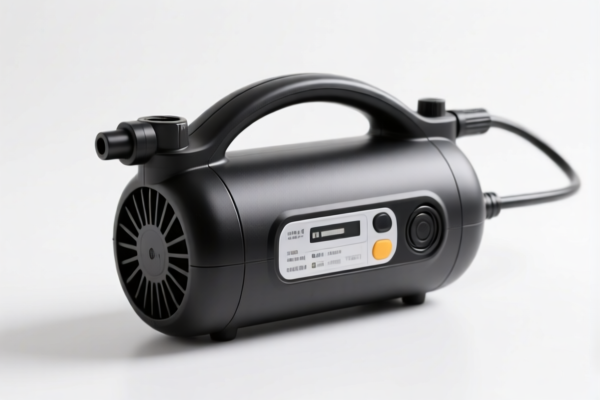
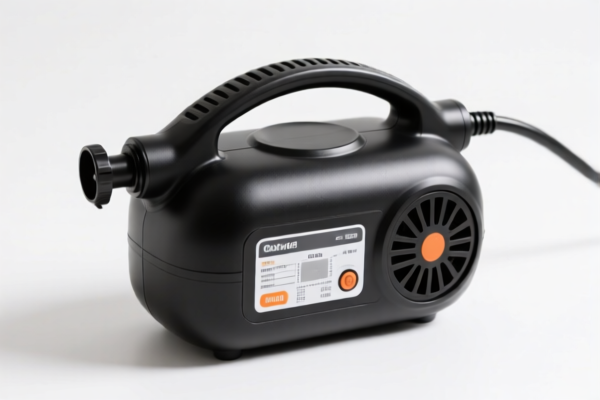


AI Analysis
🚗 Portable Car Air Pump (Vehicle Tire Inflator)
🌐 HS Code Reference & Customs Clearance Guide | 2026 Latest Tariff Analysis | Professional Transit Strategy
📌 1. Product Definition & Classification: Do You Really Understand the "Portable Air Pump"?
A portable car air pump, also known as a vehicle tire inflator, is an essential automotive accessory used for inflating tires, sports balls, and inflatable rafts. In international trade, its classification primarily depends on its driving mechanism and functional definition:
1. Electric Battery-Driven Inflators: If the pump is powered by a built-in rechargeable battery or electric motor, it is classified as an electric household appliance or electro-mechanical device. This falls under Chapter 85. 2. Engine/Compressor-Driven Units: If the unit is explicitly defined as an air compressor with specific mechanical compression characteristics, it may fall under Chapter 84.
⚠️ Key Distinction Point:
- If the product is primarily marketed as a "portable household/electrical appliance" with an integrated electric motor driving a pump mechanism → Group 85 (Electrical Machinery).
- If the product is technically an "air compressor" (even portable) and lacks specific electrical appliance features → Group 84 (Machinery & Mechanical Appliances).
📦 2. HS Code Classification Details (2026 Latest Tariff Authority Comparison)
Based on the provided data, here are the five potential HS Codes and their corresponding tax implications for imports into the US (assuming China origin based on "Section 301/122" context):
| HS Code | Product Description | Reason for Classification | Total Tax Rate |
|---|---|---|---|
| 8509.80.50.95 | Portable Air Pump (Household Appliance Category) | Considered a household electrical appliance with its own electric motor. Fits the "other appliances" catch-all logic under Chapter 85. | 14.2% |
| 8509.80.10.00 | Electric Mechanical Apparatus (Motor-Driven) | Inferred to be driven by an electric motor, falling under electro-mechanical devices. No conflict in material or function. | 10.0% |
| 8414.80.16.85 | Portable Air Compressor | Classified as a portable air compressor. No obvious conflict in material; considered a "possible fit." | 35.0% |
| 8414.80.16.90 | Portable Air Compressor (Other) | Similar to above, fits the "other air compressors" catch-all category under Chapter 84. | 35.0% |
| 8414.30.80.30 | Wireless Portable Air Compressor (For Motor Vehicles) | Specifically identified as an air compressor for motor vehicles. Material matches no conflicts. | 35.0% |
🔍 Critical Observation:
- Chapter 85 (8509) offers significantly lower tariffs (10-14.2%) compared to Chapter 84 (8414) (35%). - The core strategic difference is whether the Customs authority views the item as an "Electric Appliance" (85) or an "Industrial/Mechanical Compressor" (84). - 8509.80.10.00 is the most cost-effective option (10% total) if the product can be justified as a general electro-mechanical electrical appliance.
💰 3. 2026 Latest Tariff Rate Breakdown (Including Surcharges & Policy Add-ons)
✅ Applicable Country: United States (US)
✅ Origin: China (CN)
✅ Effective Date: Current rates apply (2025-2026 Context)
🎯 1. 8509.80.10.00 — Electro-Mechanical Electrical Apparatus (Best Case Scenario)
| Item | Detail |
|---|---|
| Base Duty Rate | 0.0% (ad valorem) |
| Section 301 Surcharge | 0.0% |
| Section 122 Tariff | +10% (Specific to certain electrical/gasoline products from China) |
| Total Effective Rate | 10.0% |
| Tax Calculation | CIF Value × 10% |
| De Minimis Eligibility | ❌ No (High value items may trigger scrutiny) |
| Legal Basis Path | IEEPA/Section 122 → USITC:8509.80.10.00 |
📌 Explanation:
- This code assumes the product is an electrical device driven by a motor. - The 10% comes entirely from Section 122 tariffs. - No Section 301 (25%) is applied here, making it the most economical choice for importers.
🎯 2. 8509.80.50.95 — Other Household Electrical Appliances
| Item | Detail |
|---|---|
| Base Duty Rate | 4.2% |
| Section 301 Surcharge | 0.0% |
| Section 122 Tariff | +10% |
| Total Effective Rate | 14.2% |
| Tax Calculation | CIF Value × 14.2% |
| De Minimis Eligibility | ❌ No |
| Legal Basis Path | IEEPA/Section 122 → USITC:8509.80.50.95 |
📌 Explanation:
- This is classified as a "Household Appliance." - The base duty is slightly higher (4.2%) than8509.80.10.00. - Still far cheaper than Chapter 84 classifications.
🎯 3. 8414.80.16.85 / 8414.80.16.90 / 8414.30.80.30 — Air Compressors (High Cost Scenario)
| Item | Detail |
|---|---|
| Base Duty Rate | 0.0% |
| Section 301 Surcharge | +25% |
| Section 122 Tariff | +10% |
| Total Effective Rate | 35.0% |
| Tax Calculation | CIF Value × 35% |
| De Minimis Eligibility | ❌ No |
| Legal Basis Path | IEEPA/Section 301 + Section 122 → USITC:8414... |
📌 Explanation:
- If classified as an Air Compressor, it attracts the full 25% Section 301 tariff. - Plus 10% Section 122. - Total 35% is significantly higher than the Chapter 85 options. - Risk: Misclassification from 85 to 84 can result in a 25% tax increase.
🛠️ 4. Customs Clearance Practical Advice (Real-World Pitfall Avoidance)
✅ 1. Preparation Checklist (Non-negotiable)
| Document | Required? | Notes |
|---|---|---|
| ✅ Product Specification Sheet | ✔️ | Must clearly state: "Electric Motor," "Voltage," "Amps," "Function: Tire Inflation." |
| ✅ Circuit Diagram / Block Diagram | ✔️ | To prove it is an electrical device (Chapter 85) rather than a purely mechanical compressor (Chapter 84). |
| ✅ Product Photos (Including Label) | ✔️ | Show power button, battery compartment, or power cord. Prove it is electrically driven. |
| ✅ FCC Certification | ✔️ | Mandatory for all electrical devices in the US. Without it, customs may seize or return. |
| ✅ Commercial Invoice | ✔️ | Description should include: "Portable Electric Tire Inflator, Battery Powered." Avoid words like "Industrial Compressor." |
| ✅ Packing List | ✔️ | Ensure the pump and accessories are listed together as one unit. |
✅ 2. Declaration Strategy (Key Mantras)
🔥 "Electric Drive is Key, Compressor is Risky, Name it Right, Save 25%!"
| Scenario | Correct Declaration | Wrong Approach |
|---|---|---|
| Battery-powered inflator | 8509.80.10.00 (10%) |
Declare as "Air Compressor" → 35% |
| Plug-in electric inflator | 8509.80.10.00 (10%) |
Declare as "Pump" without specifying electric → Risky |
| Hand-pump (Manual) | Excluded from this analysis (Not in DATA) | N/A |
| Gas-powered tire inflator | Excluded from this analysis | N/A |
💡 Pro Tip:
- Emphasize "Electric Motor Driven" in the product description. - Avoid using the term "Compressor" in the commercial invoice if possible; use "Inflator" or "Pump" instead to steer toward Chapter 85.
✅ 3. Special Situations
| Situation | Handling Advice |
|---|---|
| OEM Custom Products | Provide client orders and design specs. Ensure the "electric" nature is documented in the BOM (Bill of Materials). |
| Integrated Pressure Gauge | Still classified as an Electric Appliance (8509), not a measuring instrument (9013). The gauge is an accessory. |
| Multi-function Devices | If it also has a flashlight or USB charging port, it reinforces the "Electrical Appliance" classification. |
| Lithium Battery Inclusion | Ensure proper UN38.3 testing and MSDS are available for shipping (Dangerous Goods regulations), even if customs focuses on HS Code. |
🌍 5. Global Market Comparison (2026 Latest)
| Country/Region | Recommended HS Code | Tariff (China Origin) | Certification | Notes |
|---|---|---|---|---|
| 🇺🇸 USA | 8509.80.10.00 |
10% (Section 122 only) | FCC + UL (if applicable) | Best option. Avoid 8414 (35%). |
| 🇨🇳 China | 8509.80.10.00 |
5-10% (Varies) | CCC (if applicable) | Lower tariffs, no Section 301/122. |
| 🇪🇺 EU | 8509.80.99 |
0-4% | CE + RoHS + EPR | No Section 301. Focus on safety certs. |
| 🇦🇺 Australia | 8509.80.99 |
5% | RCM (RCM Labeling) | Standard electrical import rules. |
| 🇯🇵 Japan | 8509.80.00 |
0-3% | PSE / METI | No Section 301. |
📌 Conclusion:
- The US is the only major market with significant Section 301/122 tariffs. - Choosing the correct HS Code (8509 vs. 8414) can save you up to 25% in duties. - China-made portable pumps entering the US should strongly aim for8509.80.10.00or8509.80.50.95.
📌 6. Common Mistakes & Pitfall Guide (Blood-Teaching Lessons)
❌ Mistake 1: Using "Air Compressor" in the invoice title
👉 Consequence: Customs may reclassify to 8414 → Tax jumps from 10% to 35%.
❌ Mistake 2: No FCC Certification
👉 Consequence: Goods held at border, potential destruction or return. No sale possible.
❌ Mistake 3: Misdeclaring as "General Pump"
👉 Consequence: Customs ambiguity → Delay in clearance + Potential audits.
❌ Mistake 4: Ignoring Section 122
👉 Consequence: Even for Chapter 85, 10% tax applies. Assuming 0% base duty means 0% total is a cost calculation error.
✅ Correct Approach:
"Portable Electric Tire Inflator, 12V DC/Rechargeable Battery, with Digital Display, Model XYZ, FCC Certified"
🎯 7. Conclusion: Professional Declaration, Save Time, Cut Costs!
🎯 Remember the Mantra:
🔹 "Electric is Cheap, Compressor is Expensive, Name it Electric, Save 25%!"
🔹 "FCC is Mandatory, Section 122 is Inevitable, Wrong Code is Bankrupt!"
📌 Tip:
If your portable pump is original in Vietnam, Mexico, or Malaysia, you may qualify for IEEPA/Section 301 exemptions or lower tariffs.
Recommendation: Apply for a Pre-Ruling (Advance Ruling) from US Customs to lock in the 8509 classification before shipping large volumes.
📣 Immediate Action:
📞 Contact your freight forwarder + Provide circuit diagrams + Request HS Code Pre-Ruling
🚀 Let your car pumps clear smoothly, reduce costs, and maximize profits!
✨ Professional Customs Clearance Starts with Precise Classification!
💼 Every cent of your cost deserves precise calculation!
Customer Reviews
About HS Code Classification
The Harmonized System (HS) is an internationally standardized nomenclature developed by the World Customs Organization (WCO) to classify traded products. Over 200 countries use the HS system as the basis for customs tariffs, trade statistics, and import/export regulations.
Each HS code follows a hierarchical structure:
- Chapter (2 digits) — Broad category of goods (e.g., Chapter 84: Machinery and Mechanical Appliances)
- Heading (4 digits) — More specific grouping within the chapter
- Subheading (6 digits) — Internationally standardized breakdown, used by all WCO member countries
- National subdivisions (8-10 digits) — Country-specific extensions for further classification, such as US HTSUS 10-digit codes
Correct HS code classification is essential for smooth customs clearance, accurate duty payment, and compliance with trade regulations. Misclassification can lead to customs delays, overpayment of duties, or penalties.
When importing from CN to US, the applicable tariff rates may include:
- Most-Favored-Nation (MFN) rate — The standard duty rate applied to WTO members
- General rate — Applied to countries without trade agreements
- Trade remedy duties — Additional tariffs such as Section 301 (anti-dumping), Section 232 (national security), or countervailing duties
The information provided on this page is for reference purposes only. For official classification, please consult with your local customs authority or a licensed customs broker.