Portable Charger
CN → US| HS Code | Tariff Rate | Origin | Destination | Doc |
|---|---|---|---|---|
| 8507808200 | 38.4% | CN | US | Official Doc |
| 8504409520 | 35.0% | CN | US | Official Doc |
| 8504409510 | 35.0% | CN | US | Official Doc |
Product Images
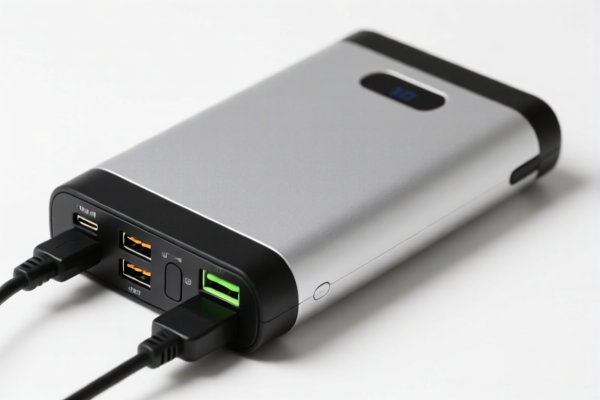
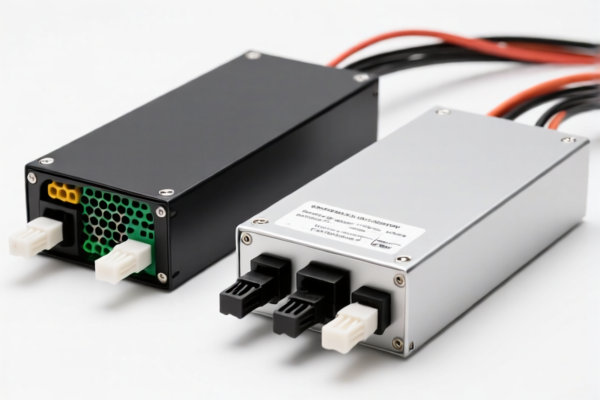

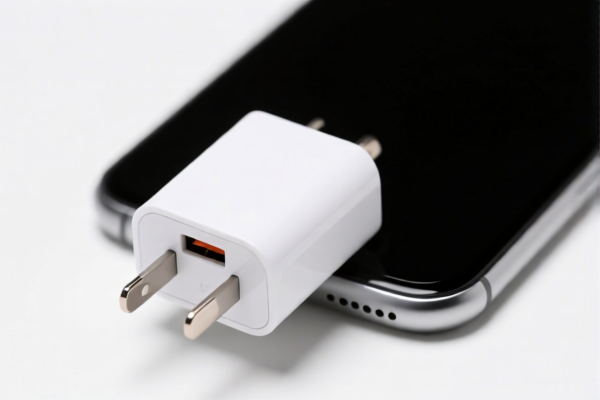
AI Analysis
🔋 Portable Charger (Power Bank) | The Ultimate 2026 HS Code & Duty Master Guide
🌐 HS Code Classification & Customs Clearance | 2026 Tax Rate Deep Dive | Strategic Entry Strategy
📌 One: Product Definition & Core Logic: Why Does a "Portable Charger" Have Multiple Classifications?
A Portable Charger (commonly known as a Power Bank) is essentially a rechargeable battery system packaged for portability. In international trade, its classification hinges on a single, critical question:
Is it classified primarily as a "Battery" or as a "Power Converter/Rectifier"?
This distinction splits the product into two distinct legal pathways with significantly different tax implications:
⚠️ The Critical Split:
- Path A (Battery Core): If the customs focus is on the energy storage capability (the cells inside) → HS 8507.80.82.00.
- Path B (Power Conversion): If the customs focus is on the circuitry converting voltage/current (DC-DC conversion, rectification) → HS 8504.40.95.20 or 8504.40.95.10.🧠 The Logic:
- A Power Bank is a battery. However, it contains internal circuitry that acts as a converter (taking battery voltage and outputting a stable 5V/9V/12V).
- US Customs and Trade laws often view the functional output (the conversion) as the dominant feature for "converter" classifications, leading to different duty rates.
📦 Two: HS Code Classification Details (2026 Latest Tariff Schedule)
| HS Code | Product Description & Logic | Key Feature Focus |
|---|---|---|
8507.80.82.00 |
Other Accumulators (Batteries): Portable charger treated as an extension of electro-accumulators. | ✅ Focus: Energy Storage (The Battery Cells) |
8504.40.95.20 |
Static Converters (Power Supplies): Classified under "Power" and "Rectifier Equipment" with output > 50W (or general power category). | ✅ Focus: Conversion Circuitry (DC-DC, Regulation) |
8504.40.95.10 |
Rectifiers & Power Equipment: Specifically for Power Supplies with output under 50W. | ✅ Focus: Low-Power Conversion (Common for most consumer power banks) |
🔍 Key Takeaway:
-8507.80.82.00is the "Battery" route. It is technically accurate but often carries higher combined duties in specific US trade scenarios.
-8504.40.95.10/8504.40.95.20is the "Converter/Power Supply" route. This is often used for chargers that emphasize rectification or voltage regulation.
💰 Three: 2026 Latest Tariff Rate Breakdown (USA | China Origin)
✅ Applicable Country: USA (US)
✅ Country of Origin: China (CN)
✅ Effective Date: 2025-11-10 onwards (Current Trade Regime)
🎯 1. Route A: Battery Classification
HS Code: 8507.80.82.00
Description: "Portable charger belongs to the extension application of electro-accumulators... classified as 'Other Accumulators'."
| Item | Content |
|---|---|
| Base Tariff | 3.4% (ad valorem) |
| Additional Tariff (Section 301) | +25.0% (China-specific punitive tariff) |
| 122 Clause Tariff | +10.0% (Specific Section 301 add-on) |
| Total Duty Rate | 38.4% |
| Calculation | CIF Value × 38.4% |
| De Minimis Exemption | ❌ NO (High-risk category for Section 301) |
| Legal Path | Base (8507) → Section 301 (25%) → 122 Clause (10%) |
📌 Interpretation:
- The 3.4% is the standard Most Favored Nation (MFN) rate.
- The 25% is the massive Section 301 "China Tariff."
- The 10% is an additional "122 Clause" tariff specifically targeting certain Chinese battery-related exports.
- Result: A total of 38.4% is a very heavy burden.
🎯 2. Route B: Converter/Power Supply Classification
HS Code: 8504.40.95.20 OR 8504.40.95.10
Description: "Portable charger belongs to Static Converters... classified as 'Power' or 'Rectifier Equipment'."
| Item | Content |
|---|---|
| Base Tariff | 0.0% (Duty-Free Base) |
| Additional Tariff (Section 301) | +25.0% (China-specific punitive tariff) |
| 122 Clause Tariff | +10.0% (Specific Section 301 add-on) |
| Total Duty Rate | 35.0% |
| Calculation | CIF Value × 35.0% |
| De Minimis Exemption | ❌ NO (Still subject to Section 301) |
| Legal Path | Base (8504) → Section 301 (25%) → 122 Clause (10%) |
📌 Interpretation:
- The Good News: The Base Tariff is 0%, saving you 3.4% compared to the Battery classification.
- The Bad News: The 25% + 10% surcharges still apply fully because these are still Chinese goods subject to Section 301.
- The Result: 35.0% is 3.4% lower than the battery route, but it is still a high-cost classification.
🛠️ Four: Customs Clearance Strategy & Practical Advice
✅ 1. Document Preparation Checklist (Critical for Audit)
| Document | Requirement | Why It Matters |
|---|---|---|
| Product Spec Sheet | ✔️ Mandatory | Must explicitly state Output Power (W) and Internal Circuitry Type (e.g., "DC-DC Converter"). |
| Schematic / Circuit Diagram | ✔️ Critical | Key Differentiator: If you claim 8504 (Converter), you MUST prove the Rectification/Conversion function is dominant. |
| Product Photos | ✔️ Mandatory | Show internal structure (if accessible) or clearly label "Power Supply/Converter" on the exterior. |
| Test Reports | ✔️ Recommended | FCC, UL, CE reports that mention "Power Conversion" or "Voltage Regulation" rather than just "Battery Safety." |
| Commercial Invoice | ✔️ Mandatory | Do NOT write just "Portable Charger." Use: "Portable Power Supply / DC Converter Unit" (align with 8504) OR "Rechargeable Lithium Accumulator" (align with 8507). |
| Origin Certificate | ✔️ Mandatory | Must confirm Made in China (as the 10% + 25% apply to China origin). |
✅ 2. Declaration Strategy (The "Winning" Tactic)
🔥 Golden Rule: "If you want to save 3.4%, prove it's a Converter, not just a Battery."
| Scenario | Recommended HS Code | Reasoning | Risk Level |
|---|---|---|---|
| Standard Power Bank (Most Cases) | 8504.40.95.10 |
Most power banks output <50W and rely heavily on rectification/regulation circuits to ensure stable output. | 🟢 Lower Risk (If docs support "Converter") |
| High-Capacity/Industrial Power Bank | 8504.40.95.20 |
If output >50W or complex power management, this fits "Power Supplies" better. | 🟢 Lower Risk |
| "Dumb" Battery Packs (No Circuit) | 8507.80.82.00 |
If the device is essentially just a battery pack with no complex conversion (rare for modern smart chargers). | 🟡 Higher Risk (Higher tax: 38.4%) |
| OEM Custom Device | 8504.40.95.10 |
Emphasize the custom power conversion feature in the description. | 🟢 Lower Risk |
⚠️ Warning: Do NOT declare a Power Bank as
8507.80.82.00if you can justify8504. The 3.4% base tax difference adds up to thousands of dollars on large shipments.
✅ 3. Special Scenarios & Pitfalls
| Situation | Advice |
|---|---|
| "De Minimis" (Section 321) | ❌ DO NOT RELY ON IT. Most Section 301 products (Chinese Power Banks) are excluded from the $800 de minimis exemption. Expect full duty collection. |
| Multi-Function Devices (Power Bank + Wall Charger) | Declare as 8504.40.95.10 (The "Power Supply" function is usually dominant over the battery function in hybrid units). |
| Missing Circuit Diagrams | ⚠️ High Risk of Audit. Without a circuit diagram proving "Rectification," Customs will default to the more generic (and often higher tax) Battery classification (8507). |
| Name on Invoice | Avoid "Lithium Battery" alone. Use "Portable DC Power Supply" or "Rectifier Unit" to steer classification toward 8504. |
🌍 Five: Global Market Comparison (2026 Outlook)
| Region | Recommended HS | Total Tax (China Origin) | Key Note |
|---|---|---|---|
| 🇺🇸 USA | 8504.40.95.10 |
35.0% | Highest complexity. Must prove "Converter" status. |
| 🇪🇺 EU | 8504.40.95 |
~0% - 5% | Generally lower duties, but strict CE/RoHS & Battery Directive rules apply. |
| 🇨🇦 Canada | 8504.40 |
~5% + 301 | Similar to US, but Section 301 nuances may differ. |
| 🇯🇵 Japan | 8504.40 |
~5% - 8% | No Section 301, but strict safety certification. |
📌 Conclusion for USA:
- USA is the most expensive market for Portable Chargers due to the 35% combined rate (0% Base + 25% + 10% Add-on).
- Strategy: Maximize the8504classification to avoid the extra 3.4% Base Tax.
- Compliance: Ensure your circuit diagrams and spec sheets explicitly mention "Rectifier," "Converter," or "Voltage Regulation" to justify the8504code.
🎯 Six: Final Checklist for Shippers
- ❌ STOP calling it just a "Battery" in your commercial invoice if it has complex circuitry.
- ✅ DO prepare a circuit diagram showing the DC-DC converter section.
- ✅ DO label the product description as "Portable Power Supply / Rectifier Unit" to align with
8504.40.95.10. - ✅ DO calculate 35% of your CIF value for US entry budgeting (not 38.4%).
- ⚠️ WARNING: If Customs challenges the classification, the penalty for underpayment could be severe due to the high duty rates.
📌 Conclusion: Precision is Profit
🚀 The Bottom Line:
For Portable Chargers, the difference between 35.0% (8504) and 38.4% (8507) is small in percentage but massive in dollar value.
The key to saving money is proving the "Converter" function.
🔹 Pro Tip: If your product is complex, pre-classify with a professional broker using the
8504logic.
🔹 Action: Update your Spec Sheets today to highlight "Power Conversion Technology" over "Energy Storage."
✨ Smart Customs, Lower Duties, Faster Clearance!
💼 Don't let a 3.4% mistake eat your margin!
Customer Reviews
About HS Code Classification
The Harmonized System (HS) is an internationally standardized nomenclature developed by the World Customs Organization (WCO) to classify traded products. Over 200 countries use the HS system as the basis for customs tariffs, trade statistics, and import/export regulations.
Each HS code follows a hierarchical structure:
- Chapter (2 digits) — Broad category of goods (e.g., Chapter 84: Machinery and Mechanical Appliances)
- Heading (4 digits) — More specific grouping within the chapter
- Subheading (6 digits) — Internationally standardized breakdown, used by all WCO member countries
- National subdivisions (8-10 digits) — Country-specific extensions for further classification, such as US HTSUS 10-digit codes
Correct HS code classification is essential for smooth customs clearance, accurate duty payment, and compliance with trade regulations. Misclassification can lead to customs delays, overpayment of duties, or penalties.
When importing from CN to US, the applicable tariff rates may include:
- Most-Favored-Nation (MFN) rate — The standard duty rate applied to WTO members
- General rate — Applied to countries without trade agreements
- Trade remedy duties — Additional tariffs such as Section 301 (anti-dumping), Section 232 (national security), or countervailing duties
The information provided on this page is for reference purposes only. For official classification, please consult with your local customs authority or a licensed customs broker.