Portable Document Bag
CN → US| HS Code | Tariff Rate | Origin | Destination | Doc |
|---|---|---|---|---|
| 4820900000 | 35.0% | CN | US | Official Doc |
| 3926909989 | 22.8% | CN | US | Official Doc |
| 4202329300 | 52.6% | CN | US | Official Doc |
| 4820300040 | 35.0% | CN | US | Official Doc |
| 3926908700 | 40.3% | CN | US | Official Doc |
Product Images
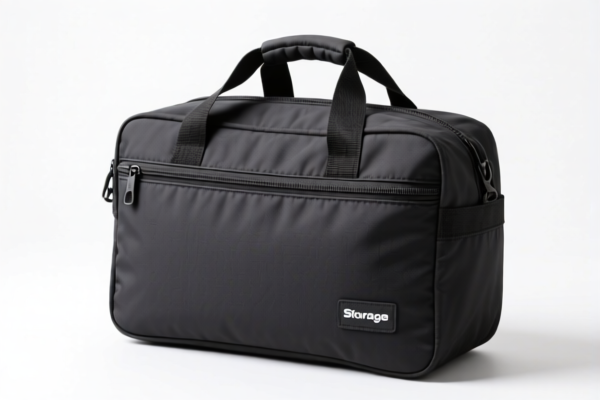
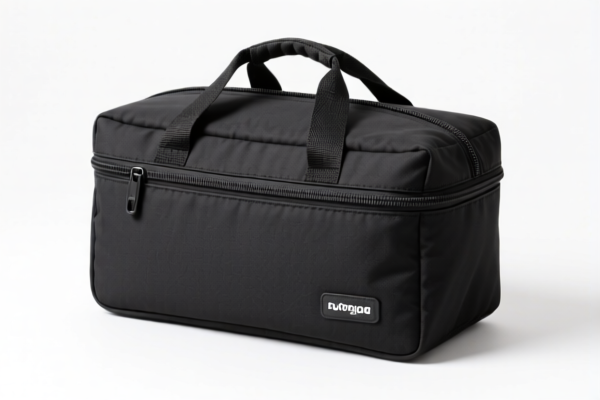
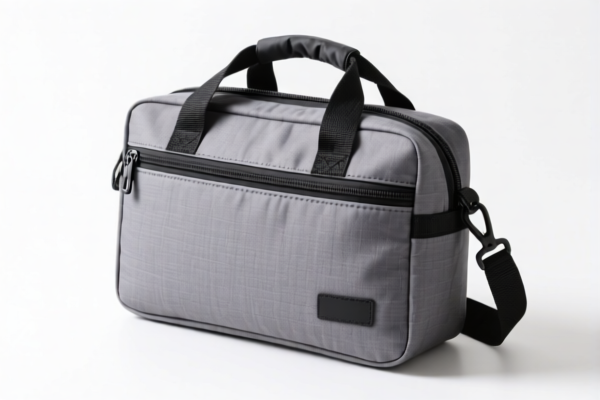
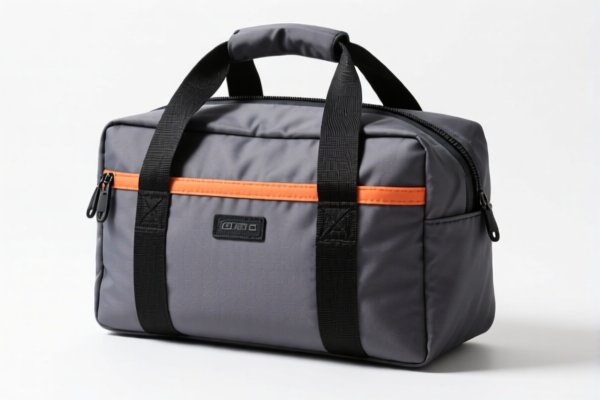
AI Analysis
📁 Portable Document Bag (Folder & Document Cases)
🌐 HS Code Reference & Customs Clearance Guide | 2026 Latest Tariff Analysis | Professional Clearance Strategy
📌 I. Product Definition & Classification: What Exactly is a "Document Bag"?
In international trade, the "Portable Document Bag" is a broad term covering stationery and containers for holding papers. However, customs classification is strictly determined by material composition and functional design. Misclassification here can lead to massive tariff discrepancies (from 22.8% to 52.6%).
It falls into three main categories: 1. Stationery/Office Supplies (Paper-based): Simple folders, pocket folders, or binders made of paper or cardboard. 2. Plastic Articles: Flat or semi-rigid containers made entirely of plastic. 3. Luggage/Containers (Leather/Textile/Plastic sheets): More durable, often zippered or clamped cases that resemble small pouches or briefcases.
⚠️ Key Distinction Point:
- If it is paper/cardboard and functions as a standard folder → Chapter 48 (Lowest Tax)
- If it is plastic and flat/simple → Chapter 39 (Medium Tax)
- If it is plastic/textile and looks like a "container/pouch" (e.g., zippered, structured) → Chapter 42 (Highest Tax)
📦 II. HS Code Classification Details (2026 Latest Tariff Authority Comparison)
| HS Code | Product Description | Applicable Scenario | Material/Feature |
|---|---|---|---|
4820.90.00.00 |
Other bound or unbound collections of paper; paper folders & covers | Basic paper folders, card holders, loose-leaf binders | 📄 Paper/Cardboard |
4820.30.00.40 |
Folders (incl. two-pocket files, letter folders, plain folders) | Standard office paper folders | 📄 Paper/Cardboard |
3926.90.99.89 |
Other articles of plastics; not specified elsewhere | Flat plastic document sleeves, generic plastic bags | 🧴 Plastic (Flat) |
3926.90.87.00 |
Other articles of plastics; office/school supplies | Rigid or semi-rigid plastic folders, flat plastic stationery | 🧴 Plastic (Flat/Stationery) |
4202.32.93.00 |
Articles of apparel or clothing accessories; other; outer surface of plastics or textile materials | Structured plastic/textile document cases, zippered pouches | 👜 Plastic/Textile (Structured) |
4202.32.99.00 |
Other articles of apparel/clothing accessories; other | Similar to above, generic "container" classification | 👜 Textile/Plastic Sheet |
🔍 Critical Reminder:
- Paper items always go to Chapter 48 (HS 4820). They are considered "stationery." - Plastic items that are simple flats go to Chapter 39 (HS 3926). They are considered "plastic articles." - Plastic/Textile items that have the characteristics of a "bag" or "container" (even if flat) often get bumped to Chapter 42 (HS 4202). This is the most dangerous classification for importers due to high tariffs.
💰 III. 2026 Latest Tariff Rate Breakdown (Including Surtaxes & Policy Add-ons)
✅ Applicable Country: United States (US)
✅ Origin: China (CN)
✅ Effective Date: Ongoing (Section 301 + IEEPA)
🎯 1. 4820.90.00.00 & 4820.30.00.40 —— Paper Folders & Covers (Stationery)
| Item | Content |
|---|---|
| Base Duty Rate | 0% |
| Section 301 Surtax | +25.0% |
| IEEPA Surtax (Section 122) | +10.0% |
| Total Tax Rate | 35.0% |
| Tax Calculation | CIF Value × 35% |
| De Minimis Eligibility | ❌ No (Denied for China origin under current IEEPA rules for these goods) |
| Legal Basis Path | IEEPA:9903.01.24 → USITC:4820.xx.xx → FOOTNOTE:301-4820 |
📌 Explanation:
- Paper folders are classified as basic stationery. The base duty is 0%.
- However, they are subject to the full 25% Section 301 tariff and 10% IEEPA tariff.
- Total: 35%. This is the recommended and cheapest classification if the product is indeed paper-based.
🎯 2. 3926.90.99.89 —— Plastic Articles (Generic/Flat)
| Item | Content |
|---|---|
| Base Duty Rate | 5.3% |
| Section 301 Surtax | +7.5% |
| IEEPA Surtax (Section 122) | +10.0% |
| Total Tax Rate | 22.8% |
| Tax Calculation | CIF Value × 22.8% |
| De Minimis Eligibility | ❌ No |
| Legal Basis Path | IEEPA:9901.25 → USITC:3926.90.99.89 → FOOTNOTE:301-3926 |
📌 Explanation:
- This code applies to unspecified plastic articles.
- Warning: This rate is often lower than the paper classification!
- If you can prove your "plastic document bag" is a generic plastic article (not a specific office supply like a folder), you might save money. However, customs may reclassify it as3926.90.87.00if it's clearly stationery.
🎯 3. 3926.90.87.00 —— Plastic Office/School Supplies
| Item | Content |
|---|---|
| Base Duty Rate | 5.3% |
| Section 301 Surtax | +25.0% |
| IEEPA Surtax (Section 122) | +10.0% |
| Total Tax Rate | 40.3% |
| Tax Calculation | CIF Value × 40.3% |
| De Minimis Eligibility | ❌ No |
| Legal Basis Path | IEEPA:9903.01.24 → USITC:3926.90.87.00 → FOOTNOTE:301-3926 |
📌 Explanation:
- This is for specific plastic office/school supplies (e.g., plastic ring binders, plastic file dividers).
- Unlike3926.90.99.89, the Section 301 tax jumps to 25%.
- Total: 40.3%. This is higher than paper folders (35%).
🎯 4. 4202.32.93.00 & 4202.32.99.00 —— Plastic/Textile Containers (The "Trap" Classifications)
| Item | Content |
|---|---|
| Base Duty Rate | 17.6% |
| Section 301 Surtax | +25.0% |
| IEEPA Surtax (Section 122) | +10.0% |
| Total Tax Rate | 52.6% |
| Tax Calculation | CIF Value × 52.6% |
| De Minimis Eligibility | ❌ No |
| Legal Basis Path | IEEPA:9903.01.24 → USITC:4202.32.9x → FOOTNOTE:301-4202 |
📌 Explanation:
- These codes are for bags, cases, and containers made of plastics or textiles.
- If Customs determines your "document bag" is a container (e.g., has a zipper, handles, or is structured like a portfolio/briefcase), it moves to Chapter 42.
- Total: 52.6%. This is the HIGHEST tax rate.
- Common Mistake: Importing a plastic zippered document sleeve and declaring it as a "folder" (Chapter 39/48) when Customs classifies it as a "container" (Chapter 42).
🛠️ IV. Customs Clearance Practical Advice (Real-World Pitfall Avoidance)
✅ 1. Preparation Checklist (Non-negotiable)
| Document | Required? | Note |
|---|---|---|
| ✅ Product Photos | ✔️ | Must show the entire structure. Does it have a zipper? Handles? Clips? |
| ✅ Material Declaration | ✔️ | Explicitly state: "100% Paper," "Polypropylene Plastic," or "Canvas with PVC Coating." |
| ✅ Function Description | ✔️ | "Holds A4 papers flat" vs. "Storage case with closure mechanism." |
| ✅ Commercial Invoice | ✔️ | Do not just write "Bag." Write "Paper Folder," "Plastic Document Sleeve," or "Textile Document Case." |
| ✅ Structure Diagram | ✔️ | Helpful for proving it’s a flat sheet (Chapter 39/48) vs. a container (Chapter 42). |
✅ 2. Declaration Strategy (Key Mantra)
🔥 "Paper is Cheap, Plastic is Tricky, Bag is Expensive!"
| Situation | Correct Declaration | Risk if Wrong |
|---|---|---|
| Paper Folder | 4820.90.00.00 or 4820.30.00.40 |
Low Risk (35%) |
| Plain Plastic Sleeve | 3926.90.99.89 |
Medium Risk (22.8% - 40.3%) |
| Plastic Ring Binder | 3926.90.87.00 |
High Risk if called "Container" (40.3%) |
| Zippered Plastic/Textile Case | 4202.32.93.00 |
Must Declare as Container (52.6%) |
⚠️ Critical Warning:
- If you declare a zippered plastic document case as3926.90.87.00(Plastic Office Supply), Customs may reclassify it as4202.32.93.00(Container).
- Result: You pay the difference in duty (52.6% - 40.3% = 12.3%) plus penalties and storage fees!
✅ 3. Special Case Handling
| Situation | Handling Advice |
|---|---|
| OEM Custom Plastic Folders | Provide design specs. If it has mechanical parts (rings, clamps), it’s likely 3926.90.87.00 (40.3%), not the generic 3926.90.99.89 (22.8%). |
| "Portfolio" Style Bags | Even if made of paper, if it has a flap and clasp, Customs might try to push it to 4202 or 4820. Stick to 4820 with strong evidence of being "stationery." |
| Mixed Materials | If it’s 60% textile and 40% plastic, it likely falls under Chapter 42. Avoid this unless you are prepared for the 52.6% tax. |
| Sample Shipments | Even for samples, if classified as China-origin goods subject to IEEPA/301, duties apply. Use De Minimis only if applicable (but currently blocked for these HS codes from China). |
🌍 V. Global Market Comparison (2026 Latest)
| Country/Region | Recommended HS Code | Tariff (China Origin) | Certification | Notes |
|---|---|---|---|---|
| 🇺🇸 USA | 4820.90.00.00 (Paper) |
35% | N/A | 4202 is 52.6% - Avoid if possible |
| 🇺🇸 USA | 3926.90.99.89 (Plastic) |
22.8% | N/A | Best for plain plastic sleeves |
| 🇨🇳 China | 4820.90.00.00 |
0% | N/A | Domestic duty-free |
| 🇪🇺 EU | 4820.90.00.00 |
5% | N/A | No Section 301 equivalent |
| 🇪🇺 EU | 4202.32.99.00 |
6% | CE (if electronics involved) | Lower than US Chapter 42 rates |
| 🇬🇧 UK | 4820.90.00.00 |
5% | N/A | Post-Brexit, stable rates |
📌 Conclusion:
- USA is the most punitive market for document bags due to Section 301 and IEEPA.
- Paper classification (Chapter 48) is the safest and most predictable at 35%.
- Plastic classification (Chapter 39) is risky; ensure your product is not deemed a "container" (Chapter 42).
📌 VI. Common Errors & Pitfall Guide (Lessons from Experience)
❌ Error 1: Calling a zippered plastic case a "Folder"
👉 Consequence: Customs reclassifies to 4202.32.93.00 → Tax jumps from 40.3% to 52.6%.
❌ Error 2: Declaring paper folders as "Plastic" to avoid paper tax
👉 Consequence: Incorrect declaration → Fine + Delay. Also, paper tax (35%) is often comparable to plastic stationery tax (40.3%).
❌ Error 3: Ignoring IEEPA 10%
👉 Consequence: Even if base duty is 0%, the 10% IEEPA surtax applies to all these HS codes from China. Many importers forget this!
❌ Error 4: Using generic names like "Stationery Bag"
👉 Consequence: Ambiguity leads to Customs examiner discretion, which often defaults to the higher tax bracket (Chapter 42).
✅ Correct Practice:
- Paper: "Paper Pocket Folder, A4 Size, 70gsm Cardstock" →
4820.90.00.00- Plastic Sleeve: "Transparent Polypropylene Document Sleeve, No Closure" →
3926.90.99.89- Structured Case: "PVC Document Case with Zipper Closure" →
4202.32.93.00
🎯 VII. Conclusion: Precise Classification Saves Money!
🎯 Remember the Mantra:
🔹 "Paper is 35%, Plastic Sleeve is 22.8%, Plastic Binder is 40.3%, Zippered Case is 52.6%!"
🔹 "Don't let a zipper cost you 12% more tax!"📌 Pro Tip:
- If you import high volumes of plastic document cases, consider pre-ruling with US Customs (CBP) to confirm whether your specific design is3926(Plastic Article) or4202(Container).
- For paper products, the classification is straightforward. Focus on volume discounts and supply chain efficiency.
📣 Action Item:
📞 Review your product photos. Does it have a zipper? A handle? A rigid structure?
🚀 If Yes → Expect Chapter 42 (52.6%).
🚀 If No (Flat/Folded) → Aim for Chapter 48 (35%) or Chapter 39 (22.8-40.3%).
✨ Smart Customs Clearance Starts with Accurate Classification!
💼 Your Margin Depends on Your HS Code!
Customer Reviews
About HS Code Classification
The Harmonized System (HS) is an internationally standardized nomenclature developed by the World Customs Organization (WCO) to classify traded products. Over 200 countries use the HS system as the basis for customs tariffs, trade statistics, and import/export regulations.
Each HS code follows a hierarchical structure:
- Chapter (2 digits) — Broad category of goods (e.g., Chapter 84: Machinery and Mechanical Appliances)
- Heading (4 digits) — More specific grouping within the chapter
- Subheading (6 digits) — Internationally standardized breakdown, used by all WCO member countries
- National subdivisions (8-10 digits) — Country-specific extensions for further classification, such as US HTSUS 10-digit codes
Correct HS code classification is essential for smooth customs clearance, accurate duty payment, and compliance with trade regulations. Misclassification can lead to customs delays, overpayment of duties, or penalties.
When importing from CN to US, the applicable tariff rates may include:
- Most-Favored-Nation (MFN) rate — The standard duty rate applied to WTO members
- General rate — Applied to countries without trade agreements
- Trade remedy duties — Additional tariffs such as Section 301 (anti-dumping), Section 232 (national security), or countervailing duties
The information provided on this page is for reference purposes only. For official classification, please consult with your local customs authority or a licensed customs broker.