Portable Enema Bag
CN → US| HS Code | Tariff Rate | Origin | Destination | Doc |
|---|---|---|---|---|
| 4014905000 | 14.2% | CN | US | Official Doc |
| 4014901000 | 10.0% | CN | US | Official Doc |
| 9018390040 | 10.0% | CN | US | Official Doc |
| 3926902100 | 21.7% | CN | US | Official Doc |
| 3926909989 | 22.8% | CN | US | Official Doc |
Product Images
AI Analysis
💉 Portable Enema Bag: HS Code Classification & 2026 Customs Clearance Guide
🌐 HS Code Reference & Clearance Strategy | 2026 Updated Tariff Analysis | Professional-Level Compliance Guide
📌 I. Product Definition & Classification: What Exactly Is a "Portable Enema Bag"?
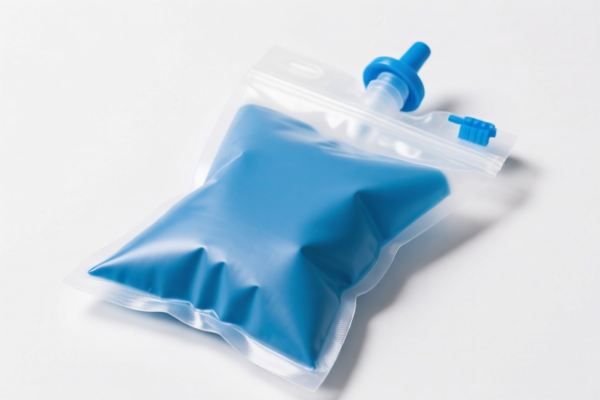
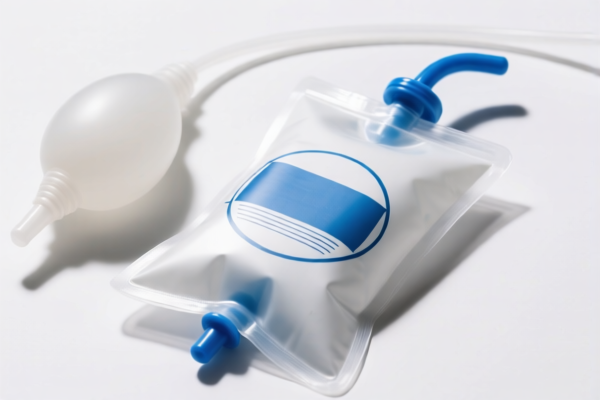
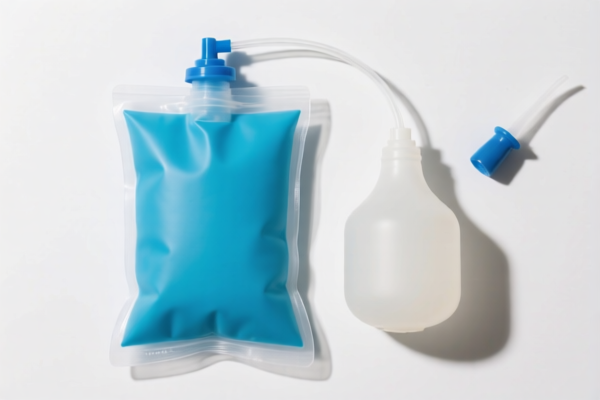
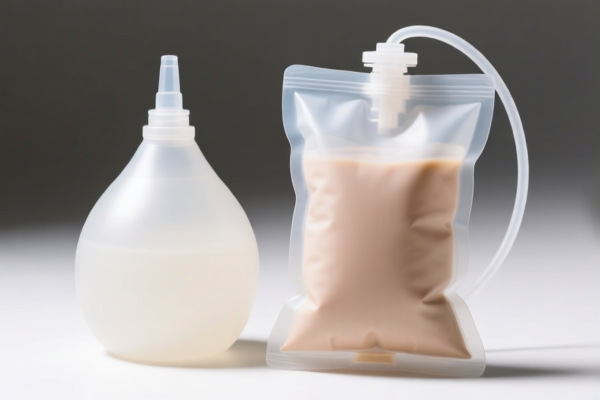
A Portable Enema Bag is a medical or hygienic device used for administering enemas. It typically consists of a reservoir (made of rubber or plastic) with tubing and a nozzle. In international trade, the classification depends heavily on material and intended use.
There are two primary material categories: * Vulcanized Rubber: Used for durable, reusable medical-grade bags. * Plastic (PE/PVC): Used for disposable or semi-disposable hygiene/medical bags.
⚠️ Critical Distinction Point:
- If the bag is made of Vulcanized Rubber for medical/hygiene use → It generally falls under Chapter 40.
- If the bag is made of Plastic and considered a general medical device → It may fall under Chapter 90 or Chapter 39.
- Key Risk: US Customs often scrutinizes these items due to the "Section 301" and "IEEPA" additional tariffs, leading to significant cost differences based on precise classification.
📦 II. HS Code Classification Details (2026 Latest Tariff Concordance)
Below are the specific HS Codes derived from the provided data, along with their corresponding tax rates and legal justifications.
| HS Code | Product Description | Applicable Scenario | Material | Total Tax Rate |
|--------|--------------------------|-----------------------------|----------------------|
| 4014.90.50.00 | Enema bags for hygienic/medical use, made of vulcanized rubber or flexible synthetic materials | Reusable medical enema kits, hospital-grade rubber bags | Rubber/Synthetic | 14.2% |
| 4014.90.10.00 | Sanitary goods made of vulcanized rubber, specifically instruments for enemas | Traditional rubber enema bulbs/bags | Rubber | 10.0% |
| 9018.39.00.40 | Medical catheters/drains category enema bags, made of plastic or rubber | Modern medical enema bags treated as "medical instruments" | Plastic/Rubber | 10.0% |
| 3926.90.21.00 | Plastic enema bags conforming to the definition of plastic articles | Standard plastic enema bags (e.g., PVC/PE) | Plastic | 21.7% |
| 3926.90.99.89 | Other plastic articles made of plastic (e.g., PE/PVC) for enema use | Generic plastic enema accessories or non-standard plastic bags | Plastic | 22.8%* |
🔍 Important Note:
- The term "122 Clause Tariff 10%" refers to the IEEPA (International Emergency Economic Powers Act) surcharge applicable to Chinese-origin goods entering the US, effective from late 2025/2026.
- "Section 301" additional tariffs (often labeled as "added tariffs" in customs data) apply to specific plastic products (3926), leading to higher total rates.
💰 III. 2026 Detailed Tariff Rate Explanation (Including Additional Duties & Policy Surcharges)
✅ Applicable Country: United States (US)
✅ Origin: China (CN)
✅ Effective Time: 2025/2026 (Post-2025 Customs Updates)
🎯 1. 4014.90.50.00 —— Vulcanized Rubber Enema Bags
| Item | Content |
|---|---|
| Base Tariff | 4.2% |
| Section 301 Additional Tariff | 0.0% |
| IEEPA (122 Clause) Surcharge | +10.0% |
| Total Tariff | 14.2% |
| Tax Calculation | CIF Value × 14.2% |
| De Minimis Exemption? | ❌ No (Medical/Health items often excluded or strictly monitored) |
| Legal Basis Path | Chapter 40 → 4014.90 → IEEPA:9903.01.24 (10% Surcharge) |
📌 Explanation:
- Vulcanized rubber products (4014) are exempt from the Section 301 "Additional Tariff" of 7.5% or 10% that often applies to plastics.
- However, they are subject to the 10% IEEPA surcharge for Chinese origin.
- Result: 4.2% (Base) + 10% (IEEPA) = 14.2%. This is a moderate tariff level compared to plastics.
🎯 2. 4014.90.10.00 —— Sanitary Rubber Goods for Enemas
| Item | Content |
|---|---|
| Base Tariff | 0.0% |
| Section 301 Additional Tariff | 0.0% |
| IEEPA (122 Clause) Surcharge | +10.0% |
| Total Tariff | 10.0% |
| Tax Calculation | CIF Value × 10.0% |
| De Minimis Exemption? | ❌ No |
| Legal Basis Path | Chapter 40 → 4014.90.10 → IEEPA:9903.01.24 |
📌 Explanation:
- This is the most favorable rate among rubber categories.
- Base duty is 0%, but the 10% IEEPA surcharge still applies.
- Ideal for exporters if the product strictly qualifies as "sanitary rubber goods."
🎯 3. 9018.39.00.40 —— Medical Catheter/Drain Category Enema Bags
| Item | Content |
|---|---|
| Base Tariff | 0.0% |
| Section 301 Additional Tariff | 0.0% |
| IEEPA (122 Clause) Surcharge | +10.0% |
| Total Tariff | 10.0% |
| Tax Calculation | CIF Value × 10.0% |
| De Minimis Exemption? | ❌ No |
| Legal Basis Path | Chapter 90 → 9018.39 → IEEPA:9903.01.24 |
📌 Explanation:
- By classifying the enema bag as a "medical instrument" (under Chapter 90), you can access the 0% base tariff.
- Strategy: This requires proving the product is a "medical device" (e.g., FDA registered, used in clinical settings).
- Total Cost: Only the 10% IEEPA surcharge applies. This is the lowest total tax rate if medical certification is available.
🎯 4. 3926.90.21.00 —— Plastic Enema Bags
| Item | Content |
|---|---|
| Base Tariff | 4.2% |
| Section 301 Additional Tariff | +7.5% |
| IEEPA (122 Clause) Surcharge | +10.0% |
| Total Tariff | 21.7% |
| Tax Calculation | CIF Value × 21.7% |
| De Minimis Exemption? | ❌ No |
| Legal Basis Path | Chapter 39 → 3926.90 → Section 301: Footnote 9903.88.01 + IEEPA |
📌 Explanation:
- Plastic products (3926) are heavily penalized.
- They incur the Base (4.2%) + Section 301 Additional (7.5%) + IEEPA Surcharge (10%).
- Total: 21.7%. This is significantly higher than rubber or medical device classifications.
🎯 5. 3926.90.99.89 —— Other Plastic Articles for Enema Use
| Item | Content |
|---|---|
| Base Tariff | 5.3% |
| Section 301 Additional Tariff | +7.5% |
| IEEPA (122 Clause) Surcharge | +10.0% |
| Total Tariff | 22.8% |
| Tax Calculation | CIF Value × 22.8% |
| De Minimis Exemption? | ❌ No |
| Legal Basis Path | Chapter 39 → 3926.90.99 → Section 301 + IEEPA |
📌 Explanation:
- This is a "catch-all" for plastic articles.
- Base tariff is higher (5.3%) compared to3926.90.21.00.
- Total: 22.8%. This is the highest cost option for plastic enema bags. Avoid this unless necessary.
🛠️ IV. Customs Clearance Practical Advice (Battle-Tested Pitfall Avoidance)
✅ 1. Document Checklist (Missing Items = Delay/Seizure)
| Document | Must Provide? | Explanation |
|---|---|---|
| ✅ Product Specifications | ✔️ | Material (Rubber vs. Plastic), Dimensions, Capacity |
| ✅ Material Certificate | ✔️ | Proof of Vulcanized Rubber or FDA-approved Plastic |
| ✅ Intended Use Statement | ✔️ | Explicitly state "Medical Use" or "Hygienic Use" |
| ✅ Commercial Invoice | ✔️ | Must clearly describe the item as "Enema Bag," not just "Bag" |
| ✅ FDA Registration (if applicable) | ✔️ | If claiming 9018.39.00.40, medical device registration strengthens the case |
| ✅ Packing List | ✔️ | Ensure no loose accessories are declared separately |
✅ 2. Declaration Strategy (Key Mantras)
🔥 "Material Defines Code, Medical Defines Duty, Plastic Gets Punished!"
| Scenario | Correct Declaration | Wrong Declaration |
|---|---|---|
| Rubber Bag | 4014.90.50.00 (Vulcanized Rubber Enema Bag) |
"Plastic Bag" → Triggers 21.7%+ |
| Plastic Bag | 3926.90.21.00 (Plastic Enema Bag) |
"Medical Device" without proof → Risk of penalty |
| Medical Grade Bag | 9018.39.00.40 (Medical Catheter/Drain Enema Bag) |
Generic "Sanitary Product" → Misses 0% base duty benefit |
| Disposable Plastic | 3926.90.99.89 |
4014.90.10.00 → Misclassification of material |
✅ 3. Special Cases & Workarounds
| Situation | Handling Advice |
|---|---|
| Mixed Materials (Rubber tube, Plastic bag) | Declare based on principal material or essential character. Usually, the reservoir (bag) dictates the code. |
| OEM Custom Bags | Provide design drawings to prove "Medical Instrument" status for 9018.39.00.40. |
| Small Quantity (De Minimis) | ❌ Not Applicable. Medical/hygiene items and goods from China with IEEPA surcharges generally do not qualify for the $800 de minimis exemption. |
| Section 301 Exemption | Check if your specific plastic HTS code has an exclusion (unlikely for 3926). Most plastic enema bags do not have exemptions. |
🌍 V. Global Market Clearance Comparison (2026 Latest)
| Country/Region | Recommended HS Code | Tariff (China Origin) | Certification Required | Notes |
|---|---|---|---|---|
| 🇺🇸 USA | 9018.39.00.40 or 4014.90.10.00 |
10.0% (Medical/Rubber) 21.7%+ (Plastic) |
FDA (if medical) | IEEPA 10% surcharge applies to all Chinese goods. Plastic is heavily taxed. |
| 🇨🇳 China | 4014.90.50.00 or 3926.90.21.00 |
0%~10% | CE/RoHS (if exporting back) | No IEEPA surcharge for domestic trade. |
| 🇪🇺 EU | 3006.51.00 or 3926.90.99 |
0%~4% | CE Marking, REACH | No Section 301/IEEPA. Lower tariffs than US. |
| 🇬🇧 UK | 3006.51.00 |
0% | UKCA Marking | Post-Brexit rules apply. |
| 🇯🇵 Japan | 3006.51.00 |
0% | PSE/MHLW | Prefer medical device classification. |
📌 Conclusion:
- USA is the most expensive market due to IEEPA (10%) and Section 301 (7.5%) surcharges on plastics.
- Strategy: To minimize US duties, aim for4014.90.10.00(10% total) or9018.39.00.40(10% total).
- Avoid3926.90codes if possible, as they carry the highest total tax burden (21.7%~22.8%).
📌 VI. Common Errors & Pitfalls (Lessons Learned)
❌ Error 1: Declaring a Plastic Enema Bag as 4014.90.10.00 (Rubber)
👉 Consequence: Customs seizure for misclassification. Fine up to 160% of duties owed.
❌ Error 2: Ignoring the 10% IEEPA Surcharge in cost calculations
👉 Consequence: Profit margin collapse. A bag costing $1.00 now has a $0.10+ hidden tax that wasn't quoted to the customer.
❌ Error 3: Using vague descriptions like "Sanitary Bag"
👉 Consequence: Customs may assign a higher general rate or require additional testing/delay.
❌ Error 4: Assuming De Minimis applies to small quantities
👉 Consequence: Package held at border. IEEPA taxes apply regardless of value for China-origin goods in many cases.
✅ Correct Declaration Example:
"Medical Enema Bag, Vulcanized Rubber, Reusable, Model XYZ, for Clinical Use Only. HS: 4014.90.10.00"
🎯 VII. Conclusion: Precise Classification Saves Money!
🎯 Remember This Mantra:
🔹 "Rubber & Medical = 10% Total"
🔹 "Plastic = 22% Total (Ouch!)"
🔹 "Misclassification = Fine + Delay"🔹 "Always declare Material + Intended Use"
🔹 "Check IEEPA Surcharges Before Shipping"
📌 Pro Tip:
If you are exporting Plastic Enema Bags to the US, consider:
1. Re-engineering to use Vulcanized Rubber to qualify for 4014.90 (10% total).
2. Securing FDA Approval to classify as a medical device under 9018.39.00.40 (10% total).
3. Applying for Section 301 Exclusions if available (check current USITC lists).
📣 Immediate Action:
📞 Consult a licensed customs broker.
📸 Provide clear photos of the product material and nozzle.
🚀 Optimize your HS Code to save 11.7%~12.8% in taxes!
✨ Professional Customs Clearance Starts with Accurate Classification!
💼 Every Percent Saved is Pure Profit!
Customer Reviews
About HS Code Classification
The Harmonized System (HS) is an internationally standardized nomenclature developed by the World Customs Organization (WCO) to classify traded products. Over 200 countries use the HS system as the basis for customs tariffs, trade statistics, and import/export regulations.
Each HS code follows a hierarchical structure:
- Chapter (2 digits) — Broad category of goods (e.g., Chapter 84: Machinery and Mechanical Appliances)
- Heading (4 digits) — More specific grouping within the chapter
- Subheading (6 digits) — Internationally standardized breakdown, used by all WCO member countries
- National subdivisions (8-10 digits) — Country-specific extensions for further classification, such as US HTSUS 10-digit codes
Correct HS code classification is essential for smooth customs clearance, accurate duty payment, and compliance with trade regulations. Misclassification can lead to customs delays, overpayment of duties, or penalties.
When importing from CN to US, the applicable tariff rates may include:
- Most-Favored-Nation (MFN) rate — The standard duty rate applied to WTO members
- General rate — Applied to countries without trade agreements
- Trade remedy duties — Additional tariffs such as Section 301 (anti-dumping), Section 232 (national security), or countervailing duties
The information provided on this page is for reference purposes only. For official classification, please consult with your local customs authority or a licensed customs broker.