Portable Financial Diary
CN → US| HS Code | Tariff Rate | Origin | Destination | Doc |
|---|---|---|---|---|
| 4820102060 | 35.0% | CN | US | Official Doc |
| 4202329900 | 52.6% | CN | US | Official Doc |
| 4202329100 | 52.6% | CN | US | Official Doc |
| 4820102010 | 35.0% | CN | US | Official Doc |
Product Images
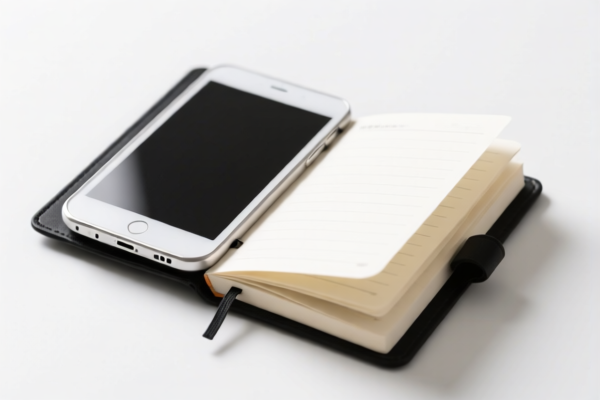
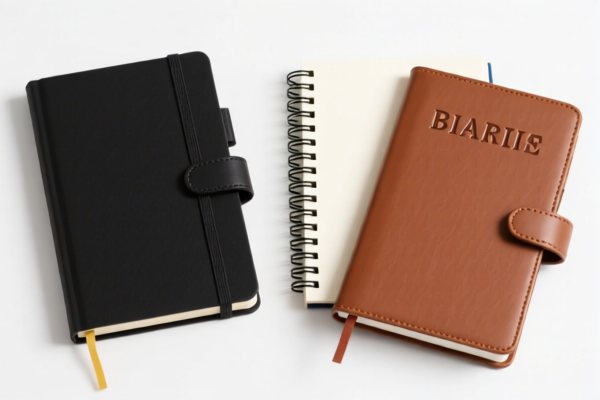
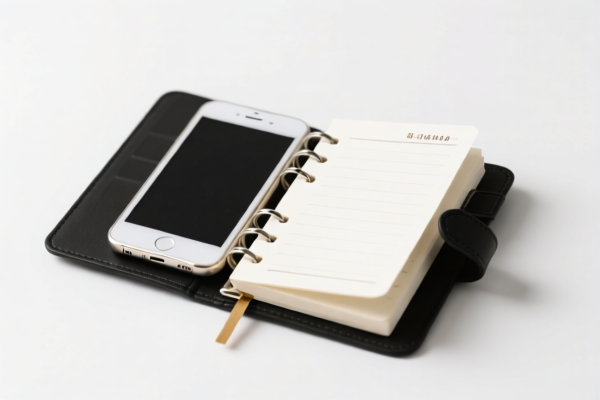
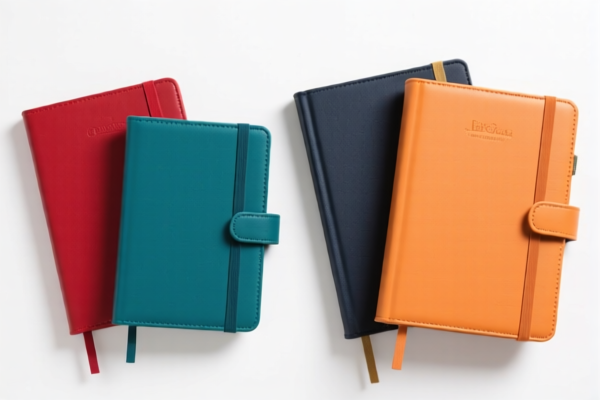
AI Analysis
📒 Portable Financial Diary (Portable Financial Diary)
🌐 HS Code Reference & Customs Clearance Guide | 2026 Latest Tariff Analysis | Professional Clearance Strategy 📌 I. Product Definition & Classification: Do You Really Understand "Diaries"?
A Portable Financial Diary falls under the category of stationery and office supplies made of paper or paperboard. In international trade, these items are strictly categorized based on their binding status (bound vs. unbound) and specific use (general vs. specialized).
For a "Financial Diary," the key distinction lies in whether it is considered a bound diary or a memorandum pad/loose-leaf note.
1. Bound Diaries, Notebooks, and Address Books (Diaries & Address Books, Bound) * Characteristics: Permanently stitched or glued, typically with a hardcover or durable softcover, designed for long-term use and record-keeping. * Classification Logic: If the "financial diary" is a structured booklet for daily financial tracking, it is classified as a Bound Diary.
2. Memorandum Pads, Letter Pads, and Similar Articles * Characteristics: Often unbound, spiral-bound, or loose-leaf pads intended for quick notes, temporary records, or memos. * Classification Logic: If the item is more like a notepad or a loose-leaf binder refill for financial data, it falls under Memorandum Pads.
⚠️ Key Distinction Point: * If it is a booklet-style diary for long-term financial planning → Bound Diary. * If it is a notepad/pad for quick financial jotting → Memorandum Pad.
📦 II. HS Code Classification Details (2026 Latest Tariff Authority Comparison)
| HS Code | Product Description | Application Scenario | Binding Type |
|---|---|---|---|
4820.10.20.10 |
Diaries, notebooks and address books, bound; memorandum pads, letter pads and similar articles: Diaries and address books | Permanent financial planners, bound ledger diaries, professional organizers | ✅ Bound (Stitched/Glued) |
4820.10.20.60 |
Diaries, notebooks and address books, bound; memorandum pads, letter pads and similar articles: Other | Loose-leaf financial binders, unbound financial pads, specialized memo books | ❌ Unbound/Semi-bound (Loose/Pad) |
4820.10.10.00 |
Registers, account books, notebooks, order books, receipt books, letter pads, memorandum pads, diaries and similar articles: Registers and account books | Note: Not explicitly listed in source data, but generally for strict accounting registers. | ✅ Bound |
4820.90.00.00 |
Other articles of stationery | Non-standard stationery items not fitting above categories | ❌ N/A |
🔍 Key Reminder: * Bound Financial Diaries are typically classified under 4820.10.20.10. * Loose-leaf or Pad-style Financial Notes are classified under 4820.10.20.60. * Both codes have the same tariff rate in the provided data, so the primary difference is in customs inspection accuracy and product description matching.
💰 III. 2026 Latest Tariff Rate Details (Including Additional Taxes & Policy Add-ons)
✅ Applicable Country: United States (US) ✅ Country of Origin: China (CN) (Note: If origin is non-China, tariffs may differ; based on source data which implies China-US trade context with "Additional Tariff" column) ✅ Effective Date: As per 2026 Tariff Schedule
🎯 1. 4820.10.20.10 —— Bound Financial Diary (Diaries & Address Books)
| Item | Content |
|---|---|
| Base Tariff Rate | 0.0% (Ad Valorem) |
| Additional Tariff (Section 301 / China) | 25.0% |
| Total Tariff Rate | 25.0% |
| Tax Calculation | CIF Value × 25% |
| De Minimis Exemption Eligible? | ❌ No (Deny De Minimis for Section 301 goods) |
| Legal Basis Path | HTSUS: 4820.10.20.10 → Section 301 Additional Duty: 25% |
📌 Explanation: * Although the base tariff for paper stationery is 0%, products from China are subject to a 25% additional tariff under the Section 301 trade remedies. * This is a high-cost item for importers, and the full 25% must be declared.
🎯 2. 4820.10.20.60 —— Other Financial Diaries (Memorandum Pads, Unbound)
| Item | Content |
|---|---|
| Base Tariff Rate | 0.0% (Ad Valorem) |
| Additional Tariff (Section 301 / China) | 25.0% |
| Total Tariff Rate | 25.0% |
| Tax Calculation | CIF Value × 25% |
| De Minimis Exemption Eligible? | ❌ No (Deny De Minimis for Section 301 goods) |
| Legal Basis Path | HTSUS: 4820.10.20.60 → Section 301 Additional Duty: 25% |
📌 Note: * Same tariff treatment as bound diaries. * Even if the product is simple, the origin triggers the additional duty.
🛠️ IV. Customs Clearance Practical Advice (Battlefield Pit-Avoidance Guide)
✅ 1. Required Documents Checklist (All Essential)
| Document | Must Provide | Description |
|---|---|---|
| ✅ Product Specification Sheet | ✔️ | Include dimensions, paper type (gsm), binding type (bound vs. loose), and intended use (financial planning). |
| ✅ Product Photos | ✔️ | Clear images showing the cover, binding method, and interior layout. |
| ✅ Commercial Invoice | ✔️ | Must specify: "Financial Diary, Paper, Bound/Unbound, Model XXX". Avoid vague terms like "Notebook". |
| ✅ Packing List | ✔️ | Detail the number of units, weight, and packaging type. |
| ✅ Proof of Origin (if applicable) | ✔️ | To verify country of manufacture (crucial for tariff application). |
✅ 2. Declaration Tips (Key Mantra)
🔥 "Bound vs. Unbound, Specify Clearly, Tariff is 25%, No Surprise!"
| Scenario | Correct Declaration | Wrong Practice |
|---|---|---|
| Bound Financial Diary | 4820.10.20.10 - "Bound Financial Diary" |
Misdeclare as "Notebook" (4820.10.10) to avoid scrutiny → Risk of penalty. |
| Loose-leaf Financial Planner | 4820.10.20.60 - "Loose-leaf Financial Planner" |
Declare as "Bound" → Mismatch in physical inspection. |
| Unbound Pad | 4820.10.20.60 - "Financial Memorandum Pad" |
Declare as "Bound Diary" → Unnecessary confusion, though tax is same. |
| Vague "Stationery" | ❌ Never Use | "Stationery" is too broad → Customs will reclassify and possibly apply higher duties or detain. |
✅ 3. Special Circumstances Handling
| Situation | Handling Advice |
|---|---|
| Set with Pen & Diary | If the pen is minor, declare as "Diary Set" but focus on the diary for HS code. Pen may be classified separately. |
| Leather Cover Diary | If the cover is leather, it may be classified under Chapter 46 (Leather Goods, e.g., 4202.32.99.00), which has 0% tariff in the source data. Crucial Check! |
| Digital Financial Planner | If it includes electronic components (e.g., e-ink screen), it may fall under Chapter 85 (Electrical), not 48. |
| Non-Chinese Origin | If manufactured in Vietnam/Thailand, check for de minimis eligibility or lower tariffs (0% additional duty). |
🌍 V. Global Market Clearance Comparison (2026 Latest)
| Country/Region | Recommended HS Code | Tariff (China Origin) | Certification Requirements | Notes |
|---|---|---|---|---|
| 🇺🇸 USA | 4820.10.20.10 / .60 |
25% (Additional) | None specific for paper | High Cost! Section 301 applies. |
| 🇨🇳 China | 4820.10.20.10 |
0% - 5% | None | Low cost for domestic use. |
| 🇪🇺 EU | 4820.10.20 |
0% - 6% | REACH (if ink/paper has chemicals) | Generally low tariffs, but check ink composition. |
| 🇬🇧 UK | 4820.10.20 |
0% - 5% | UKCA (if applicable) | Post-Brexit tariffs may vary. |
| 🇯🇵 Japan | 4820.10.20 |
0% - 3% | None | Low tariffs, focus on content accuracy. |
📌 Conclusion: * USA is the most expensive market for Chinese-made diaries due to the 25% additional tariff. * Consider leather-covered diaries (
4202.32.99.00) if feasible, as they may have 0% additional tariff in the source data, saving significant costs. * Non-Chinese origins can bypass the 25% duty, offering a major cost advantage.
📌 VI. Common Mistakes & Pitfall Guide (Lessons from Experience)
❌ Mistake 1: Declaring a bound diary as a "Notebook" without specifying binding. 👉 Consequence: Customs may reclassify, causing delays. Though tax is same, accuracy is key for compliance.
❌ Mistake 2: Assuming all stationery is duty-free. 👉 Consequence: 25% additional tariff applies to Chinese goods. Ignoring this leads to seizure or large back-taxes.
❌ Mistake 3: Using vague descriptions like "Office Supplies". 👉 Consequence: Customs will assign a generic code, possibly with higher duties or extra inspection fees.
❌ Mistake 4: Overlooking leather covers.
👉 Consequence: A diary with a leather cover might be classified as a leather accessory (4202.32.99.00) with 0% additional tariff. Failing to leverage this misses a cost-saving opportunity.
✅ Correct Approach:
"Financial Diary, Paper, Bound, 2026 Edition, Model XYZ, Made in China" OR "Financial Planner, Leather Cover, Bound, Model ABC, Made in Vietnam"
🎯 VII. Conclusion: Professional Declaration, Save Time & Money!
🎯 Remember the Mantra:
🔹 "Bound or Unbound, Specify Clearly." 🔹 "China Origin = 25% Extra Duty." 🔹 "Leather Cover? Check Chapter 42 for 0%!" 🔹 "HS Code Defines Cost, Accuracy Saves Thousands!"
📌 Pro Tip:
If your diary has a leather or synthetic leather cover, investigate classification under 4202.32.99.00 (or similar leather goods codes). The source data shows 0% total tax for this category, which could save you the 25% additional tariff on paper diaries.
📣 Immediate Action:
📞 Contact a Professional Customs Broker + Provide Product Photos + Confirm Origin 🚀 Let Your Diary Clear Customs Smoothly, Efficiently, and Profitably!
✨ Professional Clearance Starts with Accurate Classification! 💼 Every Dollar of Tariff Matters!
Customer Reviews
About HS Code Classification
The Harmonized System (HS) is an internationally standardized nomenclature developed by the World Customs Organization (WCO) to classify traded products. Over 200 countries use the HS system as the basis for customs tariffs, trade statistics, and import/export regulations.
Each HS code follows a hierarchical structure:
- Chapter (2 digits) — Broad category of goods (e.g., Chapter 84: Machinery and Mechanical Appliances)
- Heading (4 digits) — More specific grouping within the chapter
- Subheading (6 digits) — Internationally standardized breakdown, used by all WCO member countries
- National subdivisions (8-10 digits) — Country-specific extensions for further classification, such as US HTSUS 10-digit codes
Correct HS code classification is essential for smooth customs clearance, accurate duty payment, and compliance with trade regulations. Misclassification can lead to customs delays, overpayment of duties, or penalties.
When importing from CN to US, the applicable tariff rates may include:
- Most-Favored-Nation (MFN) rate — The standard duty rate applied to WTO members
- General rate — Applied to countries without trade agreements
- Trade remedy duties — Additional tariffs such as Section 301 (anti-dumping), Section 232 (national security), or countervailing duties
The information provided on this page is for reference purposes only. For official classification, please consult with your local customs authority or a licensed customs broker.