Portable Flashlight
CN → US| HS Code | Tariff Rate | Origin | Destination | Doc |
|---|---|---|---|---|
| 8513102000 | 22.5% | CN | US | Official Doc |
| 8513104000 | 13.5% | CN | US | Official Doc |
| 9405428440 | 38.9% | CN | US | Official Doc |
| 9405490000 | 38.9% | CN | US | Official Doc |
| 8513102000 | 22.5% | CN | US | Official Doc |
Product Images
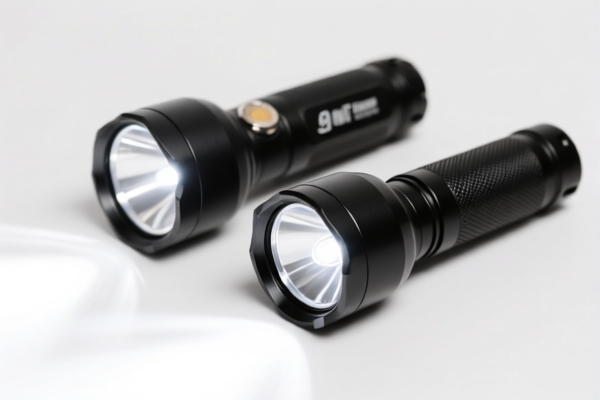
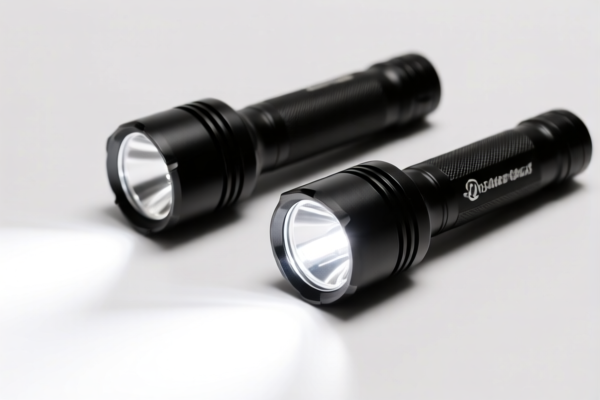
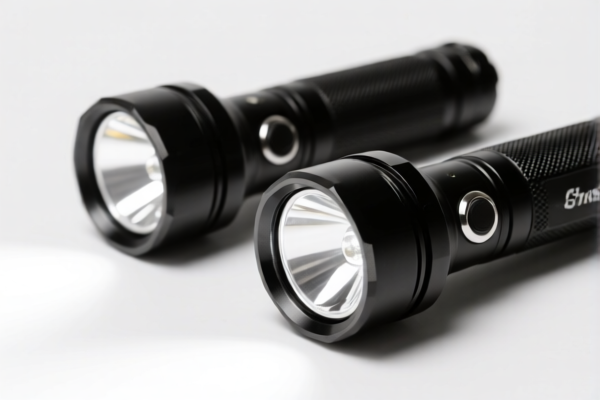
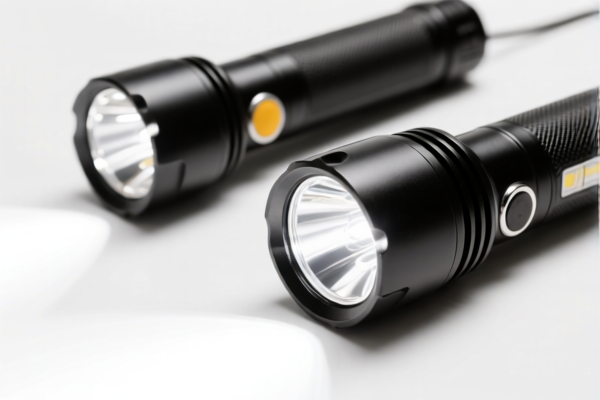
AI Analysis
🔦 Portable Flashlight (Portable Electric Lamps)
🌐 HS Code Reference & Customs Clearance Guide | 2026 Latest Tariff Analysis | Professional Strategy
📌 I. Product Definition & Classification: What Exactly is a "Portable Flashlight"?
A Portable Flashlight is a battery-operated, hand-held lighting device used for general illumination, emergency preparedness, or industrial inspection. In international trade, its classification is highly sensitive to form factor, power source integration, and specific use case.
The core distinction lies between: 1. True Portable Electric Lamps (Heading 8513): Self-contained, battery-powered, designed to be carried in the hand or pocket. This is the ideal classification for standard flashlights. 2. Other Electric Luminaires (Heading 9405): General lighting fixtures that do not meet the strict "portable/self-contained" definition, often serving as a "catch-all" category.
⚠️ Critical Distinction Point:
- If the device is hand-held, battery-powered (built-in or replaceable), and not part of a fixed installation → It belongs to 8513.
- If it is a plug-in lamp, LED bulb, or decorative fixture without clear portable utility → It falls under 9405.
- Misclassification Risk: Declaring a standard flashlight as "Other Lighting Fixture" (9405) triggers significantly higher tariffs due to additional trade remedies.
📦 II. HS Code Classification Matrix (2026 Latest Tariff Authority)
| HS Code | Product Description | Application Scenario | Key Feature |
|---|---|---|---|
8513.10.20.00 |
Portable Electric Lamps (e.g., Flashlights) | Standard hand-held flashlights, tactical lights | ✅ Self-contained, battery-driven, portable |
8513.10.40.00 |
Portable Electric Lamps (Other) | Other portable lighting devices fitting the definition | ✅ Portable, self-powered, non-specific use |
9405.42.84.40 |
Electric Lamps and Lighting Fittings (Other) | Generic "flashlights" misclassified as general lighting | ❌ Fails strict "portable/self-driven" definition; catch-all |
9405.49.00.00 |
Electric Lamps and Lighting Fittings (Other) | Electric lighting apparatus, general category | ❌ Broad category; higher duty burden |
🔍 Key Insight:
-8513is the most favorable classification for true flashlights, offering lower base duties.
-9405is a fallback category but carries higher punitive tariffs (especially Section 301/122 duties).
- Customs authorities scrutinize form factor: If it looks and functions like a flashlight,8513is the correct legal classification.
💰 III. 2026 Latest Tariff Rate Breakdown (Including Surcharges)
✅ Applicable Country: United States (US)
✅ Origin: China (CN)
✅ Effective Date: Ongoing (based on current trade policies including Section 301 & Section 122)
🎯 1. 8513.10.20.00 — Portable Electric Lamps (Flashlights)
| Item | Content |
|---|---|
| Base Duty Rate | 12.5% (ad valorem) |
| Section 301 Surtax | 0.0% (Exempt from 25% tariff for this specific subheading under current rules) |
| Section 122 Surtax | +10% (China-specific surcharge) |
| Total Effective Rate | 22.5% |
| Tax Calculation | CIF Value × 22.5% |
| De Minimis Eligibility | ❌ No (Value > $800 threshold for personal import; commercial shipments subject to full duty) |
| Legal Basis Path | USITC:8513.10.20.00 → Section 122: 10% surcharge |
📌 Explanation:
- The 22.5% total includes a 12.5% base duty and a 10% Section 122 surcharge.
- Crucially, it avoids the 25% Section 301 tariff that applies to many other electronics under9405.
- This is the preferred classification for cost optimization.
🎯 2. 8513.10.40.00 — Other Portable Electric Lamps
| Item | Content |
|---|---|
| Base Duty Rate | 3.5% |
| Section 301 Surtax | 0.0% |
| Section 122 Surtax | +10% |
| Total Effective Rate | 13.5% |
| Tax Calculation | CIF Value × 13.5% |
| De Minimis Eligibility | ❌ No |
| Legal Basis Path | USITC:8513.10.40.00 → Section 122: 10% surcharge |
📌 Explanation:
- This subheading applies to portable lamps that do not fit the specific "flashlight" description but still meet the portable/self-powered criteria.
- Lowest total tariff (13.5%) among all options, making it highly attractive if the product qualifies.
🎯 3. 9405.42.84.40 & 9405.49.00.00 — Electric Luminaires (General)
| Item | Content |
|---|---|
| Base Duty Rate | 3.9% |
| Section 301 Surtax | +25.0% |
| Section 122 Surtax | +10% |
| Total Effective Rate | 38.9% |
| Tax Calculation | CIF Value × 38.9% |
| De Minimis Eligibility | ❌ No |
| Legal Basis Path | USITC:9405.42.84.40 or 9405.49.00.00 → Section 301: 25% + Section 122: 10% |
📌 Explanation:
- Total Tariff: 38.9%.
- This category incurs the full 25% Section 301 tariff because these headings are explicitly listed in the Section 301 exclusions list (or lack of exclusion).
- High Risk: Using this classification for a standard flashlight results in significantly higher costs compared to8513.
🛠️ IV. Customs Clearance Practical Advice (Avoiding Pitfalls)
✅ 1. Documentation Checklist (Mandatory)
| Document | Required | Notes |
|---|---|---|
| ✅ Product Specification Sheet | ✔️ | Must explicitly state "Battery-powered, Hand-held, Portable" |
| ✅ Technical Diagram | ✔️ | Show battery compartment, switch, and lamp head |
| ✅ Product Photos | ✔️ | Clear images showing it is a standalone unit, not part of a fixture |
| ✅ Commercial Invoice | ✔️ | Describe as "Portable Electric Flashlight," NOT "LED Lamp" or "Lighting Fixture" |
| ✅ Battery Declaration | ✔️ | If lithium batteries are included, provide MSDS and UN38.3 test reports |
| ✅ Packing List | ✔️ | Ensure quantity matches invoice |
✅ 2. Classification Strategy (Key Mantra)
🔥 "Portable & Self-Driven = 8513 | Fixed & General = 9405"
| Scenario | Correct HS Code | Incorrect HS Code | Consequence of Error |
|---|---|---|---|
| Standard Hand-hold Flashlight | 8513.10.20.00 (22.5%) |
9405.49.00.00 (38.9%) |
Overpay 16.4% |
| Pocket-sized LED Light | 8513.10.40.00 (13.5%) |
9405.42.84.40 (38.9%) |
Overpay 25.4% |
| Plug-in Night Light | 9405.49.00.00 (38.9%) |
8513.10.20.00 (22.5%) |
Underdeclare Duty → Penalties |
| Headlamp (Hand-held mode) | 8513.10.20.00 |
9405.49.00.00 |
Avoidable Cost |
📌 Note:
- If the flashlight can also be mounted or plug-in, still argue for8513if it is primarily designed for portable use.
- Provide marketing materials showing portable use cases (e.g., hiking, emergencies) to support8513classification.
✅ 3. Special Considerations
| Scenario | Handling Advice |
|---|---|
| OEM/White Label | Use generic descriptions like "Portable Electric Lamp" but ensure technical specs match 8513. |
| With Lithium Batteries | Must comply with IATA/IMO regulations. Declare battery type (Li-ion/Li-Po) and watt-hour rating. |
| Tactical/High-Beam | Still 8513. Do not classify as "Industrial Equipment" (9030) unless it has measurement functions. |
| Rechargeable via USB | Still 8513 if the battery is internal/removable and the device is portable. |
🌍 V. Global Market Comparison (2026)
| Country/Region | Recommended HS Code | Duty Rate (CN Origin) | Certification | Notes |
|---|---|---|---|---|
| 🇺🇸 USA | 8513.10.20.00 |
22.5% | FCC (if RF), UL/ETL (safety) | Avoid 9405 (38.9%) |
| 🇨🇳 China | 8513.10.20.00 |
~5-8% | CCC (if applicable) | Lower base duty |
| 🇪🇺 EU | 8513.10.20.00 |
0-4% | CE, RoHS, WEEE | No trade surcharges |
| 🇬🇧 UK | 8513.10.20.00 |
0-4% | UKCA | Post-Brexit rules apply |
| 🇯🇵 Japan | 8513.10.20.00 |
0-4% | PSE | Electrical safety mandatory |
📌 Conclusion:
- USA is the most complex due to Section 301/122 surcharges.
- EU/Asia have simpler, lower duty structures.
- Always aim for8513for flashlights to minimize costs in the US market.
📌 VI. Common Mistakes & Pitfalls (Lessons Learned)
❌ Mistake 1: Classifying as 9405.49.00.00 ("Other Lighting")
👉 Result: Pay 38.9% instead of 22.5%. Loss: 16.4% per unit.
❌ Mistake 2: Describing as "LED Lamp" instead of "Flashlight"
👉 Result: Customs may reject 8513 and default to 9405. Always use "Flashlight" or "Portable Electric Lamp".
❌ Mistake 3: Ignoring Battery Regulations
👉 Result: Cargo held at port. Require UN38.3 and MSDS for any lithium battery-containing products.
❌ Mistake 4: Combining Flashlights with Plug-in Lamps in One Shipment
👉 Result: Complex customs scrutiny. Split shipments or clearly separate line items with distinct HS Codes.
✅ Best Practice:
"Hand-held Portable Electric Flashlight, Battery-operated, Model XYZ, FCC Certified, Lithium-ion Battery Included"
🎯 VII. Conclusion: Smart Classification Saves Money!
🎯 Remember the Mantra:
🔹 "Portable = 8513 (22.5%) | Fixed = 9405 (38.9%)"
🔹 "16.4% Savings is Huge! Don't Overpay!"
🔹 "Documentation is Key: Prove Portability!"
📌 Pro Tip:
If your flashlight is exclusively portable, insist on 8513.10.20.00 or 8513.10.40.00.
For large volumes, consider applying for an Advance Ruling from US Customs to lock in the 8513 classification and avoid future disputes.
📣 Immediate Action:
📞 Contact a Customs Broker + Provide Tech Specs + Verify Battery Compliance
🚀 Classify Correctly, Clear Fast, Maximize Profit!
✨ Professional Classification, Precision Compliance!
💼 Every Percentage Point Counts in Global Trade!
Customer Reviews
About HS Code Classification
The Harmonized System (HS) is an internationally standardized nomenclature developed by the World Customs Organization (WCO) to classify traded products. Over 200 countries use the HS system as the basis for customs tariffs, trade statistics, and import/export regulations.
Each HS code follows a hierarchical structure:
- Chapter (2 digits) — Broad category of goods (e.g., Chapter 84: Machinery and Mechanical Appliances)
- Heading (4 digits) — More specific grouping within the chapter
- Subheading (6 digits) — Internationally standardized breakdown, used by all WCO member countries
- National subdivisions (8-10 digits) — Country-specific extensions for further classification, such as US HTSUS 10-digit codes
Correct HS code classification is essential for smooth customs clearance, accurate duty payment, and compliance with trade regulations. Misclassification can lead to customs delays, overpayment of duties, or penalties.
When importing from CN to US, the applicable tariff rates may include:
- Most-Favored-Nation (MFN) rate — The standard duty rate applied to WTO members
- General rate — Applied to countries without trade agreements
- Trade remedy duties — Additional tariffs such as Section 301 (anti-dumping), Section 232 (national security), or countervailing duties
The information provided on this page is for reference purposes only. For official classification, please consult with your local customs authority or a licensed customs broker.