Portable Folding Mirror
CN → US| HS Code | Tariff Rate | Origin | Destination | Doc |
|---|---|---|---|---|
| 7009911090 | 42.8% | CN | US | Official Doc |
| 9013809100 | 22.0% | CN | US | Official Doc |
| 9013105000 | 22.8% | CN | US | Official Doc |
| 8525894000 | 17.5% | CN | US | Official Doc |
| 8525895030 | 35.0% | CN | US | Official Doc |
Product Images
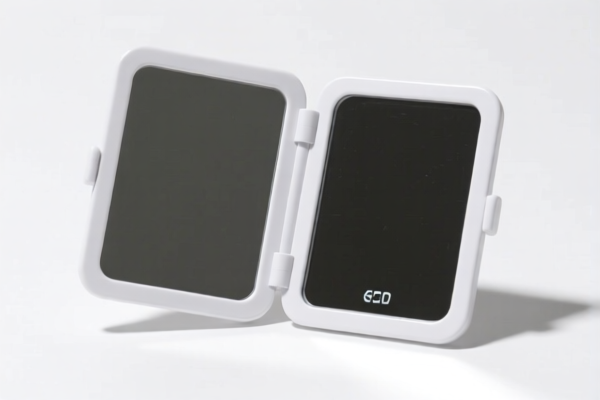
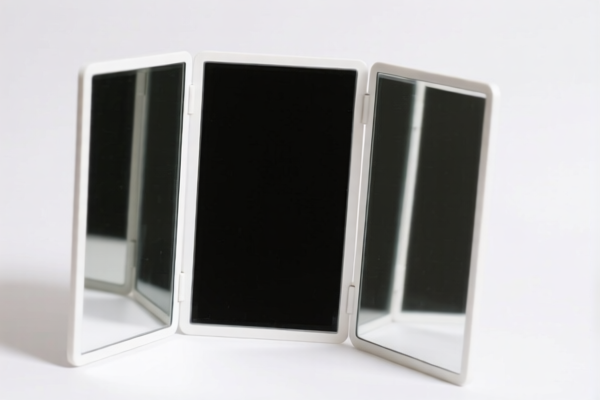
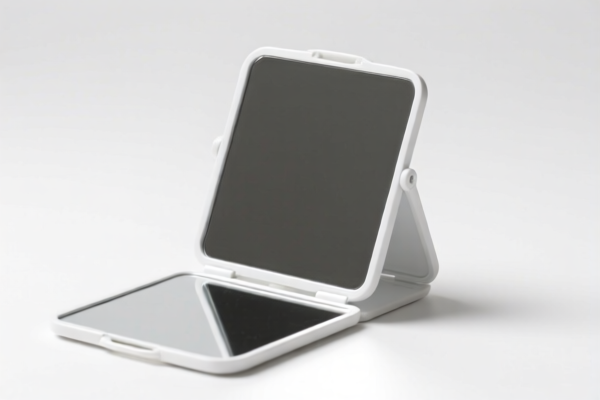

AI Analysis
🪞 Portable Folding Mirror (折叠镜)
🌐 HS Code Reference & Customs Clearance Guide | 2026 Latest Tariff Analysis | Professional Transit Strategy
📌 I. Product Definition & Classification: Are You Classifying "Mirrors" Correctly?
A Portable Folding Mirror is a compact optical device, typically consisting of a reflective surface (glass or acrylic) mounted in a frame, designed for personal grooming or inspection. In international trade, the classification depends heavily on the material composition and optical function.
⚠️ Key Distinction Point:
- If the mirror is primarily valued as glassware/accessory → It falls under Chapter 70 (Glass);
- If the mirror is valued as an optical instrument for precision or specific optical function → It may fall under Chapter 90 (Optical Instruments);
- Note: Standard household/cosmetic folding mirrors usually lean towards Chapter 70 unless they have specific optical enhancements (e.g., magnification lenses integrated into a scientific apparatus).
📦 II. HS Code Classification Details (2026 Latest Tariff Authoritative Comparison)
Based on the provided data, there are 5 potential HS Codes depending on the specific design and declared purpose. Below is the detailed breakdown:
| HS Code | Product Description | Summary Reason | Total Tax Rate |
|---|---|---|---|
7009.91.10.90 |
Mirrors of Glass, Not Fitted | Classified as glass material mirrors, falling under the "other items" residual principle for mirrors. | 42.8% |
9013.80.91.00 |
Other Optical Appliances | Classified as optical appliances, fitting the definition of "other optical appliances and instruments." | 22.0% |
9013.10.50.00 |
Other Optical Appliances | Classified under optical appliances, fitting the definition of "unlisted other optical appliances." | 22.8% |
8525.89.40.00 |
Portable Camera / Image Capture Device | Note: This code is for "Portable Cameras" based on image capture use. | 17.5% |
8525.89.50.30 |
Cameras (Video/Camera) | Note: This code is for "Cameras," fitting the form and use definition of cameras. | 35.0% |
🔍 Critical Insight for Mirrors:
- The most common classification for standard folding mirrors is7009.91.10.90(Glass Mirrors).
- However, if the mirror is part of an optical kit or has magnifying optical properties distinct from simple reflection, customs might argue for Chapter 90 (9013.xxxx).
- Warning: Codes8525.89.40.00and8525.89.50.30are explicitly listed in the data for "Portable Cameras" (便携式相机). Do NOT use these for mirrors unless you are misdeclaring a camera as a mirror, which is illegal and risky. These codes are included in the data set for comparison or if the product is actually a mirror-with-camera hybrid (rare).
💰 III. 2026 Latest Tariff Rate Detailed Explanation (Including Surcharges & Policy Add-ons)
✅ Applicable Country: USA (US)
✅ Origin: China (CN)
✅ Effective Time: 2025/2026 (Current Policy)
🎯 1. 7009.91.10.90 —— Glass Mirrors (The Standard Mirror Code)
| Item | Content |
|---|---|
| Base Tariff | 7.8% (Ad Valorem) |
| Section 301 Surcharge | 25.0% |
| Section 122 Surcharge | 10.0% |
| Total Tax Rate | 42.8% |
| Tax Calculation | CIF Value × 42.8% |
| De Minimis Exemption | ❌ Not Eligible (High tariff threshold) |
| Legal Basis Path | USITC:7009.91.10.90 → Section 301: 25% → Section 122: 10% |
📌 Explanation:
- This is the highest tax burden among mirror-specific codes.
- The 25% comes from the Section 301 tariffs on Chinese goods.
- The 10% is a specific additional surcharge (Section 122).
- Strategy: Verify if the mirror can be argued as "optical" to reduce taxes, but be prepared for customs audits.
🎯 2. 9013.80.91.00 —— Other Optical Appliances (Low-Tax Option)
| Item | Content |
|---|---|
| Base Tariff | 4.5% (Ad Valorem) |
| Section 301 Surcharge | 7.5% |
| Section 122 Surcharge | 10.0% |
| Total Tax Rate | 22.0% |
| Tax Calculation | CIF Value × 22.0% |
| De Minimis Exemption | ❌ Not Eligible |
| Legal Basis Path | USITC:9013.80.91.00 → Section 301: 7.5% → Section 122: 10% |
📌 Explanation:
- Significant Savings: 42.8% → 22.0% (20.8% lower).
- Justification Required: You must prove the mirror is an "optical instrument" (e.g., has specific magnification, is used in medical/dental contexts, or is part of a specialized optical device).
- Risk: Customs may reject this if it's a simple household mirror.
🎯 3. 9013.10.50.00 —— Other Optical Appliances (Alternative Optical Code)
| Item | Content |
|---|---|
| Base Tariff | 5.3% (Ad Valorem) |
| Section 301 Surcharge | 7.5% |
| Section 122 Surcharge | 10.0% |
| Total Tax Rate | 22.8% |
| Tax Calculation | CIF Value × 22.8% |
| De Minimis Exemption | ❌ Not Eligible |
| Legal Basis Path | USITC:9013.10.50.00 → Section 301: 7.5% → Section 122: 10% |
📌 Explanation:
- Very similar to9013.80.91.00, just 0.8% higher.
- Use this if the mirror fits the "unlisted optical appliances" category better than "other optical instruments."
⚠️ Codes for Portable Cameras (ONLY IF Applicable)
❗ Important: The following codes are for Cameras, not mirrors. Use only if your product is a Mirror-Integrated Camera or you are misdeclaring (which is advised against).
🎯 4. 8525.89.40.00 —— Portable Cameras (Image Capture)
| Item | Content |
|---|---|
| Base Tariff | 0.0% |
| Section 301 Surcharge | 7.5% |
| Section 122 Surcharge | 10.0% |
| Total Tax Rate | 17.5% |
🎯 5. 8525.89.50.30 —— Cameras
| Item | Content |
|---|---|
| Base Tariff | 0.0% |
| Section 301 Surcharge | 25.0% |
| Section 122 Surcharge | 10.0% |
| Total Tax Rate | 35.0% |
🛠️ IV. Customs Clearance Practical Advice (Pitfall Avoidance Guide)
✅ 1. Preparation Checklist (Must-Haves)
| Document | Required? | Explanation |
|---|---|---|
| ✅ Product Specifications | ✔️ | Must detail: Size, Material (Glass/Plastic), Magnification (if any), Intended Use. |
| ✅ Product Photos | ✔️ | Clear images of the mirror, frame, and any mechanisms. Show if it's a simple reflective surface or has optical elements. |
| ✅ Commercial Invoice | ✔️ | Must clearly state: "Folding Mirror, Glass Material, For Personal Use" OR "Optical Mirror with Magnification." |
| ✅ Customs Ruling / Pre-classification | ✔️ | Highly Recommended to confirm whether it's Chapter 70 or 90. |
✅ 2. Declaration Strategy (Key Mantra)
🔥 "Material Defines Chapter 70, Function Defines Chapter 90!"
| Scenario | Recommended HS Code | Risk Level |
|---|---|---|
| Standard Household/Cosmetic Mirror | 7009.91.10.90 |
✅ Safe (Correct but high tax) |
| Mirror with Magnification Lens | 9013.80.91.00 or 9013.10.50.00 |
⚠️ Medium (Requires proof of optical function) |
| Mirror Integrated with Camera | 8525.89.40.00 |
✅ Correct (If it has image capture) |
| Misdeclaring Camera as Mirror | 7009.91.10.90 |
❌ Illegal (Fraud) |
✅ 3. Special Situation Handling
| Situation | Handling Advice |
|---|---|
| Customs Audits Optical Claim | Provide technical datasheets showing focal length, lens type, or specific optical purpose. |
| Product is a Simple Glass Mirror | Do NOT try to classify under 9013 to save taxes. The risk of penalty is high. Stick to 7009.91.10.90. |
| Product is a Mirror-Camera Hybrid | Declare as a Camera (8525...) if the camera is the primary function. If the mirror is just a viewfinder, it may still be a camera. |
🌍 V. Global Market Comparison (2026)
| Country/Region | Recommended HS Code | Tariff Rate | Note |
|---|---|---|---|
| 🇺🇸 USA | 7009.91.10.90 |
42.8% | High tariff due to Section 301 & 122. |
| 🇺🇸 USA (Optical) | 9013.80.91.00 |
22.0% | Only if justified as optical instrument. |
| 🇨🇳 China | 7009.91.10.90 |
5-10% | Lower base rates, no Section 301. |
| 🇪🇺 EU | 7009.91.10.90 |
4-5% | Standard duty, no major surcharges. |
📌 Conclusion:
- USA imports face the highest burden for mirrors due to multiple surcharges.
- Optical classification (9013) can cut taxes by ~20%, but requires strong justification.
- Glass classification (7009) is the safest, most common, but most expensive path for simple mirrors.
📌 VI. Common Mistakes & Pitfalls (Blood Lessons)
❌ Mistake 1: Declaring a simple mirror as 9013 to save tax without proof.
👉 Consequence: Customs audit, delay, fine, and potential re-classification with back taxes.
❌ Mistake 2: Misdeclaring a camera as a mirror (7009).
👉 Consequence: Customs penalty for misclassification, seizure of goods.
❌ Mistake 3: Ignoring Section 122 Surcharge.
👉 Consequence: Underpayment by 10%, leading to arrears and interest.
✅ Correct Practice:
"Folding Mirror, Glass, 6x Magnification, For Personal Grooming"
If magnification is significant and specialized, consider9013with supporting documentation.
🎯 VII. Conclusion: Professional Declaration, Cost Efficiency!
🎯 Key Takeaway:
🔹 Simple Mirror →
7009.91.10.90(42.8%)
🔹 Optical/Magnifying Mirror →9013.80.91.00(22.0%)
🔹 Camera Mirror →8525.89.40.00(17.5%)
📌 Tip:
If your product is a standard folding mirror, prepare for the 42.8% tax. If it has special optical features, consult a customs broker to argue for Chapter 90 (22% tax). Do not risk misdeclaration.
✨ Professional Customs Clearance Starts with Accurate Classification!
💼 Every Percentage Point Saved is Profit Gained!
Customer Reviews
About HS Code Classification
The Harmonized System (HS) is an internationally standardized nomenclature developed by the World Customs Organization (WCO) to classify traded products. Over 200 countries use the HS system as the basis for customs tariffs, trade statistics, and import/export regulations.
Each HS code follows a hierarchical structure:
- Chapter (2 digits) — Broad category of goods (e.g., Chapter 84: Machinery and Mechanical Appliances)
- Heading (4 digits) — More specific grouping within the chapter
- Subheading (6 digits) — Internationally standardized breakdown, used by all WCO member countries
- National subdivisions (8-10 digits) — Country-specific extensions for further classification, such as US HTSUS 10-digit codes
Correct HS code classification is essential for smooth customs clearance, accurate duty payment, and compliance with trade regulations. Misclassification can lead to customs delays, overpayment of duties, or penalties.
When importing from CN to US, the applicable tariff rates may include:
- Most-Favored-Nation (MFN) rate — The standard duty rate applied to WTO members
- General rate — Applied to countries without trade agreements
- Trade remedy duties — Additional tariffs such as Section 301 (anti-dumping), Section 232 (national security), or countervailing duties
The information provided on this page is for reference purposes only. For official classification, please consult with your local customs authority or a licensed customs broker.