Portable Leather Bag
CN → USProduct Images
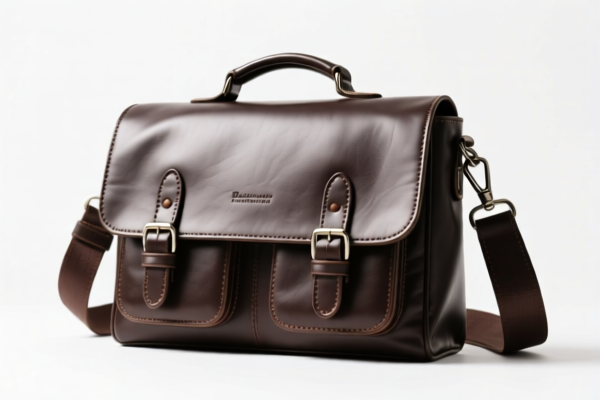
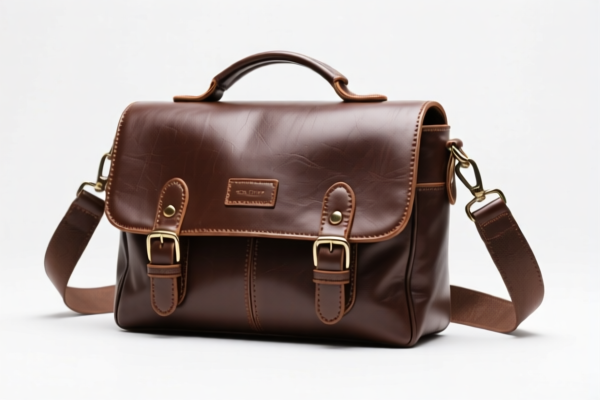


AI Analysis
👜 Portable Leather Bag (Handbags, Satchels, & Luggage)
🌐 HS Code Reference & Customs Clearance Guide | 2026 Latest Tariff Analysis | Professional Strategy for Luxury & Practical Goods
📌 I. Product Definition & Classification: Do You Know What "Leather Bag" Really Means?
A "Portable Leather Bag" is a versatile accessory ranging from high-end fashion handbags to rugged travel luggage. In international trade, the classification depends heavily on material composition, function, and construction.
It is broadly categorized into two main streams:
- Fashion Handbags/Satchels (Leather): Bags made primarily of leather (or composition leather), used for carrying personal items.
- Travel Luggage/Backpacks (Leather/Other): If the bag is designed specifically for travel (e.g., rolling cases, large suitcases) or contains non-leather structural elements.
⚠️ Critical Distinction:
- If the bag is made of full-grain leather, top-grain leather, or leather-covered fabric (where leather is the dominant material) → Classify under Chapter 42 (Leather Goods).
- If the bag is made of synthetic leather (PU/PVC) or textile with leather trim → Classify under Chapter 42 (specifically subheadings for "Other") or Chapter 63 (Textiles).
- If it is a rolling suitcase (even if leather-covered), it may fall under 4202 but often requires checking if it's considered "luggage" vs. "handbag."
📦 II. HS Code Classification Details (2026 Authoritative Reference)
| HS Code | Product Description | Application Scenario | Material Composition |
|---|---|---|---|
4202.11.00.00 |
Handbags (including purses), with outer surface of leather or composition leather | Fashion handbags, totes, shoulder bags, clutch bags | ✅ Leather > 50% (or composition leather) |
4202.12.00.00 |
Handbags with outer surface of plastic or textile materials | Leather-trimmed bags, PU leather bags, canvas bags with leather accents | ❌ Leather is minor or non-existent |
4202.21.00.00 |
Handbags (including shoulder bags) with outer surface of leather | Crossbody bags, small satchels, messenger bags (leather dominant) | ✅ Leather |
4202.22.00.00 |
Handbags with outer surface of plastic/textile | Travel totes, gym bags, backpacks (textile dominant) | ❌ Textile/Synthetic |
4202.31.00.00 |
Wallets, purses (with outer surface of leather) | Card holders, coin purses, wallets | ✅ Leather |
4202.32.00.00 |
Wallets (with outer surface of plastic/textile) | Synthetic wallets | ❌ Synthetic |
4202.91.00.00 |
Other articles (e.g., belts, cases) with outer surface of leather | Belts, briefcases, cosmetic cases | ✅ Leather |
🔍 Key Reminder:
- "Composition Leather" includes split leather, reconstituted leather, and "genuine leather" that is not top-grain, but still counts under4202.11.
- Rolling Suitcases: If the bag has wheels and a telescopic handle, it is generally classified under 4202.92 (if textile) or 4202.11/21 (if leather), but customs often scrutinize "luggage" vs. "fashion bags."
- Leather Trim: If leather is only a trim (e.g., a canvas bag with leather handles), it usually falls under 4202.22 or 4202.21 depending on the dominant material.
💰 III. 2026 Latest Tariff Rate Breakdown (Including Additional Duties & Policies)
✅ Applicable Country: United States (US)
✅ Country of Origin: China (CN)
✅ Effective Date: 2025-11-10 (and subsequent imports)
✅ Scenario: Portable Leather Bags (Fashion Handbags)
🎯 1. 4202.11.00.00 —— Handbags, Leather/Composition Leather
| Item | Content |
|---|---|
| Base Tariff | 3.2% (ad valorem) |
| USITC Section 301 (301) | +25% (Standard for Category 4202 items) |
| IEEPA Additional Tariff | +10% (China-specific, effective Nov 2025) |
| Total Tariff | 38.2% |
| Tax Calculation | CIF Value × 38.2% |
| De Minimis Exemption | ❌ Not Applicable (Deny De Minimis for 301/IEEPA items) |
| Legal Path | Section 301: 4202.11 → IEEPA: 9903.30.01 → USITC: 4202.11.00.00 |
📌 Explanation:
- "3.2%" is the standard Most-Favored-Nation (MFN) rate for leather handbags.
- "25%" is the Section 301 "Additional Duty" applied to Chinese leather goods.
- "10%" is the IEEPA surcharge targeting Chinese-origin consumer goods.
- Combined 38.2% is extremely high for fashion items, significantly impacting profit margins.
🎯 2. 4202.21.00.00 —— Handbags (Leather) / Crossbody Bags
| Item | Content |
|---|---|
| Base Tariff | 3.2% |
| USITC Section 301 | +25% |
| IEEPA Additional Tariff | +10% |
| Total Tariff | 38.2% |
| Tax Calculation | CIF × 38.2% |
| De Minimis Exemption | ❌ Not Applicable |
| Legal Path | Section 301: 4202.21 → IEEPA: 9903.30.01 → USITC: 4202.21.00.00 |
📌 Note:
- Leather crossbody bags, shoulder bags, and satchels are treated the same as handbags.
- "Composition Leather" (e.g., bonded leather) is treated identical to full leather under this classification.
🎯 3. 4202.12.00.00 —— Handbags (Plastic/Textile) with Leather Trim
| Item | Content |
|---|---|
| Base Tariff | 3.2% |
| USITC Section 301 | +25% |
| IEEPA Additional Tariff | +10% |
| Total Tariff | 38.2% |
| Tax Calculation | CIF × 38.2% |
| De Minimis Exemption | ❌ Not Applicable |
⚠️ Warning: Even if the bag is mostly canvas, if it is classified under 4202 (which includes textile bags), it still incurs the 301/IEEPA duties.
🛠️ IV. Customs Clearance Practical Tips (Pitfall Avoidance)
✅ 1. Required Documentation Checklist
| Document | Must Provide | Details |
|---|---|---|
| ✅ Product Specification Sheet | ✔️ | Material breakdown (e.g., "80% Leather, 20% Cotton"), dimensions, weight, lining material. |
| ✅ Material Declaration | ✔️ | Explicitly state "Genuine Leather," "Bonded Leather," or "Synthetic Leather (PU)." |
| ✅ Photos (Internal/External) | ✔️ | Show seams, linings, hardware, and brand labels. |
| ✅ Supplier's Declaration | ✔️ | Confirm no prohibited substances (e.g., chrome VI in leather). |
| ✅ Commercial Invoice | ✔️ | Must match HS Code and description (e.g., "Leather Handbag, Model X"). |
| ✅ Country of Origin Certificate | ✔️ | Essential for proving origin (China vs. Vietnam/Thailand). |
| ✅ Packaging List | ✔️ | Show if bags are packed individually or bulk. |
✅ 2. Declaration Strategy (Key Mantra)
🔥 "Material Matters, Don't Guess, Declare 'Leather' Accurately, Avoid 38% Pitfall!"
| Scenario | Correct Declaration | Wrong Action |
|---|---|---|
| Genuine Leather Bag | 4202.11.00.00 + "Genuine Leather" |
Mislabel as "Textile" → Audit + Penalty |
| PU Leather Bag | 4202.12.00.00 + "Synthetic Leather" |
Claim as "Leather" → Overpayment |
| Rolling Leather Suitcase | 4202.92.00.00 (if textile) or 4202.11 (if leather) |
Treat as "Handbag" → Potential Re-classification |
| Mixed Material (Leather + Textile) | Declare dominant material | Hide leather content → Customs Seizure |
✅ 3. Special Scenarios Handling
| Situation | Advice |
|---|---|
| OEM Custom Leather Bags | Provide design specs; if leather is imported but assembled elsewhere, check "Substantial Transformation" rules. |
| Leather-Trimmed Canvas Bags | If leather < 5% (by value or area), declare as textile (4202.22) to avoid leather scrutiny. |
| Vintage/Used Leather Bags | May require additional proof of age; new vs. used classification affects duties. |
| Gift Items | "De Minimis" (Section 321) applies only if value < $800; BUT Section 301/IEEPA duties DO NOT apply to de minimis shipments anymore (as of 2025/2026 updates). |
🌍 V. Global Market Comparison (2026 Tariff Outlook)
| Country/Region | Recommended HS Code | Tariff Rate (China Origin) | Certification | Note |
|---|---|---|---|---|
| 🇺🇸 USA | 4202.11.00.00 |
38.2% (301 + IEEPA) | None | Highest Duty in world for leather bags |
| 🇨🇳 China | 4202.11.00.00 |
6% | None | Low duty for domestic trade |
| 🇪🇺 EU | 4202.11.00.00 |
0% (if under quota) | CE, REACH | High anti-dumping on some leather types |
| 🇬🇧 UK | 4202.11.00.00 |
5% | Post-Brexit Rules | Check GB tariff vs. EU |
| 🇨🇦 Canada | 4202.11.00.00 |
3.5% | CSA | Low duty, but strict origin rules |
📌 Conclusion:
- USA is the most expensive market for Chinese leather bags due to 301 + IEEPA.
- EU and UK have lower base tariffs but stricter sustainability and chemical regulations.
- Recommendation: Shift production to Vietnam or Mexico to avoid US Section 301/IEEPA duties (Tariff may drop to 3.2% or 0%).
📌 VI. Common Mistakes & Lessons Learned (Blood & Tears)
❌ Mistake 1: Declaring "Leather Bag" as "Textile Bag" to avoid leather duties.
👉 Consequence: Customs audit, seizure, 100% penalty, and 38.2% duty + back taxes.
❌ Mistake 2: Using vague terms like "Fashion Bag" or "Leather Goods" without HS Code.
👉 Consequence: Delayed clearance, demurrage fees, and re-classification by CBP.
❌ Mistake 3: Not disclosing "Composition Leather" (Bonded Leather).
👉 Consequence: Misclassification; if bonded leather is declared as "Genuine Leather," it may trigger anti-fraud investigations.
❌ Mistake 4: Assuming "De Minimis" ($800) exempts all duties.
👉 Consequence: Section 301 and IEEPA duties still apply to de minimis shipments from China (as of 2025 policy updates).
✅ Correct Approach:
"Handbag, 100% Genuine Leather (Cowhide), 35cm x 25cm, Black, Model LB-2026, Made in Vietnam (if applicable)"
🎯 VII. Conclusion: Precision Classification Saves Money!
🎯 Remember the Mantra:
🔹 "Leather vs. Textile, declare it right; 38% duty is the killer, don't let it steal your profit!"
🔹 "HS Code is life, Tariff is king; one wrong digit = thousands lost!"
📌 Pro Tip:
If your leather bags are sourced from Vietnam, Mexico, or Thailand, you may qualify for Section 301 exemptions or lower tariffs (0-5%).
Recommendation: Apply for CBP Advance Rulings before shipping to avoid surprises.
📣 Take Action Now:
📞 Contact Customs Broker + Provide Material Specs + Request HS Code Pre-Ruling
🚀 Get Your Leather Bags Through US Customs Smoothly, Efficiently, and Profitably!
✨ Professional Customs Clearance Starts with Accurate Classification!
💼 Every Dollar Saved is a Dollar Earned!
Customer Reviews
About HS Code Classification
The Harmonized System (HS) is an internationally standardized nomenclature developed by the World Customs Organization (WCO) to classify traded products. Over 200 countries use the HS system as the basis for customs tariffs, trade statistics, and import/export regulations.
Each HS code follows a hierarchical structure:
- Chapter (2 digits) — Broad category of goods (e.g., Chapter 84: Machinery and Mechanical Appliances)
- Heading (4 digits) — More specific grouping within the chapter
- Subheading (6 digits) — Internationally standardized breakdown, used by all WCO member countries
- National subdivisions (8-10 digits) — Country-specific extensions for further classification, such as US HTSUS 10-digit codes
Correct HS code classification is essential for smooth customs clearance, accurate duty payment, and compliance with trade regulations. Misclassification can lead to customs delays, overpayment of duties, or penalties.
When importing from CN to US, the applicable tariff rates may include:
- Most-Favored-Nation (MFN) rate — The standard duty rate applied to WTO members
- General rate — Applied to countries without trade agreements
- Trade remedy duties — Additional tariffs such as Section 301 (anti-dumping), Section 232 (national security), or countervailing duties
The information provided on this page is for reference purposes only. For official classification, please consult with your local customs authority or a licensed customs broker.