Portable Notebook
CN → US| HS Code | Tariff Rate | Origin | Destination | Doc |
|---|---|---|---|---|
| 4820102060 | 35.0% | CN | US | Official Doc |
| 4901990092 | 17.5% | CN | US | Official Doc |
| 4820102010 | 35.0% | CN | US | Official Doc |
| 4901990093 | 17.5% | CN | US | Official Doc |
Product Images


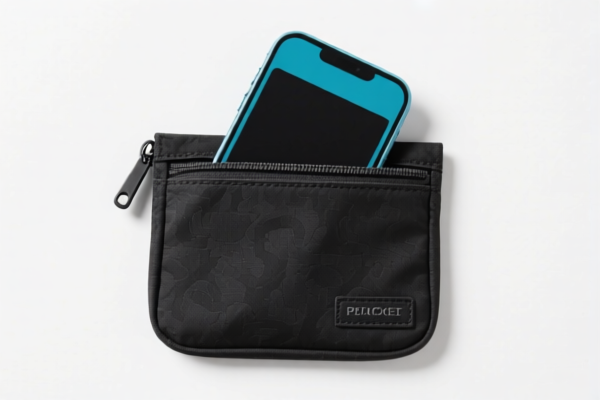

AI Analysis
📓 Portable Notebooks: The Ultimate 2026 HS Code & Tariff Strategy Guide
🌐 HS Code Classification & Tariff Breakdown | 2026 Trade Alert | Smart Clearance Strategy
📌 Welcome to your comprehensive guide on "Portable Notebooks."
Are you importing paper-bound notebooks for personal, office, or educational use? The classification of your product drastically affects your final landed cost. A misclassification can mean the difference between a 17.5% tax and a 35% tax—a 20% difference in your budget!
Below, we decode the exact HS Codes, tax structures, and clearance strategies for Paper Portable Notebooks based on the 2026 US Customs and Border Protection (CBP) data.
📦 I. HS Code Classification Matrix: Which One Fits Your Product?
The "Portable Notebook" is not a single product in the eyes of Customs. It falls into two distinct categories based on its physical structure and functional definition: 1. Stationery/Notebooks (Chapter 48): Focuses on the physical binding and paper content as a writing instrument accessory. 2. Books/Published Matter (Chapter 49): Focuses on the content being printed text, resembling a "book" or "manual."
| HS Code | Product Description | Key Characteristics | Tax Category |
|---|---|---|---|
4820.10.20.60 |
Stationery Notebook | Paper-bound, fits the "Notebook/Journal" definition under Chapter 48 (Stationery). | 35.0% |
4820.10.20.10 |
Diary/Notebook | Paper-bound, specifically defined as a "Diary or Notebook" under Chapter 48. | 35.0% |
4901.99.00.92 |
Printed Book/Notebook | Classified as a "Book/Brochure" under Chapter 49 (Printed Matter). | 17.5% |
4901.99.00.93 |
Manual/Pamphlet | Classified as a "Printed Publication/Manual" under Chapter 49. | 17.5% |
⚠️ Critical Insight:
- If your product is marketed as "Stationery," "Writing Pad," or "Diary" without substantial printed text content, it likely falls under Chapter 48 (4820) → Higher Tax (35%).
- If your product is marketed as a "Journal with printed text," "Sketchbook with instructions," or "Book-like notebook," it may qualify for Chapter 49 (4901) → Lower Tax (17.5%).
💰 II. 2026 Tariff Rate Deep Dive: The "China 122 Clause" Impact
All data below applies to Chinese Origin (CN) imports to the USA. The high tax rates are due to the intersection of Section 301 tariffs and the specific "122 Clause" (Section 232/301 extensions).
🎯 Scenario A: High-Tax Category (HS Codes 4820.10.20.60 & 4820.10.20.10)
Applies to: Standard Stationery Notebooks & Diaries
| Component | Rate | Legal Basis | Details |
|---|---|---|---|
| Base Tariff (MFN) | 0.0% | USITC General | Standard duty for stationery is often duty-free. |
| Section 301 Additional | 25.0% | USITC Footnote | "Additional duties" on specific Chinese goods (Chapter 48). |
| "122 Clause" Tariff | 10.0% | IEEPA/301 | Specific punitive tariff targeting Chinese goods under Section 122/301. |
| 🔴 TOTAL TAX RATE | 35.0% | High Risk Zone |
📌 Calculation:
(Base 0% + 301 25% + 122 10%) = 35%
Example: On a $100,000 shipment of standard notebooks, you pay $35,000 in duties alone.
🎯 Scenario B: Low-Tax Category (HS Codes 4901.99.00.92 & 4901.99.00.93)
Applies to: Book-like Notebooks, Printed Manuals, Journals with Text
| Component | Rate | Legal Basis | Details |
|---|---|---|---|
| Base Tariff (MFN) | 0.0% | USITC General | Books and printed matter often enjoy lower base rates. |
| Section 301 Additional | 7.5% | USITC Footnote | Reduced penalty rate for certain "Books/Published Matter" categories. |
| "122 Clause" Tariff | 10.0% | IEEPA/301 | Applies universally to Chinese goods under this clause. |
| 🟢 TOTAL TAX RATE | 17.5% | Optimization Zone |
📌 Calculation:
(Base 0% + 301 7.5% + 122 10%) = 17.5%
Example: On a $100,000 shipment of book-like notebooks, you pay $17,500 in duties.
💡 Savings: $17,500 per $100k shipment just by shifting classification logic!
🛠️ III. Clearance Strategy & Risk Management
✅ 1. Classification Optimization (The "Book" vs. "Stationery" Battle)
- Strategy: If your notebook contains pre-printed text, illustrations, or structured content (e.g., a "Bullet Journal" with printed templates and instructions), argue for Chapter 49 (4901).
- Evidence Required:
- High-resolution photos showing printed content inside.
- Marketing copy describing the item as a "Journal," "Book," or "Workbook" rather than just "Stationery."
- Proof that the binding is permanent (smyth sewn, glued) resembling a book, not a simple stapled pad.
- Risk: If Customs deems it a "blank" notebook for general writing, they will force Chapter 48 (4820) → 35% Tax.
✅ 2. Documentation Checklist (Non-Negotiable)
| Document | Purpose | Critical Detail |
|---|---|---|
| Commercial Invoice | Declare Value | Must state "Paper Portable Notebook" + HS Code. |
| Product Specs | Define Function | Explicitly state "Contains X% pre-printed text/graphics." |
| Packing List | Weight/Volume | Match invoice details exactly. |
| Country of Origin | Tariff Trigger | Must clearly state "Made in China". |
| Content Samples | Classification Proof | Provide photos of 3-5 random pages showing printed content. |
✅ 3. "De Minimis" Warning
- ❌ No Exemption: Unlike some small gift items, Notebooks under 2026 rules are NOT exempt from the 122 Clause or Section 301 tariffs even if the value is low.
- De Minimis Threshold: $800 (Section 321) DOES NOT APPLY to goods subject to these specific punitive tariffs if they are flagged as "restricted" under the 122/301 provisions. Expect full tax liability regardless of shipment size.
🚀 IV. Action Plan: How to Clear Shipment Smoothly
🏁 Step 1: Audit Your Product Definition
- Is it a "Blank" pad? → Expect 35% Tax (
4820.10.20.x). - Is it a "Printed" book/journal? → Aim for 17.5% Tax (
4901.99.00.x).
🏁 Step 2: File a Pre-Ruling (Optional but Recommended)
- Before shipping a large batch, file a CBP Binding Ruling Request with samples of your notebook. This legally binds Customs to your chosen HS Code and tax rate, preventing retroactive fines.
🏁 Step 3: Price Adjustment
- If classifying under 4820 (35%), ensure your profit margins can absorb an extra $35 per $100 of CIF value.
- If classifying under 4901 (17.5%), re-evaluate your pricing strategy to remain competitive.
📌 V. Common Pitfalls & "Don'ts"
| ❌ Mistake | ⚠️ Consequence |
|---|---|
| Lumping all notebooks under one HS Code | Customs may audit and assess the higher 35% rate + penalties. |
| Declaring as "Stationery" but claiming "Book" status | Mismatched HS Code = Audit Trigger + 122 Clause enforcement. |
| Ignoring the "122 Clause" (10%) | Underestimating total tax by 10% leads to cash flow crunches. |
| Shipping without printed content proof | Risk of re-classification from 17.5% to 35% upon arrival. |
🎯 VI. Final Verdict: The Smart Choice
"Portable Notebook" is a battlefield of classification. * Standard Blank Notebooks = 35% Tax (Base 0% + 301 25% + 122 10%). * Printed/Text-Rich Notebooks = 17.5% Tax (Base 0% + 301 7.5% + 122 10%).
Pro Tip: If your product can be legally described as a "Journal with Pre-printed Content" rather than a "Blank Notebook," you can legally reduce your duty burden by 50% (from 35% to 17.5%).
🚨 Remember: In 2026, classification is cost. Do not guess. Validate your product's printed content with your customs broker before the vessel leaves China.
📢 Ready to Ship?
✅ Verify Content: Does it have printed text? ✅ Select HS Code:
4901(Cheaper) vs4820(More Expensive). ✅ Budget for 122 Clause: Always include that extra 10%.
✨ Clearance Success = Accurate Classification + Full Compliance! ✨
Customer Reviews
About HS Code Classification
The Harmonized System (HS) is an internationally standardized nomenclature developed by the World Customs Organization (WCO) to classify traded products. Over 200 countries use the HS system as the basis for customs tariffs, trade statistics, and import/export regulations.
Each HS code follows a hierarchical structure:
- Chapter (2 digits) — Broad category of goods (e.g., Chapter 84: Machinery and Mechanical Appliances)
- Heading (4 digits) — More specific grouping within the chapter
- Subheading (6 digits) — Internationally standardized breakdown, used by all WCO member countries
- National subdivisions (8-10 digits) — Country-specific extensions for further classification, such as US HTSUS 10-digit codes
Correct HS code classification is essential for smooth customs clearance, accurate duty payment, and compliance with trade regulations. Misclassification can lead to customs delays, overpayment of duties, or penalties.
When importing from CN to US, the applicable tariff rates may include:
- Most-Favored-Nation (MFN) rate — The standard duty rate applied to WTO members
- General rate — Applied to countries without trade agreements
- Trade remedy duties — Additional tariffs such as Section 301 (anti-dumping), Section 232 (national security), or countervailing duties
The information provided on this page is for reference purposes only. For official classification, please consult with your local customs authority or a licensed customs broker.