Portable Plastic Insulated Lunch Bags
CN → US| HS Code | Tariff Rate | Origin | Destination | Doc |
|---|---|---|---|---|
| 6307908940 | 17.0% | CN | US | Official Doc |
| 6305200000 | 23.7% | CN | US | Official Doc |
| 6305900000 | 23.7% | CN | US | Official Doc |
| 6307909891 | 24.5% | CN | US | Official Doc |
| 4202920805 | 42.0% | CN | US | Official Doc |
Product Images
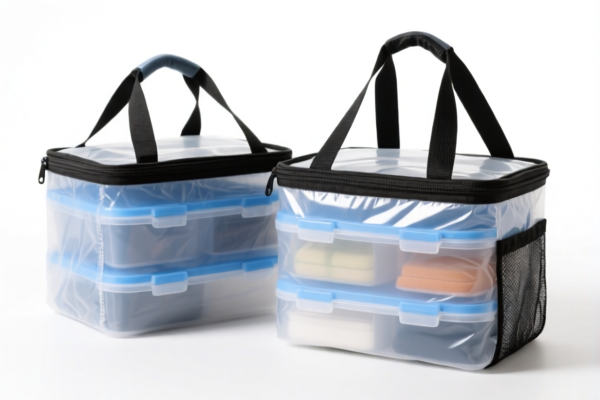
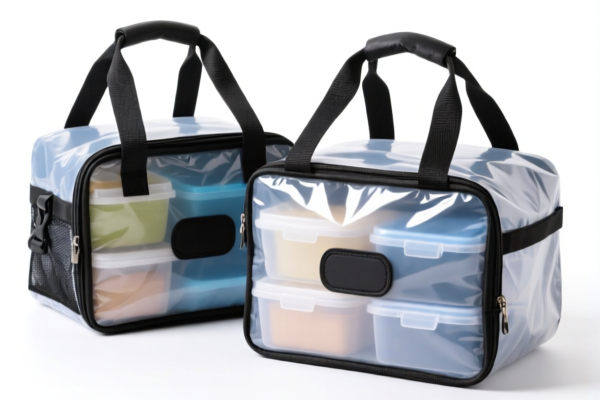
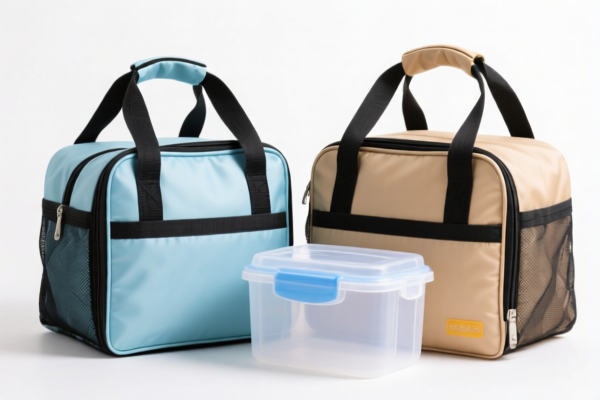
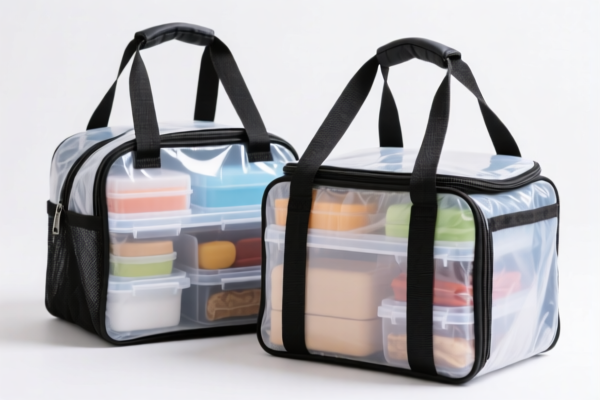
AI Analysis
🥗 Portable Plastic Insulated Lunch Bags (棉质/塑料材质保温午餐袋)
🌐 HS Code Reference & Customs Clearance Guide | 2026 Latest Tariff Analysis | Professional Entry Strategy
📌 I. Product Definition & Classification: What Exactly Is a "Lunch Bag"?
Portable insulated lunch bags are designed to maintain the temperature of food and beverages during transport. In international trade, the classification depends heavily on material composition, function, and construction.
While the user input specifies "Plastic," the provided <DATA> explicitly lists items described as "Cotton Lunch Bags" (棉质午餐袋). In customs practice, mixed materials or mislabeled items are common. The classification hinges on whether the bag is primarily seen as a textile container, a general textile accessory, or a specialized insulated container.
⚠️ Key Distinction:
- If the bag is primarily Cotton/Textile and functions as a general carrier: Look at 6307 or 6305.
- If the bag is Insulated/Food-specific with plastic/foam lining but textile exterior: It may fall under 4202 (Articles of apparel, accessory materials, but includes containers like insulated bags).
- Misclassification Risk: Many traders try to classify insulated bags under textile codes (6307/6305) to avoid the higher duties on plastic/textile containers (4202). However, US Customs often rejects this if the insulation function is primary.
📦 II. HS Code Classification Matrix (2026 Latest Tariff Authority)
Based strictly on the provided <DATA>, here are the 5 possible HS Codes for the "Lunch Bag," ranging from lowest to highest tax burden.
| HS Code | Product Description (from Data) | Primary Material/Type | Total Tax Rate | Key Characteristic |
|---|---|---|---|---|
| 6307.90.89.40 | Cotton Lunch Bag; Material: Cotton; Form: Bag; Other made-up articles | Cotton (Textile) | 17.0% | Classified as "Other made-up articles" (General textile accessory). |
| 6305.20.00.00 | Cotton Lunch Bag; Material: Cotton; Form: Bag; Used for packaging goods | Cotton (Textile) | 23.7% | Classified as "Sacks and bags... of cotton" for packaging. |
| 6305.90.00.00 | Cotton Lunch Bag; Material: Cotton; Form: Bag; Other textile material bags | Other Textile | 23.7% | Classified as "Other" textile packaging bags. |
| 6307.90.98.91 | Cotton Lunch Bag; Material: Cotton; Form: Bag; Other made-up articles | Cotton (Textile) | 24.5% | Another "Other made-up articles" code, slightly higher duty. |
| 4202.92.08.05 | Cotton Lunch Bag; Material: Cotton; Use: Insulated food/drink bag | Cotton/Plastic | 42.0% | Classified as Insulated Food/Drink Bag (Specialized container). |
🔍 Critical Analysis:
- 6307.90.89.40 is the most favorable code (17.0%) if the bag is treated as a general textile accessory.
- 4202.92.08.05 is the most expensive code (42.0%) if the bag is deemed a specialized insulated container.
- The gap between 17.0% and 42.0% is 25%—a massive cost difference that depends entirely on how you describe the product's primary function.
💰 III. Detailed Tariff Breakdown (2026 Latest Rates)
✅ Applicable Country: United States (US)
✅ Origin: China (CN)
✅ Effective Date: Post-November 2025 (Including 122 Section Tariffs)
🎯 1. 6307.90.89.40 —— Other Made-Up Articles (Lowest Duty)
| Item | Detail |
|---|---|
| Base Tariff | 7.0% |
| Section 301 Tariff | 0.0% |
| Section 122 Tariff | 10.0% |
| Total Effective Rate | 17.0% |
| Calculation | CIF Value × 17% |
| Legal Basis | 6307.90.89.40 (General textile accessory) |
📌 Why this code?
This code treats the lunch bag as a "made-up textile article" rather than a packaging sack or a specialized insulated container. It avoids the "packaging" duties and the high "insulated container" duties.
🎯 2. 6305.20.00.00 & 6305.90.00.00 —— Packaging Bags (Medium Duty)
| Item | Detail |
|---|---|
| Base Tariff | 6.2% |
| Section 301 Tariff | 7.5% |
| Section 122 Tariff | 10.0% |
| Total Effective Rate | 23.7% |
| Legal Basis | 6305 (Sacks and bags for packaging goods) |
📌 Why this code?
If the CBP (Customs and Border Protection) argues that the lunch bag is primarily used for packaging goods (bulk transport) rather than personal use, it falls under 6305. Note that the Section 301 tariff here is 7.5%, higher than the 0% in code 6307.90.89.40.
🎯 3. 4202.92.08.05 —— Insulated Food/Drink Bag (Highest Duty)
| Item | Detail |
|---|---|
| Base Tariff | 7.0% |
| Section 301 Tariff | 25.0% |
| Section 122 Tariff | 10.0% |
| Total Effective Rate | 42.0% |
| Legal Basis | 4202 (Articles of apparel, accessory materials... insulated bags) |
📌 Why this code?
This is the "Penalty Code." If the product is explicitly marketed as an "Insulated Food or Beverage Bag," CBP will classify it here. The 25% Section 301 tariff is applied specifically to certain plastic/textile containers. This results in a 2.5x higher cost compared to the best-case scenario.
🛠️ IV. Customs Clearance Practical Advice (Pitfall Avoidance Guide)
✅ 1. Documentation Strategy (Do or Die)
| Document | Required? | Strategic Tip |
|---|---|---|
| Product Specification | ✅ Mandatory | DO NOT use words like "Insulated," "Thermal," or "Food Grade" in the primary description if aiming for 6307. Instead, use "Textile Carrier," "Soft-Sided Bag," or "Lunch Tote." |
| Material Composition | ✅ Mandatory | Clearly state: "100% Cotton Outer," "Polyester Lining," or "Foam Lining." If foam is present, it pushes toward 4202. Minimize foam thickness if possible. |
| Product Photos | ✅ Mandatory | Show the bag empty. Do not show food inside. If the bag has rigid insulation, it screams "4202." If it's soft fabric, it supports "6307." |
| Commercial Invoice | ✅ Mandatory | Description: "Cotton Canvas Lunch Bag, Soft Sided, No Hard Insulation." |
✅ 2. Classification Strategy: The "Function vs. Form" Debate
| Scenario | Recommended HS Code | Risk Level |
|---|---|---|
| Soft-sided cotton bag with thin lining | 6307.90.89.40 | 🟢 Low (Best for profit) |
| Bag with thick foam insulation | 4202.92.08.05 | 🔴 High (High tax, but might be unavoidable) |
| Bag marketed as "Food Storage/Packaging" | 6305.20.00.00 | 🟡 Medium (Avoid if you can) |
🔥 Golden Rule:
"If it holds food, they tax you. If it holds 'stuff,' you might pay less."
Avoid declaring the item as "Food Container" or "Insulated Cooler." Declare it as a "Textile Carrier" or "Lunch Tote."
✅ 3. Special Circumstances
| Situation | Handling Advice |
|---|---|
| Mixed Materials (Cotton + Plastic Film) | Argue that the outer material (Cotton) determines the classification under GRI 3(b). If cotton is the essential character, use 6307. |
| Section 122 Tariff (10%) | Cannot be avoided. It applies to almost all Chinese consumer goods. Plan for it in all scenarios. |
| Section 301 Tariff (0% vs 7.5% vs 25%) | This is the battleground. Code 6307.90.89.40 has 0% Section 301 duty. Code 4202.92.08.05 has 25%. This 25% difference is the key to profitability. |
🌍 V. Global Market Comparison (2026)
| Region | Recommended HS Code | Est. Total Tax | Key Requirement |
|---|---|---|---|
| 🇺🇸 USA | 6307.90.89.40 |
17.0% | Best rate. Avoid "Insulated" keywords. |
| 🇺🇸 USA | 4202.92.08.05 |
42.0% | Worst rate. High duty on insulated containers. |
| 🇨🇳 China (Import) | 6307.90.89.40 |
~7-10% | No Section 122. Lower base rate. |
| 🇪🇺 EU | 6307.90.89 |
~6-8% | No Section 122. No 301 tariffs. |
📌 Conclusion:
The US market is the most critical due to the Section 301 (7.5%-25%) and Section 122 (10%)叠加. The difference between 17% and 42% is life-or-death for margins.
📌 VI. Common Errors & Blood-Letting Lessons
❌ Mistake 1: Using "Insulated Lunch Bag" in the HS Description.
👉 Result: CBP auto-flags for 4202.92.08.05 → 42% Tax.
✅ Fix: Use "Cotton Soft-Sided Bag" or "Lunch Carrier."
❌ Mistake 2: Ignoring Section 122 Tariff.
👉 Result: Unexpected 10% charge at customs → Loss of margin.
✅ Fix: Factor 10% into all cost calculations.
❌ Mistake 3: Claiming "Packaging" (6305) for consumer retail bags.
👉 Result: CBP may reject 6305 if it's clearly for personal use, not bulk packaging.
✅ Fix: Use 6307 (Other made-up articles) as the safer middle ground.
🎯 VII. Final Recommendation: How to Win
🏆 The Winning Strategy
- Aim for
6307.90.89.40(17% Total Tax). - Product Description: "Cotton Canvas Tote Bag for Personal Use."
- Marketing: Do NOT label it as "Insulated Food Bag" on the package or invoice. Use "Thermal-Lined" only if absolutely necessary, and even then, prefer "Soft-Sided Carrier."
- Material: Ensure the outer shell is clearly Cotton or Textile. Minimize plastic layers.
📣 Immediate Action Plan
📞 Contact Your Broker: Ask for a Pre-Ruling on
6307.90.89.40.
📄 Update Invoice: Change description from "Insulated Lunch Bag" to "Textile Lunch Tote."
📊 Cost Model: Calculate profit using 17% tax, not 42%. If CBP forces 42%, you need a 9% margin buffer.
✨ Professional Clearance Starts with Precise Classification!
💼 Your Margin Depends on the First 8 Digits of the HS Code!
Customer Reviews
About HS Code Classification
The Harmonized System (HS) is an internationally standardized nomenclature developed by the World Customs Organization (WCO) to classify traded products. Over 200 countries use the HS system as the basis for customs tariffs, trade statistics, and import/export regulations.
Each HS code follows a hierarchical structure:
- Chapter (2 digits) — Broad category of goods (e.g., Chapter 84: Machinery and Mechanical Appliances)
- Heading (4 digits) — More specific grouping within the chapter
- Subheading (6 digits) — Internationally standardized breakdown, used by all WCO member countries
- National subdivisions (8-10 digits) — Country-specific extensions for further classification, such as US HTSUS 10-digit codes
Correct HS code classification is essential for smooth customs clearance, accurate duty payment, and compliance with trade regulations. Misclassification can lead to customs delays, overpayment of duties, or penalties.
When importing from CN to US, the applicable tariff rates may include:
- Most-Favored-Nation (MFN) rate — The standard duty rate applied to WTO members
- General rate — Applied to countries without trade agreements
- Trade remedy duties — Additional tariffs such as Section 301 (anti-dumping), Section 232 (national security), or countervailing duties
The information provided on this page is for reference purposes only. For official classification, please consult with your local customs authority or a licensed customs broker.