Portable Practice Notebook
CN → US| HS Code | Tariff Rate | Origin | Destination | Doc |
|---|---|---|---|---|
| 4820200000 | 35.0% | CN | US | Official Doc |
| 4820104000 | 10.0% | CN | US | Official Doc |
| 4823908680 | 35.0% | CN | US | Official Doc |
| 4823906700 | 35.0% | CN | US | Official Doc |
Product Images
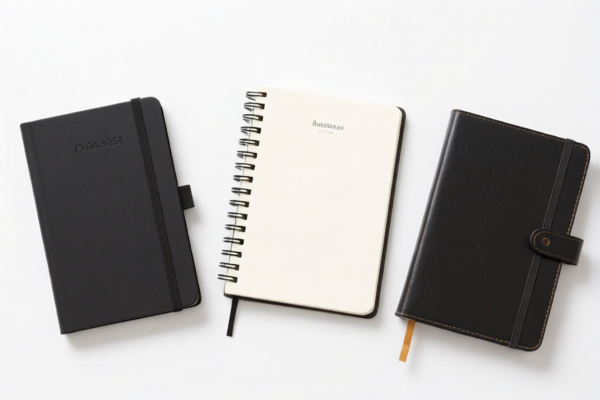
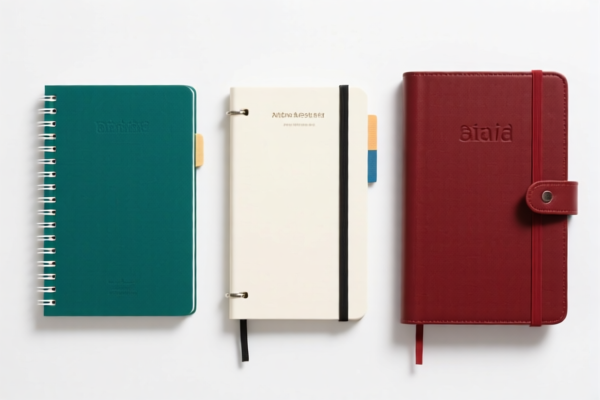
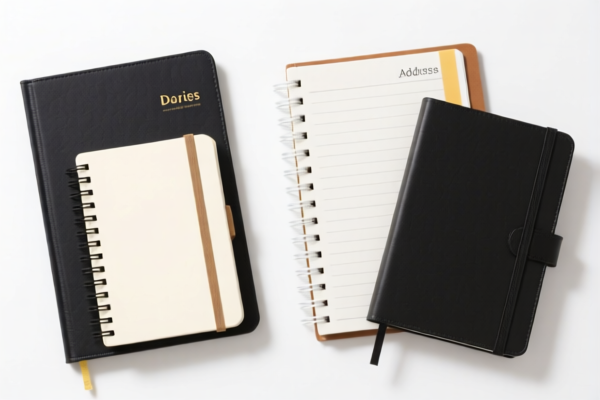
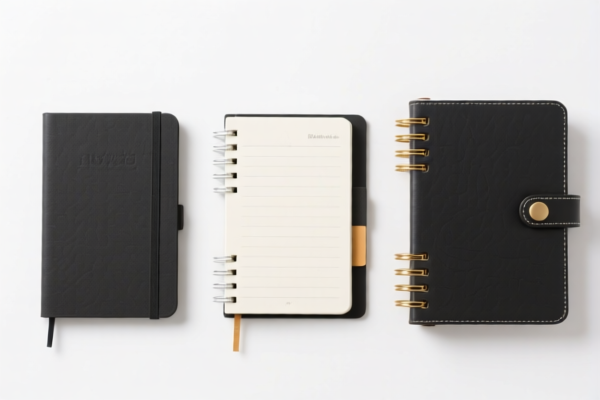
AI Analysis
📓 Portable Practice Notebook (Paper Stationery)
🌐 HS Code Reference & Customs Clearance Guide | 2026 Latest Tariff Analysis | Professional Entry Strategies
📌 I. Product Definition & Classification: Do You Really Understand "Practice Notebooks"?
A Portable Practice Notebook is a staple item in the global stationery trade. While seemingly simple, its classification in international trade depends heavily on its structure, material, and specific use case. In customs declarations, it is rarely treated as a single uniform item. Instead, it falls into two primary categories:
- Notebooks (Exercises/Loose-leaf): Defined as bound papers, often with ruled lines, intended for writing exercises or notes. These are specific sub-categories under Heading 4820.
- Other Paper Goods (Cut to Size/Shape): If the notebook is not a standard "exercise book" but rather a generic paper pad, sketchbook, or custom-cut paper product, it may fall under Heading 4823.
⚠️ Key Distinction Point:
- If it is a standard exercise book (bound, ruled paper for writing) →归入 4820
- If it is a generic paper pad (unbound, loose sheets, or specific cut shapes not meeting "notebook" definition) →归入 4823
📦 II. HS Code Classification Details (2026 Latest Tariff Authority Comparison)
| HS Code | Product Description | Applicability | Material/Structure |
|---|---|---|---|
4820.20.00.00 |
Exercise Books: Use case completely matches standard practice notebooks | Standard school/office exercise books, ruled paper, bound | ✅ Binding + Paper |
4820.10.40.00 |
Notebooks: Classified as stationery, paper material, bound | General purpose notebooks, diaries, or bound paper pads | ✅ Binding + Paper |
4823.90.86.80 |
Other Paper Articles: Non-specific excluded category | Generic paper pads, cut-to-size paper goods, non-standard formats | ❌ No Binding / Generic |
4823.90.67.00 |
Paper Products: Cut to specific size or shape | Custom-shaped notebooks, cut paper pads, specific industrial paper uses | ❌ Cut Shape / No Standard Binding |
🔍 Crucial Reminder:
- Bound vs. Unbound: If the product is bound (stapled, glued, or sewn) and intended for writing exercises, it strongly favors 4820.
- Generic Paper: If the "notebook" is essentially a stack of cut paper with a simple cover or no binding, it may be classified under 4823, which can have different tariff implications depending on trade policies.
💰 III. 2026 Latest Tariff Rate Breakdown (Including Additional Taxes & Policy Surcharges)
✅ Applicable Country: United States (US)
✅ Origin: China (CN)
✅ Effective Date: Current US-China Trade Framework (2026)
🎯 1. 4820.20.00.00 —— Exercise Books (Complete Use Case Match)
| Item | Content |
|---|---|
| Base Tariff Rate | 0.0% (ad valorem) |
| USITC Additional Tariff | +25.0% (Section 301 Duties) |
| IEEPA Additional Tariff | +10.0% (Section 122 Clause / China-specific surcharge) |
| Total Tax Rate | 35.0% |
| Tax Calculation | CIF Value × 35% |
| De Minimis Exemption | ❌ Not Eligible (High tariff items usually excluded or subject to strict scrutiny) |
| Legal Basis Path | Section 301: 9903.88.01 → IEEPA: 9903.01.24 → USITC: 4820.20.00.00 |
📌 Explanation:
- "Exercise Books" are clearly defined stationery items.
- The 25% Section 301 tariff applies to most Chinese-origin stationery.
- The 10% IEEPA surcharge adds further cost, making the total 35%. This is a significant cost factor for importers.
🎯 2. 4820.10.40.00 —— Notebooks (Stationery Category, Paper Material)
| Item | Content |
|---|---|
| Base Tariff Rate | 0.0% |
| USITC Additional Tariff | +0.0% (Exempted or Lower Tier) |
| IEEPA Additional Tariff | +10.0% (Section 122 Clause) |
| Total Tax Rate | 10.0% |
| Tax Calculation | CIF Value × 10% |
| De Minimis Exemption | ❌ Not Eligible |
| Legal Basis Path | IEEPA: 9903.01.24 → USITC: 4820.10.40.00 |
📌 Note:
- This is the most favorable tariff for "Notebooks" classified under this specific subheading.
- The 25% Section 301 tariff does NOT apply here (or is excluded for this specific sub-item), saving 15% compared to Exercise Books.
- Only the 10% IEEPA surcharge remains.
- Strategy: If your product can be classified as a "Notebook" (4820.10) rather than an "Exercise Book" (4820.20), you save substantial costs.
🎯 3. 4823.90.86.80 —— Other Paper Products (Non-Specific Excluded Category)
| Item | Content |
|---|---|
| Base Tariff Rate | 0.0% |
| USITC Additional Tariff | +25.0% (Section 301 Duties) |
| IEEPA Additional Tariff | +10.0% (Section 122 Clause) |
| Total Tax Rate | 35.0% |
| Tax Calculation | CIF Value × 35% |
| De Minimis Exemption | ❌ Not Eligible |
| Legal Basis Path | Section 301: 9903.88.01 → IEEPA: 9903.01.24 → USITC: 4823.90.86.80 |
📌 Explanation:
- Classified as general paper goods.
- Subject to the full 35% tariff burden (25% + 10%).
- Risk: If customs argues this is actually an "Exercise Book," they may reclassify it, leading to delays.
🎯 4. 4823.90.67.00 —— Paper Products (Cut to Size/Shape)
| Item | Content |
|---|---|
| Base Tariff Rate | 0.0% |
| USITC Additional Tariff | +25.0% (Section 301 Duties) |
| IEEPA Additional Tariff | +10.0% (Section 122 Clause) |
| Total Tax Rate | 35.0% |
| Tax Calculation | CIF Value × 35% |
| De Minimis Exemption | ❌ Not Eligible |
| Legal Basis Path | Section 301: 9903.88.01 → IEEPA: 9903.01.24 → USITC: 4823.90.67.00 |
📌 Explanation:
- Applies to notebooks or paper pads that are cut to specific non-standard shapes or sizes.
- Same 35% total tax as other general paper goods.
🛠️ IV. Customs Clearance Practical Advice (Real-World Pitfall Guide)
✅ 1. Preparation Checklist (Essential Documents)
| Document | Required | Description |
|---|---|---|
| ✅ Product Specification | ✔️ | Details: Paper weight (GSM), number of pages, binding type (spiral, glue, thread). |
| ✅ Product Photos | ✔️ | Clear images showing the cover, binding, and interior layout (ruled vs. blank). |
| ✅ Commercial Invoice | ✔️ | Must accurately describe the item. Avoid vague terms like "Paper Goods" if it's a notebook. |
| ✅ Packing List | ✔️ | Quantity per box, total boxes, net/gross weight. |
| ✅ Certificate of Origin (CO) | ✔️ | If applicable for non-China origins to avoid surcharges. |
✅ 2. Declaration Tips (Key Mantras)
🔥 "Bind it Right, Call it a Notebook, Save 15% Tax!"
| Scenario | Correct Declaration | Incorrect Declaration |
|---|---|---|
| Standard Ruled Exercise Book | 4820.20.00.00 (35% Tax) |
Mislabel as "Notebook" 4820.10 → Risk of reclassification & penalties |
| General Bound Notebook | 4820.10.40.00 (10% Tax) |
Mislabel as "Paper Product" 4823 → 35% Tax (Overpayment) |
| Cut-to-Shape Paper Pad | 4823.90.67.00 (35% Tax) |
None (Only option if not a standard book) |
| Loose-Leaf Paper Pack | 4823.90.86.80 (35% Tax) |
Mislabel as "Exercise Book" → High risk of audit |
✅ 3. Special Case Handling
| Situation | Handling Advice |
|---|---|
| OEM Custom Notebooks | Provide design specs. If it resembles a standard exercise book, expect 35% tax. If it's a unique "notebook" format, argue for 4820.10 (10%). |
| Sketchbooks vs. Exercise Books | Sketchbooks are often classified as 4820.20.00.00 (35%) if they are bound. Generic art paper pads may fall under 4823 (35%). |
| Digital/Smart Notebooks | If it contains electronic components, it is NOT paper stationery. It may fall under 8543 or 8471, which have different tariffs. |
| Small Quantity / De Minimis | While the $800 de minimis rule exists, high-duty items (35%) may still face stricter scrutiny or require entry summary filing. Check current CBP enforcement trends. |
🌍 V. Global Market Comparison (2026 Latest)
| Country/Region | Recommended HS Code | Tariff (China Origin) | Key Certification | Notes |
|---|---|---|---|---|
| 🇺🇸 USA | 4820.10.40.00 |
10% (Best Case) | No specific tech cert | Avoid 4820.20 if possible; saves 25%. |
| 🇨🇳 China | 4820.10.40.00 |
5% - 10% | GB Standard | Domestic trade has lower VAT implications. |
| 🇪🇺 EU | 4820.10.00 |
0% - 6% | CE (if electronic), REACH | No Section 301 equivalent. |
| 🇬🇧 UK | 4820.10.00 |
0% - 5% | UKCA | Post-Brexit rules apply. |
| 🇯🇵 Japan | 4820.10.00 |
0% - 5% | JIS | Low tariffs for stationery. |
📌 Conclusion:
- The US is the highest-cost market due to Section 301 and IEEPA surcharges.
- Classification Strategy is Key: Differentiating between4820.10(10%) and4820.20/4823(35%) can halve the landed cost (relative to the tax portion).
📌 VI. Common Errors & Pitfalls (Blood-Teachings)
❌ Error 1: Calling a standard "Exercise Book" a "Notebook" to get 10% tax.
👉 Consequence: Customs audit, reclassification to 4820.20.00.00, back-tariffs of 25% + penalties.
❌ Error 2: Classifying a bound, ruled paper book as "Other Paper Products" (4823).
👉 Consequence: Overpaying 25% in Section 301 duties unnecessarily.
❌ Error 3: Ignoring the "Binding" aspect.
👉 Consequence: Unbound paper stacks declared as notebooks may be rejected or reclassified as cut paper (4823) with high duties.
✅ Correct Practice:
"Bound, Ruled Exercise Book for Students, Model XYZ, Paper Weight 70gsm, Spiral Bound"
🎯 VII. Conclusion: Precision Classification Saves Money!
🎯 Remember the Mantra:
🔹 "If it's a Notebook, Aim for 4820.10 (10%)!"
🔹 "If it's an Exercise Book, Prepare for 35% (25%+10%)."
🔹 "Don't guess the HS Code; let the product structure decide."
📌 Pro Tip:
- If you are importing large volumes, apply for an Advance Ruling from US Customs and Border Protection (CBP) to confirm whether your specific notebook design falls under 4820.10.40.00 or 4820.20.00.00.
- This legal protection can save thousands in duties and prevent shipment delays.
📣 Immediate Action:
📞 Contact your freight forwarder with clear product photos and binding details.
🚀 Optimize your supply chain by designing products that fit the "Notebook" (10% tax) category if possible, or budgeting for the 35% duty if "Exercise Book" is the only accurate description.
✨ Professional Clearance Starts with Accurate Classification!
💼 Every 25% saved in duty is pure profit!
Customer Reviews
About HS Code Classification
The Harmonized System (HS) is an internationally standardized nomenclature developed by the World Customs Organization (WCO) to classify traded products. Over 200 countries use the HS system as the basis for customs tariffs, trade statistics, and import/export regulations.
Each HS code follows a hierarchical structure:
- Chapter (2 digits) — Broad category of goods (e.g., Chapter 84: Machinery and Mechanical Appliances)
- Heading (4 digits) — More specific grouping within the chapter
- Subheading (6 digits) — Internationally standardized breakdown, used by all WCO member countries
- National subdivisions (8-10 digits) — Country-specific extensions for further classification, such as US HTSUS 10-digit codes
Correct HS code classification is essential for smooth customs clearance, accurate duty payment, and compliance with trade regulations. Misclassification can lead to customs delays, overpayment of duties, or penalties.
When importing from CN to US, the applicable tariff rates may include:
- Most-Favored-Nation (MFN) rate — The standard duty rate applied to WTO members
- General rate — Applied to countries without trade agreements
- Trade remedy duties — Additional tariffs such as Section 301 (anti-dumping), Section 232 (national security), or countervailing duties
The information provided on this page is for reference purposes only. For official classification, please consult with your local customs authority or a licensed customs broker.