Portable Slide Organizer Box
CN → US| HS Code | Tariff Rate | Origin | Destination | Doc |
|---|---|---|---|---|
| 4202999000 | 55.0% | CN | US | Official Doc |
| 3923102000 | 35.0% | CN | US | Official Doc |
| 3923109000 | 38.0% | CN | US | Official Doc |
| 3926901000 | 20.9% | CN | US | Official Doc |
| 4202929315 | 52.6% | CN | US | Official Doc |
| 3926909989 | 22.8% | CN | US | Official Doc |
Product Images
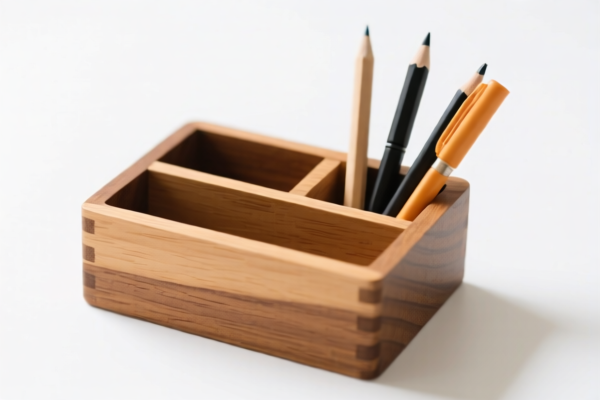

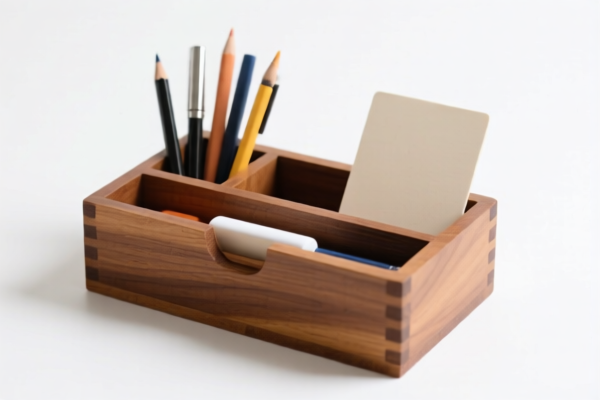
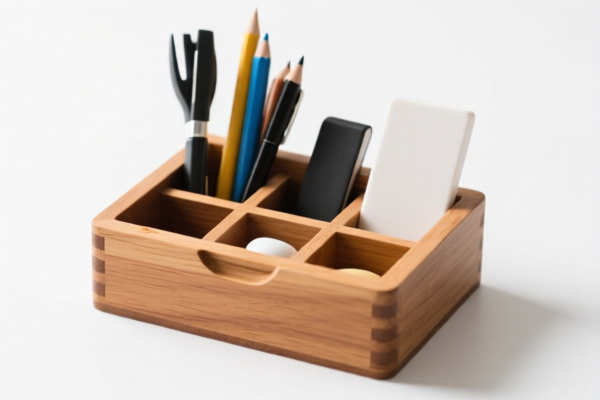
AI Analysis
📦 Portable Slide Organizer Box (收纳盒)
🌐 HS Code Reference & Customs Clearance Guide | 2026 Latest Tariff Analysis | Professional Level Compliance Strategy
📌 I. Product Definition & Classification: What Exactly is a "Portable Slide Organizer Box"?
A "Portable Slide Organizer Box" is a container designed to store, protect, and transport small items. In international trade, its classification depends heavily on its material composition and specific design features (e.g., sliding mechanism, textile exterior).
Key Classification Ambiguity: - Plastic Components: If the box is primarily made of plastic, it falls under Chapter 39 (Plastics and Articles Thereof). - Textile/Luggage Components: If the exterior is textile-based or designed like a luggage item, it falls under Chapter 42 (Articles of Leather; Travel Goods, Handbags). - General Plastic Articles: If it doesn’t fit specific packaging definitions, it may fall under Chapter 39, Heading 3926 (Other Articles of Plastics).
⚠️ Critical Distinction:
- If the box is rigid plastic and used as a package → 3923.10
- If the box is plastic but considered "other articles" (not strictly packaging) → 3926.90
- If the box has a textile exterior or is made for travel/luggage purposes → 4202.99 or 4202.92
📦 II. HS Code Classification Details (Based on Provided Data)
| HS Code | Product Description & Reasoning | Total Tax Rate | Key Tariff Components |
|---|---|---|---|
4202.99.90.00 |
Textile/Other Materials Container: Classified under "Other containers and bags." The summary suggests it may be made of plastic, textile, or cardboard. If the exterior is textile or it’s considered a general container, this applies. | 55.0% | Base: 20.0% Additional (301): 25.0% Section 122: 10% |
3923.10.20.00 |
Plastic Packaging (Box/Case): Assumed to be plastic, fitting the description of "boxes, cases, crates, and similar articles of plastics used for packaging." | 35.0% | Base: 0.0% Additional (301): 25.0% Section 122: 10% |
3923.10.90.00 |
Plastic Packaging (Other): Similar to above, but categorized under other plastic packaging articles. | 38.0% | Base: 3.0% Additional (301): 25.0% Section 122: 10% |
3926.90.10.00 |
Plastic Containers (Other Articles): Classified as "Other plastic articles," specifically containers. This is a broader category than packaging. | 20.9% | Base: 3.4% Additional (301): 7.5% Section 122: 10% |
4202.92.93.15 |
Textile-Lined/Textile Exterior Container: Classified under travel goods/handbags with textile surfaces. Suggests the box may have a textile outer layer or be designed as a travel case. | 52.6% | Base: 17.6% Additional (301): 25.0% Section 122: 10% |
3926.90.99.89 |
Other Plastic Articles (General): The most generic classification for plastic containers not fitting specific packaging or industrial categories. | 22.8% | Base: 5.3% Additional (301): 7.5% Section 122: 10% |
🔍 Important Note:
- The lowest tax rate (20.9%) is under3926.90.10.00, but only if the product is clearly a "plastic container" and not a "package."
- The highest tax rate (55.0%) is under4202.99.90.00, which incurs a high base tariff (20%) plus full Section 301 and Section 122 duties.
- Misclassification between "Packaging" (3923) and "Other Articles" (3926) can lead to significant duty differences.
💰 III. 2026 Latest Tariff Rate Breakdown (Including Additional Duties)
✅ Applicable Country: United States (US)
✅ Origin: China (CN)
✅ Effective Date: November 10, 2025 (and subsequent imports)
🎯 1. 4202.99.90.00 —— Other Containers and Bags (High Tax)
| Item | Content |
|---|---|
| Base Tariff | 20.0% |
| USITC Additional Tariff (Section 301) | +25.0% |
| Section 122 Tariff | +10.0% |
| Total Tariff | 55.0% |
| Tax Calculation | CIF Value × 55% |
| De Minimis Eligibility | ❌ No (Deny de minimis) |
| Legal Basis | HTSUS:4202.99.90.00 → USITC:4202.99.90.00 → IEEPA:9903.01.25 |
📌 Explanation:
- This classification treats the box as a "container or bag" with potentially textile components.
- The 20% base tariff is high compared to plastic packaging.
- Total 55% makes this the most expensive option. Avoid this classification unless the product is definitively a textile travel bag.
🎯 2. 3923.10.20.00 —— Plastic Boxes, Cases, Crates (Medium-High Tax)
| Item | Content |
|---|---|
| Base Tariff | 0.0% |
| USITC Additional Tariff (Section 301) | +25.0% |
| Section 122 Tariff | +10.0% |
| Total Tariff | 35.0% |
| Tax Calculation | CIF Value × 35% |
| De Minimis Eligibility | ❌ No |
| Legal Basis | IEEPA:9903.01.24 → USITC:3923.10.20.00 → FOOTNOTE:9903.88.01 |
📌 Explanation:
- Base tariff is 0%, which is favorable.
- However, the 25% Section 301 duty still applies heavily.
- Suitable if the product is strictly defined as "plastic packaging."
🎯 3. 3926.90.10.00 —— Plastic Containers (Lowest Tax Option)
| Item | Content |
|---|---|
| Base Tariff | 3.4% |
| USITC Additional Tariff (Section 301) | +7.5% |
| Section 122 Tariff | +10.0% |
| Total Tariff | 20.9% |
| Tax Calculation | CIF Value × 20.9% |
| De Minimis Eligibility | ❌ No |
| Legal Basis | IEEPA:9901.25 → USITC:3926.90.10.00 → FOOTNOTE:9901.25 |
📌 Explanation:
- Lowest total rate (20.9%).
- Section 301 duty is only 7.5% (not 25%), which is a massive saving.
- Crucial: This code is for "Other plastic articles" (containers), not "packaging." If the box is used for storage/organizing rather than shipping packaging, this is the optimal classification.
🎯 4. 3926.90.99.89 —— Other Plastic Articles (General)
| Item | Content |
|---|---|
| Base Tariff | 5.3% |
| USITC Additional Tariff (Section 301) | +7.5% |
| Section 122 Tariff | +10.0% |
| Total Tariff | 22.8% |
| Tax Calculation | CIF Value × 22.8% |
| De Minimis Eligibility | ❌ No |
| Legal Basis | IEEPA:9901.25 → USITC:3926.90.99.89 |
📌 Explanation:
- Slightly higher than3926.90.10.00due to a higher base tariff (5.3% vs 3.4%).
- Use this if the container doesn’t fit the specific "container" subheading of 3926.90.10.
🛠️ IV. Customs Clearance Practical Advice (Pitfall Avoidance Guide)
✅ 1. Preparation Checklist (All Documents Required)
| Document | Required? | Notes |
|---|---|---|
| ✅ Product Specification Sheet | ✔️ | Must specify material (e.g., "PP Plastic," "Textile Cover"). |
| ✅ Product Photos | ✔️ | Clear images of the box, showing sliding mechanism, interior, and exterior material. |
| ✅ Commercial Invoice | ✔️ | Declare accurately: "Plastic Storage Box" or "Textile-Lined Organizer." |
| ✅ Packing List | ✔️ | Ensure quantity and weight match the invoice. |
| ✅ Certificate of Origin (CO) | ✔️ | If not from China, to check for FTA benefits. |
| ✅ Third-Party Test Report | ✔️ | If applicable (e.g., FDA for food contact, if any). |
✅ 2. Declaration Strategy (Key Mantras)
🔥 "Material Determines Code, Packaging vs. Container is Key!"
| Scenario | Correct Declaration | Incorrect Declaration | Risk |
|---|---|---|---|
| Plastic Box for Storage | 3926.90.10.00 (20.9%) |
4202.99.90.00 (55%) |
Overpaying 34.1%! |
| Plastic Box for Shipping | 3923.10.20.00 (35%) |
3926.90.99.89 (22.8%) |
Overpaying 12.2% |
| Textile-Exterior Box | 4202.92.93.15 (52.6%) |
3926.90.10.00 (20.9%) |
Under-declaration Risk |
| Mixed Material Box | Consult Specialist | Guessing Code | Customs Audit & Penalties |
✅ 3. Special Cases
| Case | Handling Advice |
|---|---|
| Plastic with Textile Label/Trim | If the textile is minor, classify as plastic (3926). If textile is the main exterior, classify as 4202. |
| Slide Mechanism | The mechanism does not change the HS code significantly; focus on material and function (storage vs. packaging). |
| Set of Boxes | If sold as a set, classify the set as a whole. The primary material determines the code. |
| OEM Custom Design | Provide design drawings to prove it’s a "container" (storage) rather than "packaging" (shipping). |
🌍 V. Global Market Comparison (2026 Latest)
| Country/Region | Recommended HS Code | Tariff Rate | Certification | Notes |
|---|---|---|---|---|
| 🇺🇸 USA | 3926.90.10.00 |
20.9% | None Specific | Lowest US Rate |
| 🇨🇳 China | 3926.90.99.90 |
~3-5% | None | No Section 301/122 |
| 🇪🇺 EU | 3926.90.97 |
1.7% - 4% | CE (if applicable) | Lower base tariffs |
| 🇯🇵 Japan | 3926.90.90 |
3% - 6% | PSE (if electrical) | No additional duties |
📌 Conclusion:
- USA has the highest complexity due to Section 301 and Section 122.
- Optimal US Strategy: Classify as3926.90.10.00(Plastic Container) for 20.9% total duty.
- Avoid4202codes unless the product is explicitly a textile travel bag, as the 55% rate is prohibitive.
📌 VI. Common Mistakes & Pitfalls (Lessons Learned)
❌ Mistake 1: Declaring a plastic storage box as "Plastic Packaging" (3923) when it’s for home use.
👉 Result: May be rejected or audited. If customs disagrees, they may reclassify to 3926, but you’ll face delays.
👉 Better: Use 3926.90.10.00 if it’s clearly a storage container.
❌ Mistake 2: Declaring a textile-covered box as "Plastic" (3926).
👉 Result: Customs may reclassify to 4202.99.90.00 → 55% tax!
👉 Better: If textile >50% of exterior, use 4202.
❌ Mistake 3: Ignoring Section 122 (10%).
👉 Result: All China-origin plastic/textile goods from certain categories are subject to this. Always include it in cost calculations.
✅ Correct Declaration Example:
"Plastic Slide Organizer Box, for Desktop Storage, Made of Polypropylene, Model XYZ, China Origin"
🎯 VII. Conclusion: Optimize Clearance, Maximize Profit!
🎯 Remember the Mantra:
🔹 "Plastic Storage? Go 3926! (20.9%)"
🔹 "Plastic Packaging? Go 3923! (35%)"
🔹 "Textile Cover? Go 4202! (55%)"
🔹 "Misclassification Costs You Thousands!"
📌 Pro Tip:
- Apply for Advance Ruling if the product is new or ambiguous.
- Verify Material Composition: If the box is 80% plastic and 20% textile, argue for 3926.
- Keep Documentation Ready: Photos, specs, and invoices must align perfectly.
📣 Immediate Action:
📞 Consult your customs broker with product photos.
🚀 Choose3926.90.10.00for optimal US clearance if plastic.
💼 Save 34% in duties by choosing the right HS Code!
✨ Professional Clearance Starts with Accurate Classification!
💼 Every Dollar Saved is Pure Profit!
Customer Reviews
About HS Code Classification
The Harmonized System (HS) is an internationally standardized nomenclature developed by the World Customs Organization (WCO) to classify traded products. Over 200 countries use the HS system as the basis for customs tariffs, trade statistics, and import/export regulations.
Each HS code follows a hierarchical structure:
- Chapter (2 digits) — Broad category of goods (e.g., Chapter 84: Machinery and Mechanical Appliances)
- Heading (4 digits) — More specific grouping within the chapter
- Subheading (6 digits) — Internationally standardized breakdown, used by all WCO member countries
- National subdivisions (8-10 digits) — Country-specific extensions for further classification, such as US HTSUS 10-digit codes
Correct HS code classification is essential for smooth customs clearance, accurate duty payment, and compliance with trade regulations. Misclassification can lead to customs delays, overpayment of duties, or penalties.
When importing from CN to US, the applicable tariff rates may include:
- Most-Favored-Nation (MFN) rate — The standard duty rate applied to WTO members
- General rate — Applied to countries without trade agreements
- Trade remedy duties — Additional tariffs such as Section 301 (anti-dumping), Section 232 (national security), or countervailing duties
The information provided on this page is for reference purposes only. For official classification, please consult with your local customs authority or a licensed customs broker.