Portable Solar Panel
CN → US| HS Code | Tariff Rate | Origin | Destination | Doc |
|---|---|---|---|---|
| 8541430010 | 60.0% | CN | US | Official Doc |
| 8541430080 | 60.0% | CN | US | Official Doc |
| 8501729000 | 37.0% | CN | US | Official Doc |
Product Images
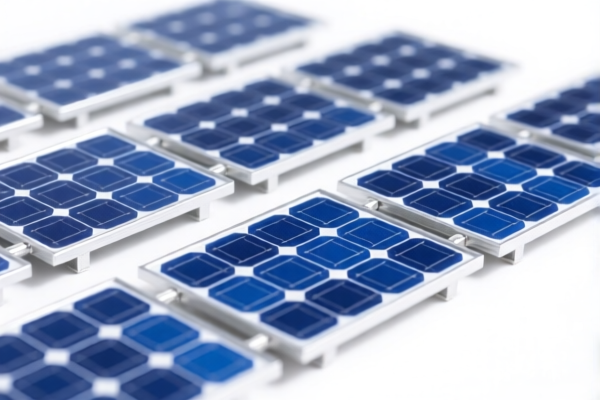
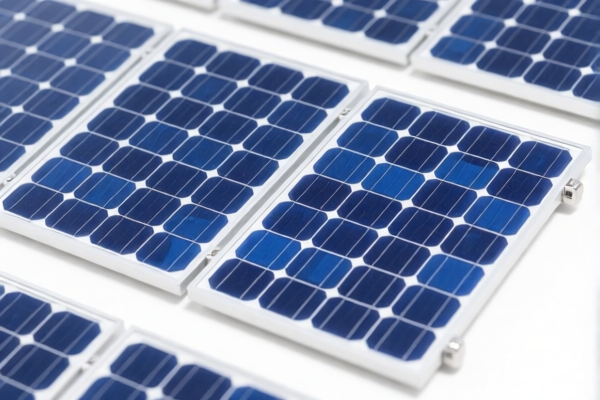
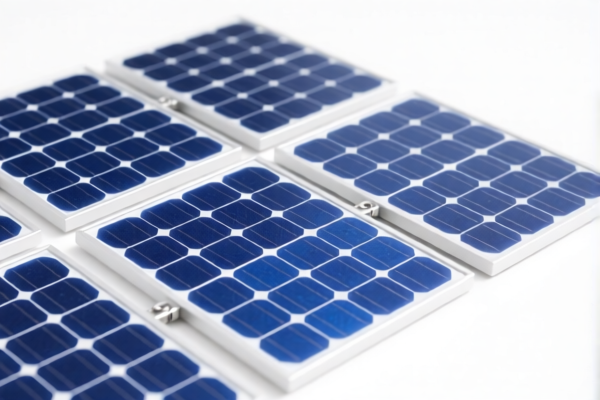
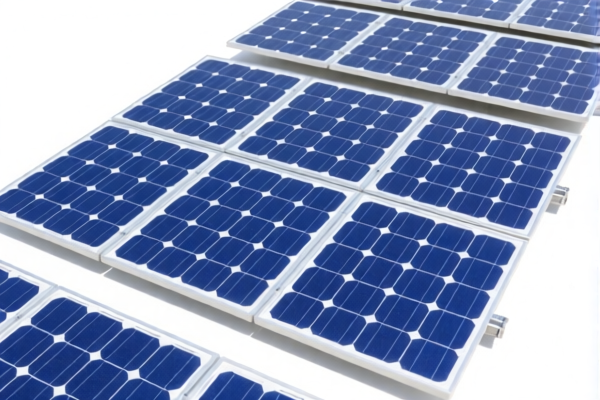
AI Analysis
☀️ Portable Solar Panel (Crisp & Crystalline Silicon Photovoltaic Modules)
🌐 HS Code Reference & Customs Clearance Guide | 2026 Latest Tariff Analysis | Professional Clearance Strategy
📌 One: Product Definition and Classification: Do You Really Understand "Solar Panels"?
In international trade, "Portable Solar Panels" are primarily classified based on their semiconductor material and assembly status. The two most critical categories for crystalline silicon modules (monocrystalline/polycrystalline) and amorphous/non-crystalline panels are distinct from finished inverters or generators.
Key Distinction Points:
* Photovoltaic Modules/Arrays (8541.43): These are the actual panels containing the silicon cells, glass, and encapsulation. Even if "portable," if they are assembled panels, they fall here.
* Photovoltaic DC Generators (8501.72): This category is for inverters or converters that turn DC into AC or regulate voltage. Do not misclassify solar panels as generators. A panel is a power source, not a generator/converter unit in HS terms.
⚠️ Critical Warning:
- If the item is a solar panel (silicon cells laminated), it belongs to Chapter 8541.
- If the item is an inverter/charge controller unit, it belongs to Chapter 8501.
- Portable does not change the HS code for the panel itself; it remains a module/panel.
📦 Two. HS Code Classification Details (2026 Latest Tariff Authority Comparison)
Based on your product "Portable Solar Panel," the correct classification depends on the specific material type (Crystalline Silicon vs. Amorphous).
| HS Code | Product Description | Application Scenario | Material Type |
|---|---|---|---|
8541.43.00.10 |
Crisp Silicon Photovoltaic Modules or Panels | Monocrystalline/Polycrystalline portable panels (Most Common) | ✅ Crystalline Silicon |
8541.43.00.80 |
Amorphous or Other Semiconductor Material Assembled Panels | Thin-film, amorphous silicon portable panels | ✅ Amorphous/Other |
8501.72.90.00 |
Photovoltaic DC Generators | Inverters, charge controllers, DC-to-DC converters | ❌ NOT Panels |
🔍 Key Reminder:
- Most "Portable Solar Panels" (rigid or flexible sheets of silicon cells) fall under8541.43.00.10if they are crystalline silicon.
- If they are thin-film/amorphous, they fall under8541.43.00.80.
- Never use8501.72.90.00for the panel itself. This code is for the electronics that convert the power. Misclassification leads to significant duty discrepancies and customs holds.
💰 Three. 2026 Latest Tariff Rate Breakdown (Including Additional Taxes & Policy Surcharges)
✅ Applicable Country: United States (US)
✅ Country of Origin: China (CN)
✅ Effective Date: 2025/2026 (Current Status)
🎯 1. 8541.43.00.10 – Crystalline Silicon Photovoltaic Modules/Panels
| Item | Content |
|---|---|
| Base Tariff | 0.0% (MFN Rate) |
| Section 301 Surcharge | +50.0% |
| Section 122 Tariff | +10.0% |
| Total Tariff Rate | 60.0% |
| Tax Calculation | CIF Value × 60% |
| De Minimis Exemption | ❌ Not Eligible (Denied for Solar Products from China under specific provisions) |
| Legal Basis Path | USITC:8541.43.00.10 → SECTION301:50% → SECTION122:10% |
📌 Explanation:
- "Base Tariff 0%": The standard Most Favored Nation (MFN) rate for solar panels is zero.
- "Section 301 Surcharge 50%": This is the major penalty tariff imposed on Chinese solar products under Trade Act Section 301.
- "Section 122 Tariff 10%": Additional tariff under International Emergency Economic Powers Act (IEEPA) Section 122 for specific strategic goods.
- Total 60%: This is a VERY HIGH effective duty rate. Cost efficiency strategies must account for this.
🎯 2. 8541.43.00.80 – Amorphous or Other Semiconductor Material Assembled Panels
| Item | Content |
|---|---|
| Base Tariff | 0.0% |
| Section 301 Surcharge | +50.0% |
| Section 122 Tariff | +10.0% |
| Total Tariff Rate | 60.0% |
| Tax Calculation | CIF Value × 60% |
| De Minimis Exemption | ❌ Not Eligible |
| Legal Basis Path | USITC:8541.43.00.80 → SECTION301:50% → SECTION122:10% |
📌 Note:
- Even if the material is different (Amorphous/Thin-film), the Section 301 and Section 122 surcharges apply equally.
- Total 60% remains unchanged.
- Ensure accurate labeling: "Amorphous Silicon Panel" vs. "Monocrystalline Panel" to select the correct HS subheading, but the tax burden is identical.
⚠️ Common Misclassification Alert: 8501.72.90.00
If you mistakenly classify a panel as a DC Generator (Inverter):
| Item | Content |
|---|---|
| Base Tariff | 2.0% |
| Section 301 Surcharge | +25.0% |
| Section 122 Tariff | +10.0% |
| Total Tariff Rate | 37.0% |
| Risk | HIGH AUDIT RISK |
📌 Why this is dangerous:
- While 37% is lower than 60%, classifying a solar panel as a DC Generator is a false declaration.
- Customs will inspect the product. If they find it’s just a panel (no circuitry for conversion), they will reclassify it to8541.43, demand the difference (60% - 37% = 23% more duty), plus penalties and late fees.
- Advice: Do not use8501.72for panels. Use8541.43.
🛠️ Four. Customs Clearance Practical Advice (Real-World Pitfall Avoidance Guide)
✅ 1. Required Documentation Checklist (Non-Negotiable)
| Document | Mandatory? | Description |
|---|---|---|
| ✅ Product Specification Sheet | ✔️ | Must clearly state: Crystalline vs. Amorphous, Wattage, Dimensions. |
| ✅ Product Photos | ✔️ | Clear images of the back label, showing "Made in China" and technical specs. |
| ✅ Commercial Invoice | ✔️ | Description must be precise: "Crystalline Silicon Photovoltaic Module, Portable, Model XYZ." Avoid vague terms like "Solar Device." |
| ✅ Packing List | ✔️ | List each panel separately if possible. |
| ✅ Certificate of Origin (CO) | ✔️ | Essential for proving origin (China) to apply correct Section 301 rates. |
✅ 2. Declaration Tips (Key Mantra)
🔥 "Material Determines HS, Section 301 is Inescapable, Don't Call It a Generator!"
| Scenario | Correct Declaration | Wrong Practice |
|---|---|---|
| Portable Monocrystalline Panel | 8541.43.00.10 |
Declaring as 8541.43.00.80 (Amorphous) → Confusion, Audit. |
| Portable Thin-Film Panel | 8541.43.00.80 |
Declaring as 8501.72 (Generator) → False Declaration, High Penalty. |
| Panel + Inverter Kit | Split Declaration | Declaring both as one HS code → Misclassification. |
Crucial Rule:
- If you are shipping a Kit (Panel + Inverter + Cables), you must separate them:
- Panels → 8541.43.00.10 (60% Duty)
- Inverters → 8501.72.90.00 (37% Duty)
- Do not lump them together under one code. This invites detailed inspection and potential rejection.
✅ 3. Special Situations
| Situation | Handling Advice |
|---|---|
| "Made in China" but Shipped from Vietnam/Thailand | Ensure Substantial Transformation proof. If only assembled, origin is still China → 60% Duty. If significantly transformed, origin may change → Lower Duty. |
| Sample Shipments (De Minimis) | ❌ Do Not Rely on De Minimis. Solar panels from China are explicitly excluded from low-value exemption for Section 301/122 duties. Even 1 unit will be taxed at 60%. |
| Flexible vs. Rigid | Both fall under 8541.43. Rigid is typically 8541.43.00.10. Flexible thin-film is 8541.43.00.80. Confirm material. |
🌍 Five. Global Market Clearance Comparison (2026 Latest)
| Country/Region | Recommended HS Code | Tariff (China Origin) | Certification | Notes |
|---|---|---|---|---|
| 🇺🇸 USA | 8541.43.00.10 |
60.0% (Total) | No specific FCC for panels, but label required | Highest Cost Market. Plan margins accordingly. |
| 🇨🇳 China | 8541.43.00.10 |
0% (Import Duty) | CCC (if applicable) | Duty-free import, but high export taxes may apply. |
| 🇪🇺 EU | 8541.43.00.10 |
0% | CE, RoHS | No Section 301 equivalent. Low duty advantage. |
| 🇦🇺 Australia | 8541.43.00.10 |
5% | RCM | Competitive market. |
| 🇯🇵 Japan | 8541.43.00.10 |
0% | PSE/JIS | Duty-free. |
📌 Conclusion:
- The USA is uniquely expensive due to Section 301 and 122 tariffs.
- Strategy: If targeting the US, consider sourcing from Southeast Asia (Vietnam, Thailand, Malaysia) where origin is not China, potentially avoiding the 60% penalty.
- For domestic or other markets, the 0-5% duty makes solar panels highly competitive.
📌 Six. Common Errors & Pitfall Guide (Lessons Learned the Hard Way)
❌ Error 1: Calling the product "Solar Generator" to get a lower tax rate (8501.72).
👉 Consequence: Customs detects it’s a panel. Reclassification to 8541.43. Pay 23% more duty + penalties.
❌ Error 2: Ignoring the "Section 122" tariff.
👉 Consequence: Underestimating cost by 10%. Budgets fail. Profit margins vanish.
❌ Error 3: Assuming "Portable" means a different HS Code.
👉 Consequence: HS Codes are material-based. Portable crystalline panels are still 8541.43.00.10.
❌ Error 4: Not separating Panel + Inverter in a kit.
👉 Consequence: Confused clearance. Potential seizure or delay for re-declaration.
✅ Correct Practice:
"Photovoltaic Module, Crystalline Silicon, Portable, 100W, Model SP-100, Made in China"
HS Code:8541.43.00.10
Total Duty: 60%
🎯 Seven. Conclusion: Professional Declaration, Save Costs, Avoid Risks!
🎯 Remember the Mantra:
🔹 "Panels are 8541, Not 8501! Section 301 is 50%, Section 122 is 10%. Total 60%!"
🔹 "If it’s Silicon, it’s 60%. If it’s an Inverter, it’s 37%. Don’t Mix Them!"
📌 Pro Tip:
If you are shipping to the US, and your products are assembled in Vietnam/Thailand/Malaysia with substantial transformation, you can legally claim Non-China Origin. This can reduce your duty from 60% to near 0%.
Recommendation: Apply for an Advance Ruling from US CBP if you are unsure about the origin status or classification of complex kits.
📣 Immediate Action:
📞 Contact a professional customs broker.
📦 Provide clear photos and material specs.
🚀 Verify HS Code8541.43.00.10or8541.43.00.80.
💰 Budget for 60% Duty if China Origin.
✨ Professional Clearance Starts with Accurate Classification!
💼 Your Cost Efficiency Depends on This Detail!
Customer Reviews
About HS Code Classification
The Harmonized System (HS) is an internationally standardized nomenclature developed by the World Customs Organization (WCO) to classify traded products. Over 200 countries use the HS system as the basis for customs tariffs, trade statistics, and import/export regulations.
Each HS code follows a hierarchical structure:
- Chapter (2 digits) — Broad category of goods (e.g., Chapter 84: Machinery and Mechanical Appliances)
- Heading (4 digits) — More specific grouping within the chapter
- Subheading (6 digits) — Internationally standardized breakdown, used by all WCO member countries
- National subdivisions (8-10 digits) — Country-specific extensions for further classification, such as US HTSUS 10-digit codes
Correct HS code classification is essential for smooth customs clearance, accurate duty payment, and compliance with trade regulations. Misclassification can lead to customs delays, overpayment of duties, or penalties.
When importing from CN to US, the applicable tariff rates may include:
- Most-Favored-Nation (MFN) rate — The standard duty rate applied to WTO members
- General rate — Applied to countries without trade agreements
- Trade remedy duties — Additional tariffs such as Section 301 (anti-dumping), Section 232 (national security), or countervailing duties
The information provided on this page is for reference purposes only. For official classification, please consult with your local customs authority or a licensed customs broker.