Portable Spring Scale
CN → US| HS Code | Tariff Rate | Origin | Destination | Doc |
|---|---|---|---|---|
| 901719 | 0.0% | CN | US | Official Doc |
| 901780 | 0.0% | CN | US | Official Doc |
Product Images
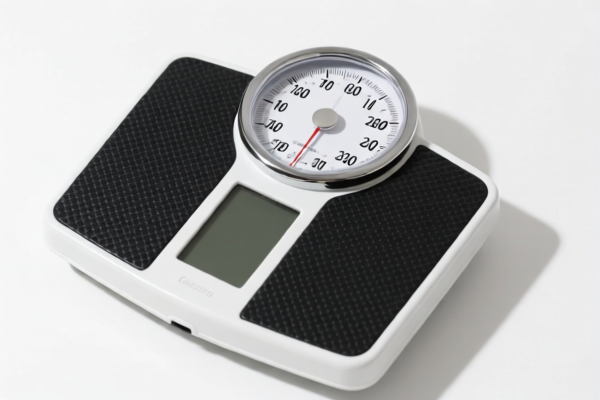
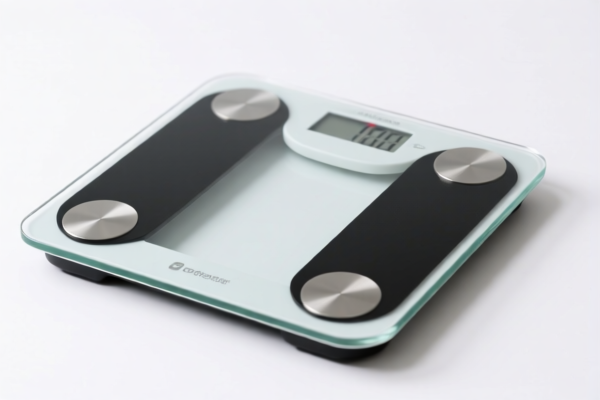
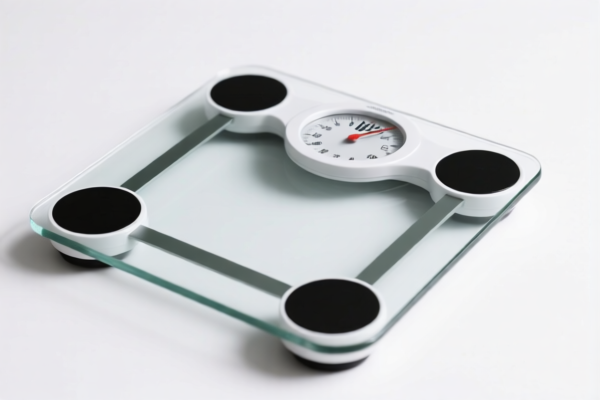
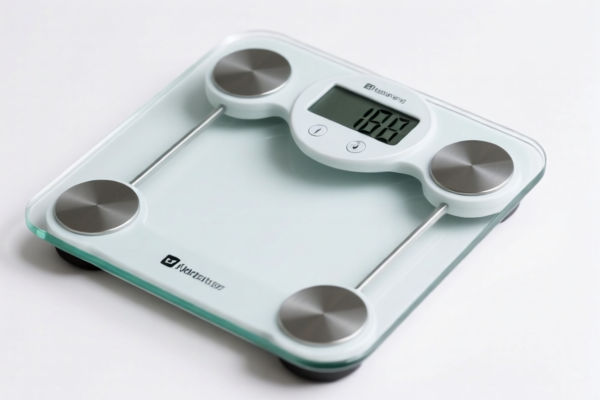
AI Analysis
🎒 Portable Spring Scale (Weight & Force Measuring Instruments)
🌐 HS Code Reference & Clearance Guide | 2026 Latest Tariff Analysis | Professional Customs Strategy
📌 I. Product Definition & Classification: Do You Know What "Portable Spring Scale" Really Is?
In international trade, "Portable Spring Scales" are not just simple handheld devices. They are precision instruments used for measuring weight (mass) or force in various commercial, industrial, and scientific contexts. The classification depends heavily on the specific application and technical specification.
According to the provided data, these instruments fall under Chapter 90 (Optical, Photographic, Cinematographic, Measuring, Checking, Precision, Medical or Surgical Instruments). Specifically, they are categorized as:
1. Other Portable Spring Scales (Specific/Weight Focus)
Used for measuring weight or force, where specific details (like calibration range or specific industrial use) distinguish them from general-purpose scales.
2. General Purpose Measuring Instruments
Used for general measurement purposes, covering a broader range of physical quantities or less specialized applications.
⚠️ Key Distinction Point:
- If the scale is a specialized portable spring balance for specific weight/force measurement (not otherwise specified) → 9017.19
- If it is a general-purpose instrument for checking physical quantities → 9017.80
- Note: Both are part of the "Other instruments and apparatus for measuring or checking physical quantities" heading.
📦 II. HS Code Classification Details (2026 Latest Tariff Authority Comparison)
Based on the provided dataset, here are the exact classifications for Portable Spring Scales:
| HS Code | Product Description | Applicable Scenario | Tax Status |
|---|---|---|---|
9017.19 |
Other instruments and apparatus for measuring or checking physical quantities, not specified elsewhere, including portable spring scales, used for measuring weight or force. | Specialized portable spring scales for specific weight/force applications. | ⚠️ Error: Failed to retrieve tax information |
9017.80 |
Instruments and apparatus for measuring or checking physical quantities, not specified elsewhere, including portable spring scales, used for general measurement purposes. | General-purpose measuring instruments, broader physical quantity checks. | ⚠️ Error: Failed to retrieve tax information |
🔍 Important Reminder:
- The provided data explicitly states "Failed to retrieve tax information" and "total_tax: Error" for both codes.
- This means standard tariff rates cannot be automatically calculated from this specific data source.
- Action Required: You MUST consult a licensed customs broker or the official national tariff database (e.g., USITC, EU TARIC, China Customs) for the actual applied duty rate, as it varies by country of origin, trade agreement, and specific product characteristics.
💰 III. Tax Rate & Duty Analysis (Critical Warning)
✅ Applicable Countries: To Be Determined (Based on Origin)
✅ Product: Portable Spring Scale
✅ HS Codes:9017.19/9017.80
🚨 Current Tax Status: DATA RETRIEVAL FAILURE
| Project | Content |
|---|---|
| Base Tax Rate | ❓ Unknown (Data Error) |
| Additional Duties | ❓ Unknown (Data Error) |
| Total Tax | Error |
| Tax Calculation | Cannot Calculate without official tariff lookup |
| Legal Basis | Requires official national customs tariff schedule |
📌 Explanation:
- The source data indicates a technical failure in retrieving tax details for9017.19and9017.80.
- Do NOT assume a rate based on similar products.
- Portable spring scales are often subject to anti-dumping duties or Section 301 tariffs if imported into the US from China, depending on the specific classification and origin.
- Example (Hypothetical): In the US, similar measuring instruments from China may face 25% Section 301 tariffs + base duty (often 0-3.4%). But this is NOT confirmed by the provided data.
🛠️ IV. Customs Clearance Practical Advice (Avoid Pitfalls)
✅ 1. Required Documentation (Non-Negotiable)
| Document | Must Provide | Description |
|---|---|---|
| ✅ Product Specifications | ✔️ | Include measurement range, accuracy, capacity, material, and intended use (weight vs. force). |
| ✅ Technical Diagram | ✔️ | Show if it includes digital components, calibration certificates, or is purely mechanical. |
| ✅ Product Photos | ✔️ | Clear images of the scale, label, model number, and packaging. |
| ✅ Commercial Invoice | ✔️ | Must accurately describe the item as "Portable Spring Scale" or "Force Measuring Instrument." |
| ✅ Declaration Statement | ✔️ | Confirm if the scale is for personal use, commercial use, or scientific research. |
| ✅ Country of Origin Certificate | ✔️ | Critical for determining potential preferential tariffs or trade sanctions. |
✅ 2. Classification Tips (Key Mnemonic)
🔥 "Specific Use Goes to .19, General Use to .80. Check Tax Data First!"
| Scenario | Correct Classification | Risk if Misclassified |
|---|---|---|
| Specialized portable spring scale for weight/force (specific) | 9017.19 |
May be downgraded to 9017.80 or rejected if details don't match. |
| General-purpose measuring instrument (broad physical quantities) | 9017.80 |
May be upcharged if classified as specialized without proof. |
| Digital portable scale (with display/circuit) | Check Chapter 85 or 9031 | Misclassifying as mechanical spring scale (9017) can lead to heavy penalties. |
| Non-measuring spring device (e.g., suspension spring) | Chapter 73 or 76 | Not a measuring instrument → Wrong HS Code → Customs Hold. |
✅ 3. Special Handling
| Situation | Handling Advice |
|---|---|
| Digital Spring Scales | If it has electronic components, it may NOT belong in 9017. Check Chapter 85 or 9031. |
| Calibration Certificates | Provide third-party calibration certificates to prove accuracy and compliance. |
| High-Volume Imports | Consider applying for a Pre-Ruling (Advance Ruling) to confirm HS Code and duty rate. |
| Origin: China to US | Verify if Section 301 tariffs apply. Even if base duty is 0%, additional duties may apply. |
🌍 V. Global Market Clearance Comparison (2026 Latest)
| Country/Region | Recommended HS Code | Base Duty (Typical) | Certification Requirements | Remarks |
|---|---|---|---|---|
| 🇺🇸 USA | 9017.19 / 9017.80 |
0-3.4% (Base) + Potential 25% (Sec 301) | None specific for scale | Check Section 301 list! |
| 🇨🇳 China | 9017.19 / 9017.80 |
0-5% | None specific | Import duty depends on FTAs. |
| 🇪🇺 EU | 9017.19 / 9017.80 |
0-4.5% | CE Marking (if applicable) | No additional anti-dumping usually. |
| 🇬🇧 UK | 9017.19 / 9017.80 |
0-4.5% | UKCA Marking (post-Brexit) | Similar to EU rules. |
| 🇯🇵 Japan | 9017.19 / 9017.80 |
0-5% | PSE (if electrical) | Verify if digital components apply. |
📌 Conclusion:
- Tax rates are highly variable and data is missing in the source.
- Always verify with the destination country's customs authority.
- Digital vs. Mechanical is the most critical classification factor.
📌 VI. Common Mistakes & Pitfalls (Lessons Learned)
❌ Mistake 1: Classifying a digital electronic scale under 9017 (mechanical instruments).
👉 Consequence: Misclassification → Potential penalty or higher duty. Digital scales often fall under 9031.80 or 8543.
❌ Mistake 2: Assuming zero duty because base rate is often low.
👉 Consequence: Ignoring Section 301 tariffs (for China-origin goods to US) or countervailing duties.
❌ Mistake 3: Providing incomplete product descriptions.
👉 Consequence: Customs cannot determine if it's "general" (9017.80) or "specific" (9017.19) → Delay or audit.
❌ Mistake 4: Not checking for tax retrieval errors.
👉 Consequence: Relying on incomplete data → Unexpected costs.
✅ Correct Approach:
"Portable Spring Scale, Mechanical, for General Measurement, Model XYZ, Capacity 10kg, Accuracy 1g, Non-Digital."
🎯 VII. Conclusion: Professional Classification Saves Money!
🎯 Remember the Mantra:
🔹 "Digital goes elsewhere, Mechanical goes here. Check tax data for errors. Verify origin for tariffs."
🔹 "HS Code9017is for mechanical/general. If it's digital, look at9031or8543."
📌 Pro Tip:
Since the tax data shows "Error", ALWAYS perform a dual verification:
1. Check the official customs tariff database of the destination country.
2. Consult a licensed customs broker to confirm if Section 301 or other additional duties apply.
📣 Immediate Action:
📞 Contact a customs broker + Provide detailed product specs (Mechanical vs. Digital) + Apply for HS Code Pre-Ruling if importing large volumes.
🚀 Ensure your Portable Spring Scales clear customs smoothly, avoiding unexpected taxes!
✨ Professional clearance starts with accurate classification!
💼 Your profit margin depends on precise duty calculation!
Customer Reviews
About HS Code Classification
The Harmonized System (HS) is an internationally standardized nomenclature developed by the World Customs Organization (WCO) to classify traded products. Over 200 countries use the HS system as the basis for customs tariffs, trade statistics, and import/export regulations.
Each HS code follows a hierarchical structure:
- Chapter (2 digits) — Broad category of goods (e.g., Chapter 84: Machinery and Mechanical Appliances)
- Heading (4 digits) — More specific grouping within the chapter
- Subheading (6 digits) — Internationally standardized breakdown, used by all WCO member countries
- National subdivisions (8-10 digits) — Country-specific extensions for further classification, such as US HTSUS 10-digit codes
Correct HS code classification is essential for smooth customs clearance, accurate duty payment, and compliance with trade regulations. Misclassification can lead to customs delays, overpayment of duties, or penalties.
When importing from CN to US, the applicable tariff rates may include:
- Most-Favored-Nation (MFN) rate — The standard duty rate applied to WTO members
- General rate — Applied to countries without trade agreements
- Trade remedy duties — Additional tariffs such as Section 301 (anti-dumping), Section 232 (national security), or countervailing duties
The information provided on this page is for reference purposes only. For official classification, please consult with your local customs authority or a licensed customs broker.