Portable Washing Machine
CN → US| HS Code | Tariff Rate | Origin | Destination | Doc |
|---|---|---|---|---|
| 8450110040 | 18.9% | CN | US | Official Doc |
| 8450190000 | 11.8% | CN | US | Official Doc |
Product Images
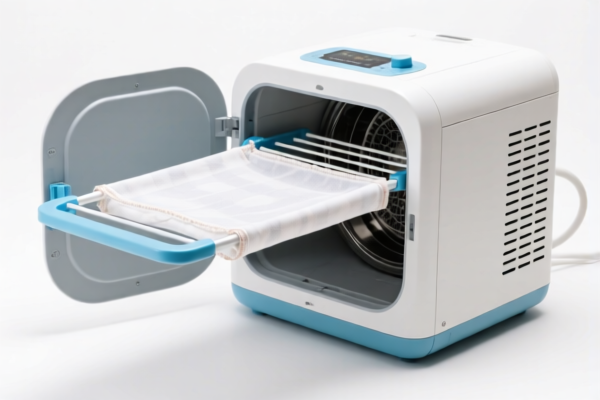
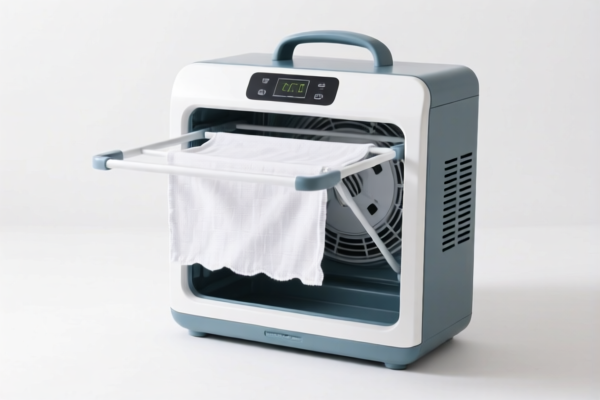
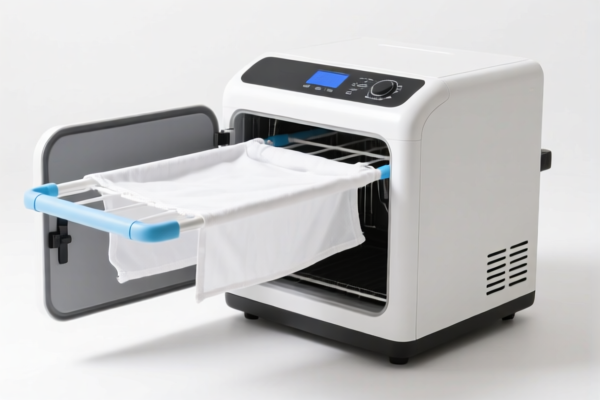
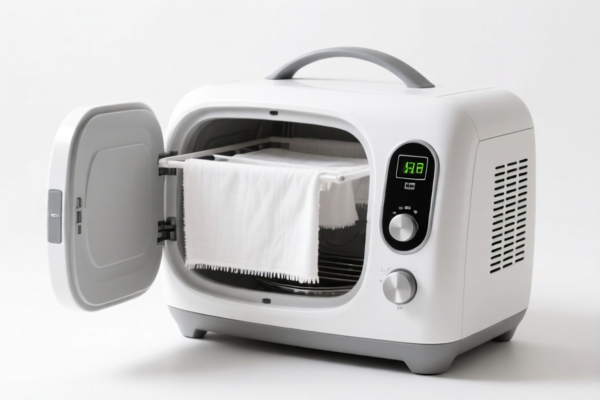
AI Analysis
🚿 Portable Washing Machine (Portable Laundry Devices)
🌐 HS Code Reference & Customs Clearance Guide | 2026 Latest Tariff Analysis | Strategic Compliance Strategy
📌 I. Product Definition & Classification: Is it a Washer, a Filter, or Plastic?
A "Portable Washing Machine" is a complex product that triggers multiple potential HS Code classifications depending on its primary function, material composition, and intended use. In international trade, it is not treated as a single uniform item. It can be classified as:
- Water Treatment Equipment: If the device focuses on filtration/purification of water for cleaning.
- Plastic Household Goods: If classified primarily as a plastic container or sanitary item.
- IT Peripheral (Printer/Processor): Critical Warning: Certain electronic components or specific "smart" laundry modules may be erroneously or aggressively classified under Automatic Data Processing (ADP) machines if they involve complex data handling or are bundled with printer-like mechanisms (rare but high-risk).
⚠️ Key Distinction Point:
- Function over Form: Customs looks at the primary purpose. If it cleans clothes via water agitation → Potential Washer.
- Material Dominance: If it is essentially a plastic tub with minimal electronics → Potential Plastic Goods.
- Electronic Complexity: If it has advanced ADP interfaces or is marketed as a "smart data-driven cleaning unit," it risks being misclassified under IT categories.
📦 II. HS Code Classification Details (Based on Provided Data)
| HS Code | Product Description | Application Scenario | Primary Attribute |
|--------|--------------------------|--------------------------|
| 8421.21.00.00 | Water purification/filtering apparatus | Water treatment/filtration category | Mechanical/Water Processing |
| 3924.90.56.50 | Plastic household/sanitary goods | Plastic home accessories | Material-Based |
| 8471.90.00.00 | ADP Machine Peripherals (Other) | IT Peripherals/Printers | Electronic/IT (High Risk) |
| 8471.80.90.00 | Units of Automatic Data Processing Machines | IT Peripherals/Printers | Electronic/IT (High Risk) |
| 8443.32.10.90 | Printer Units (Other) | Printing Equipment | Electronic/IT (Misclassification Risk) |
🔍 Critical Analysis:
-8421.21.00.00is the most logical fit for a "washing machine" if viewed as a water processing unit.
-3924.90.56.50is likely for the plastic housing or non-electronic components.
-8471and8443codes are highly suspect for a standard washing machine. Their inclusion in the data suggests either:
1. The product is a hybrid device (e.g., a smart laundry monitor with printing capabilities).
2. There is a risk of misclassification by authorities if the product is marketed ambiguously.
3. The "portable" aspect involves small-scale data processing that customs might erroneously group with ADP peripherals.
💰 III. 2026 Latest Tariff Rate Breakdown (Detailed Policy Add-ons)
✅ Applicable Country: United States (US)
✅ Origin: China (CN)
✅ Effective Date: Post-2025 (including Section 301 and IEEPA tariffs)
🎯 1. 8421.21.00.00 —— Water Purification/Filtering Apparatus
This is the most appropriate classification for a washing machine viewed as a water treatment device.
| Item | Details |
|---|---|
| Base Duty Rate | 0.0% |
| Section 301 Surcharge | +25.0% |
| IEEPA Surcharge (Section 122) | +10.0% |
| Total Effective Rate | 35.0% |
| Calculation Basis | CIF Value × 35% |
| De Minimis Exemption? | ❌ No (High risk of rejection under current policies) |
| Legal Path | USITC:8421.21.00.00 → Section 301: Footnote 9903.88.01 → IEEPA:9903.01.25 |
📌 Explanation:
- While the base rate is 0%, the 35% total tariff makes this category expensive.
- However, it is more accurate than IT classifications.
- Note: If the device is purely mechanical filtration, this is the best defense.
🎯 2. 3924.90.56.50 —— Plastic Household Goods
If customs determines the primary value is in the plastic material rather than the mechanical function.
| Item | Details |
|---|---|
| Base Duty Rate | 3.4% |
| Section 301 Surcharge | +7.5% |
| IEEPA Surcharge (Section 122) | +10.0% |
| Total Effective Rate | 20.9% |
| Calculation Basis | CIF Value × 20.9% |
| De Minimis Exemption? | ❌ No |
| Legal Path | USITC:3924.90.56.50 → Section 301: Footnote 9903.88.01 → IEEPA:9903.01.25 |
📌 Explanation:
- Lower total tariff (20.9%) compared to water treatment (35%) and IT (35%).
- Risk: Customs may reject this if the device has significant electronic components (motor, control board), arguing it’s not a "simple plastic good."
- Strategy: Use this only if the product is minimalist, plastic-heavy, and lacks complex electronics.
🎯 3. 8471.90.00.00 & 8471.80.90.00 —— ADP Machine Peripherals
These codes apply if the device is considered part of an Automatic Data Processing Machine (e.g., a smart laundry hub with heavy data processing).
| Item | Details |
|---|---|
| Base Duty Rate | 0.0% |
| Section 301 Surcharge | +25.0% |
| IEEPA Surcharge (Section 122) | +10.0% |
| Total Effective Rate | 35.0% |
| Calculation Basis | CIF Value × 35% |
| De Minimis Exemption? | ❌ No |
| Legal Path | USITC:8471.90.00.00 / 8471.80.90.00 → Section 301 → IEEPA |
📌 Warning:
- 35% Total Tariff.
- Misclassification Risk: Highly unlikely for a standard washing machine. If declared under this code, customs may audit for false classification.
- Use Case: Only for devices that are primarily data processors with minor laundry functions.
🎯 4. 8443.32.10.90 —— Printer Units (Other)
This code is for printers. Inclusion here suggests a potential confusion with thermal transfer printers or label printers sometimes bundled with laundry services.
| Item | Details |
|---|---|
| Base Duty Rate | 0.0% |
| Section 301 Surcharge | +7.5% |
| IEEPA Surcharge (Section 122) | +10.0% |
| Total Effective Rate | 17.5% |
| Calculation Basis | CIF Value × 17.5% |
| De Minimis Exemption? | ❌ No |
| Legal Path | USITC:8443.32.10.90 → Section 301 → IEEPA |
📌 Analysis:
- Lowest Total Tariff (17.5%).
- Extreme Misclassification Risk: Declaring a washing machine as a printer is fraudulent unless the item is actually a printer disguised as a washer (unlikely) or a hybrid device.
- Recommendation: Avoid unless the product is definitively a printer.
🛠️ IV. Customs Clearance Practical Advice (Pitfall Avoidance)
✅ 1. Material & Documentation Checklist
| Document | Required? | Purpose |
|---|---|---|
| Product Brochure | ✅ Yes | Clarifies if it’s a washer, filter, or IT device. |
| Circuit Diagram | ✅ Yes | Proves level of electronics (Motor vs. Data Processing). |
| Material Composition | ✅ Yes | Confirms plastic vs. electronic content for 3924 vs. 8421. |
| Photos (Internal/External) | ✅ Yes | Shows motor, drum, or lack thereof. |
| Commercial Invoice | ✅ Yes | Must use precise terms: "Portable Water Agitator" or "Plastic Wash Basin." Avoid "Washing Machine" if ambiguous. |
| CE/FCC Certifications | ✅ Yes | Required for electronic components. |
✅ 2. Declaration Strategy (Key Mantras)
🔥 "Function First, Material Second, Avoid IT Traps!"
| Scenario | Recommended HS Code | Why? |
|---|---|---|
| Standard Portable Washer | 8421.21.00.00 |
Best fit for water processing. Tariff: 35%. |
| Non-Electric Plastic Tub | 3924.90.56.50 |
Lowest tariff (20.9%). Use only if no motor/electronics. |
| Smart Washer with Data Hub | 8471.90.00.00 |
If it processes user data heavily. Tariff: 35%. |
| Device with Built-in Printer | 8443.32.10.90 |
High Risk. Only if printer is primary function. Tariff: 17.5%. |
⚠️ Critical Warning:
- Do not declare a washing machine as a printer (8443) to save on tariffs. Customs audits will catch this based on function.
- If the device has a motor and water inlet,3924will likely be rejected.
✅ 3. Special Handling Tips
| Situation | Recommendation |
|---|---|
| Hybrid Device | Declare the primary function. If 70% washer, 30% IT, declare as washer (8421). |
| Plastic Dominance | If the electronic value is <10% of total value, argue for 3924. |
| Customs Audit | Provide a technical spec sheet highlighting water filtration/agitation features. |
| Pre-Ruling | Apply for an Advance Ruling from CBP to lock in the HS Code. |
🌍 V. Global Market Comparison (2026)
| Market | Recommended HS Code | Est. Total Tariff | Note |
|---|---|---|---|
| 🇺🇸 USA | 8421.21.00.00 |
35% | High Section 301/IEEPA. |
| 🇪🇺 EU | 8450.11 (Washer) |
0-4% | Standard home appliance duty. No 301 tariffs. |
| 🇨🇳 China | 8450.11 |
0-4% | Low duty. No anti-dumping. |
| 🇯🇵 Japan | 8450.11 |
0-3% | Low duty. |
📌 Conclusion:
- The USA is the most expensive market due to 35% total tariffs on washing/water treatment devices.
- China/EU/Japan offer much lower tariffs (~0-4%) for home appliances.
- Strategy: Consider supply chain diversification if targeting the US market.
📌 VI. Common Mistakes & Pitfalls (Blood Lessons)
❌ Mistake 1: Declaring a motorized washer as 3924.90.56.50 (Plastic).
👉 Result: Customs reclassifies to 8421 or 8450, adding 14-30%+ in back duties and penalties.
❌ Mistake 2: Declaring a washer as 8443 (Printer) to get 17.5% tariff.
👉 Result: Severe fraud penalty. Customs will seize goods for misclassification.
❌ Mistake 3: Using "Washing Machine" in the invoice without technical specs.
👉 Result: Customs assumes it’s a large home appliance (8450), which may have different tariffs, leading to discrepancies.
✅ Correct Approach:
"Portable Electric Water Agitation Device for Laundry, Plastic Housing, 110V, Model XYZ, No Printing Function."
🎯 VII. Conclusion: Strategic Cost Reduction
🎯 Remember:
🔹 "If it spins water, it’s
8421(35%). If it’s just plastic, it’s3924(20.9%). If it prints, it’s8443(17.5%) - but don't lie!"
🔹 "Customs looks at function, not just name. Prove your function."
📌 Pro Tip:
If your product is originating from Vietnam or Mexico, you may avoid Section 301 tariffs, potentially reducing the rate to Base + 10% (IEEPA).
👉 Recommendation: Apply for an Advance Ruling with US CBP before shipping to the USA.
📣 Action Item:
📞 Contact a licensed customs broker.
📦 Provide internal component photos (motor vs. circuit board).
🚀 Secure your HS Code before production to avoid customs holds.
✨ Professional Classification Saves Thousands!
💼 Don't let a wrong digit cost you 35% of your profit!
Customer Reviews
About HS Code Classification
The Harmonized System (HS) is an internationally standardized nomenclature developed by the World Customs Organization (WCO) to classify traded products. Over 200 countries use the HS system as the basis for customs tariffs, trade statistics, and import/export regulations.
Each HS code follows a hierarchical structure:
- Chapter (2 digits) — Broad category of goods (e.g., Chapter 84: Machinery and Mechanical Appliances)
- Heading (4 digits) — More specific grouping within the chapter
- Subheading (6 digits) — Internationally standardized breakdown, used by all WCO member countries
- National subdivisions (8-10 digits) — Country-specific extensions for further classification, such as US HTSUS 10-digit codes
Correct HS code classification is essential for smooth customs clearance, accurate duty payment, and compliance with trade regulations. Misclassification can lead to customs delays, overpayment of duties, or penalties.
When importing from CN to US, the applicable tariff rates may include:
- Most-Favored-Nation (MFN) rate — The standard duty rate applied to WTO members
- General rate — Applied to countries without trade agreements
- Trade remedy duties — Additional tariffs such as Section 301 (anti-dumping), Section 232 (national security), or countervailing duties
The information provided on this page is for reference purposes only. For official classification, please consult with your local customs authority or a licensed customs broker.