Position Sensor
CN → US| HS Code | Tariff Rate | Origin | Destination | Doc |
|---|---|---|---|---|
| 8543704500 | 37.6% | CN | US | Official Doc |
| 9031499000 | 35.0% | CN | US | Official Doc |
| 9031909195 | 85.0% | CN | US | Official Doc |
Product Images
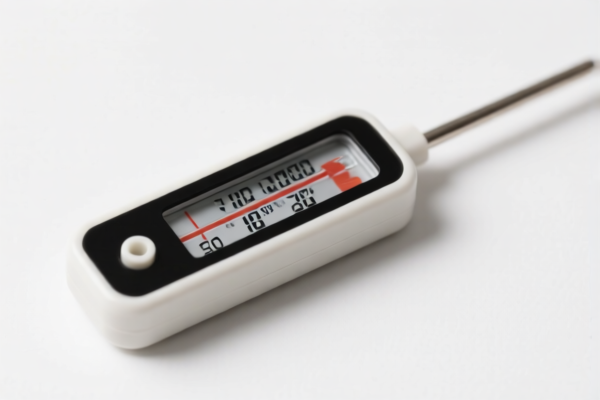
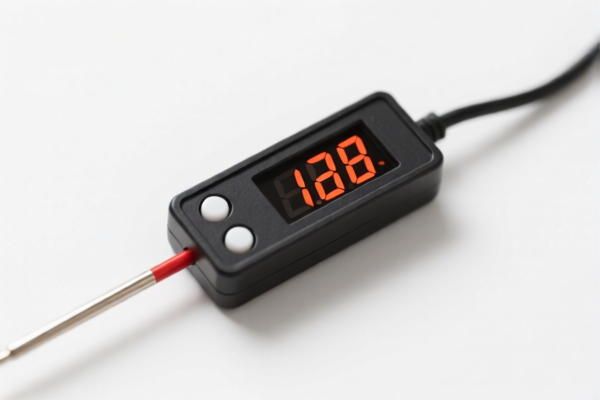
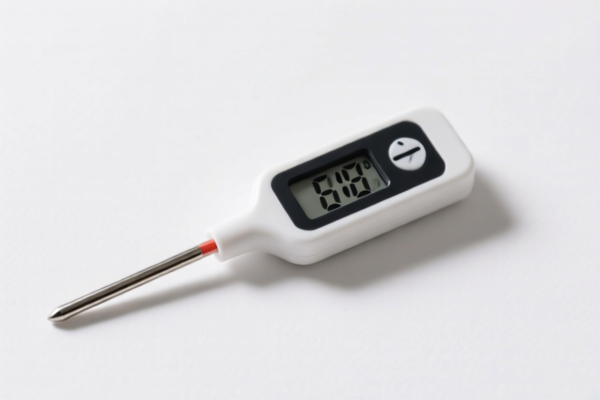
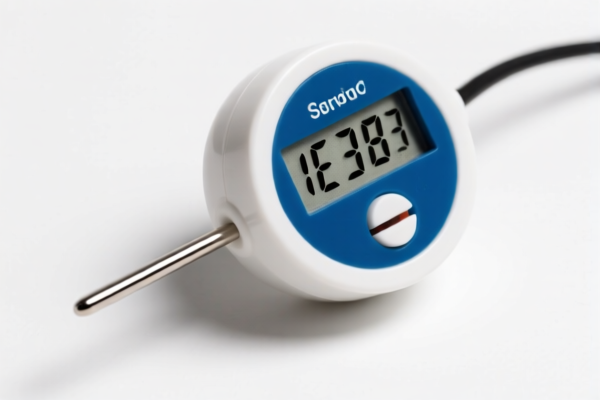
AI Analysis
📍 Position Sensors (Position Sensors / Transducers)
🌐 HS Code Reference & Customs Clearance Guide | 2026 Latest Tariff Analysis | Professional Clearance Strategy
📌 I. Product Definition: What Exactly is a "Position Sensor"?
A Position Sensor is a device used to detect the physical location or orientation of an object within a system. In international trade, these devices are critical components for motors, industrial automation, robotics, and automotive systems. However, their classification is highly dependent on their functional independence and integration status.
They generally fall into three main categories for customs purposes: 1. Motor-Integrated Devices: Sensors that function as independent parts of motor assemblies. 2. Measurement Instruments: Standalone sensors classified as optical or physical measuring devices. 3. Instrument Parts: Components that serve as core parts for other measuring instruments.
⚠️ Key Distinction Point:
- If the sensor is designed specifically to work with a motor as an integrated functional unit → Chapter 85 (Electrical Machinery)
- If it is a standalone measuring device for optical/physical parameters → Chapter 90 (Optical/Medical Instruments)
- If it is a spare part for a specific instrument → Chapter 90 (Parts/Accessories)
📦 II. HS Code Classification Details (2026 Latest Tariff Authority)
| HS Code | Product Description | Applicable Scenario | Classification Logic |
|---|---|---|---|
8543.70.45.00 |
Electrical machines and apparatus, having individual functions, not specified or included elsewhere | Sensors functioning as independent motor components; motor accessories with sensing capabilities | ✅ Motor/Device Category |
9031.49.90.00 |
Measuring or checking instruments, appliances and machines, not specified or included elsewhere in this chapter; projectors (excluding those of heading 90.09) | Standalone position sensors for physical/optical measurement; general industrial sensors | ✅ Instrument Category |
9031.90.91.95 |
Parts and accessories for instruments, appliances, machines and apparatus of heading 90.31 | Core components/parts of larger measuring systems; replacement sensors for specific instruments | ✅ Parts Category |
🔍 Important Reminder:
-8543.70.45.00is typically chosen when the sensor is integral to an electric motor or power apparatus function.
-9031.49.90.00is chosen for standalone measuring sensors that determine position via optical or physical means.
-9031.90.91.95is a high-risk code for parts; it applies only if the sensor is explicitly a component of another 90.31 instrument. Misclassification here leads to massive tax penalties.
💰 III. 2026 Latest Tariff Rate Breakdown (Including Surcharges & Policy Add-ons)
✅ Applicable Country: United States (US)
✅ Origin: China (CN)
✅ Effective Time: Current tariffs as per 2025/2026 regulations
🎯 1. 8543.70.45.00 —— Electrical Apparatus (Motor-Related Sensors)
| Item | Content |
|---|---|
| Basic Tariff | 2.6% (ad valorem) |
| Section 301 Surcharge | +25.0% |
| Section 122 Tariff | +10.0% |
| Total Tax Rate | 37.6% |
| Tax Calculation | CIF Value × 37.6% |
| De Minimis Exemption | ❌ Not Applicable |
| Legal Basis Path | Section 301: 8543.70.45 → Section 122: 10% |
📌 Explanation:
- This code is considered an "Electrical Machine/Apparatus."
- It attracts the full 25% Section 301 tariff (Section 301 List 4A/4B) plus a 10% Section 122 tariff (often related to national security or specific trade remedies).
- Total Cost Impact: Nearly 38% of the product value.
🎯 2. 9031.49.90.00 —— Measuring Instruments (Standalone Sensors)
| Item | Content |
|---|---|
| Basic Tariff | 0.0% (ad valorem) |
| Section 301 Surcharge | +25.0% |
| Section 122 Tariff | +10.0% |
| Total Tax Rate | 35.0% |
| Tax Calculation | CIF Value × 35.0% |
| De Minimis Exemption | ❌ Not Applicable |
| Legal Basis Path | Section 301: 9031.49.90 → Section 122: 10% |
📌 Explanation:
- While the basic tariff is 0%, the surcharges remain heavy.
- It is 2.6% cheaper than the motor-related category (8543) due to the 0% base rate.
- Suitable for generic optical/physical position sensors not tied to motors.
🎯 3. 9031.90.91.95 —— Parts & Accessories (Sensor Components)
| Item | Content |
|---|---|
| Basic Tariff | 0.0% (ad valorem) |
| Section 301 Surcharge | +25.0% |
| Section 122 Tariff | +10.0% |
| Steel/Aluminum/Copper Surcharge | +50.0% (If applicable material) |
| Total Tax Rate | 85.0% (Standard) |
| Total Tax Rate (Metals) | Up to 135.0% (If steel/aluminum/copper content is significant) |
| Tax Calculation | CIF Value × 85% (or higher) |
| De Minimis Exemption | ❌ Not Applicable |
| Legal Basis Path | Section 301: 9031.90.91 → Section 122: 10% → Materials Surcharge: 50% |
📌 Critical Warning:
- This code carries the highest risk and cost.
- The 50% surcharge applies if the sensor contains significant steel, aluminum, or copper components and is deemed a "part" under specific material rules.
- Total rate can reach 85% or even exceed 100% if material surcharges are fully applied.
- Avoid this code unless you are strictly shipping replacement parts for existing instruments. Do not use it for complete sensor units.
🛠️ IV. Customs Clearance Practical Advice (Real-World Pitfall Guide)
✅ 1. Documentation Checklist (Non-Negotiable)
| Document | Must Provide? | Explanation |
|---|---|---|
| ✅ Product Specification Sheet | ✔️ | Must clearly state: "Position Sensor," measuring principle (optical, magnetic, etc.), and output signal. |
| ✅ Circuit Diagram / Block Diagram | ✔️ | Crucial to prove if it is a "standalone instrument" (9031) or "motor part" (8543). |
| ✅ Product Photos (With Label) | ✔️ | Show model number, brand, and input/output connectors. |
| ✅ Declaration of Material Content | ✔️ | Crucial for 9031.90.91.95. If steel/aluminum/copper > threshold, expect +50% tax. |
| ✅ Commercial Invoice | ✔️ | Clearly describe item as "Electronic Position Sensor" or "Linear Displacement Transducer." Avoid vague terms like "Auto Part" without detail. |
| ✅ Origin Certificate (CO) | ✔️ | Required to verify China origin for Section 301/122 applicability. |
✅ 2. Declaration Strategy (Key Tips)
🔥 “Function Defines Code, Material Defines Penalty, Never Guess!”
| Scenario | Recommended HS Code | Wrong Approach | Consequence |
|---|---|---|---|
| Sensor integrated with a motor or controlling motor speed | 8543.70.45.00 |
Reporting as 9031.49.90.00 |
Under-declaration risk; potential audit for misclassification. |
| Standalone sensor for measuring position (e.g., in CNC, robotics) | 9031.49.90.00 |
Reporting as 9031.90.91.95 |
Tax increase from 35% to 85%+! |
| Replacement sensor part for a specific machine | 9031.90.91.95 |
Reporting as 9031.49.90.00 |
May be accepted, but check material surcharges. |
| Sensor with high Steel/Aluminum content | Check Material Surcharge | Ignoring material content | Unexpected +50% tax bill at port. |
✅ 3. Special Cases & Handling
| Situation | Handling Advice |
|---|---|
| OEM Custom Sensors | Provide the end-use application (e.g., "For use in CNC Machine X"). If it’s a general-purpose sensor, use 9031.49.90.00. |
| Sensor + Cable + Connector Kit | Declare as a complete unit. Do not split into "sensor" and "cable" unless the cable is sold separately. Splitting may trigger higher rates on cables. |
| High Metal Content | If the sensor housing is primarily steel/aluminum, and classified as a "part" (9031.90), expect the 50% additional surcharge. Opt for 9031.49.90.00 if it can be justified as a finished instrument. |
| Software-Defined Sensors | If the sensor relies heavily on embedded software for calibration, ensure the software is declared as part of the hardware value, not separately, to avoid complex classification. |
🌍 V. Global Market Comparison (2026 Latest)
| Country/Region | Recommended HS Code | Tariff (China Origin) | Certification Requirements | Remarks |
|---|---|---|---|---|
| 🇺🇸 USA | 9031.49.90.00 |
35.0% (301+122) | FCC, RoHS | 8543.70.45.00 is 37.6%. 9031.90.91.95 is 85%+. Choose 9031.49 for best rate. |
| 🇨🇳 China | 9031.49.90.00 |
~6-10% | CCC, RoHS | No Section 301/122. Much lower cost for domestic sale. |
| 🇪🇺 EU | 9031.49.90.00 |
~0-2.7% | CE, RoHS, REACH | No anti-dumping surcharges. |
| 🇯🇵 Japan | 9031.49.90.00 |
~0-3.5% | PSE, JIS | Low tariffs, strict quality standards. |
📌 Conclusion:
- The USA imposes the heaviest burden on position sensors.
- Avoid9031.90.91.95unless absolutely necessary, as the 85%+ tax is prohibitive.
- Opt for9031.49.90.00(35%) or8543.70.45.00(37.6%) depending on functional design.
- Material content matters: If using the "Parts" code, steel/aluminum/copper content can double your tax.
📌 VI. Common Mistakes & Pitfalls (Lessons Learned)
❌ Mistake 1: Declaring a complete sensor as a "Part/Accessory" (9031.90.91.95)
👉 Result: Tax jumps from 35% to 85%+. Do not do this.
❌ Mistake 2: Ignoring Section 122 Tariffs
👉 Result: Customs may assess an additional 10% on top of Section 301, catching you off guard.
❌ Mistake 3: Ambiguous Description ("Motor Part") without Detail
👉 Result: Customs may misclassify under 8543.70.45.00 (37.6%) instead of 9031.49.90.00 (35%), costing an extra 2.6%.
❌ Mistake 4: Failing to Disclose Material Composition for "Parts"
👉 Result: If audited, the 50% material surcharge is applied retroactively, plus penalties.
✅ Correct Approach:
“Electronic Position Sensor, Non-Optical, Standalone Unit, Model XYZ, for Industrial Automation, FCC Certified”
→ Declare as9031.49.90.00→ Tax: 35.0%
🎯 VII. Conclusion: Precision Classification Saves Millions
🎯 Remember the Golden Rules:
🔹 “Standalone Instrument = 9031.49 (35%)”
🔹 “Motor Function = 8543.70 (37.6%)”
🔹 “Parts = 9031.90 (85%+), AVOID if possible!”
🔹 “Material Matters: Steel/Aluminum = +50% on Parts Code”
📌 Pro Tip:
For US imports, always aim for 9031.49.90.00 if the sensor is a complete, standalone unit. It offers the lowest legal tariff (35%) compared to the alternatives. File an Advance Ruling with CBP if your product design is ambiguous to lock in the 35% rate and avoid the 85% trap.
📣 Immediate Action:
📞 Consult with a licensed customs broker.
📋 Prepare detailed technical specs and material bills of materials (BOM).
🚀 Clear customs smoothly, control costs, and maximize profit!
✨ Professional Clearance Starts with Accurate Classification!
💼 Every percentage point in tax rate impacts your bottom line!
Customer Reviews
About HS Code Classification
The Harmonized System (HS) is an internationally standardized nomenclature developed by the World Customs Organization (WCO) to classify traded products. Over 200 countries use the HS system as the basis for customs tariffs, trade statistics, and import/export regulations.
Each HS code follows a hierarchical structure:
- Chapter (2 digits) — Broad category of goods (e.g., Chapter 84: Machinery and Mechanical Appliances)
- Heading (4 digits) — More specific grouping within the chapter
- Subheading (6 digits) — Internationally standardized breakdown, used by all WCO member countries
- National subdivisions (8-10 digits) — Country-specific extensions for further classification, such as US HTSUS 10-digit codes
Correct HS code classification is essential for smooth customs clearance, accurate duty payment, and compliance with trade regulations. Misclassification can lead to customs delays, overpayment of duties, or penalties.
When importing from CN to US, the applicable tariff rates may include:
- Most-Favored-Nation (MFN) rate — The standard duty rate applied to WTO members
- General rate — Applied to countries without trade agreements
- Trade remedy duties — Additional tariffs such as Section 301 (anti-dumping), Section 232 (national security), or countervailing duties
The information provided on this page is for reference purposes only. For official classification, please consult with your local customs authority or a licensed customs broker.