Positive Microfilm
CN → US| HS Code | Tariff Rate | Origin | Destination | Doc |
|---|---|---|---|---|
| 3702530060 | 38.7% | CN | US | Official Doc |
| 3705000000 | 35.0% | CN | US | Official Doc |
| 3702530030 | 38.7% | CN | US | Official Doc |
| 3701910060 | 38.7% | CN | US | Official Doc |
| 3701910030 | 38.7% | CN | US | Official Doc |
Product Images

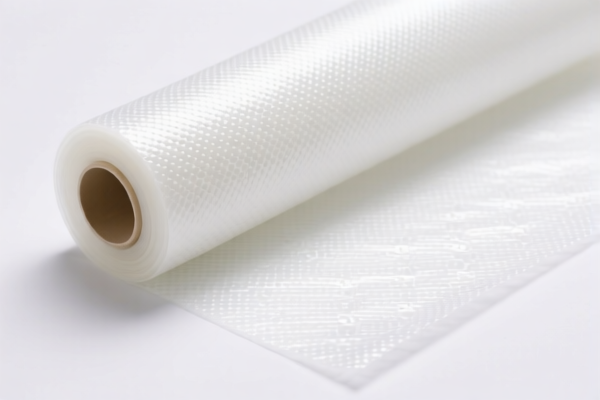
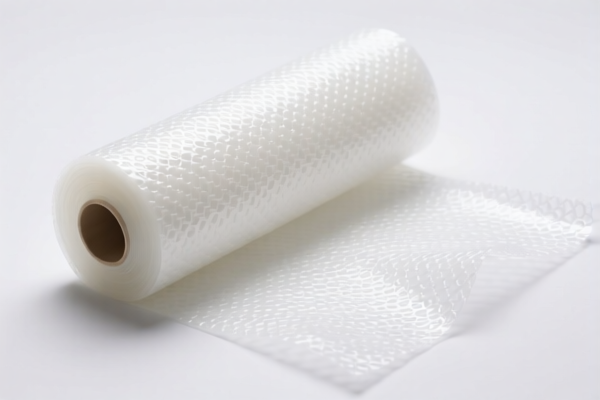

AI Analysis
🎞️ Positive Microfilm (Positive Motion Picture Film)
🌐 HS Code Reference & Customs Clearance Guide | 2026 Latest Tariff Analysis | Professional Clearance Strategy
📌 I. Product Definition & Classification: What is "Positive Microfilm"?
Positive Microfilm (also known as Positive Motion Picture Film) refers to exposure-ready or already exposed/developed photographic films specifically designed for microfilming, archival, or industrial documentation purposes. Unlike standard consumer photo negatives, positive film produces images of the same tonal value as the original subject (direct positive images).
In international trade, the classification depends heavily on two critical factors: 1. State of Exposure: Is the film unexposed (raw stock) or exposed/developed (processed)? 2. Physical Form: Is it in rolls or sheets? 3. Color: Is it Color or Black & White?
⚠️ Key Distinction Point: - If the film is unexposed (raw stock for future use) → It falls under Heading 3702 (Photographic film in rolls, whether or not in packets). - If the film is exposed and developed (already captured images) → It falls under Heading 3705 (Photographic plates and film, exposed and developed).
📦 II. HS Code Classification Details (Based on Provided Data)
Based on the <DATA> provided, all items are Color Positive Microfilm. Below is the precise mapping of HS Codes to their specific characteristics and tax implications.
| HS Code | Product Description | State/Format | Total Tax Rate | Tax Breakdown |
|---|---|---|---|---|
3702.53.00.60 |
Color Positive Film (Unexposed) | Matched with Color Photographic Roll Film & Unexposed characteristics | 38.7% | Base: 3.7% Add-on: 25.0% Sec 122: 10% |
3705.00.00.00 |
Color Positive Film (Exposed) | Matched with Exposed & Developed photographic film category | 35.0% | Base: 0.0% Add-on: 25.0% Sec 122: 10% |
3702.53.00.30 |
Color Positive Film (Unexposed) | Matched with Color Light-Sensitive Material in Roll/Sheet form | 38.7% | Base: 3.7% Add-on: 25.0% Sec 122: 10% |
3701.91.00.60 |
Color Positive Film (Unexposed) | Matched with Color Photographic Sensitized Material | 38.7% | Base: 3.7% Add-on: 25.0% Sec 122: 10% |
3701.91.00.30 |
Color Positive Film (Unexposed) | Matched with Color Photography & Unexposed Sensitized characteristics | 38.7% | Base: 3.7% Add-on: 25.0% Sec 122: 10% |
🔍 Critical Analysis: - Unexposed Film (3702/3701 series): Always carries a 38.7% total tax rate. This is because it incurs a 3.7% base duty. - Exposed/Developed Film (3705 series): Carries a 35.0% total tax rate. It benefits from a 0.0% base duty, but still faces the 25% and 10% add-ons. - All Codes are subject to significant trade barriers (Add-on + Sec 122 tariffs).
💰 III. 2026 Latest Tariff Rate Details (Including Add-ons & Policy Surcharges)
✅ Scope: Applies to Color Positive Microfilm as per the provided dataset.
✅ Structure: The tax structure consists of three components.
🎯 1. Unexposed Color Positive Microfilm (HS Codes: 3702.53.00.60, 3702.53.00.30, 3701.91.00.60, 3701.91.00.30)
| Item | Detail |
|---|---|
| Base Duty | 3.7% (Ad Valorem) |
| Add-on Tariff | +25.0% (Likely Section 301 or similar trade remedy) |
| Section 122 Tariff | +10.0% (Specific policy surcharge) |
| Total Tax Rate | 38.7% |
| Calculation Base | CIF Value × 38.7% |
| Key Characteristic | Must be declared as "Unexposed" and "Color". |
📌 Explanation: - The 3.7% base duty applies to sensitized photographic film in rolls or sheets. - The 25.0% add-on is a mandatory trade restriction tariff. - The 10.0% Section 122 tariff is an additional policy levy. - Total Impact: Nearly 40% of the CIF value is lost to tariffs. De Minimis exemptions (Section 321) are NOT applicable for HS codes in the 3702/3701 range under these high tariff conditions.
🎯 2. Exposed & Developed Color Positive Microfilm (HS Code: 3705.00.00.00)
| Item | Detail |
|---|---|
| Base Duty | 0.0% (Ad Valorem) |
| Add-on Tariff | +25.0% (Same trade remedy as above) |
| Section 122 Tariff | +10.0% (Same policy levy) |
| Total Tax Rate | 35.0% |
| Calculation Base | CIF Value × 35.0% |
| Key Characteristic | Must be declared as "Exposed" and "Developed". |
📌 Explanation: - Although the base duty is 0%, the 25% + 10% add-ons remain unchanged. - Savings: This is 3.7% cheaper than unexposed film due to the base duty exemption. - Risk: Declaring processed film incorrectly as unexposed (or vice versa) can lead to severe penalties.
🛠️ IV. Customs Clearance Practical Advice (Battle-Tested Pitfall Avoidance)
✅ 1. Essential Documentation Checklist
| Document | Required? | Purpose |
|---|---|---|
| ✅ Product Specification Sheet | Yes | Must explicitly state: "Color Positive Microfilm," "Exposure Status (Unexposed/Exposed)," and "Format (Roll/Sheet)." |
| ✅ Material Safety Data Sheet (MSDS) | Yes | Photographic film often contains chemicals. Must verify flammability and chemical composition. |
| ✅ Commercial Invoice | Yes | Must clearly describe the item. Do NOT just write "Film." Use: "Color Positive Microfilm, Unexposed, Roll Format, HS 3702.53.00.60" |
| ✅ Packing List | Yes | Detail the number of rolls/sheets and net/gross weight. |
| ✅ Certificate of Origin | Yes | To verify country of origin for tariff application. |
✅ 2. Declaration Strategy (Key Mantras)
🔥 "State is King: Unexposed = 38.7%, Exposed = 35.0%. Misdeclaration = Penalty!"
| Scenario | Correct HS Code | Incorrect Action | Consequence |
|---|---|---|---|
| Raw Color Positive Film (Rolls) | 3702.53.00.60 or 3702.53.00.30 |
Declare as "Exposed Film" | Wrong tariff (35% vs 38.7%), potential audit. |
| Already Exposed/Developed Microfilm | 3705.00.00.00 |
Declare as "Unexposed Film" | Wrong tariff (35% vs 38.7%), risk of smuggling charges if undervalued. |
| Black & White Positive Film | Not in Data | Force into Color HS Codes | Rejection. Must use correct B&W codes (e.g., 3702.54, 3702.55, etc.). |
| Sheets vs. Rolls | 3702.53.00.30 (Rolls/Sheets) |
Ignore format distinction | May lead to further classification disputes under 3701 vs 3702. |
✅ 3. Special Handling Tips
| Situation | Advice |
|---|---|
| OEM/Private Label | Ensure the brand name does not imply a specific exempt category. Generic description is safest. |
| Mix of Exposed/Unexposed | Separate Shipments. Do not mix exposed and unexposed film in one HS code declaration. They require different HTS codes and tax rates. |
| High Value Shipments | Consider Advance Ruling from customs if the film's sensitivity or exact "positive" nature is ambiguous. |
| Section 122 Tariff Impact | Since 10% is added to all codes in the dataset, cost optimization through HS code selection is limited to the Base Duty difference (3.7% vs 0%). |
🌍 V. Global Market Context (2026 Outlook)
| Market | Recommended HS Code (General) | Est. Tariff Impact | Note |
|---|---|---|---|
| 🇺🇸 USA | 3702.53.xxxx / 3705.00.00 |
High (35-38.7%) | Heavy add-ons (25%+10%) apply to Chinese-origin goods. |
| 🇨🇳 China | 3702.53 / 3705.00 |
Low/Moderate | Base rates vary, but generally lower than US add-ons. |
| 🇪🇺 EU | 3702.53 / 3705.00 |
0% | Standard MFN duty is often 0% for photographic film, but VAT applies. |
| 🇬🇧 UK | 3702.53 / 3705.00 |
0% | Similar to EU post-Brexit, but check UK-specific tariffs. |
📌 Conclusion: - The US market is the most challenging due to the 35-38.7% total tariff burden. - Exposed film (
3705.00.00.00) offers a slight advantage (3.7% savings) over unexposed film, but both are heavily taxed. - Non-US markets (EU/UK) may offer significant duty savings (0% MFN), but VAT and anti-dumping duties must still be considered.
📌 VI. Common Mistakes & Pitfalls (Lessons Learned)
❌ Mistake 1: Declaring Unexposed film as Exposed to save 3.7% 👉 Consequence: Customs will inspect physical samples. If found unexposed, you face penalties, back-taxes, and delays.
❌ Mistake 2: Ignoring the "Positive" aspect and classifying as "Negative Film" 👉 Consequence: Wrong subheading. Positive film has different base duties in some jurisdictions.
❌ Mistake 3: Using vague descriptions like "Photographic Film" 👉 Consequence: Customs may assign a default higher duty rate or require detailed analysis.
✅ Correct Approach:
"Color Positive Microfilm, Unexposed, Roll Format, Sensitized, HS 3702.53.00.60"
🎯 VII. Conclusion: Precision in Classification, Savings in Clearance
🎯 Remember the Mantra:
🔹 "Unexposed = 38.7% | Exposed = 35.0%"
🔹 "Base Duty 3.7% vs 0% | Add-ons 35% Constant"
🔹 "Declare State Accurately, Avoid Penalties, Save Time!"
📌 Pro Tip: If your positive microfilm is critical for archival purposes, consult if any cultural heritage or documentary exemptions apply in the destination country, though unlikely under the current 2026 tariff structure.
📣 Immediate Action:
📞 Contact your customs broker with the exact Exposure Status and Physical Format of your film. 🚀 Ensure your invoice matches the HS Code description precisely. 💼 Your compliance saves your profit margin!
Customer Reviews
About HS Code Classification
The Harmonized System (HS) is an internationally standardized nomenclature developed by the World Customs Organization (WCO) to classify traded products. Over 200 countries use the HS system as the basis for customs tariffs, trade statistics, and import/export regulations.
Each HS code follows a hierarchical structure:
- Chapter (2 digits) — Broad category of goods (e.g., Chapter 84: Machinery and Mechanical Appliances)
- Heading (4 digits) — More specific grouping within the chapter
- Subheading (6 digits) — Internationally standardized breakdown, used by all WCO member countries
- National subdivisions (8-10 digits) — Country-specific extensions for further classification, such as US HTSUS 10-digit codes
Correct HS code classification is essential for smooth customs clearance, accurate duty payment, and compliance with trade regulations. Misclassification can lead to customs delays, overpayment of duties, or penalties.
When importing from CN to US, the applicable tariff rates may include:
- Most-Favored-Nation (MFN) rate — The standard duty rate applied to WTO members
- General rate — Applied to countries without trade agreements
- Trade remedy duties — Additional tariffs such as Section 301 (anti-dumping), Section 232 (national security), or countervailing duties
The information provided on this page is for reference purposes only. For official classification, please consult with your local customs authority or a licensed customs broker.