Potassium Ferrocyanide
CN → US| HS Code | Tariff Rate | Origin | Destination | Doc |
|---|---|---|---|---|
| 2835240000 | 38.1% | CN | US | Official Doc |
| 2835391000 | 38.1% | CN | US | Official Doc |
| 2837190110 | 17.5% | CN | US | Official Doc |
Product Images
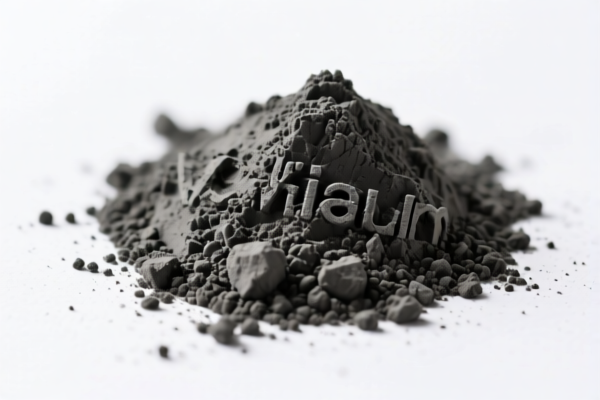
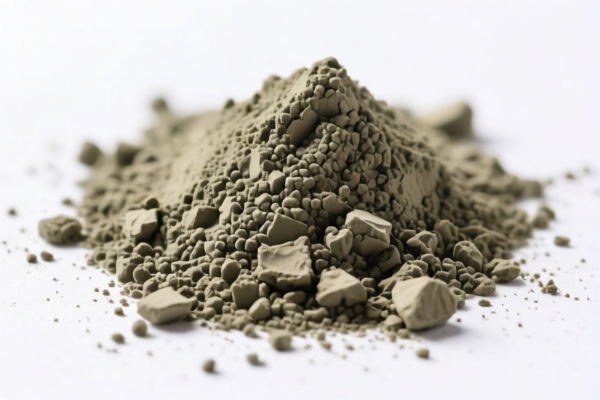
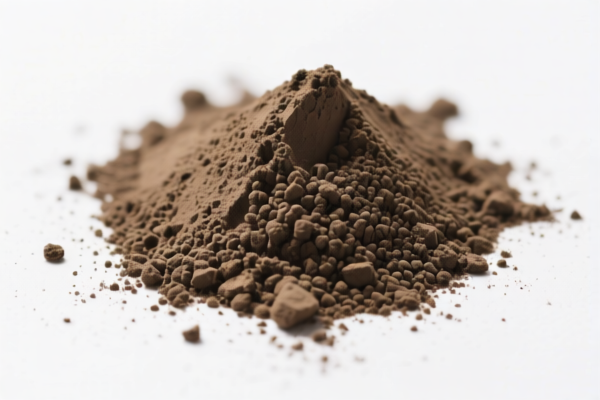
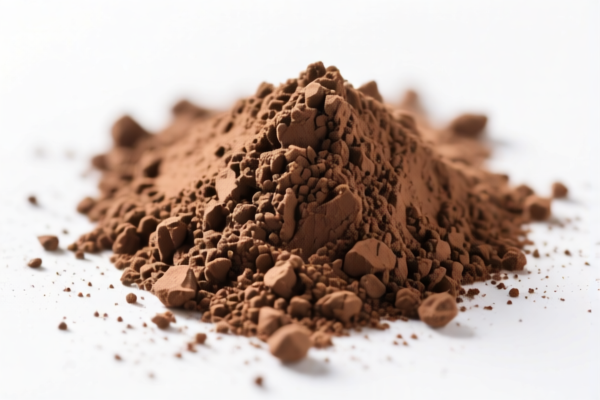
AI Analysis
🧪 Potassium Ferrocyanide (Yellow Prussiate of Potassium)
🌐 HS Code Reference & Customs Clearance Guide | 2026 Latest Tariff Breakdown | Professional-Level Compliance Strategy
📌 I. Product Definition & Classification: Do You Truly Understand "Potassium Ferrocyanide"?
Potassium Ferrocyanide (Chemical Formula: $K_4[Fe(CN)_6] \cdot 3H_2O$), commonly known as Yellow Prussiate of Potassium, is an inorganic chemical salt. In international trade, it is primarily classified based on its chemical structure rather than its industrial application (though it is widely used as an anticaking agent in salt, fertilizer, and pigments).
Key Classification Distinctions: 1. Chemical Nature: It is a complex inorganic compound containing iron, carbon, nitrogen, and potassium. 2. Hydration State: Usually traded as a trihydrate ($3H_2O$). If sold as anhydrous, classification may vary slightly, but trihydrate is the standard trade form. 3. Safety Profile: Despite containing cyanide groups, it is non-toxic under normal conditions because the cyanide is tightly bound in a stable complex. However, it is regulated due to potential acid release of hydrogen cyanide gas.
⚠️ Critical Distinction:
- If the product is pure Potassium Ferrocyanide → Classify under Chapter 28 (Inorganic Chemicals).
- If it is a mixture (e.g., blended with salt as an anticaking agent) → Classify under Chapter 21 or Chapter 25 depending on the primary ingredient.
- Do NOT confuse with Potassium Ferricyanide ($K_3[Fe(CN)_6]$, Red Prussiate), which falls under a different HS code (2837.19.90).
📦 II. HS Code Classification Details (2026 Latest Tariff Authority Match)
| HS Code | Product Description | Application Scenario | Chemical Form |
|---|---|---|---|
2837.11.00.00 |
Potassium ferrocyanide (including salts) | Pure chemical reagent, industrial raw material | $K_4[Fe(CN)_6]$ |
2837.19.90.00 |
Other salts of cyanides, complex cyanides, or cyanate complexes | Potassium Ferricyanide, Sodium Ferrocyanide, etc. | Different metal ion |
2103.90.90.00 |
Food additives/mixtures containing Potassium Ferrocyanide | Anti-caking agent in table salt, animal feed | Mixed product |
3204.17.00.00 |
Synthetic organic coloring matter (if used as pigment precursor) | Industrial dye manufacturing | Industrial grade |
🔍 Key Reminder:
- Pure Chemicals must be declared under HS Code2837.11.00.00.
- If it is mixed with sodium chloride (salt) for anti-caking purposes, it may be classified as2103.90.90.00or2501.00.00.00(salt), but this depends on the concentration and primary function.
- Misclassification Risk: Declaring a pure chemical as "food additive" without proper proof of formulation can lead to customs delays.
💰 III. 2026 Latest Tariff Rate Details (Including Additional Taxes, Policy Surcharges)
✅ Applicable Country: United States (US)
✅ Country of Origin: China (CN)
✅ Effective Date: November 10, 2025 onwards (for subsequent imports)
🎯 1. 2837.11.00.00 —— Potassium Ferrocyanide (Pure Chemical)
| Item | Content |
|---|---|
| Base Tariff Rate | 5.3% (ad valorem) |
| USITC Additional Tariff | 0% (Not listed under 301 Section for this specific subheading) |
| IEEPA Additional Tariff | 7.5% (Section 301 surcharge on Chinese goods, applicable to most Chapter 28 chemicals) |
| Total Tariff Rate | 12.8% |
| Tax Calculation | CIF Value × 12.8% |
| De Minimis Exemption Eligibility | ❌ No (Chemicals are generally not exempt) |
| Legal Basis Path | HTSUS:2837.11.00.00 → USITC:301_01 → IEEPA:9903.01.24 |
📌 Explanation:
- The base rate of 5.3% is standard for potassium cyanides/ferrocyanides.
- The 7.5% IEEPA surcharge applies because Potassium Ferrocyanide is considered a "chemical product" subject to Section 301 tariffs.
- Total: 12.8%. This is moderate compared to electronics or steel, but still significant for bulk chemicals.
🎯 2. Mixed Products (e.g., Anti-Caking Salt containing Potassium Ferrocyanide)
| Item | Content |
|---|---|
| Base Tariff Rate | 0% - 1% (for salt) or 5.5% (for food mixtures) |
| USITC Additional Tariff | 0% (Food products often exempt) |
| IEEPA Additional Tariff | 0% (Food products exempt) |
| Total Tariff Rate | 0% - 1% |
| Tax Calculation | CIF Value × 0%–1% |
| De Minimis Exemption Eligibility | ❌ No (Unless under $800, but chemicals are scrutinized) |
📌 Note:
- If imported as table salt with anti-caking agent, the tariff is much lower.
- However, customs may require proof that the product is primarily salt, not a chemical concentrate.
🛠️ IV. Customs Clearance Practical Advice (Battle-Tested Pitfall Avoidance Guide)
✅ 1. Required Documentation Checklist (Mandatory)
| Document | Must Provide | Explanation |
|---|---|---|
| ✅ Certificate of Analysis (COA) | ✔️ | Must specify chemical purity, hydration state ($3H_2O$), and absence of free cyanide. |
| ✅ Safety Data Sheet (SDS) | ✔️ | Must comply with OSHA/HGHS standards. Label as "Non-Toxic" under normal conditions. |
| ✅ Product Specification Sheet | ✔️ | Detail usage: Industrial Reagent vs. Food Grade. |
| ✅ Commercial Invoice | ✔️ | Must clearly state "Potassium Ferrocyanide Trihydrate" and HS Code 2837.11.00.00. |
| ✅ Certificate of Origin (CO) | ✔️ | To claim any preferential rates if not from China. |
| ✅ Phthalate/Heavy Metal Test Report | ✔️ | For food-grade applications, additional testing may be required. |
✅ 2. Declaration Tips (Key Mantra)
🔥 "Pure Chemical = Chapter 28, Mixed Product = Chapter 21/25, SDS is King!"
| Scenario | Correct Declaration Method | Wrong Practice |
|---|---|---|
| Pure Potassium Ferrocyanide | 2837.11.00.00 with COA |
Misdeclare as "Salt Additive" → 20% penalty |
| Mixed with Salt (Anti-caking) | 2103.90.90.00 or 2501.00.00.00 with formulation proof |
Declare as pure chemical → Overpay tariffs |
| Food Grade | 2103.90.90.00 + FDA Prior Notice |
Import without FDA registration → Detention! |
✅ 3. Special Situation Handling
| Situation | Handling Advice |
|---|---|
| Food Grade Import | Must register with FDA and file Prior Notice before arrival. |
| Industrial Grade | No FDA required, but SDS must be clear for DOT/OSHA compliance. |
| Hydrated vs. Anhydrous | Declare as Trihydrate if that is the form. Anhydrous may have different moisture content specs. |
| Cyanide Content Concerns | Provide test report showing no free cyanide to avoid hazardous material classification. |
🌍 V. Global Market Customs Comparison (2026 Latest)
| Country/Region | Recommended HS Code | Tariff | Certification Requirement | Notes |
|---|---|---|---|---|
| 🇺🇸 USA | 2837.11.00.00 |
12.8% (China) | SDS + COA | 7.5% Section 301 surcharge applies |
| 🇨🇳 China | 2837.11.00.00 |
0% | None | Exempt for import into China |
| 🇪🇺 EU | 2837.11.00.00 |
5.3% | REACH Registration | Must register under REACH for industrial use |
| 🇦🇺 Australia | 2837.11.00.00 |
5.0% | Australian Industrial Chemicals Introduction Scheme (AICIS) | AICIS assessment required |
| 🇯🇵 Japan | 2837.11.00.00 |
5.5% | PMDC Act | Pre-manufacture notification may be needed |
📌 Conclusion:
- USA is the only major market with additional 7.5% surcharge on Chinese-origin chemicals.
- EU requires REACH registration, which is a significant compliance hurdle for new exporters.
- Food Grade imports always require FDA (USA) or EFSA (EU) compliance.
📌 VI. Common Errors & Pitfall Guide (Blood & Tears Lessons)
❌ Error 1: Declaring "Potassium Ferrocyanide" as "Food Additive" without FDA registration
👉 Consequence: Shipment detained or rejected by FDA. Fine: $1,000+ per violation.
❌ Error 2: Failing to specify hydration state (Trihydrate vs. Anhydrous)
👉 Consequence: Customs may misclassify or request additional tests, causing 7–14 day delays.
❌ Error 3: Not providing SDS showing "Non-Hazardous" status
👉 Consequence: Carrier may refuse shipment or charge HazMat handling fees.
❌ Error 4: Confusing Ferrocyanide (Green/Yellow) with Ferricyanide (Red)
👉 Consequence: Wrong HS Code (2837.19.90 vs 2837.11.00) → Incorrect tariff calculation.
✅ Correct Practice:
"Potassium Ferrocyanide Trihydrate, Food Grade, CAS No. 14459-96-0, Purity ≥98%, SDS Attached, FDA Prior Notice Filed"
🎯 VII. Conclusion: Professional Declaration Saves Time and Money!
🎯 Remember the Mantra:
🔹 "Pure Chemical = Chapter 28, Food Mix = Chapter 21, SDS is King!"
🔹 "HS Code 2837.11.00, Total Tariff 12.8% for China Origin."
📌 Pro Tip:
- If you are importing Food Grade Potassium Ferrocyanide, ensure FDA Prior Notice is filed 4 hours before arrival (or 2 hours if by air).
- For Industrial Grade, ensure your SDS clearly states it is not a hazardous material under DOT regulations to avoid freight surcharges.
📣 Immediate Action:
📞 Contact your customs broker + Provide SDS + File FDA Prior Notice (if food grade)
🚀 Ensure smooth customs clearance for your Potassium Ferrocyanide shipment!
✨ Professional Customs Clearance Starts with Accurate Classification!
💼 Every percentage point of tariff matters!
Customer Reviews
About HS Code Classification
The Harmonized System (HS) is an internationally standardized nomenclature developed by the World Customs Organization (WCO) to classify traded products. Over 200 countries use the HS system as the basis for customs tariffs, trade statistics, and import/export regulations.
Each HS code follows a hierarchical structure:
- Chapter (2 digits) — Broad category of goods (e.g., Chapter 84: Machinery and Mechanical Appliances)
- Heading (4 digits) — More specific grouping within the chapter
- Subheading (6 digits) — Internationally standardized breakdown, used by all WCO member countries
- National subdivisions (8-10 digits) — Country-specific extensions for further classification, such as US HTSUS 10-digit codes
Correct HS code classification is essential for smooth customs clearance, accurate duty payment, and compliance with trade regulations. Misclassification can lead to customs delays, overpayment of duties, or penalties.
When importing from CN to US, the applicable tariff rates may include:
- Most-Favored-Nation (MFN) rate — The standard duty rate applied to WTO members
- General rate — Applied to countries without trade agreements
- Trade remedy duties — Additional tariffs such as Section 301 (anti-dumping), Section 232 (national security), or countervailing duties
The information provided on this page is for reference purposes only. For official classification, please consult with your local customs authority or a licensed customs broker.