Potassium Hydroxide Granules
CN → US| HS Code | Tariff Rate | Origin | Destination | Doc |
|---|---|---|---|---|
| 2815200050 | 35.0% | CN | US | Official Doc |
| 2815200090 | 35.0% | CN | US | Official Doc |
Product Images
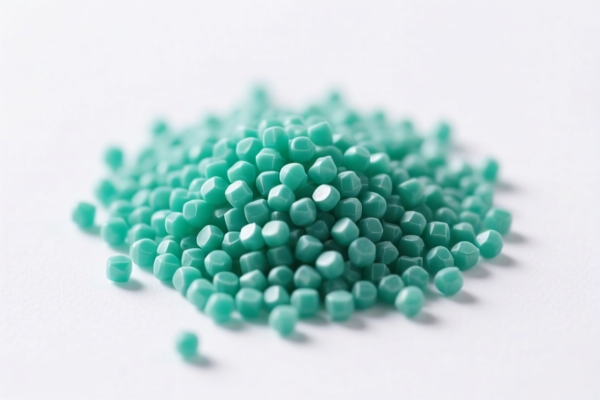
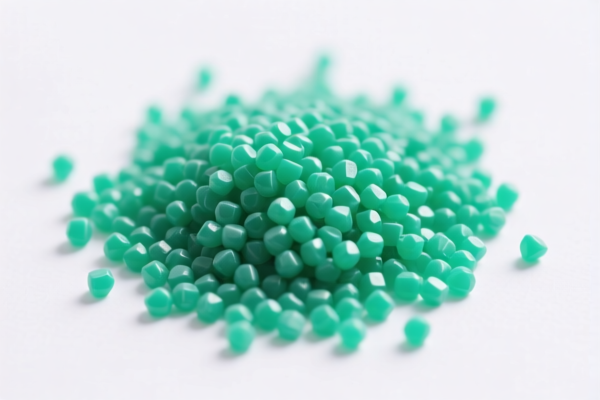
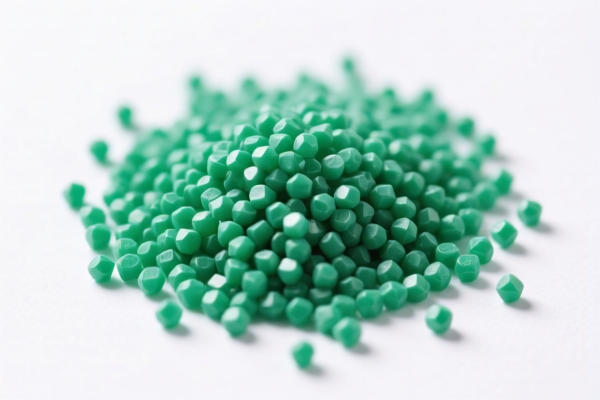
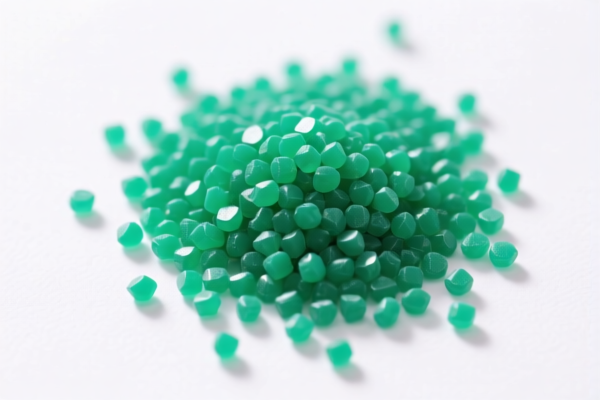
AI Analysis
🧪 Potassium Hydroxide Granules (Caustic Potash)
🌐 HS Code Reference & Customs Clearance Guide | 2026 Latest Tariff Analysis | Professional Strategy for Chemical Import
📌 I. Product Definition & Classification: Do You Understand "Caustic Potash"?
Potassium Hydroxide (KOH), commonly known as Caustic Potash, is a strong alkaline chemical widely used in soap making, fertilizer production, electroplating, and battery manufacturing. In international trade, its classification depends heavily on its physical form and concentration.
For Granular Potassium Hydroxide, it is strictly categorized under Potassium Hydroxide solids. The HS Code classification distinguishes between specific solid forms and "other" general solids.
⚠️ Key Distinction:
- Granular/Solid Form: Must be declared under 2815.20.00.50 (Specific Solid Form).
- Other Forms (Pellets, Flakes, or Non-Specific): Declared under 2815.20.00.90 (Other).
- Liquid Solution: Not covered in this dataset, typically falls under different subheadings or requires different documentation.
📦 II. HS Code Classification Details (2026 Latest Tariff Authority Reference)
| HS Code | Product Description | Applicable Scenario | Physical Form |
|---|---|---|---|
2815.20.00.50 |
Potassium hydroxide (Caustic potash) In solid form | Granules, specific solid industrial grade | ✅ Solid (Granular) |
2815.20.00.90 |
Potassium hydroxide (Caustic potash) Other | Pellets, flakes, non-specified solid forms, or residues | ✅ Solid (Other) |
🔍 Important Note:
- Granules are explicitly considered "In solid form" for the purpose of the more specific code2815.20.00.50.
- If the product is in pellet or flake form, or if the specific "solid form" definition is not met, it falls under2815.20.00.90.
- Both codes fall under Chapter 28 (Inorganic Chemicals), Heading 2815 (Sodium hydroxide; potassium hydroxide; peroxides of sodium or potassium).
💰 III. 2026 Latest Tariff Rate Details (Including Additional Taxes)
✅ Applicable Country: United States (US)
✅ Origin: China (CN) (Note: Rates may vary by origin; this data reflects the provided tax structure)
✅ Effective Time: Current applicable rates based on provided data
🎯 1. 2815.20.00.50 —— Potassium Hydroxide (Caustic Potash) In Solid Form (Granules)
| Item | Content |
|---|---|
| Base Tariff Rate | 0.0% (ad valorem) |
| Additional Tariff (Section 301) | +25.0% |
| Total Tariff Rate | 25.0% |
| Tax Calculation | CIF Value × 25% |
| De Minimis Exemption | ❌ Not Eligible (High tariff rate exceeds thresholds) |
| Legal Basis Path | USITC:2815.20.00.50 → FOOTNOTE:301 → Total: 25.0% |
📌 Explanation:
- The Base Tariff is 0%, reflecting the general duty-free status for many inorganic chemicals.
- However, due to Section 301 Trade Remedies, an additional 25% tariff is applied to goods of Chinese origin in this category.
- Total Duty: 25%. This is a significant cost factor for bulk chemical imports.
🎯 2. 2815.20.00.90 —— Potassium Hydroxide (Caustic Potash) Other
| Item | Content |
|---|---|
| Base Tariff Rate | 0.0% (ad valorem) |
| Additional Tariff (Section 301) | +25.0% |
| Total Tariff Rate | 25.0% |
| Tax Calculation | CIF Value × 25% |
| De Minimis Exemption | ❌ Not Eligible |
| Legal Basis Path | USITC:2815.20.00.90 → FOOTNOTE:301 → Total: 25.0% |
📌 Note:
- Both2815.20.00.50and2815.20.00.90carry the same total tariff rate of 25%.
- The distinction is primarily for statistical accuracy and customs compliance, not for tax savings in this specific dataset.
- Ensure the product description matches the physical form (Granules vs. Other) to avoid customs audits.
🛠️ IV. Customs Clearance Practical Advice (Battle-Tested Pitfall Guide)
✅ 1. Documentation Checklist (Non-Negotiable)
| Document | Required | Description |
|---|---|---|
| ✅ Safety Data Sheet (SDS) | ✔️ | Critical. Must comply with OSHA HazCom Standard. Must identify KOH as a corrosive substance. |
| ✅ Certificate of Analysis (COA) | ✔️ | Confirms purity, moisture content, and physical form (granular). |
| ✅ Product Specification Sheet | ✔️ | Details particle size distribution, packaging type, and intended use. |
| ✅ Commercial Invoice | ✔️ | Clearly state: "Potassium Hydroxide, Granules, HS Code 2815.20.00.50" |
| ✅ Packing List | ✔️ | Net/Gross weight must match. Note: KOH is hygroscopic; moisture weight must be accounted for. |
| ✅ Non-Hazardous Certificate | ⚠️ | If applicable, but KOH is generally Corrosive Class 8. Do not claim non-hazardous. |
✅ 2. Declaration Best Practices (Key Tips)
🔥 “Granules = Solid Form; SDs = Must Have; Tariff = 25%”
| Scenario | Correct Declaration | Wrong Practice |
|---|---|---|
| Granular KOH | 2815.20.00.50 - "Potassium Hydroxide, Solid Form" |
Declare as "Other" (90) without justification |
| Pelleted KOH | 2815.20.00.90 - "Potassium Hydroxide, Other" |
Declare as "Solid Form" (50) if not strictly granular |
| Liquid KOH | Not in scope | Must use appropriate liquid HS code (e.g., 2815.20.00.xx) |
| Hygroscopic Nature | Declare Net Weight (exclude moisture absorption) | Declare gross weight including absorbed water |
📌 Critical Warning:
- Potassium Hydroxide is Corrosive (Class 8) under DOT regulations.
- Incorrect declaration as "non-hazardous" can lead to severe fines, detention, and rejection.
- Ensure packaging is UN-certified for corrosive substances.
✅ 3. Special Handling Conditions
| Condition | Handling Advice |
|---|---|
| Hygroscopic Risk | KOH absorbs moisture from air. Ensure packaging is sealed airtight. Inspect for clumping or liquefaction upon arrival. |
| Corrosive Packaging | Use HDPE drums or lined steel containers. Avoid metal containers that can react with KOH. |
| Plastic Waste Regulation | Some jurisdictions have restrictions on plastic waste. Ensure drums are not classified as waste. |
| Pre-Ruling Recommendation | Strongly Recommended: Apply for a Pre-Ruling if unsure about "Granular" vs. "Other" definition in your specific port. |
🌍 V. Global Market Comparison (2026 Latest)
| Country/Region | Recommended HS Code | Tariff (China Origin) | Certification | Notes |
|---|---|---|---|---|
| 🇺🇸 USA | 2815.20.00.50 / .90 |
25% (Total) | DOT Class 8 | High tariff, strict hazmat rules |
| 🇨🇳 China | 2815.20 |
~5-8% | GB Standards | Domestic standard compliance |
| 🇪🇺 EU | 2815.20 |
0% | REACH + CLP | No additional tariffs, strict chemical registration |
| 🇦🇺 Australia | 2815.20 |
5% | GHS | Hazmat transport regulations |
| 🇯🇵 Japan | 2815.20 |
0% | JIS | Strict purity standards |
📌 Conclusion:
- USA is the most expensive market for KOH imports from China due to the 25% Section 301 tariff.
- EU and Japan offer better tariff advantages (0% base), but compliance costs (REACH/JIS) are higher.
- Tariff Planning: Consider sourcing from non-China origins (e.g., South Korea, Europe) to avoid the 25% surcharge if feasible.
📌 VI. Common Errors & Pitfall Guide (Lessons Learned)
❌ Error 1: Declaring KOH as "Non-Hazardous"
👉 Consequence: Severe fines, shipment seizure, and legal liability. KOH is Class 8 Corrosive.
❌ Error 2: Using vague descriptions like "Chemical Powder"
👉 Consequence: Customs delay, audit, and potential misclassification penalties.
✅ Correct Description: "Potassium Hydroxide, Granules, Pure, Corrosive, Class 8, UN 1823"
❌ Error 3: Ignoring Hygroscopic Nature
👉 Consequence: Dispute over Net Weight vs. Gross Weight.
✅ Solution: Declare Net Weight and provide a COA showing purity.
❌ Error 4: Misclassifying Granules as "Other"
👉 Consequence: While the tariff is the same (25%), it may trigger manual examination for statistical inconsistency.
✅ Solution: Use 2815.20.00.50 for Granules.
🎯 VII. Conclusion: Precision in Classification Saves Costs!
🎯 Remember These Key Points:
🔹 "Granules = Solid Form (50)"
🔹 "Tariff = 25% (US, China Origin)"
🔹 "SDS = Mandatory"
🔹 "Hazmat = Class 8 Corrosive"
📌 Pro Tip:
- If you are importing large volumes, consider bonded warehouses to defer duty payment.
- For small samples, ensure they are properly packaged to avoid hazmat surcharges at the courier level.
📣 Immediate Action:
📞 Consult with a licensed customs broker to verify the "Granular" definition for your specific product.
📄 Prepare SDS and COA before shipping.
🚀 Ensure your invoice includes the exact HS Code and proper hazard labels to avoid delays.
✨ Professional clearance starts with accurate classification!
💼 Your bottom line depends on getting the HS Code and Tariff right!
Customer Reviews
About HS Code Classification
The Harmonized System (HS) is an internationally standardized nomenclature developed by the World Customs Organization (WCO) to classify traded products. Over 200 countries use the HS system as the basis for customs tariffs, trade statistics, and import/export regulations.
Each HS code follows a hierarchical structure:
- Chapter (2 digits) — Broad category of goods (e.g., Chapter 84: Machinery and Mechanical Appliances)
- Heading (4 digits) — More specific grouping within the chapter
- Subheading (6 digits) — Internationally standardized breakdown, used by all WCO member countries
- National subdivisions (8-10 digits) — Country-specific extensions for further classification, such as US HTSUS 10-digit codes
Correct HS code classification is essential for smooth customs clearance, accurate duty payment, and compliance with trade regulations. Misclassification can lead to customs delays, overpayment of duties, or penalties.
When importing from CN to US, the applicable tariff rates may include:
- Most-Favored-Nation (MFN) rate — The standard duty rate applied to WTO members
- General rate — Applied to countries without trade agreements
- Trade remedy duties — Additional tariffs such as Section 301 (anti-dumping), Section 232 (national security), or countervailing duties
The information provided on this page is for reference purposes only. For official classification, please consult with your local customs authority or a licensed customs broker.