Potassium Hydroxide Pellets
CN → US| HS Code | Tariff Rate | Origin | Destination | Doc |
|---|---|---|---|---|
| 2815200050 | 35.0% | CN | US | Official Doc |
| 2815110000 | 35.0% | CN | US | Official Doc |
| 3104900100 | 35.0% | CN | US | Official Doc |
| 3104300000 | 35.0% | CN | US | Official Doc |
Product Images
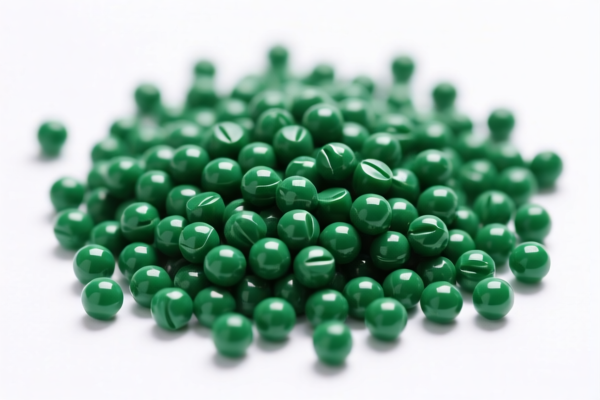


AI Analysis
🧪 Potassium Hydroxide Pellets (Caustic Potash)
🌐 HS Code Reference & Customs Clearance Guide | 2026 Latest Tariff Analysis | Professional Clearance Strategy
📌 I. Product Definition & Classification: Do You Really Know "Potassium Hydroxide Pellets"?
Potassium Hydroxide (KOH), commonly known as Caustic Potash, is a strong alkali widely used in soap making, fertilizer production, battery electrolytes, and pH balancing agents. In international trade, it is classified under Chapter 28 (Inorganic Chemicals).
The classification hinges on its physical state:
* Solid Form (Pellets/Flakes): Specifically listed under subheading 2815.20.50.
* Other Forms (Solution/Paste): Classified under 2815.20.90.
⚠️ Key Distinction:
- If your product is in solid form (pellets, flakes, beads) → Classify under 2815.20.00.50
- If your product is in liquid form (solution) or other non-solid states → Classify under 2815.20.00.90
📦 II. HS Code Classification Details (2026 Latest Tariff Authority对照)
| HS Code | Product Description | Applicable Scenario | Physical State |
|---|---|---|---|
2815.20.00.50 |
Potassium Hydroxide (Caustic Potash) In solid form | Pellets, flakes, beads, granules | ✅ Solid |
2815.20.00.90 |
Potassium Hydroxide (Caustic Potash) Other | Solutions, pastes, non-solid forms | ❌ Not Solid |
🔍 Critical Reminder:
- "Pellets" unequivocally mean Solid Form. Do not misclassify solid KOH pellets as "Other" (2815.20.00.90) unless they are mixed with other significant ingredients that change the chemical nature (which is rare for pure KOH pellets). - If packaged in drums or sealed containers labeled "Potassium Hydroxide Pellets," use 2815.20.00.50.
💰 III. 2026 Latest Tariff Rate Breakdown (Including Surtaxes & Policy Add-ons)
✅ Applicable Country: United States (US)
✅ Origin: China (CN)
✅ Effective Time: Current trade policies (Section 301 & IEEPA applicability)
🎯 1. 2815.20.00.50 —— Potassium Hydroxide (Caustic Potash) In Solid Form
| Item | Content |
|---|---|
| Base Duty Rate | 0.0% (ad valorem) |
| Surtax (Section 301) | +25.0% |
| Total Tax Rate | 25.0% |
| Tax Calculation | CIF Value × 25% |
| De Minimis Exemption | ❌ Not Applicable (Dangerous Goods/Chemicals generally excluded from de minimis benefits under current enforcement) |
| Legal Basis Path | USITC:2815.20.00.50 → Section 301: Footnote 1 |
📌 Explanation:
- "Base Duty 0%" reflects the standard Most Favored Nation (MFN) rate for inorganic alkalis.
- "Surtax 25%" is applied due to Section 301 tariffs on Chinese-origin chemicals.
- Total 25% is a significant cost factor. Importers must calculate this precisely in landed cost models.
🎯 2. 2815.20.00.90 —— Potassium Hydroxide (Caustic Potash) Other
| Item | Content |
|---|---|
| Base Duty Rate | 0.0% (ad valorem) |
| Surtax (Section 301) | +25.0% |
| Total Tax Rate | 25.0% |
| Tax Calculation | CIF Value × 25% |
| De Minimis Exemption | ❌ Not Applicable |
| Legal Basis Path | USITC:2815.20.00.90 → Section 301: Footnote 1 |
📌 Note:
- Although the HS code differs from the solid form, the tax outcome is identical.
- This code is reserved for liquid solutions or other non-solid states. Misclassifying solid pellets here may lead to customs inquiries regarding the product's physical state, even if the tax is the same. Accuracy in description is crucial for regulatory compliance (e.g., DOT/IMO hazardous material declarations).
🛠️ IV. Customs Clearance Practical Advice (Battle-Tested Pitfall Guide)
✅ 1. Required Documentation Checklist (Non-Negotiable)
| Document | Must Provide | Description |
|---|---|---|
| ✅ MSDS (Material Safety Data Sheet) | ✔️ | Critical. KOH is a Class 8 Corrosive Substance. Must specify pH, hazard class, and UN number (UN 1813). |
| ✅ Product Specification Sheet | ✔️ | Confirm purity % (e.g., 90%, 95%) and physical form (Pellets). |
| ✅ Commercial Invoice | ✔️ | Must clearly state "Potassium Hydroxide Pellets" and HS Code 2815.20.00.50. |
| ✅ Packing List | ✔️ | Detail net/gross weight, packaging type (drums/bags), and UN markings if applicable. |
| ✅ Certificate of Origin | ✔️ | Required to verify Chinese origin for Section 301 surtax application. |
| ✅ DOT/IMO Declaration | ✔️ | If shipped as hazardous material (which KOH pellets often are), proper dangerous goods declaration is mandatory. |
✅ 2. Declaration Tips (Key Mantra)
🔥 "Solid Pellets, Code .50; Liquid Solution, Code .90; Hazardous Class 8, MSDS Ready!"
| Scenario | Correct Declaration | Wrong Practice |
|---|---|---|
| Solid KOH Pellets | 2815.20.00.50 + "In Solid Form" |
Mislabeling as "Chemical Powder" → Ambiguity |
| KOH Solution | 2815.20.00.90 + "In Liquid Form" |
Mislabeling as "Pellets" → Physical mismatch |
| Mixed with other chemicals | Check specific subheading | Assuming pure KOH rules apply |
✅ 3. Special Handling Precautions
| Situation | Handling Advice |
|---|---|
| Hazardous Material Shipment | KOH Pellets are Class 8 Corrosives. Ensure packaging meets UN standards (e.g., UN 1813). Provide proper labeling (Corrosive Diamond). |
| Hygroscopic Nature | KOH absorbs moisture. Ensure packaging is sealed and dry. Damaged packaging may lead to quality disputes or customs rejection. |
| Contact with Water | Exothermic reaction. Warn handlers. Not directly a customs issue, but affects safety documentation. |
| Origin Verification | Ensure all paperwork proves China Origin to avoid surprise surtaxes if origin is disputed. |
🌍 V. Global Market Clearance Comparison (2026 Latest)
| Country/Region | Recommended HS Code | Tariff (China Origin) | Certification/Regulatory | Notes |
|---|---|---|---|---|
| 🇺🇸 United States | 2815.20.00.50 |
25.0% (0% Base + 25% Surtax) | DOT Hazmat, OSHA HazCom | High tariff burden; precise classification critical. |
| 🇨🇳 China | 2815.20.00.50 |
~0-5% (Varies) | CCC (if applicable) | Low import duty, but strict environmental controls on production. |
| 🇪🇺 European Union | 2815.20.90* |
~5.5% | REACH, CLP/GHS | REACH registration required for substances >1 ton/year. |
| 🇬🇧 United Kingdom | 2815.20.90* |
~5.5% | UK REACH, CLP | Post-Brexit regulations mirror EU but require separate registration. |
| 🇯🇵 Japan | 2815.20.00.50 |
~5.5% | PRTR Law, Industrial Safety | Strict labeling and handling guidelines. |
📌 Conclusion:
- USA is the most tariff-sensitive market for Chinese-made KOH due to the 25% Section 301 surtax.
- Hazardous Material Compliance is universal. Failure to provide proper MSDS and UN packaging can lead to shipment rejection in any country.
📌 VI. Common Errors & Pitfall Guide (Lessons Learned)
❌ Error 1: Classifying Solid Pellets as 2815.20.00.90 ("Other")
👉 Consequence: While the tax rate is the same (25%), it raises a red flag for customs officers regarding the physical state. This can lead to delays, additional inspections, or requests for proof of form (photos/MSDS).
❌ Error 2: Failing to declare Hazardous Class (Class 8)
👉 Consequence: If shipped as a general chemical, the shipment may be confiscated or fined for violating DOT/IMO hazardous material regulations. Safety is paramount.
❌ Error 3: Ignoring Hygroscopic Nature in Packaging Description
👉 Consequence: Disputes over quantity loss due to moisture absorption. Clearly state "Net Weight" and packaging integrity in documents.
❌ Error 4: Using Generic Name "Caustic Soda" for Potassium Hydroxide
👉 Consequence: Caustic Soda is Sodium Hydroxide (NaOH, HS 2815.11/2815.90), NOT Potassium Hydroxide. Misnaming leads to wrong HS code, wrong tax, and potential fraud allegations.
✅ Correct: "Potassium Hydroxide" or "Caustic Potash"
🎯 VII. Conclusion: Professional Declaration, Risk-Free Clearance!
🎯 Remember the Mantra:
🔹 "Pellets = Solid = .50; Solution = Liquid = .90; Always 25% Surtax for China."
🔹 "MSDS is Mandatory, Hazmat Class 8, Don't Risk the Fine."
📌 Pro Tip:
If your Potassium Hydroxide is not sourced from China (e.g., from USA, Canada, or Europe), the 25% surtax may not apply. Always verify Country of Origin on the Bill of Lading and Certificate of Origin.
🚀 Action Item:
1. Confirm physical form (Solid vs. Liquid).
2. Verify HS Code (2815.20.00.50for pellets).
3. Prepare MSDS and Hazmat Declaration.
4. Calculate 25% surtax into your landed cost.
✨ Professional Customs Clearance Starts with Accurate Classification!
💼 Every Dollar of Tariff is Predictable with the Right Data!
Customer Reviews
About HS Code Classification
The Harmonized System (HS) is an internationally standardized nomenclature developed by the World Customs Organization (WCO) to classify traded products. Over 200 countries use the HS system as the basis for customs tariffs, trade statistics, and import/export regulations.
Each HS code follows a hierarchical structure:
- Chapter (2 digits) — Broad category of goods (e.g., Chapter 84: Machinery and Mechanical Appliances)
- Heading (4 digits) — More specific grouping within the chapter
- Subheading (6 digits) — Internationally standardized breakdown, used by all WCO member countries
- National subdivisions (8-10 digits) — Country-specific extensions for further classification, such as US HTSUS 10-digit codes
Correct HS code classification is essential for smooth customs clearance, accurate duty payment, and compliance with trade regulations. Misclassification can lead to customs delays, overpayment of duties, or penalties.
When importing from CN to US, the applicable tariff rates may include:
- Most-Favored-Nation (MFN) rate — The standard duty rate applied to WTO members
- General rate — Applied to countries without trade agreements
- Trade remedy duties — Additional tariffs such as Section 301 (anti-dumping), Section 232 (national security), or countervailing duties
The information provided on this page is for reference purposes only. For official classification, please consult with your local customs authority or a licensed customs broker.