Potassium Sulfate Granules
CN → US| HS Code | Tariff Rate | Origin | Destination | Doc |
|---|---|---|---|---|
| 2833295190 | 38.7% | CN | US | Official Doc |
| 2833406010 | 38.1% | CN | US | Official Doc |
| 3105600000 | 35.0% | CN | US | Official Doc |
| 3105900050 | 35.0% | CN | US | Official Doc |
| 3104300000 | 35.0% | CN | US | Official Doc |
| 3104900100 | 35.0% | CN | US | Official Doc |
Product Images


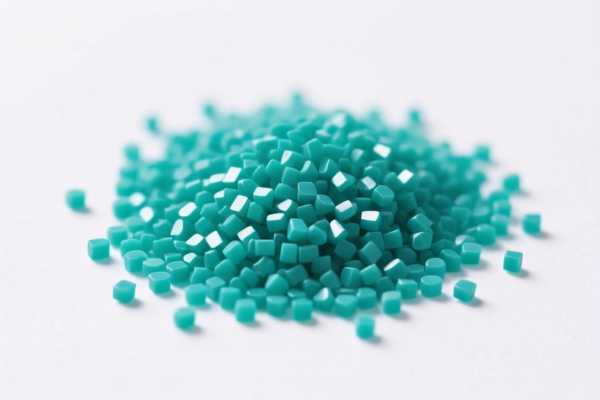
AI Analysis
🌾 Potassium Sulfate Granules: HS Code Classification & 2026 Tariff Strategy
🌐 Global Trade & Customs Guide | 2026 Latest Tariff Breakdown | Professional Clearance Strategy
📌 I. Product Definition & Classification: What Are "Potassium Sulfate Granules"?
Potassium Sulfate Granules (chemical formula: K₂SO₄) are a high-purity, granular mineral fertilizer widely used in agriculture to supply potassium (K), a vital macronutrient for plant growth. They are typically produced by reacting potassium chloride with sulfuric acid or extracted from natural mineral sources (like Kainite).
In international trade, they fall under Chapter 31 (Fertilizers) or Chapter 28 (Inorganic Chemicals), depending on their specific composition, purity, and intended use.
Key Classification Scenarios:
-
Scenario A: Pure Potassium Sulfate (Fertilizer Grade)
If the product is classified primarily as a potassic fertilizer containing only potassium as the fertilizing element (or as the sole K-source), it falls under HS Code 3104.30. -
Scenario B: Fertilizer with N-P-K or Other Elements
If the granules contain Potassium + Phosphorus (and/or Nitrogen) as two or three fertilizing elements, it falls under HS Code 3105.60. -
Scenario C: Industrial/Pure Chemical Grade
If the product is NOT intended as a fertilizer (e.g., high-purity chemical reagent, industrial application) and is classified strictly as a sulfate, it may fall under HS Code 2833.29 or 2833.40.
⚠️ Critical Distinction:
- If the primary label or usage is "Fertilizer" → Chapter 31.
- If the primary usage is "Chemical Reagent" or "Industrial Process" and not a fertilizer → Chapter 28.
- Granular form does not change the code but may affect packaging restrictions (e.g., <10kg packages in 3105).
📦 II. HS Code Classification Details (Based on Provided Data)
| HS Code | Product Description | Classification Logic |
|---|---|---|
3104.30.00.00 |
Mineral or chemical fertilizers, potassic: Potassium sulfate | Most Common. Pure Potassium Sulfate intended specifically as a fertilizer. Contains only Potassium (K). |
3105.60.00.00 |
Mineral fertilizers containing two or three elements (N, P, K): Containing P and K | Applies if the granules are a compound fertilizer containing both Phosphorus (P) and Potassium (K) (and possibly Nitrogen). |
3105.90.00.50 |
Mineral fertilizers... in tablets or similar forms or packages ≤10kg: Other | Applies to Potassium Sulfate if packaged in ≤10kg units and does not fit the specific N-P-K categories above. |
2833.29.51.90 |
Sulfates... Other sulfates: Other: Other Other | Applies if classified as a general chemical sulfate (not for fertilizer use) or specific "other" sulfates. |
2833.40.60.10 |
Peroxosulfates (persulfates): Other Of potassium | NOT Potassium Sulfate. This is for Potassium Persulfates (a different chemical compound). Only relevant if mislabeled as a persulfate. |
3104.90.01.00 |
Mineral or chemical fertilizers, potassic: Other | Applies to Potassium-based fertilizers other than Sulfate (e.g., Potassium Chloride, Potassium Nitrate). Not applicable to K₂SO₄ unless it fails the 3104.30 definition. |
🔍 Key Interpretation:
-3104.30.00.00is the primary code for standard agricultural Potassium Sulfate Granules.
-3105.60.00.00applies only if the product is a compound fertilizer (e.g., K-P granules).
-2833.29.51.90is rare for agricultural K₂SO₄ but applies to chemical grade sulfates not intended for soil application.
💰 III. 2026 Tariff Rate Analysis (Detailed Breakdown)
✅ Applicable Market: United States (US)
✅ Origin: China (CN) (Assumed based on "Additional Tariff" context in data)
✅ Status: High Impact due to "Additional Tariffs" (Section 301 & IEEPA).
🎯 1. 3104.30.00.00 — Potassium Sulfate (Fertilizer)
The "Standard" Fertilizer Rate
| Item | Value | Explanation |
| :--- | :--- | :--- |
| Base Duty | 0.0% | Standard MFN rate for fertilizers is often duty-free. |
| Additional Duty | +25.0% | Section 301 Tariff (Retaliatory/Trade War tariff). |
| Total Tax Rate | 25.0% | Effective rate = CIF Value × 25% |
| De Minimis Exemption | ❌ No | Fertilizers are excluded from $800 de minimis exemption. |
| Legal Basis | HTSUS:3104.30.00.00 → Section 301 List 4A/4C | |
📌 Critical Note: Even though the base tariff is 0%, the 25% additional tariff makes this a high-cost import. This applies to agricultural-grade Potassium Sulfate.
🎯 2. 3105.60.00.00 — Compound Fertilizer (P & K)
The "Compound" Fertilizer Rate
| Item | Value | Explanation |
| :--- | :--- | :--- |
| Base Duty | 0.0% | Standard MFN rate for compound fertilizers. |
| Additional Duty | +25.0% | Section 301 Tariff (Applies to "Other Fertilizers"). |
| Total Tax Rate | 25.0% | Effective rate = CIF Value × 25% |
| De Minimis Exemption | ❌ No | Not eligible for small package exemption if classified as fertilizer. |
| Legal Basis | HTSUS:3105.60.00.00 → Section 301 | |
📌 Critical Note: If your granules contain both Potassium AND Phosphorus, the 25% additional tariff still applies.
🎯 3. 3105.90.00.50 — Small Package Fertilizers (<10kg)
The "Consumer/Bag" Fertilizer Rate
| Item | Value | Explanation |
| :--- | :--- | :--- |
| Base Duty | 0.0% | Standard MFN rate. |
| Additional Duty | +25.0% | Section 301 Tariff. |
| Total Tax Rate | 25.0% | Effective rate = CIF Value × 25% |
| De Minimis Exemption | ❌ No | Despite being <10kg, fertilizers are excluded from de minimis relief in the US. |
| Legal Basis | HTSUS:3105.90.00.50 → Section 301 | |
📌 Critical Note: The "≤10kg" rule in the description usually relates to exemption from certain licensing or different classification in other countries, but in the US, fertilizers face the 25% tariff regardless of package size.
🎯 4. 2833.29.51.90 — Other Sulfates (Chemical Grade)
The "Non-Fertilizer" Rate
| Item | Value | Explanation |
| :--- | :--- | :--- |
| Base Duty | 0.0% | Standard MFN rate for inorganic chemicals. |
| Additional Duty | 0.0% | No Section 301 tariff applies to this specific "Other" sulfate subheading in the provided data. |
| Total Tax Rate | 0.0% | Duty-Free (if classified correctly as non-fertilizer). |
| De Minimis Exemption | ✅ Yes | If < $800 value, may qualify for Section 321 exemption (US). |
| Legal Basis | HTSUS:2833.29.51.90 | |
📌 CRITICAL WARNING:
- To get 0% tariff, you must prove the product is NOT a fertilizer (e.g., high purity for industrial use, lab reagent, not for soil application).
- Customs Risk: If you declare2833.29for agricultural granules but they are found in a fertilizer shipment, Customs will re-classify to 3104/3105 and apply 25% + penalties.
🛠️ IV. Customs Clearance Strategy & Recommendations
✅ 1. Strategic Classification (The "Safest" Path)
- If Agricultural Use: You MUST declare under
3104.30.00.00. Do not try to evade the 25% tariff by declaring as2833. The risk of audit, seizure, and fines (up to 4x the value) is too high. - If Industrial Use: If the granules are 99.9% pure and intended for glass manufacturing, ceramics, or chemical synthesis (NOT soil), you can attempt
2833.29.51.90.- Requirement: Provide a Certificate of Analysis (CoA), Statement of Use, and Safety Data Sheet (SDS) proving non-agricultural intent.
✅ 2. Packaging & Declaration Tips
| Action | Recommendation |
|---|---|
| Labeling | Clearly state: "Fertilizer: Potassium Sulfate (K₂SO₄), N-P-K: 0-0-50" (or similar). DO NOT hide the agricultural purpose. |
| Package Size | If shipping in ≤10kg bags, be aware they still face 25% tariff. Do not assume small packages are duty-free. |
| Bill of Lading | Ensure the description matches the HS Code exactly. ✅ Correct: "Potassium Sulfate Granules, Fertilizer Grade, K₂SO₄ 90%" ❌ Wrong: "Chemical Sulfate" (if used for farming). |
| Origin Proof | Ensure the Certificate of Origin (CO) is accurate. China origin triggers the 25% "Additional Duty". |
✅ 3. Cost Optimization Strategy
- Option A: Re-Route to Non-Tariff Markets
If the destination allows, consider trans-shipping through Vietnam, Mexico, or Malaysia (if eligible for US Free Trade Agreements or IEEPA exemptions) to avoid the 25% China-specific tariff. - Option B: Verify "Fertilizer" Definition
Work with a customs broker to see if your specific batch can be classified as an industrial chemical (2833) based on purity and end-use documentation. This could save 25%. - Option C: Consolidated Shipping
Since the tax is ad valorem (percentage-based), higher value shipments pay more in absolute terms. Consolidate smaller shipments to avoid multiple handling fees, though the 25% tax remains.
🌍 V. Global Market Comparison (2026)
| Market | HS Code | Base Rate | Additional Tax | Total Rate | Notes |
|---|---|---|---|---|---|
| 🇺🇸 USA | 3104.30.00.00 |
0% | 25% | 25% | High Risk. Strictly enforced on Chinese origin. |
| 🇨🇳 China | 3104.30.00.00 |
5-10% | 0% | ~5-10% | Exporting TO China is cheaper, but importing FROM China to US is expensive. |
| 🇪🇺 EU | 3104.30.00 |
6.5% | 0% | 6.5% | No Section 301 equivalent. Lower cost. |
| 🇦🇺 Australia | 3104.30.00 |
5% | 0% | 5% | Competitive. |
| 🇯🇵 Japan | 3104.30.00 |
3.5% | 0% | 3.5% | Low tariff environment. |
📌 Conclusion: The US market is the most expensive due to the 25% additional tariff. For US-bound Potassium Sulfate, the total landed cost will be significantly higher than in Europe or Asia.
📌 VI. Common Pitfalls & "Don'ts"
❌ Pitfall 1: Mislabeling as "Chemical" to Avoid Tax
👉 Result: If Customs finds fertilizer residue or usage evidence, they will re-classify to 3104, charge 25% + 10% interest + penalties.
✅ Solution: Be honest. If it's fertilizer, declare as fertilizer.
❌ Pitfall 2: Assuming <10kg Packages are Duty-Free
👉 Result: You might think the "≤10kg" rule in 3105.90 implies a tariff exemption. It does not. The 25% still applies.
✅ Solution: Budget for 25% tax regardless of package size.
❌ Pitfall 3: Ignoring the "N-P-K" Content
👉 Result: If your granules contain Phosphorus, declaring 3104.30 (Pure K) is a mistake. You must use 3105.60.
✅ Solution: Provide a lab report confirming the N-P-K ratio.
🎯 VII. Final Verdict: Clearance Checklist
✅ Step 1: Confirm End Use.
- Farming? → Use 3104.30.00.00 (Expect 25% tax).
- Industry/Lab? → Use 2833.29.51.90 (Try for 0% tax).
✅ Step 2: Prepare Documentation.
- Lab Report (N-P-K analysis).
- SDS (Safety Data Sheet).
- Commercial Invoice (Clear description).
✅ Step 3: Budget for Tax.
- If US import from China: Add 25% to your cost calculation.
- If US import from elsewhere: Check for Free Trade Agreements.
✅ Step 4: Consult a Broker.
- Do not self-declare high-risk agricultural products without expert guidance.
📣 Call to Action:
🚀 For US Imports: Budget 25% immediately.
📉 For Global Export: Target EU/Asia for lower tariffs.
⚖️ Compliance First: Never lie about agricultural intent to save tax; the fines are devastating.
✨ Smart Trade, Smart Compliance!
💼 Your Profit Margin Depends on Accurate HS Codes!
Customer Reviews
About HS Code Classification
The Harmonized System (HS) is an internationally standardized nomenclature developed by the World Customs Organization (WCO) to classify traded products. Over 200 countries use the HS system as the basis for customs tariffs, trade statistics, and import/export regulations.
Each HS code follows a hierarchical structure:
- Chapter (2 digits) — Broad category of goods (e.g., Chapter 84: Machinery and Mechanical Appliances)
- Heading (4 digits) — More specific grouping within the chapter
- Subheading (6 digits) — Internationally standardized breakdown, used by all WCO member countries
- National subdivisions (8-10 digits) — Country-specific extensions for further classification, such as US HTSUS 10-digit codes
Correct HS code classification is essential for smooth customs clearance, accurate duty payment, and compliance with trade regulations. Misclassification can lead to customs delays, overpayment of duties, or penalties.
When importing from CN to US, the applicable tariff rates may include:
- Most-Favored-Nation (MFN) rate — The standard duty rate applied to WTO members
- General rate — Applied to countries without trade agreements
- Trade remedy duties — Additional tariffs such as Section 301 (anti-dumping), Section 232 (national security), or countervailing duties
The information provided on this page is for reference purposes only. For official classification, please consult with your local customs authority or a licensed customs broker.