Potato Cutter
CN → US| HS Code | Tariff Rate | Origin | Destination | Doc |
|---|---|---|---|---|
| 8438600000 | 35.0% | CN | US | Official Doc |
| 8438909090 | 37.8% | CN | US | Official Doc |
| 8205513030 | 38.7% | CN | US | Official Doc |
| 8205595510 | 40.3% | CN | US | Official Doc |
Product Images
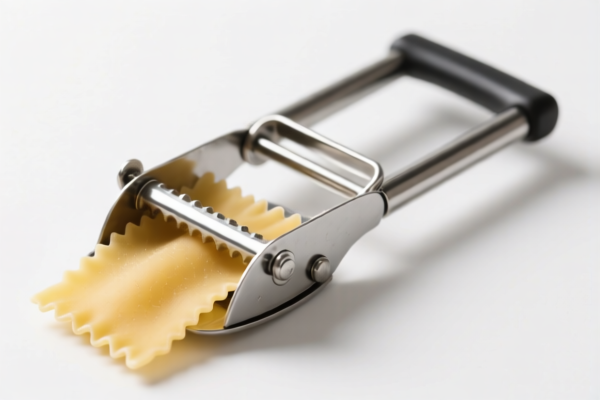
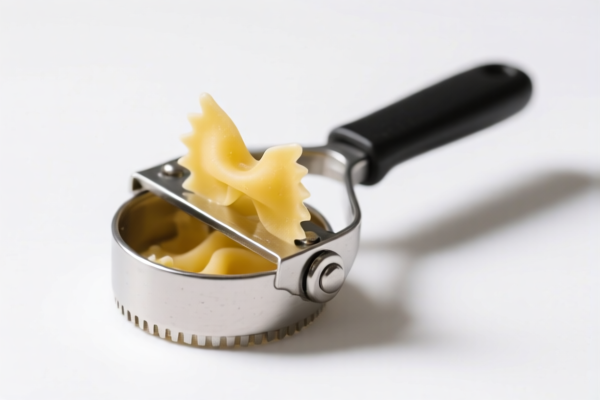
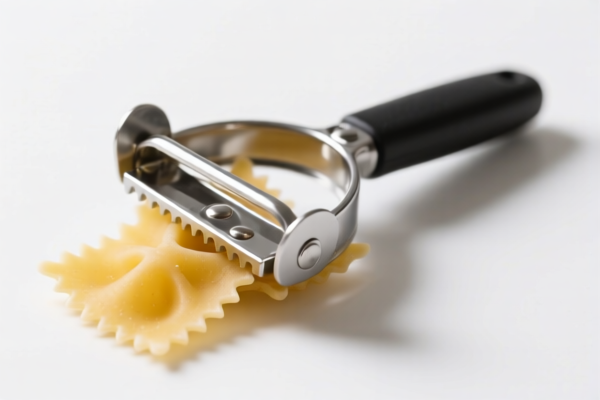

AI Analysis
🔪 Potato Cutter (Industrial Food Processing Machinery)
🌐 HS Code Reference & Customs Clearance Guide | 2026 Latest Tariff Breakdown | Professional Compliance Strategy
📌 I. Product Definition & Classification: What Exactly Is a "Potato Cutter"?
In international trade, the term "Potato Cutter" is ambiguous. It generally refers to machinery used in the industrial preparation or manufacture of food or drink. However, the critical distinction lies in scale and mechanism:
1. Industrial Machinery (HS Chapter 84):
Large-scale, automated, or semi-automated machines used in food processing plants, canneries, or large-scale kitchens to slice, dice, or chop potatoes (or other fruits/vegetables) for industrial consumption.
✅ Key Feature: Powered, non-manual, designed for high-volume output.
2. Handtools (HS Chapter 82):
Manual kitchen utensils such as potato slicers, mandolines, or handheld choppers used in households or small retail settings.
✅ Key Feature: Manual operation, no motor, simple mechanical structure.
⚠️ Critical Distinction for Customs:
- If the machine is motorized/industrial → It falls under HS 8438 (Machinery for food preparation).
- If the tool is manual/handheld → It falls under HS 8205 (Handtools).
- Parts of these machines also have specific classifications (HS 8438.90 or HS 8205.5x).
📦 II. HS Code Classification Details (2026 Latest Tariff Reference)
Based on the provided <DATA>, here are the relevant HS Codes for "Potato Cutter" scenarios:
| HS Code | Product Description | Application Scenario | Power Source |
|---|---|---|---|
8438.60.00.00 |
Machinery for the preparation of fruits, nuts, or vegetables (Industrial) | Industrial potato slicers, dicing machines, continuous feed cutters | ✅ Motorized/Industrial |
8438.90.90.90 |
Parts of food preparation machinery (Other) | Blades, chutes, motors, frames for the above industrial machines | N/A (Component) |
8205.51.30.30 |
Household tools, and parts thereof: Kitchen and table implements (Iron/Steel) | Manual potato slicers, handheld choppers, kitchen peeler-cutters | ❌ Manual/Household |
8205.59.55.10 |
Other edged handtools: Other (Iron/Steel) | Specialized manual cutting tools, not primarily "kitchen/table" implements | ❌ Manual/Other |
🔍 Important Note:
- Industrial Machines (8438.60.00.00) are subject to high additional tariffs due to trade policies.
- Parts (8438.90.90.90) may have 0% total tax if classified correctly as spare parts.
- Handtools (8205.51.30.30) are subject to base + additional taxes, but often lower than industrial machinery.
- Other Handtools (8205.59.55.10) may have 0% total tax depending on specific design.
💰 III. 2026 Latest Tariff Rate Breakdown (Detailed Tax Clauses)
✅ Applicable Country: United States (US)
✅ Origin: China (CN)
✅ Effective Date: Post-2025 Tariff Regulations
🎯 1. 8438.60.00.00 – Industrial Potato/Vegetable Cutter
| Item | Detail |
|---|---|
| Description | Machinery for the preparation of fruits, nuts, or vegetables (Industrial) |
| Base Tariff | 0.0% |
| Additional Tariff (Section 301) | 25.0% |
| Total Tariff | 25.0% |
| Tax Calculation | CIF Value × 25% |
| De Minimis Exemption | ❌ Not Applicable (Industrial machinery > $800 is subject to duty) |
| Legal Basis | HTSUS 8438.60.00.00 + USITC Footnote 9903.88.01 (Section 301) |
📌 Explanation:
- Although the base tariff is 0%, the 25% Section 301 additional tariff applies to most Chinese-origin industrial food machinery.
- This is a significant cost factor. Importers must budget for 25% duty on the CIF value.
- No de minimis exemption for commercial imports of machinery.
🎯 2. 8438.90.90.90 – Parts of Industrial Food Machinery
| Item | Detail |
|---|---|
| Description | Parts of machinery for food preparation (Other) |
| Base Tariff | 0.0% |
| Additional Tariff (Section 301) | 0.0% |
| Total Tariff | 0.0% |
| Tax Calculation | CIF Value × 0% |
| De Minimis Exemption | ✅ May Apply if value < $800 (subject to current USCBP rules) |
| Legal Basis | HTSUS 8438.90.90.90 |
📌 Strategic Insight:
- Importing parts separately can be more cost-effective than importing full machines.
- Ensure parts are clearly labeled and documented as "Spare Parts for Industrial Food Machinery".
- Avoid bundling parts with complete machines to prevent reclassification.
🎯 3. 8205.51.30.30 – Household Potato Cutters (Kitchen Tools)
| Item | Detail |
|---|---|
| Description | Household tools: Kitchen and table implements (Iron/Steel) |
| Base Tariff | 3.7% |
| Additional Tariff (Section 301) | 25.0% |
| Total Tariff | 28.7% |
| Tax Calculation | CIF Value × 28.7% |
| De Minimis Exemption | ✅ May Apply if value < $800 (for small parcels) |
| Legal Basis | HTSUS 8205.51.30.30 + USITC Footnote 9903.88.01 |
📌 Explanation:
- Higher effective rate (28.7%) due to the 3.7% base tariff being subject to the 25% additional tariff.
- Common for manual potato slicers, mandolines, or handheld choppers sold in retail packs.
- De minimis may help for small e-commerce shipments.
🎯 4. 8205.59.55.10 – Other Edged Handtools
| Item | Detail |
|---|---|
| Description | Other handtools (Iron/Steel): Other edged handtools |
| Base Tariff | 0.0% |
| Additional Tariff (Section 301) | 0.0% |
| Total Tariff | 0.0% |
| Tax Calculation | CIF Value × 0% |
| De Minimis Exemption | ✅ May Apply if value < $800 |
| Legal Basis | HTSUS 8205.59.55.10 |
📌 Strategic Insight:
- This HS Code may apply to specialized manual cutting tools that are not strictly "kitchen/table implements."
- 0% total tax makes this a highly favorable classification if the product design allows.
- Requires careful product description to justify exclusion from "household tools."
🛠️ IV. Customs Clearance Practical Advice (Pitfall Avoidance Guide)
✅ 1. Document Checklist (Mandatory)
| Document | Required | Notes |
|---|---|---|
| ✅ Product Specifications | ✔️ | Include motor power, dimensions, cutting capacity, material (stainless steel, etc.) |
| ✅ Technical Diagrams | ✔️ | For industrial machines, show motor, blades, feed mechanism |
| ✅ Product Photos | ✔️ | Clear images of the machine, labels, and any safety guards |
| ✅ Commercial Invoice | ✔️ | Must specify "Industrial Potato Cutter" or "Manual Potato Slicer" accurately |
| ✅ Packing List | ✔️ | List parts separately if importing components |
| ✅ Certificate of Origin (CO) | ✔️ | Required for tariff determination |
| ✅ Third-Party Certification | ✔️ | UL, CE, NSF (for food safety) if applicable |
✅ 2. Declaration Tips (Key Mantras)
🔥 "Industrial vs. Manual: Choose Wisely! Parts vs. Machine: Split Costs!"
| Scenario | Correct Declaration | Wrong Declaration |
|---|---|---|
| Motorized Potato Slicer | 8438.60.00.00 – "Industrial Vegetable Preparation Machinery" |
"Kitchen Tool" → 28.7% |
| Manual Potato Slicer | 8205.51.30.30 – "Household Kitchen Tool" |
"Industrial Machine" → 25% |
| Spare Blades for Machine | 8438.90.90.90 – "Parts of Food Machinery" |
"Machine" → 25% |
| Specialized Manual Cutter | 8205.59.55.10 – "Other Edged Handtool" |
"Household Tool" → 28.7% |
✅ 3. Special Cases & Solutions
| Scenario | Recommendation |
|---|---|
| OEM Custom Machine | Provide customer order + design specs to prove "industrial use" |
| Hybrid Manual/Electric Tool | Classify based on primary power source. If motorized, likely 8438.60.00.00 |
| Importing Parts Alone | Declare as "Spare Parts" with clear description to qualify for 8438.90.90.90 (0% tax) |
| Small Retail Package | Use de minimis if value < $800 and classify as handtool (8205) |
🌍 V. Global Market Comparison (2026 Latest)
| Country/Region | Recommended HS Code | Tariff (China Origin) | Certification Required | Notes |
|---|---|---|---|---|
| 🇺🇸 USA | 8438.60.00.00 |
25% | NSF, UL | High duty on industrial machines |
| 🇺🇸 USA | 8438.90.90.90 |
0% | N/A | Parts exemption applies |
| 🇨🇳 China | 8438.60.00.00 |
0% | CCC (if applicable) | No additional tariffs |
| 🇪🇺 EU | 8438.60.00.00 |
0% | CE, RoHS | No additional tariffs |
| 🇦🇺 Australia | 8438.60.00.00 |
5% | SAA | Moderate duty |
📌 Conclusion:
- USA imposes the highest tariffs on Chinese-made industrial food machinery.
- Parts imports can significantly reduce costs (0% duty).
- Manual tools have mixed rates depending on classification.
📌 VI. Common Errors & Pitfalls (Lessons Learned)
❌ Error 1: Declaring a motorized potato cutter as a "Kitchen Tool"
👉 Consequence: Classification error, potential penalties, or retroactive duty adjustment.
❌ Error 2: Shipping parts and machine together without splitting declaration
👉 Consequence: Entire shipment taxed at 25%, losing the 0% part exemption.
❌ Error 3: Using vague descriptions like "Potato Machine"
👉 Consequence: Customs may classify as highest-tariff category or hold shipment for inspection.
❌ Error 4: Ignoring food safety certifications (NSF/UL)
👉 Consequence: Shipment held at border, delayed clearance, or rejection.
✅ Correct Practice:
"Industrial Vegetable Cutter, Stainless Steel, Motor-Driven, 5HP, Model XYZ, NSF Certified, for Commercial Food Processing"
🎯 VII. Conclusion: Smart Classification Saves Money!
🎯 Remember the Mantra:
🔹 "Industrial = 25%, Parts = 0%, Manual = 28.7% or 0%!"
🔹 "Split parts, specify power source, and certify for food safety!"
📌 Pro Tip:
If your potato cutter is OEM-made or exported from Vietnam/Mexico, you may qualify for IEEPA exemptions or FTAA benefits, reducing duties to 0–5%.
Always apply for an Advance Ruling from USCBP if unsure about classification.
📣 Take Action Now:
📞 Consult a licensed customs broker
📄 Provide product specs and photos
🚀 Ensure NSF/UL certification for industrial machines
💡 Optimize logistics by shipping parts separately where possible
✨ Precise Classification, Smooth Clearance, Maximum Profit!
💼 Every Percent Saved Is Pure Profit!
Customer Reviews
About HS Code Classification
The Harmonized System (HS) is an internationally standardized nomenclature developed by the World Customs Organization (WCO) to classify traded products. Over 200 countries use the HS system as the basis for customs tariffs, trade statistics, and import/export regulations.
Each HS code follows a hierarchical structure:
- Chapter (2 digits) — Broad category of goods (e.g., Chapter 84: Machinery and Mechanical Appliances)
- Heading (4 digits) — More specific grouping within the chapter
- Subheading (6 digits) — Internationally standardized breakdown, used by all WCO member countries
- National subdivisions (8-10 digits) — Country-specific extensions for further classification, such as US HTSUS 10-digit codes
Correct HS code classification is essential for smooth customs clearance, accurate duty payment, and compliance with trade regulations. Misclassification can lead to customs delays, overpayment of duties, or penalties.
When importing from CN to US, the applicable tariff rates may include:
- Most-Favored-Nation (MFN) rate — The standard duty rate applied to WTO members
- General rate — Applied to countries without trade agreements
- Trade remedy duties — Additional tariffs such as Section 301 (anti-dumping), Section 232 (national security), or countervailing duties
The information provided on this page is for reference purposes only. For official classification, please consult with your local customs authority or a licensed customs broker.