Poultry Rearing Tools
CN → US| HS Code | Tariff Rate | Origin | Destination | Doc |
|---|---|---|---|---|
| 8436290000 | 35.0% | CN | US | Official Doc |
| 8436910080 | 35.0% | CN | US | Official Doc |
| 9403200082 | 85.0% | CN | US | Official Doc |
| 8479896500 | 20.3% | CN | US | Official Doc |
| 8479820080 | 35.0% | CN | US | Official Doc |
Product Images
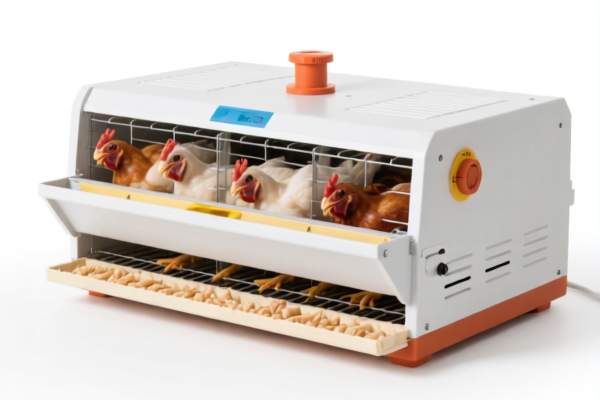
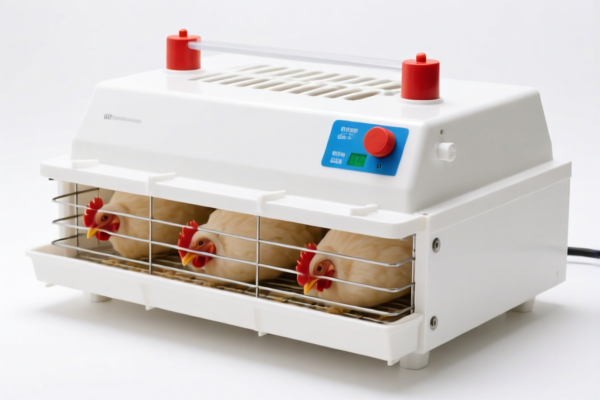
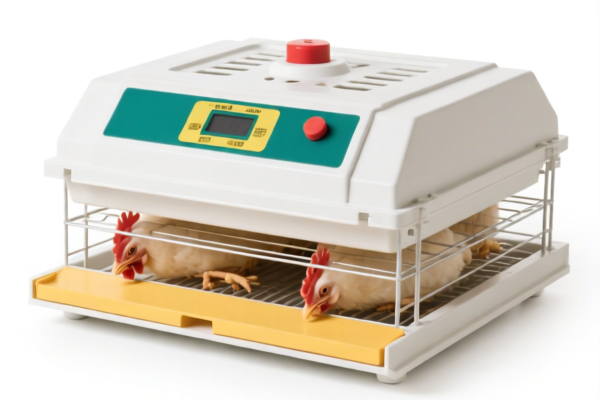

AI Analysis
🐔 Poultry Rearing Tools (Poultry Farming Equipment)
🌐 HS Code Reference & Customs Clearance Guide | 2024-2025 Tariff Full Analysis | Professional Clearance Strategy
📌 Part 1: Product Definition & Classification: Do You Truly Understand "Poultry Rearing Tools"?
Poultry rearing tools encompass a wide range of mechanical devices used in industrial and commercial animal husbandry. In international trade, they are not a single uniform category but are classified based on functionality, mechanism, and material composition. The key distinction lies between:
Integrated Mechanical Systems (Automated Feeders/Drinkers): Devices with independent mechanical functions (e.g., augers, conveyors) designed specifically for feeding or watering. General Agricultural Machinery Parts: Components or sub-assemblies that belong to broader agricultural machinery categories but lack independent final function. Metal Furniture/Structures: Structural supports, cages, or racks made of metal that may fall under general furniture or structural categories if they lack specific mechanical moving parts.
⚠️ Critical Distinction Point:
- If the device has an independent mechanical function (like mixing, conveying, or independent operation) → It often falls under Ch. 84 (Machinery). - If it is merely a static structure or part of a larger machine → It may fall under Ch. 84 Parts or Ch. 94 (Furniture/Structures).
📦 Part 2: HS Code Classification Details (Latest Tariff Authority Comparison)
| HS Code | Product Description | Applicable Scenario | Functional Status |
|---|---|---|---|
8436.29.00.00 |
Poultry rearing equipment, other | Automated feeding/watering lines, independent poultry machinery | ✅ Independent Machine |
8436.91.00.80 |
Parts of agricultural machinery | Components, nozzles, or sub-assemblies of poultry feeders | ❌ Part/Component |
9403.20.00.82 |
Other metal furniture | Metal cages, perches, or static racks (fallback logic for metal structures) | ❌ Static Structure/Furniture |
8479.89.65.00 |
Other machines with independent function | Complex mechanical devices with unique functions not elsewhere specified | ✅ Independent Complex Machine |
8479.82.00.80 |
Machines for mixing/kneading | Equipment involving mixing feed, kneading dough, or similar mechanical actions | ✅ Mechanical Action |
🔍 Key Reminder:
- Static metal cages are often misclassified as machinery. If they lack moving parts, they may fall under 9403.20.00.82 (Metal Furniture), which carries a much higher tax burden (85%) due to steel/aluminum surcharges. - Automated systems must be classified under 8436 or 8479 to potentially access lower base rates, though USITC/IEEPA surcharges still apply heavily. - Parts (like specific nozzles or chains) are classified under 8436.91, not the finished machine.
💰 Part 3: 2025 Latest Tariff Rate Breakdown (Including Surcharges & Policy Add-ons)
✅ Applicable Country: United States (US)
✅ Country of Origin: China (CN)
✅ Effective Time: Current trade war tariffs apply (Section 301 & IEEPA)
🎯 1. 8436.29.00.00 —— Poultry Rearing Equipment (Other)
| Item | Content |
|---|---|
| Base Rate | 0% (ad valorem) |
| USITC Surcharge (Sec. 301) | +25% |
| IEEPA Surcharge (Section 122/China-specific) | +10% |
| Total Effective Rate | 35.0% |
| Tax Calculation | CIF Value × 35% |
| De Minimis Eligibility | ❌ Not Eligible (High risk of scrutiny) |
| Legal Path | USITC:8436.29.00.00 → FOOTNOTE:301 → IEEPA:China-Specific |
📌 Explanation:
- This is the most common classification for independent poultry feeding/watering machines. - While the base tariff is 0%, the 35% combined surcharge is significant. - Ensure the product is clearly defined as "Poultry Rearing Equipment" to avoid being misclassified as general machinery.
🎯 2. 8436.91.00.80 —— Parts of Agricultural Machinery
| Item | Content |
|---|---|
| Base Rate | 0% |
| USITC Surcharge (Sec. 301) | +25% |
| IEEPA Surcharge | +10% |
| Total Effective Rate | 35.0% |
| Tax Calculation | CIF Value × 35% |
| De Minimis Eligibility | ❌ Not Eligible |
| Legal Path | USITC:8436.91.00.80 → FOOTNOTE:301 → IEEPA:China-Specific |
📌 Note:
- Applies to components like feed augers, water line connectors, or specific poultry housing parts. - If you ship complete machines, do not split them into parts for declaration unless legally permissible, as this can trigger anti-circumvention investigations.
🎯 3. 9403.20.00.82 —— Other Metal Furniture (FALLBACK RISK)
| Item | Content |
|---|---|
| Base Rate | 0% |
| USITC Surcharge (Sec. 301) | +25% |
| IEEPA Surcharge | +10% |
| Steel/Aluminum Surcharge | +50% |
| Total Effective Rate | 85.0% |
| Tax Calculation | CIF Value × 85% |
| De Minimis Eligibility | ❌ Not Eligible |
| Legal Path | USITC:9403.20.00.82 → FOOTNOTE:Steel/Aluminum → IEEPA |
📌 CRITICAL WARNING:
- This is the HIGH-TAX TRAP. If your poultry cage/rack is made of steel or aluminum and lacks mechanical parts, customs may classify it here. - The 85% rate is devastating. Always try to classify under Chapter 84 if there is any mechanical function or specific agricultural use. - "Metal Furniture" is often used as a fallback for items that don't fit other categories, leading to maximum penalties.
🎯 4. 8479.89.65.00 —— Other Machines with Independent Function
| Item | Content |
|---|---|
| Base Rate | 2.8% |
| USITC Surcharge (Sec. 301) | +7.5% (Note: Data specifies 7.5% for this specific sub-code in this context) |
| IEEPA Surcharge | +10% |
| Total Effective Rate | 20.3% |
| Tax Calculation | CIF Value × 20.3% |
| De Minimis Eligibility | ❌ Not Eligible |
| Legal Path | USITC:8479.89.65.00 → IEEPA |
📌 Explanation:
- If your device is a complex mechanical system with unique functions (e.g., advanced sorting, mixing, or specialized automation), it might qualify here. - 20.3% is significantly lower than 35% or 85%. - Requires strong proof of "independent function" that doesn't fit neatly into 8436.
🎯 5. 8479.82.00.80 —— Machines for Mixing/Kneading
| Item | Content |
|---|---|
| Base Rate | 0% |
| USITC Surcharge (Sec. 301) | +25% |
| IEEPA Surcharge | +10% |
| Total Effective Rate | 35.0% |
| Tax Calculation | CIF Value × 35% |
| De Minimis Eligibility | ❌ Not Eligible |
| Legal Path | USITC:8479.82.00.80 → FOOTNOTE:301 → IEEPA |
📌 Note:
- Applicable if the poultry equipment is primarily a feed mixer or involves kneading/agitating mechanisms. - Same tax rate as standard poultry equipment, but different functional justification.
🛠️ Part 4: Customs Clearance Practical Advice (Live Pitfall Avoidance Guide)
✅ 1. Documentation Checklist (Non-negotiable)
| Document | Required | Description |
|---|---|---|
| ✅ Product Specification Sheet | ✔️ | Must detail mechanical functions, materials, and dimensions. |
| ✅ Technical Diagrams/Manuals | ✔️ | Proof of function (e.g., how the feeder works, motor specs). |
| ✅ Product Photos (Labeled) | ✔️ | Clear shots of brand, model, and any moving parts. |
| ✅ Commercial Invoice | ✔️ | Must clearly state "Poultry Farming Equipment" or "Machinery Parts". |
| ✅ Packing List | ✔️ | Show what constitutes the "machine" vs. "spare parts". |
| ✅ Certificate of Origin (CO) | ✔️ | Essential for proving CN origin to apply correct surcharges. |
✅ 2. Declaration Tactics (Key Mantra)
🔥 "Function over Form, Machinery over Furniture, Avoid the 85% Trap!"
| Scenario | Correct Declaration | Wrong Practice |
|---|---|---|
| Automated Feeder Line | 8436.29.00.00 (Poultry Equipment) |
Misclassify as "Metal Furniture" → 85% Tax |
| Metal Cage/Rack (Static) | 9403.20.00.82 (Be Honest) |
Try to hide as machinery → Audit/Fine |
| Feed Mixer Unit | 8479.82.00.80 or 8479.89.65.00 |
Declare as general parts → Higher scrutiny |
| Spare Chains/Belts | 8436.91.00.80 (Parts) |
Declare as "Machine" → Inconsistent description |
✅ 3. Special Case Handling
| Situation | Recommendation |
|---|---|
| Hybrid Devices (e.g., Cage + Feeder) | Declare the functional core (the feeder) as machinery. Do not bundle static cages as part of the machine unless they are integral. |
| Steel vs. Aluminum Cages | If classified as furniture (9403), note the material. Steel/Aluminum triggers the +50% surcharge, totaling 85%. |
| Pre-Clearance Ruling | Highly recommended for complex automated systems to justify 8479.89.65.00 (20.3%) over 8436 (35%). |
| De Minimis (Section 321) | Do NOT rely on De Minimis for these goods. All listed codes have high risk and are generally excluded from low-value exemptions due to trade war policies. |
🌍 Part 5: Global Market Customs Comparison (2025 Latest)
| Country/Region | Recommended HS Code | Tariff Rate | Certification | Notes |
|---|---|---|---|---|
| 🇺🇸 USA | 8436.29.00.00 |
35% (or 20.3% if qualified) | No specific certification | High risk of misclassification to 9403 (85%) |
| 🇨🇳 China | 8436.29.00.00 |
0% - 5% | CCC (if applicable) | Domestic production is cheaper |
| 🇪🇺 EU | 8436.29.00 |
0% - 4.5% | CE + RoHS | No trade war surcharges |
| 🇦🇺 Australia | 8436.29.00 |
5% | RCM | Moderate duties |
| 🇯🇵 Japan | 8436.29.00 |
0% - 3.8% | PSE/JIS | Low barriers |
📌 Conclusion:
- The US market is the most expensive due to Section 301 and IEEPA surcharges. - The biggest risk is misclassification into Chapter 94 (Furniture), which doubles the effective tax rate due to material-specific surcharges. - EU and Japan offer much better tariff environments for these goods.
📌 Part 6: Common Mistakes & Pitfall Guide (Blood & Tears Lessons)
❌ Mistake 1: Declaring a complete automated feeding system as "Metal Cages" or "Furniture" to avoid machinery scrutiny.
👉 Consequence: Classified as 9403.20.00.82 → 85% Tax instead of 35%.
❌ Mistake 2: Shipping spare parts alongside the main machine and declaring them separately as "Accessories" to avoid the 35% rate.
👉 Consequence: Customs may aggregate the value → 100% penalty + seizure.
❌ Mistake 3: Using vague descriptions like "Poultry Tools" without technical details.
👉 Consequence: Customs reclassifies to the highest duty fallback (9403 or 8479 with highest surcharge).
❌ Mistake 4: Ignoring the Material Composition of static structures.
👉 Consequence: If steel/aluminum is detected in a furniture classification, the +50% surcharge is automatically applied.
✅ Correct Approach:
"Automated Poultry Feeding Line, Model XYZ, Includes Auger, Motor, and Control Panel, Non-Metal Structural Supports, Made in China"
🎯 Part 7: Conclusion: Precise Classification Saves Profits!
🎯 Remember the Mantra:
🔹 "Machinery 35%, Furniture 85%, Independent Function 20%!"
🔹 "HS Code is Life; 15% difference is huge profit!"
📌 Pro Tip:
If your product is a complex mixer or sorter, argue for
8479.89.65.00(20.3%) instead of8436(35%). Provide detailed engineering diagrams to prove "independent function" beyond standard agricultural use.
📣 Immediate Action:
📞 Consult a licensed customs broker.
📄 Prepare technical datasheets.
🚀 Avoid the "Furniture Trap" to keep taxes at 35% or 20.3%, not 85%.
✨ Professional Customs Clearance Starts with Accurate Classification!
💼 Every percentage point saved is pure profit in the supply chain!
Customer Reviews
About HS Code Classification
The Harmonized System (HS) is an internationally standardized nomenclature developed by the World Customs Organization (WCO) to classify traded products. Over 200 countries use the HS system as the basis for customs tariffs, trade statistics, and import/export regulations.
Each HS code follows a hierarchical structure:
- Chapter (2 digits) — Broad category of goods (e.g., Chapter 84: Machinery and Mechanical Appliances)
- Heading (4 digits) — More specific grouping within the chapter
- Subheading (6 digits) — Internationally standardized breakdown, used by all WCO member countries
- National subdivisions (8-10 digits) — Country-specific extensions for further classification, such as US HTSUS 10-digit codes
Correct HS code classification is essential for smooth customs clearance, accurate duty payment, and compliance with trade regulations. Misclassification can lead to customs delays, overpayment of duties, or penalties.
When importing from CN to US, the applicable tariff rates may include:
- Most-Favored-Nation (MFN) rate — The standard duty rate applied to WTO members
- General rate — Applied to countries without trade agreements
- Trade remedy duties — Additional tariffs such as Section 301 (anti-dumping), Section 232 (national security), or countervailing duties
The information provided on this page is for reference purposes only. For official classification, please consult with your local customs authority or a licensed customs broker.