Powder Sieve
CN → US| HS Code | Tariff Rate | Origin | Destination | Doc |
|---|---|---|---|---|
| 8438100090 | 17.5% | CN | US | Official Doc |
| 8421290065 | 35.0% | CN | US | Official Doc |
| 7326908688 | 87.9% | CN | US | Official Doc |
| 7326190080 | 87.9% | CN | US | Official Doc |
Product Images
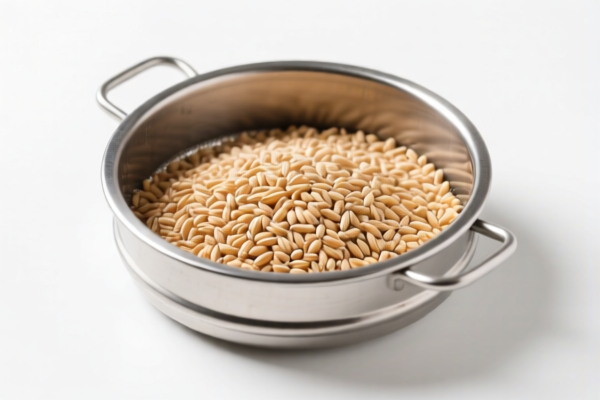
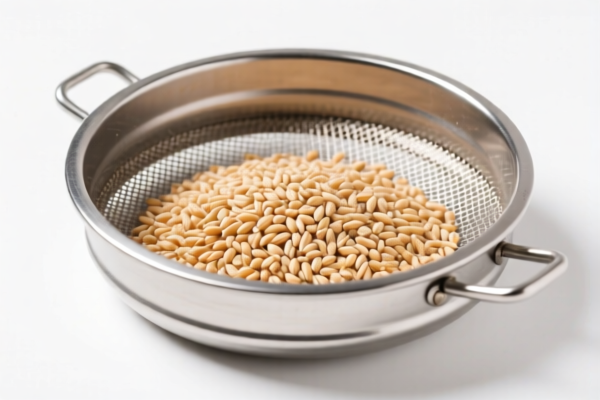
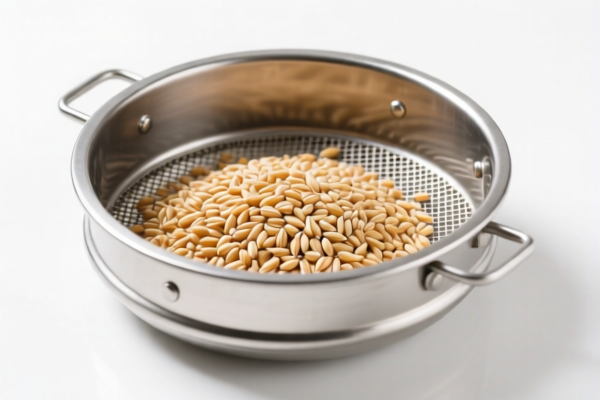
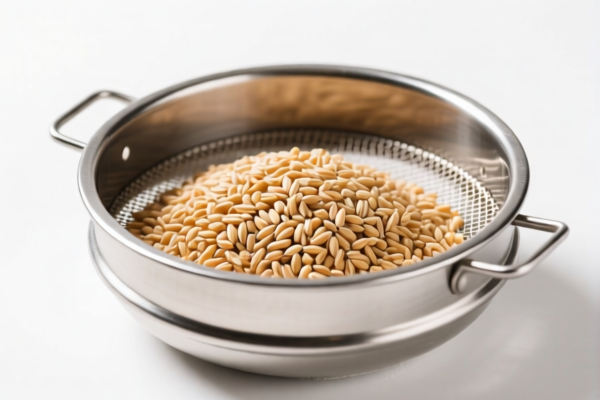
AI Analysis
🌪️ Powder Sieve & Industrial Screening Machinery
🌐 HS Code Reference & Customs Clearance Guide | 2024/2025 Tariff Landscape | Professional Classification Strategy
📌 Part I: Product Definition & Classification Logic: Is it a "Sieve" or a "Machine"?
In international trade, the term "Powder Sieve" is ambiguous and can refer to two very different products with vastly different tariff implications. The classification depends entirely on the mechanical nature and industrial application of the item.
1. Industrial Screening Machinery (Machines):
Motorized or pneumatic units designed for high-volume, continuous industrial separation of powders, granules, or liquids. These include vibratory sieve shakers, circular rotary sieves, and air classification systems.
Key Feature: Contains motors, frames, mesh supports, and is used for mass production.
2. Handheld/Manual Sieves (Simple Articles):
Simple wire mesh screens, often with a handle or rim, used for laboratory testing, small-batch production, or manual sorting. These are considered "simple articles of iron or steel."
Key Feature: No motor, no complex drive mechanism, manual operation.
⚠️ Critical Distinction:
- If the device is motorized and used for industrial food/drink processing (e.g., sifting flour, sugar, cocoa powder in a factory) → It falls under HS 8438.80.00.00.
- If the device is a simple metal mesh screen/frame without complex mechanical parts for industrial food processing → It falls under HS 7326.90.86.88 or 7326.19.00.80.
- Note: The provided data does not include HS codes for non-food industrial sieves (e.g., for chemicals/minerals under HS 8474). This guide strictly adheres to the provided .
📦 Part II: HS Code Classification Details (Based on Provided Data)
| HS Code | Product Description | Applicable Scenario | Key Characteristics |
|---|---|---|---|
8438.80.00.00 |
Other machinery for industrial preparation of food or drink | Industrial vibratory sieves for flour, sugar, additives in food plants; Bakery machinery parts. | Motorized, food-grade, part of a production line. |
8421.19.00.00 |
Filtering or purifying machinery for liquids/gases | Centrifugal dryers or liquid filtration units. Note: If the "sieve" is actually a liquid filtration unit (e.g., oil filtration), this may apply. | Used for liquids, not dry powders. |
7326.90.86.88 |
Other articles of iron or steel | Simple manual wire mesh sieves, screen frames, non-motorized screening tools for non-food or general industrial use. | Simple metal construction, no motor. |
7326.19.00.80 |
Forged or stamped iron/steel articles | Stamped mesh screens, simple metal filter discs for general use. | Manufactured by forging/stamping, not assembled machinery. |
🔍 Important Clarification:
- HS 8438 is specifically for FOOD AND DRINK preparation. If the powder sieve is used for chemicals, minerals, or pharmaceuticals (non-food), it might technically fall under other HS codes (like 8474), but these are NOT in the provided . Therefore, for the purpose of this guide, we assume the sieve is either for food use (8438) or is a simple steel article (7326).
- If a "powder sieve" is used for liquid filtration (e.g., filtering oil or water), it might be classified under HS 8421.19.00.00.
💰 Part III: Detailed Tariff Rate Analysis (2024/2025)
✅ Applicable Countries: United States (US)
✅ Origin: China (CN)
✅ Effective Date: Current tariffs apply based on the provided data.
🎯 1. 8438.80.00.00 – Industrial Machinery for Food Preparation
| Item | Detail |
|---|---|
| Base Duty Rate | 0.0% |
| Additional Duty (Section 301) | 7.5% |
| Total Duty Rate | 7.5% |
| Tax Calculation | CIF Value × 7.5% |
| De Minimis Exemption | ❌ Not Applicable (Commercial shipment) |
| Legal Basis | Standard HTSUS + Section 301 List 3/4a |
📌 Explanation:
- This code attracts a moderate tariff.
- It is considered "machinery for food preparation."
- Clearance Tip: Ensure the machine is explicitly described as "for use in food processing" to qualify for this code. If used for chemicals, customs may reclassify it, leading to delays.
🎯 2. 8421.19.00.00 – Filtering/Purifying Machinery for Liquids
| Item | Detail |
|---|---|
| Base Duty Rate | 0.0% |
| Additional Duty (Section 301) | 25.0% |
| Total Duty Rate | 25.0% |
| Tax Calculation | CIF Value × 25.0% |
| De Minimis Exemption | ❌ Not Applicable |
| Legal Basis | HTSUS + Section 301 List 3 |
📌 Explanation:
- If your "powder sieve" is actually a liquid filter (e.g., for oil, wastewater, or beverages), this code applies.
- High Tariff Alert: 25% is significantly higher than the 7.5% for food machinery.
- Critical Check: Verify if the machine is designed for liquids or dry powders. Misclassification here can lead to underpayment penalties.
🎯 3. 7326.90.86.88 & 7326.19.00.80 – Articles of Iron or Steel
| Item | Detail |
|---|---|
| Base Duty Rate | 2.9% |
| Additional Duty (Section 301) | 25.0% |
| Additional Duty (Steel/Aluminum/Copper Surcharge) | 50.0% |
| Total Duty Rate | 77.9% |
| Tax Calculation | CIF Value × 77.9% |
| De Minimis Exemption | ❌ Not Applicable |
| Legal Basis | HTSUS + Section 301 + Steel/Aluminum/Copper Tariffs |
📌 Explanation:
- Extremely High Tariff: If the sieve is classified as a simple "article of iron or steel" (e.g., a handheld sieve, a mesh screen without motor/frame complexity), the duty is 77.9%.
- Why? The 50% surcharge applies to steel articles.
- Strategic Implication: If you have a motorized sieve, do NOT classify it under 7326. Try to justify its classification under 8438 (if for food) or 8421 (if for liquids) to save 50-70% in duties.
🛠️ Part IV: Customs Clearance Practical Advice (Pitfall Avoidance Guide)
✅ 1. Documentation Checklist (Non-Negotiable)
| Document | Required? | Description |
|---|---|---|
| ✅ Product Catalog/Spec Sheet | ✔️ | Must clearly state: Is it motorized? What is it used for (Food vs. Chemical vs. Liquid)? |
| ✅ Technical Diagram | ✔️ | Show the drive system (motor, vibrator). Proves it is "machinery" (8438/8421) and not a "simple article" (7326). |
| ✅ Photographs | ✔️ | Show the entire unit, including control panel, motor, and mesh. |
| ✅ Statement of Use | ✔️ | Official letter stating the machine is used for food processing (to qualify for 8438 at 7.5%). |
| ✅ Commercial Invoice | ✔️ | Describe as "Industrial Vibratory Sieve Machine for Food Powder Separation" – NOT "Wire Mesh Sieve." |
✅ 2. Classification Strategy (The Golden Rules)
| Scenario | Recommended HS Code | Duty Rate | Why? |
|---|---|---|---|
| Motorized sieve for flour/sugar | 8438.80.00.00 |
7.5% | It is "machinery for food preparation." |
| Motorized filter for oil/water | 8421.19.00.00 |
25.0% | It is "filtering machinery for liquids." |
| Handheld mesh screen | 7326.90.86.88 |
77.9% | It is a "simple article of steel." Avoid if possible. |
| Sieving machine for chemicals | Not in Data | Unknown | RISK: May be reclassified to a higher duty code not listed here. Consult a broker. |
🔥 Key Mnemonic:
"Motor + Food = 7.5% | Motor + Liquid = 25% | No Motor = 77.9% (Pain!)"
✅ 3. Special Case Handling
| Situation | Advice |
|---|---|
| OEM Custom Sieve | Provide design drawings to prove it is a complete machine, not a simple part. |
| Used Machinery | Ensure it is cleaned and has no residue of hazardous materials. Customs may inspect for contamination. |
| Mixed Shipment | If shipping both food sieves (8438) and steel screens (7326), separate invoices to avoid applying the highest duty (77.9%) to the whole shipment. |
🌍 Part V: Market Comparison (US Focus)
| Market | Recommended Code | Estimated Duty | Notes |
|---|---|---|---|
| 🇺🇸 USA | 8438.80.00.00 |
7.5% | Best for food-grade machinery. |
| 🇺🇸 USA | 7326.90.86.88 |
77.9% | Avoid for motorized sieves. |
| 🇨🇳 China | 8438.80 |
~7-10% | Lower tariffs for import into China. |
| 🇪🇺 EU | 8438.80 |
0-2.5% | Often lower duties if not subject to safeguards. |
📌 Conclusion:
- USA has a two-tier tariff system for sieves: Low (7.5%) for food machinery, High (77.9%) for simple steel articles.
- Always argue for the "Machinery" classification (8438/8421) if your product is motorized. The savings are massive.
📌 Part VI: Common Errors & Pitfalls
❌ Error 1: Describing a motorized food sieve as "Wire Mesh Screen" or "Sifter" without specifying it is a machine.
👉 Result: Customs may classify it under 7326 → 77.9% duty.
✅ Fix: Use "Industrial Vibratory Sieve Machine" in the description.
❌ Error 2: Using a food sieve for chemicals and declaring it as food machinery.
👉 Result: Audit failure, penalties, and possible reclassification to a different (potentially higher) duty code not in this list.
✅ Fix: Be honest about the end-use. If not for food, it may not qualify for 8438.
❌ Error 3: Confusing "Powder Sieve" with "Liquid Filter."
👉 Result: If it’s a liquid filter, it should be 8421 (25%), not 8438 (7.5%). Misdeclaration can lead to audits.
✅ Fix: Clearly state "For Liquids" or "For Dry Powders" in the description.
🎯 Part VII: Conclusion & Action Plan
🎯 Remember the Strategy:
🔹 "Is it Motorized? Yes → Is it for Food? Yes → 7.5% | No → Is it for Liquid? Yes → 25% | No → 77.9%!"
📌 Immediate Actions:
1. Check the Motor: If it has a motor, it is likely 8438 or 8421.
2. Check the Material: If it’s just a wire mesh frame, it’s 7326.
3. Check the Use: Food = 8438 (7.5%). Liquid = 8421 (25%).
4. Prepare Docs: Get a "Statement of Use" for food machinery to justify the lower rate.
📣 Final Tip:
If your product is not for food or liquids (e.g., for mining, construction), the provided does not cover it. You must consult a customs broker for the correct HS code (likely under HS 8474 or HS 8479), as the 77.9% steel tariff or 0% base rate may not apply in the same way.
✨ Accurate Classification Saves Money!
💼 Don’t let a $10,000 sieve cost you $7,790 in duties due to wrong classification!
Customer Reviews
About HS Code Classification
The Harmonized System (HS) is an internationally standardized nomenclature developed by the World Customs Organization (WCO) to classify traded products. Over 200 countries use the HS system as the basis for customs tariffs, trade statistics, and import/export regulations.
Each HS code follows a hierarchical structure:
- Chapter (2 digits) — Broad category of goods (e.g., Chapter 84: Machinery and Mechanical Appliances)
- Heading (4 digits) — More specific grouping within the chapter
- Subheading (6 digits) — Internationally standardized breakdown, used by all WCO member countries
- National subdivisions (8-10 digits) — Country-specific extensions for further classification, such as US HTSUS 10-digit codes
Correct HS code classification is essential for smooth customs clearance, accurate duty payment, and compliance with trade regulations. Misclassification can lead to customs delays, overpayment of duties, or penalties.
When importing from CN to US, the applicable tariff rates may include:
- Most-Favored-Nation (MFN) rate — The standard duty rate applied to WTO members
- General rate — Applied to countries without trade agreements
- Trade remedy duties — Additional tariffs such as Section 301 (anti-dumping), Section 232 (national security), or countervailing duties
The information provided on this page is for reference purposes only. For official classification, please consult with your local customs authority or a licensed customs broker.