Powdered Disposable Plastic Gloves
CN → US| HS Code | Tariff Rate | Origin | Destination | Doc |
|---|---|---|---|---|
| 3926204010 | 16.5% | CN | US | Official Doc |
| 3926201020 | 10.0% | CN | US | Official Doc |
| 4015191110 | 38.0% | CN | US | Official Doc |
| 3926204010 | 16.5% | CN | US | Official Doc |
| 3926201020 | 10.0% | CN | US | Official Doc |
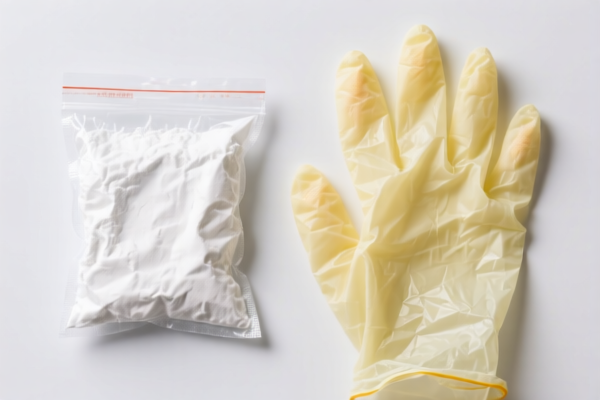
Product Images



AI Analysis
🧤 Powdered Disposable Plastic Gloves
🌐 HS Code Reference & Customs Clearance Guide | 2026 Latest Tariff Analysis | Professional Clearance Strategy
📌 I. Product Definition and Classification: Do You Really Understand "Powdered Disposable Plastic Gloves"?
Powdered disposable gloves are widely used in food processing, medical examination, and industrial handling. In international trade, their classification depends heavily on material composition (Plastic vs. Rubber) and specific usage attributes.
⚠️ Key Distinction Point:
- If the material is Plastic (e.g., Polyethylene/PE) → Classified under Chapter 39
- If the material is Rubber (e.g., Latex/Nitrile) → Classified under Chapter 40
- "Powdered" indicates a processing method (for ease of donning), but does not change the fundamental material classification.
📦 II. HS Code Classification Details (2026 Latest Tariff Authoritative Comparison)
Based on the provided data, here are the valid HS Codes for Powdered Disposable Plastic Gloves:
| HS Code | Product Description | Summary & Rationale | Total Tax Rate |
|---|---|---|---|
3926.20.40.10 |
Food-grade Disposable Plastic Gloves | Material is plastic; matches food-grade usage and form. | 16.5% |
3926.20.10.20 |
General Disposable Plastic Gloves | Matches general disposable usage and plastic material attributes. | 10.0% |
4015.19.11.10 |
Disposable Gloves (Rubber/Plastic Fallback) | Material inferred as vulcanized rubber or plastic; fits the "catch-all" category inference rule. | 38.0% |
🔍 Critical Note:
-3926.20.40.10is specifically for food-grade applications.
-3926.20.10.20is for general-purpose plastic gloves.
-4015.19.11.10is a fallback category. If the material cannot be definitively proven as plastic, or if it contains significant rubber content, this code may apply, but it carries a significantly higher tax burden.
💰 III. 2026 Latest Tariff Rate Details (Including Additional Taxes, Policy Add-ons)
✅ Applicable Country: United States (US)
✅ Country of Origin: China (CN)
✅ Effective Time: From November 10, 2025 (including subsequent imports)
🎯 1. 3926.20.40.10 —— Food-grade Disposable Plastic Gloves
| Item | Content |
|---|---|
| Base Tariff | 6.5% (ad valorem) |
| Section 301 Additional Tariff | +0.0% |
| Section 122 Tariff | +10.0% |
| Total Tariff Rate | 16.5% |
| Tax Calculation | CIF Value × 16.5% |
| De Minimis Eligibility | ❌ No (Deny De Minimis) |
| Legal Basis Path | Base: 3926.20.40.10 → Section 122: 10% |
📌 Explanation:
- Base Tariff 6.5%: Standard most-favored-nation (MFN) rate for plastic gloves under HS 3926.20.
- Section 122 Tariff 10%: Specific additional tariff applied to certain plastic goods from China.
- No Section 301: Unlike electronics or some other plastics, this specific subheading may not be subject to the broader 25% Section 301 tariff, resulting in a lower total cost.
🎯 2. 3926.20.10.20 —— General Disposable Plastic Gloves
| Item | Content |
|---|---|
| Base Tariff | 0.0% (ad valorem) |
| Section 301 Additional Tariff | +0.0% |
| Section 122 Tariff | +10.0% |
| Total Tariff Rate | 10.0% |
| Tax Calculation | CIF Value × 10.0% |
| De Minimis Eligibility | ❌ No (Deny De Minimis) |
| Legal Basis Path | Base: 3926.20.10.20 → Section 122: 10% |
📌 Note:
- Zero Base Rate: This subheading benefits from a 0% base duty.
- Only Section 122 Applies: The only additional cost is the 10% Section 122 tariff.
- Cost Advantage: This is the most cost-effective classification for general plastic gloves, offering a 50% lower total tariff rate compared to food-grade gloves (3926.20.40.10).
🎯 3. 4015.19.11.10 —— Disposable Gloves (Rubber/Plastic Fallback)
| Item | Content |
|---|---|
| Base Tariff | 3.0% (ad valorem) |
| Section 301 Additional Tariff | +25.0% |
| Section 122 Tariff | +10.0% |
| Total Tariff Rate | 38.0% |
| Tax Calculation | CIF Value × 38.0% |
| De Minimis Eligibility | ❌ No (Deny De Minimis) |
| Legal Basis Path | Base: 4015.19.11.10 → Section 301: 25% → Section 122: 10% |
📌 Warning:
- High Tax Burden: This category incurs the highest total tariff (38%) due to the inclusion of the 25% Section 301 tariff in addition to the 10% Section 122 tariff.
- When to Use: Only use this code if the gloves are not definitively plastic (e.g., latex or nitrile rubber) or if specific documentation fails to support the Chapter 39 classification. Avoid if possible for pure plastic gloves.
🛠️ IV. Customs Clearance Practical Advice (Battle-Tested Pitfall Avoidance)
✅ 1. Required Documentation Checklist (Non-negotiable)
| Document | Mandatory? | Description |
|---|---|---|
| ✅ Product Specification Sheet | ✔️ | Must specify: Material (100% PE/PP for Chapter 39), "Powdered" status, Food-grade certification (if claiming 3926.20.40.10) |
| ✅ Material Composition Statement | ✔️ | Explicitly state "Plastic" to avoid Chapter 40 fallback. |
| ✅ Product Photos (Label/Packaging) | ✔️ | Must show "Disposable," "Plastic," and "Powdered" clearly. |
| ✅ FDA Registration (if food-grade) | ✔️ | Required for 3926.20.40.10 to prove food-contact safety. |
| ✅ Commercial Invoice | ✔️ | Clearly describe as "Powdered Disposable Plastic Gloves," NOT "Medical Gloves" (which may trigger Chapter 40). |
| ✅ Packing List | ✔️ | Consistent with invoice; specify quantity per box. |
✅ 2. Declaration Strategy (Key Mnemonics)
🔥 “Plastic is Key, Powder is Detail, Chapter 39 Saves Money!”
| Scenario | Correct Declaration | Wrong Practice |
|---|---|---|
| Pure Plastic Gloves (PE/PP) | 3926.20.10.20 or 3926.20.40.10 |
Declare as "Latex Gloves" → Triggers Chapter 40 → 38% |
| Food-Grade Plastic Gloves | 3926.20.40.10 |
Declare as "General Gloves" → Misses food-grade compliance, but tax is higher (16.5% vs 10% if misclassified) |
| Mixed Material Gloves | 4015.19.11.10 (Fallback) |
Attempt to force Chapter 39 without proof → Customs audit & penalty |
| Powdered vs. Non-Powdered | Specify "Powdered" in description | Omitting "Powdered" may lead to misclassification if other details are vague |
✅ 3. Special Case Handling
| Situation | Handling Advice |
|---|---|
| OEM Custom Gloves | Provide client order + design specs. Ensure material is strictly plastic to avoid Chapter 40. |
| Nitrile/Latex Gloves | Do NOT declare as plastic. Must use Chapter 40 (4015.19.11.10). Expect 38% tax. |
| Food-Grade Claim | Must have FDA 21 CFR 177.2480 compliance documentation for 3926.20.40.10. |
| Powder Type | Specify if powder is cornstarch, talc, or silicone. Some powders may trigger additional health regulations. |
🌍 V. Global Main Market Clearance Comparison (2026 Latest)
| Country/Region | Recommended HS Code | Tariff | Certification | Notes |
|---|---|---|---|---|
| 🇺🇸 USA | 3926.20.10.20 |
10% (China Origin) | FDA (if food) | High Section 122 tax applies. |
| 🇨🇳 China | 3926.20.10.20 |
~5-10% | CCC (if applicable) | No Section 122/301. |
| 🇪🇺 EU | 3926.20.90 |
~6.5% | CE/REACH | No additional US-style tariffs. |
| 🇬🇧 UK | 3926.20.90 |
~6.5% | UKCA | Post-Brexit alignment. |
| 🇯🇵 Japan | 3926.20.90 |
~6.5% | PSE (if electrical) | No major additional tariffs. |
📌 Conclusion:
- USA is the only major market with significant additional tariffs (Section 122 & 301) on Chinese-origin plastics and rubber gloves.
- Chapter 39 (Plastic) is significantly cheaper than Chapter 40 (Rubber) in the US due to the absence of Section 301 tariffs on specific plastic subheadings.
- Verify material composition before shipping to avoid the 38% tax trap.
📌 VI. Common Errors & Pitfall Guide (Blood-Tested Lessons)
❌ Error 1: Declaring "Plastic Gloves" but supplying Nitrile/Latex samples
👉 Consequence: Customs reclassification to 4015.19.11.10 → 38% Tax + Penalties.
❌ Error 2: Using "Medical Gloves" as the product name for non-medical plastic gloves
👉 Consequence: Triggers FDA medical device review delays + potential misclassification.
❌ Error 3: Omitting "Powdered" in description
👉 Consequence: Minor, but may lead to questions about composition (powder type). Best to be precise.
❌ Error 4: Assuming all gloves fall under one HS Code
👉 Consequence: Missing the 0% base rate for 3926.20.10.20 by misclassifying as 3926.20.40.10 (16.5%) unnecessarily.
✅ Correct Practice:
"Powdered Disposable Plastic Gloves, 100% Polyethylene, Food-Grade (or General Purpose), Non-Sterile, Model ABC, FDA Compliant"
🎯 VII. Conclusion: Professional Declaration, Save Time, Reduce Costs!
🎯 Remember the Mnemonic:
🔹 “Plastic = 10-16%, Rubber = 38%!”
🔹 “Section 122 hits 10%, Section 301 hits 25%!”
🔹 “Know your material, know your code, save thousands!”
📌 Pro Tip:
If your gloves are not made in China (e.g., Vietnam, Malaysia), you may avoid Section 301 & 122 tariffs.
For Chinese-origin goods, pre-classify with a customs broker and ensure material proof is ready to justify Chapter 39.
📣 Immediate Action:
📞 Contact a licensed customs broker + Provide material test reports + Verify FDA status
🚀 Let your gloves clear customs smoothly, maximize profit, and scale your business!
✨ Professional Clearance Starts with Accurate Classification!
💼 Every percentage point of tariff is money in your pocket or out of it!
Customer Reviews
About HS Code Classification
The Harmonized System (HS) is an internationally standardized nomenclature developed by the World Customs Organization (WCO) to classify traded products. Over 200 countries use the HS system as the basis for customs tariffs, trade statistics, and import/export regulations.
Each HS code follows a hierarchical structure:
- Chapter (2 digits) — Broad category of goods (e.g., Chapter 84: Machinery and Mechanical Appliances)
- Heading (4 digits) — More specific grouping within the chapter
- Subheading (6 digits) — Internationally standardized breakdown, used by all WCO member countries
- National subdivisions (8-10 digits) — Country-specific extensions for further classification, such as US HTSUS 10-digit codes
Correct HS code classification is essential for smooth customs clearance, accurate duty payment, and compliance with trade regulations. Misclassification can lead to customs delays, overpayment of duties, or penalties.
When importing from CN to US, the applicable tariff rates may include:
- Most-Favored-Nation (MFN) rate — The standard duty rate applied to WTO members
- General rate — Applied to countries without trade agreements
- Trade remedy duties — Additional tariffs such as Section 301 (anti-dumping), Section 232 (national security), or countervailing duties
The information provided on this page is for reference purposes only. For official classification, please consult with your local customs authority or a licensed customs broker.