Power Adapter
CN → US| HS Code | Tariff Rate | Origin | Destination | Doc |
|---|---|---|---|---|
| 8504407007 | 35.0% | CN | US | Official Doc |
| 8504407018 | 35.0% | CN | US | Official Doc |
| 8504406007 | 35.0% | CN | US | Official Doc |
| 8536694010 | 35.0% | CN | US | Official Doc |
Product Images
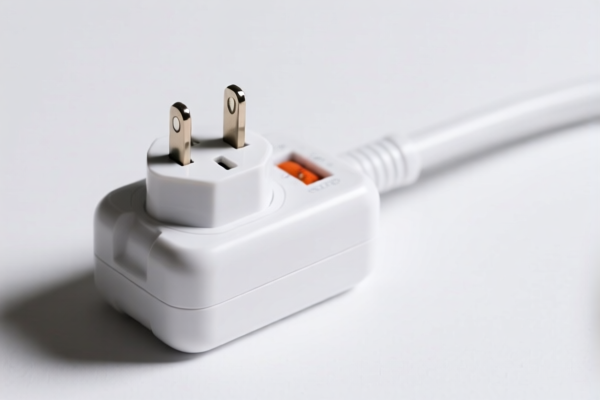
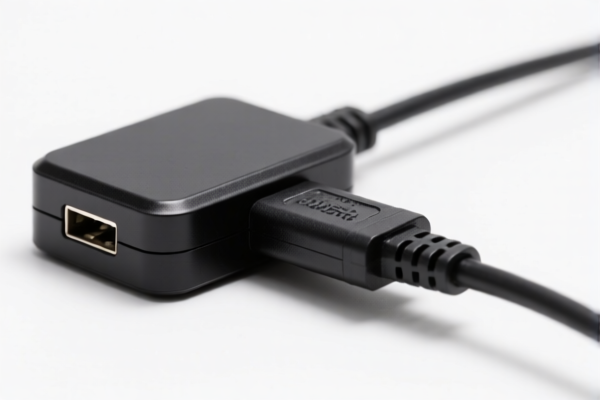
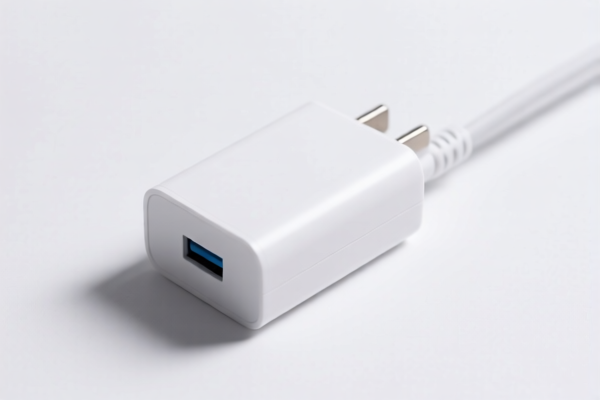
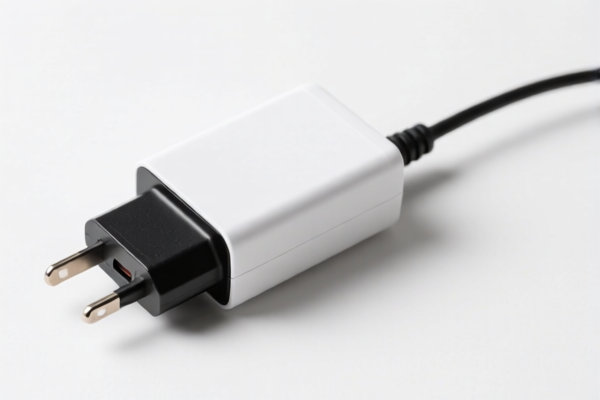
AI Analysis
⚡ Power Adapter: The Ultimate HS Code & Customs Clearance Guide (2026 Edition)
🌐 Global Trade Intelligence | Tariff Deep Dive | Strategic Clearance Protocol
📌 1. Product Definition: What Exactly is a "Power Adapter"?
A Power Adapter (often called a "Wall Wart" or "AC/DC Adapter") is a static converter device that transforms alternating current (AC) from a mains source into direct current (DC) at a specific voltage and current for electronic devices.
🔍 Critical Classification Nuances: * Function: It is a Static Converter (静止式变流器) or Power Converter. * Components: Typically includes a transformer, rectifier, filter, and casing. * Key Distinction: * If it functions primarily as a Voltage Converter (AC to DC) → HS 8504 (Transformers & Static Converters). * If it functions primarily as a Connector (e.g., a simple plug extension with no conversion) → HS 8536 (Electrical Connectors). * Most commercial adapters fall under 8504 due to the conversion function.
📦 2. HS Code Classification Matrix (2026 Tax Regime)
Based on the latest customs data, Power Adapters are primarily classified under HS 8504.40 (Static converters) and potentially HS 8536.69 (Connectors).
| HS Code | Product Description | Functional Logic | Key Classification Criteria |
|---|---|---|---|
| 8504.40.70.07 | Static Converters (Power Adapters) | Mainstream power adapter classification. | Fits "Static Converter" definition. No material/shape conflict. |
| 8504.40.70.18 | Other Static Converters (Power Adapters) | Classified under "Other" in the power converter category. | Fits as an electronic device power supply. No power range conflict. |
| 8504.40.60.07 | Static Converters (Adapter) | Alternative sub-classification for adapters. | Matches "Power Converter" description. No functional conflict. |
| 8536.69.40.10 | Electrical Connectors (Coaxial/Adapter) | Only if the adapter is treated primarily as a connector (e.g., voltage ≤ 1000V). | Classified as a connection device rather than a converter. |
⚠️ The "Converter vs. Connector" Trap:
If the device converts voltage (e.g., 110V AC to 5V DC), it MUST be declared under 8504. Declaring it as 8536 (Connector) is a common error that can lead to customs audits, even if the total tax rate is currently similar in this specific dataset.
💰 3. 2026 Tariff Rate Breakdown (China → Global Market)
🇺🇸 Target Market: United States (US)
🇨🇳 Origin: China (CN)
📅 Effective Date: 2025/2026 Tax Regime
🎯 Tax Structure Analysis (Applicable to All Listed HS Codes)
| Tax Component | Rate | Legal Basis & Detail |
|---|---|---|
| Base Tariff | 0.0% | Standard Most-Favored-Nation (MFN) rate. |
| Section 301 "Add-on" Tariff | +25.0% | Section 301 retaliation measures on Chinese goods. |
| "Section 122" / Special Provision | +10.0% | Section 122 specific clauses (often related to supply chain security or specific technology categories). |
| 🔴 TOTAL DUTY RATE | 35.0% | 0% (Base) + 25% (Section 301) + 10% (Section 122) |
📌 Critical Interpretation of the 35% Rate: 1. Base Duty (0%): Under normal trade relations, power converters are often duty-free. 2. Section 301 (25%): This is the primary "US-China Trade War" tariff targeting Chinese electronics and industrial components. It applies to the ad valorem value of the goods. 3. Section 122 (10%): This specific 10% surcharge acts as an additional layer of protectionism for specific high-volume categories like power adapters, likely under recent executive orders or specific trade remedy measures. 4. Cumulative Impact: The 35% total is NOT compound; it is additive on the CIF value. * Formula:
Duty = CIF Value × 35%
🛠️ 4. Strategic Customs Clearance Advice (Action Plan)
To ensure smooth entry and avoid penalties, follow this 5-Step Clearance Protocol:
✅ Step 1: Precise HS Code Selection
- Recommendation: Prioritize
8504.40.70.07or8504.40.70.18. - Why? These codes explicitly classify the item as a "Static Converter" (Power Adapter).
- Risk Avoidance: Only use
8536.69.40.10if the device is purely a passive connector (no internal transformer/circuitry). Using this code for a real power adapter may trigger a "Misclassification" audit.
✅ Step 2: Documentation Preparation
- Technical Datasheet: Must clearly state "AC/DC Conversion," Input Voltage, and Output Voltage.
- Schematic/Circuit Diagram: Essential for proving the device is a converter (8504) and not just a plug (8536).
- Labeling: Ensure the physical label reads "Input: 100-240V ~50/60Hz, Output: 12V ⎓ 2A" to match the 8504 description.
✅ Step 3: Cost Calculation & Budgeting
- Do NOT underestimate the 35% tariff.
- Example: If the CIF value is $10,000, the duty is $3,500.
- Strategy: If shipping via air, consider the "De Minimis" threshold ($800). However, if the total value exceeds $800 (or if the carrier does not qualify for de minimis), the 35% will be collected immediately.
✅ Step 4: Country of Origin Verification
- Ensure the "Country of Origin" is clearly marked as China on the commercial invoice and packing list.
- If the adapter is assembled in a third country (e.g., Vietnam) using Chinese parts, ensure you have proof of "Substantial Transformation" to potentially bypass the Section 301/122 surcharges (though this is complex for adapters).
✅ Step 5: Labeling for Compliance
- The package must clearly identify the product as a "Power Adapter for Electronic Devices".
- Avoid vague terms like "Charging Cable" or "Connector" if the device has internal conversion circuitry.
🚨 5. Common Pitfalls & Red Flags
| ❌ Mistake | ⚠️ Consequence | ✅ Correct Approach |
|---|---|---|
| Declaring as "Electrical Connector" (8536) for a device that converts voltage. | Seizure or Audit. Customs may reclassify to 8504 and assess back taxes + penalties if the description doesn't match. | Verify circuitry. If it converts AC→DC, use 8504. |
| Ignoring the "Section 122" 10% surcharge. | Underpriced Entry. Budgeting only for 25% leads to cash flow issues upon entry. | Budget for Total 35% (0+25+10). |
| Splitting shipments to avoid $800 De Minimis. | Customs Penalties. If the shipment is clearly a single commercial order split to evade duty. | Declare the true commercial value. |
| Vague Description ("Power Supply") | Delay. Customs officers cannot determine the exact HS Code. | Use specific description: "Static AC/DC Power Converter, 12V/2A". |
🌍 6. Global Comparison Snapshot (2026)
| Region | HS Code (Power Adapter) | Base Duty | Special Tariffs | Total Est. Rate |
|---|---|---|---|---|
| 🇺🇸 USA | 8504.40.70.x | 0% | +25% (Sec 301) +10% (Sec 122) | 35% ⚠️ |
| 🇪🇺 EU | 8504.40.70.x | 4% | None | 4% ✅ |
| 🇯🇵 Japan | 8504.40.70.x | 5.3% | None | 5.3% ✅ |
| 🇨🇳 China | 8504.40.70.x | 0% | None | 0% ✅ |
💡 Strategic Insight: The 35% tariff in the US makes exporting Chinese power adapters highly sensitive. * Recommendation: Consider third-party manufacturing (e.g., in Vietnam or Thailand) to bypass the "China Origin" surcharges, provided the transformation is substantial enough to change the Country of Origin.
🎯 7. Final Verdict & Action Items
- Primary Classification: Use
8504.40.70.07or8504.40.70.18. - Tariff Reality: Prepare for a 35% total duty burden (0% Base + 25% Sec 301 + 10% Sec 122).
- Documentation: Submit circuit diagrams and detailed specs to prove "Static Converter" status.
- Compliance: Ensure no misclassification into "Connector" (8536) unless the device is truly passive.
🚀 Pro Tip: For high-volume shipments, consult a licensed customs broker to apply for Exclusion Codes (if available) for Section 301 items, which can temporarily waive the 25% surcharge for specific manufacturers.
✨ Disclaimer: This guide is based on the provided 2026 tax data. Tariff laws are subject to change. Always verify with the latest CBP rulings or professional customs brokers before shipment.
Customer Reviews
About HS Code Classification
The Harmonized System (HS) is an internationally standardized nomenclature developed by the World Customs Organization (WCO) to classify traded products. Over 200 countries use the HS system as the basis for customs tariffs, trade statistics, and import/export regulations.
Each HS code follows a hierarchical structure:
- Chapter (2 digits) — Broad category of goods (e.g., Chapter 84: Machinery and Mechanical Appliances)
- Heading (4 digits) — More specific grouping within the chapter
- Subheading (6 digits) — Internationally standardized breakdown, used by all WCO member countries
- National subdivisions (8-10 digits) — Country-specific extensions for further classification, such as US HTSUS 10-digit codes
Correct HS code classification is essential for smooth customs clearance, accurate duty payment, and compliance with trade regulations. Misclassification can lead to customs delays, overpayment of duties, or penalties.
When importing from CN to US, the applicable tariff rates may include:
- Most-Favored-Nation (MFN) rate — The standard duty rate applied to WTO members
- General rate — Applied to countries without trade agreements
- Trade remedy duties — Additional tariffs such as Section 301 (anti-dumping), Section 232 (national security), or countervailing duties
The information provided on this page is for reference purposes only. For official classification, please consult with your local customs authority or a licensed customs broker.